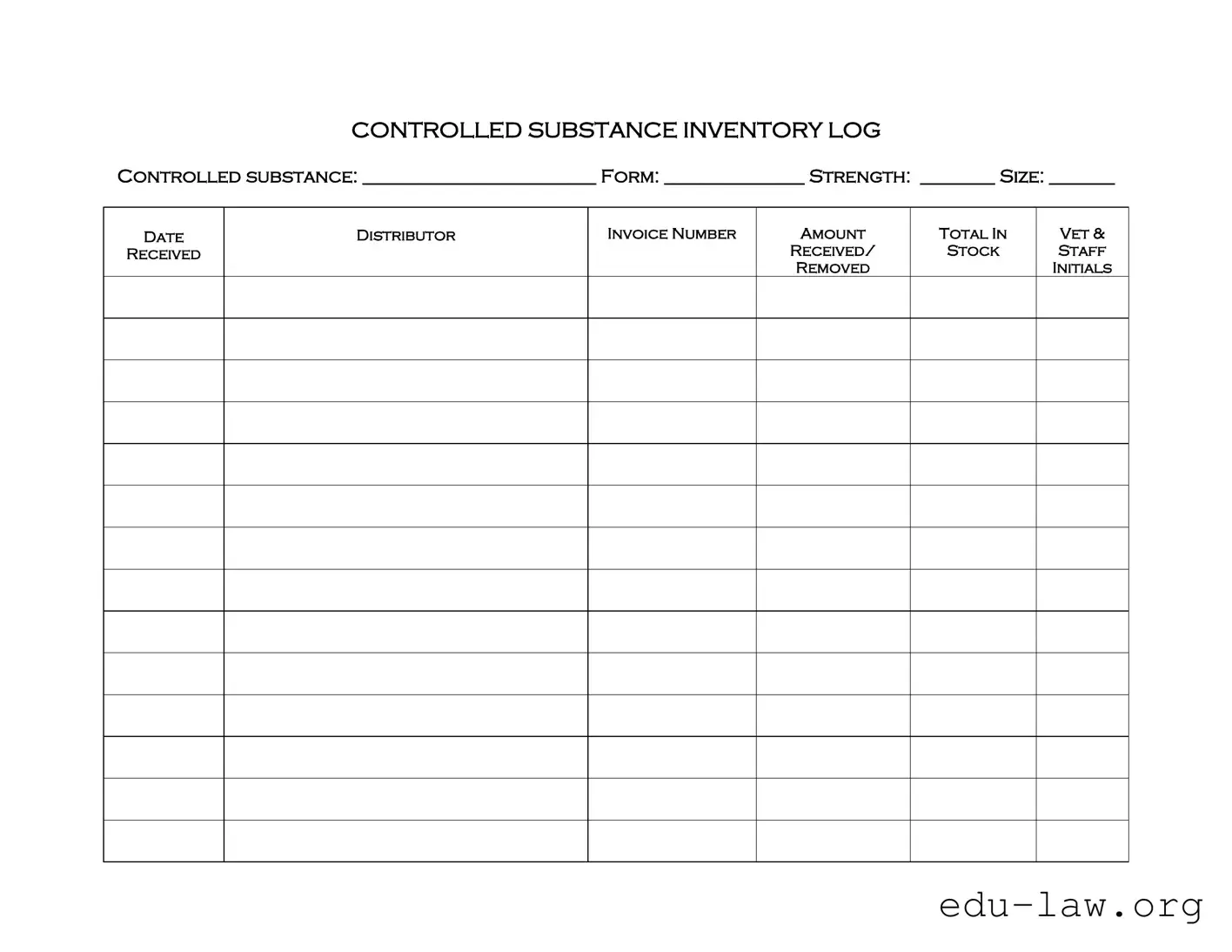
The Controlled Drug Log form serves as a crucial tool for tracking and managing controlled substances within a facility. This form is designed to ensure accountability and compliance with regulations surrounding the handling of these drugs. Each entry requires specific details, including the name of the controlled substance, its form, strength, and size. Additionally, the log captures essential information such as the date of receipt, the distributor, invoice number, and the total amount received. It also includes spaces for staff initials, indicating who has received or removed the substances from stock. By maintaining accurate records on this form, facilities can better monitor their inventory and ensure that all controlled substances are accounted for, thereby enhancing safety and regulatory compliance.
CONTROLLED SUBSTANCE INVENTORY LOG
CONTROLLED SUBSTANCE: _________________________ FORM: _______________ STRENGTH: ________ SIZE: _______
DATE |
DISTRIBUTOR |
INVOICE NUMBER |
AMOUNT |
TOTAL IN |
VET & |
RECEIVED |
|
|
RECEIVED/ |
STOCK |
STAFF |
|
|
|
|
|
|
|
|
|
REMOVED |
|
INITIALS |
|
|
|
|
|
|
|
|
|
|
|
|
|
|
|
|
|
|
|
|
|
|
|
|
|
|
|
|
|
|
|
|
|
|
|
|
|
|
|
|
|
|
|
|
|
|
|
|
|
|
|
|
|
|
|
|
|
|
|
|
|
|
|
|
|
|
|
|
|
|
|
|
|
|
|
|
|
|
|
|
|
|
|
|
|
|
|
|
|
|
| Fact Name | Description |
|---|---|
| Purpose | The Controlled Drug Log form tracks the inventory of controlled substances. |
| Required Information | It includes fields for the drug name, form, strength, size, date, distributor, invoice number, amount received, and staff initials. |
| Governing Laws | State-specific laws govern the use of this form, including the Controlled Substances Act. |
| Inventory Management | Regular updates to the log ensure accurate tracking of controlled substances. |
| Signature Requirement | Staff members must initial the log to confirm receipt and removal of substances. |
| Storage Compliance | Maintaining this log is essential for compliance with state and federal regulations. |
| Record Retention | Logs should be retained for a specified period as required by state law. |
Filling out the Controlled Drug Log form is essential for maintaining accurate records of controlled substances. This ensures compliance with regulations and helps track the inventory of medications. Follow these steps to complete the form correctly.
What is the purpose of the Controlled Drug Log form?
The Controlled Drug Log form is designed to track the inventory of controlled substances within a facility. It helps ensure accurate record-keeping of the drugs received, stored, and dispensed. By maintaining this log, staff can monitor usage and comply with regulatory requirements, thus promoting safety and accountability in handling controlled substances.
What information is required on the Controlled Drug Log form?
The form requires several key pieces of information. You must fill in the name of the controlled substance, its form (e.g., tablet, liquid), strength, and size. Additionally, each entry must include the date of receipt, the distributor's name, the invoice number, the amount received, and the total amount in stock. Staff initials are also needed to confirm the removal of any substances from inventory.
Who is responsible for maintaining the Controlled Drug Log?
The responsibility for maintaining the Controlled Drug Log typically falls to designated staff members, such as pharmacists or veterinary technicians. These individuals are tasked with ensuring that the log is updated accurately and regularly. However, all staff handling controlled substances should be aware of the log's contents and procedures to promote accountability and compliance.
How often should the Controlled Drug Log be updated?
The Controlled Drug Log should be updated each time a controlled substance is received or removed from inventory. This means that any time a new supply arrives or a dose is dispensed, the log must reflect these changes immediately. Regular audits of the log are also recommended to verify accuracy and ensure compliance with regulations.
What should be done if an error is found in the Controlled Drug Log?
If an error is identified in the Controlled Drug Log, it is important to correct it promptly. The staff member responsible should strike through the incorrect entry with a single line, write the correct information next to it, and initial the correction. This method maintains the integrity of the log while providing a clear record of changes. If the error is significant, it may be advisable to notify a supervisor for further guidance.
Leaving fields blank: It's crucial to fill out every section of the Controlled Drug Log. Missing information can lead to compliance issues and confusion down the line.
Incorrectly recording the date: Always double-check the date you enter. An incorrect date can complicate tracking and auditing processes.
Failing to include the distributor invoice number: This number is essential for verifying the source of the controlled substances. Omitting it can hinder accountability.
Not having staff initials: Each entry should include the initials of the staff member who handled the drug. This step is vital for maintaining a clear chain of custody.
Miscalculating amounts: Ensure that the amount received matches what is recorded on the invoice. Discrepancies can lead to serious regulatory issues.
The Controlled Drug Log form is an important document for tracking the use and distribution of controlled substances. Several other forms and documents are often used in conjunction with this log to ensure proper management and compliance. Below is a list of these related documents.
These documents work together to promote responsible management of controlled substances. Proper documentation supports compliance with legal and regulatory requirements, ensuring safety and accountability in handling these drugs.
The Controlled Substance Inventory Log bears similarities to the Prescription Log. Both documents serve as essential records for tracking medications. The Prescription Log specifically tracks the prescriptions issued to patients, detailing the name of the patient, the prescribed medication, dosage, and the prescribing physician. Like the Controlled Drug Log, it requires accurate entries to ensure compliance with regulations and to maintain a clear history of medication distribution. This helps prevent misuse and ensures accountability in the handling of controlled substances.
Another document akin to the Controlled Drug Log is the Medication Administration Record (MAR). The MAR is utilized in healthcare settings to document the administration of medications to patients. It includes details such as the patient’s name, medication name, dosage, route of administration, and the time the medication was given. Similar to the Controlled Drug Log, the MAR is crucial for maintaining accurate records, ensuring that patients receive their medications as prescribed, and preventing errors in medication administration.
The Inventory Control Sheet is also comparable to the Controlled Drug Log. This document is often used in pharmacies and healthcare facilities to track the stock levels of various medications, including controlled substances. It records the quantity of medications received, dispensed, and the remaining stock. Like the Controlled Drug Log, the Inventory Control Sheet helps ensure that there is a clear understanding of medication availability, which is vital for patient care and compliance with regulatory requirements.
Additionally, the Incident Report shares similarities with the Controlled Drug Log in terms of documentation and accountability. While the Incident Report focuses on documenting any adverse events or discrepancies related to medication use, it is essential for identifying potential issues in medication management. This document, like the Controlled Drug Log, emphasizes the importance of thorough record-keeping to enhance safety and compliance in medication handling.
Lastly, the Drug Utilization Review (DUR) report is another document that relates closely to the Controlled Drug Log. The DUR report analyzes the prescribing, dispensing, and usage patterns of medications within a specific time frame. It helps healthcare providers identify potential overuse or misuse of controlled substances. Similar to the Controlled Drug Log, the DUR report relies on accurate data to support safe prescribing practices and to ensure that patients receive appropriate medications for their conditions.
When filling out the Controlled Drug Log form, it is important to adhere to specific guidelines to ensure accuracy and compliance. Here are five things you should and shouldn't do:
By following these guidelines, you can help maintain the integrity of the Controlled Drug Log and ensure compliance with regulatory standards.
Understanding the Controlled Drug Log form is crucial for compliance and safety in any facility that handles controlled substances. However, several misconceptions can lead to confusion. Here are seven common misconceptions:
By addressing these misconceptions, facilities can better ensure compliance and maintain safe practices when handling controlled substances.
When filling out the Controlled Drug Log form, it is essential to ensure accuracy and completeness. Here are some key takeaways to keep in mind:
Using this log properly not only helps in maintaining compliance but also ensures the safe handling of controlled substances.