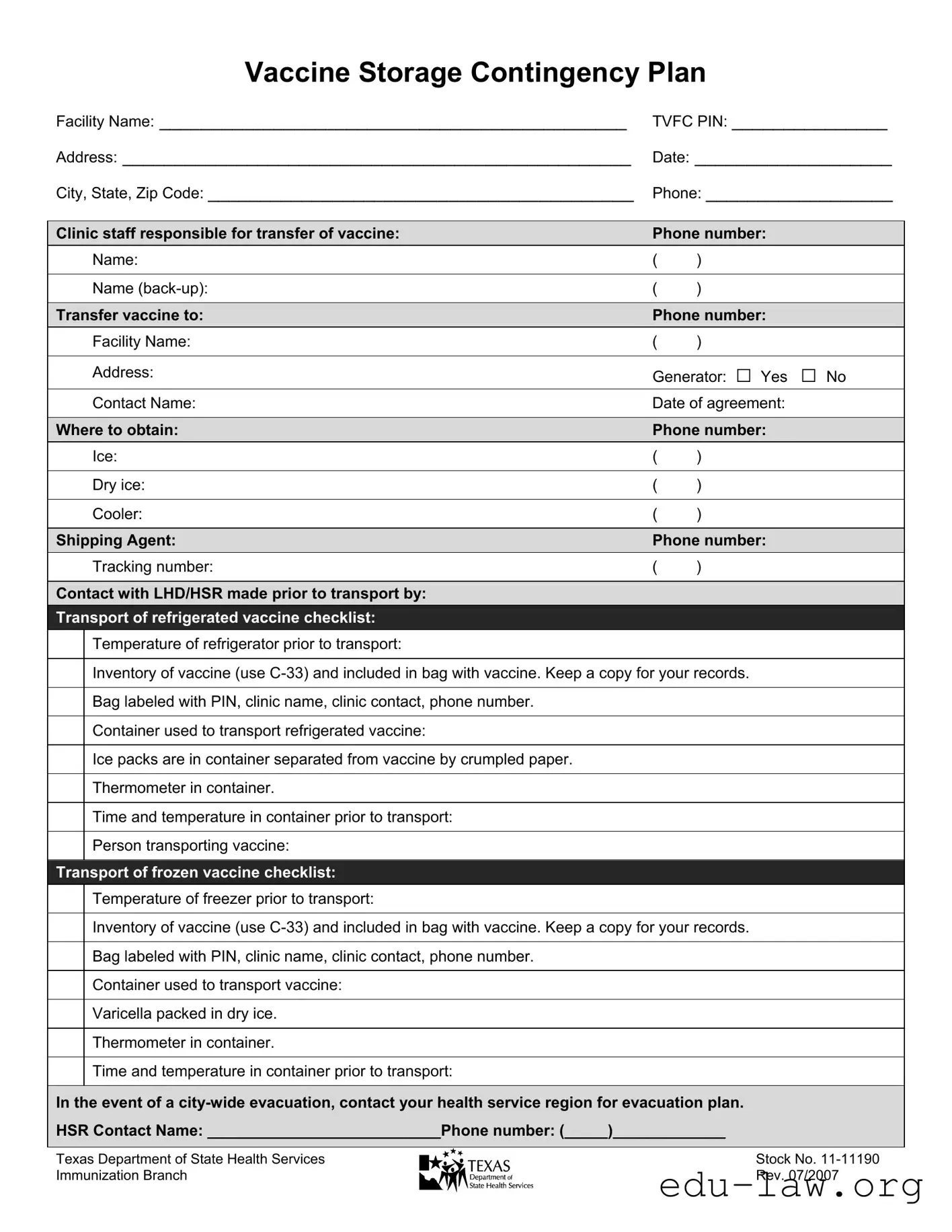
The Contingency Plan For Vaccine Storage form serves as a vital tool for clinics and healthcare facilities, ensuring the safe transport and storage of vaccines during emergencies. This form captures essential details, including the facility name, TVFC PIN, and contact information, which are crucial for quick reference. It designates responsible clinic staff for vaccine transfer, ensuring accountability and clear communication during critical situations. The form outlines procedures for transferring vaccines to designated facilities, detailing necessary equipment such as coolers and ice packs, and confirming whether a generator is available. It also emphasizes the importance of maintaining proper temperature conditions for both refrigerated and frozen vaccines, requiring staff to document temperatures before transport. Additionally, the form includes checklists to ensure that inventory is accounted for and that vaccines are properly labeled, which is vital for tracking and compliance. In the event of a city-wide evacuation, the form provides guidance on contacting health service regions, further enhancing preparedness. Overall, this form is a comprehensive resource designed to safeguard vaccine integrity and public health during unforeseen circumstances.

Vaccine Storage Contingency Plan
Facility Name: _____________________________________________ |
|
TVFC PIN: _______________ |
||
Address: _________________________________________________ |
|
Date: ___________________ |
||
City, State, Zip Code: _________________________________________ |
|
Phone: __________________ |
||
|
|
|
|
|
Clinic staff responsible for transfer of vaccine: |
|
Phone number: |
||
|
Name: |
( |
) |
|
|
|
|
|
|
|
Name |
( |
) |
|
|
|
|
|
|
Transfer vaccine to: |
|
Phone number: |
||
|
Facility Name: |
( |
) |
|
|
|
|
|
|
|
Address: |
|
Generator: □ Yes □ No |
|
|
|
|
||
|
Contact Name: |
Date of agreement: |
||
|
|
|
|
|
Where to obtain: |
|
Phone number: |
||
|
Ice: |
( |
) |
|
|
|
|
|
|
|
Dry ice: |
( |
) |
|
|
|
|
|
|
|
Cooler: |
( |
) |
|
|
|
|
|
|
Shipping Agent: |
|
Phone number: |
||
|
Tracking number: |
( |
) |
|
|
|
|
|
|
Contact with LHD/HSR made prior to transport by: |
|
|
|
|
Transport of refrigerated vaccine checklist: |
|
|
|
|
|
Temperature of refrigerator prior to transport: |
|
|
|
|
|
|||
|
Inventory of vaccine (use |
|||
|
|
|
|
|
|
Bag labeled with PIN, clinic name, clinic contact, phone number. |
|
|
|
|
|
|
|
|
|
Container used to transport refrigerated vaccine: |
|
|
|
|
|
|
|
|
|
Ice packs are in container separated from vaccine by crumpled paper. |
|
|
|
|
|
|
|
|
|
Thermometer in container. |
|
|
|
|
|
|
|
|
|
Time and temperature in container prior to transport: |
|
|
|
|
|
|
|
|
|
Person transporting vaccine: |
|
|
|
|
|
|
|
|
Transport of frozen vaccine checklist: |
|
|
|
|
|
Temperature of freezer prior to transport: |
|
|
|
|
|
|||
|
Inventory of vaccine (use |
|||
|
|
|
|
|
|
Bag labeled with PIN, clinic name, clinic contact, phone number. |
|
|
|
|
|
|
|
|
|
Container used to transport vaccine: |
|
|
|
|
|
|
|
|
|
Varicella packed in dry ice. |
|
|
|
|
|
|
|
|
|
Thermometer in container. |
|
|
|
|
|
|
|
|
|
Time and temperature in container prior to transport: |
|
|
|
|
|
|
|
|
In the event of a
Texas Department of State Health Services |
Stock No. |
Immunization Branch |
Rev. 07/2007 |
| Fact Name | Description |
|---|---|
| Facility Information | The form requires details about the facility, including name, TVFC PIN, address, and contact information. |
| Vaccine Transfer Responsibility | It identifies clinic staff responsible for vaccine transfer, including a back-up contact. |
| Transport Checklist | A checklist ensures proper temperature control and inventory management during vaccine transport. |
| Emergency Protocols | In case of a city-wide evacuation, the form directs users to contact their health service region for the evacuation plan. |
| State-Specific Laws | In Texas, the governing law includes regulations from the Texas Department of State Health Services. |
| Documentation Requirements | Users must keep a copy of the vaccine inventory and ensure the transport bag is properly labeled with clinic information. |
Completing the Contingency Plan For Vaccine Storage form is essential for ensuring that vaccines are stored and transferred safely in case of an emergency. This form requires specific information about your facility, the vaccines, and the personnel involved in the transfer process. Follow the steps outlined below to accurately fill out the form.
What is the purpose of the Contingency Plan For Vaccine Storage form?
The Contingency Plan For Vaccine Storage form is designed to ensure that vaccines are stored safely during emergencies or unexpected situations. It helps clinics prepare for potential disruptions, like power outages or natural disasters, by providing clear instructions on how to manage vaccine storage and transfer.
What information do I need to fill out on the form?
You will need to provide details such as the facility name, TVFC PIN, address, and contact information. You should also include the names and phone numbers of the clinic staff responsible for transferring the vaccine. Additionally, you will need to document the facility to which the vaccine will be transferred and the necessary contact information.
How do I prepare for the transport of refrigerated vaccines?
Before transporting refrigerated vaccines, check the temperature of the refrigerator. Make an inventory using the C-33 form and include it in the bag with the vaccines. Label the bag with the PIN, clinic name, and contact information. Ensure that ice packs are placed in the container, separated from the vaccines by crumpled paper, and that a thermometer is included.
What steps should I take for transporting frozen vaccines?
For frozen vaccines, check the temperature of the freezer prior to transport. Similar to refrigerated vaccines, you should complete an inventory using the C-33 form and include it in the bag. The bag must also be labeled with the necessary information. When packing, ensure that Varicella vaccines are packed in dry ice, and include a thermometer in the container.
What should I do in case of a city-wide evacuation?
If a city-wide evacuation occurs, contact your health service region (HSR) for the evacuation plan. It's crucial to have this contact information readily available to ensure a smooth process during emergencies.
How can I ensure that the vaccines remain at the right temperature during transport?
To maintain the correct temperature during transport, monitor the temperature in the container before leaving. Use ice packs for refrigerated vaccines and dry ice for frozen vaccines. Always include a thermometer in the transport container to keep track of the temperature throughout the journey.
What is the significance of labeling the transport bag?
Labeling the transport bag is essential for identification and communication. It helps ensure that the vaccines can be tracked and that the receiving facility knows exactly what they are receiving. This reduces the risk of mishandling and ensures a smoother transfer process.
Who is responsible for the transfer of vaccines?
The clinic staff designated on the form are responsible for the transfer of vaccines. It is important to have a primary contact and a backup in case the primary contact is unavailable. This ensures that there is always someone accountable for the vaccines during transport.
What should I do with the inventory after transport?
After transport, keep a copy of the inventory for your records. This documentation is vital for tracking the vaccines and ensuring that they are accounted for. It also helps in case of any discrepancies or audits in the future.
Incomplete Facility Information: Failing to provide the complete facility name, TVFC PIN, or address can lead to confusion and delays in vaccine transfer. Ensure all fields are filled accurately.
Missing Contact Details: Omitting phone numbers for both the clinic staff responsible for vaccine transfer and the receiving facility can hinder communication during emergencies. Double-check that all contact information is correct.
Improper Inventory Documentation: Not including an inventory of vaccines using the C-33 form can result in a lack of accountability. Always keep a copy of the inventory with the vaccine during transport.
Neglecting Temperature Checks: Failing to record the temperature of the refrigerator or freezer prior to transport can jeopardize vaccine efficacy. Ensure that temperature readings are documented accurately.
The Contingency Plan For Vaccine Storage form is essential for ensuring the proper handling and transfer of vaccines during emergencies. Alongside this form, several other documents play a crucial role in maintaining vaccine integrity and compliance with health regulations. Below is a list of commonly used forms and documents that complement the Contingency Plan.
Utilizing these documents in conjunction with the Contingency Plan For Vaccine Storage form helps ensure that vaccines remain safe and effective during emergencies. Proper documentation is key to maintaining public health standards and safeguarding community health.
The Emergency Response Plan is a document that outlines the procedures and protocols to follow in the event of an emergency affecting a healthcare facility. Similar to the Contingency Plan for Vaccine Storage, it requires detailed information about the facility, staff responsibilities, and communication plans. Both documents emphasize the importance of preparedness and provide a checklist to ensure critical supplies are maintained and accessible during emergencies. The Emergency Response Plan also highlights the need for coordination with local health authorities, much like the communication with the local health department in the vaccine storage plan.
The Disaster Recovery Plan is another essential document that parallels the Contingency Plan for Vaccine Storage. This plan focuses on restoring operations after a disaster, ensuring that essential services can be resumed as quickly as possible. It includes strategies for maintaining vital records and inventory, similar to the vaccine inventory checks outlined in the contingency plan. Both documents underscore the necessity of having backup systems in place, whether for vaccines or other critical resources, to ensure continuity of care during crises.
The Inventory Management Plan serves a function akin to the Contingency Plan for Vaccine Storage by detailing how to keep track of supplies, including vaccines. This plan ensures that all inventory is accounted for, which is crucial during emergencies when rapid access to resources is needed. Like the vaccine storage plan, it involves maintaining a clear record of items, their locations, and the personnel responsible for them. Both documents stress the importance of accurate inventory to facilitate effective response efforts.
The Cold Chain Management Plan is specifically focused on the storage and transportation of temperature-sensitive products, including vaccines. It shares similarities with the Contingency Plan for Vaccine Storage in that it outlines the necessary conditions for maintaining the integrity of vaccines during transport. Both documents include checklists for monitoring temperature and ensuring that appropriate packing materials, such as ice packs or dry ice, are used. The Cold Chain Management Plan further emphasizes the importance of training staff in proper handling procedures, which is also a key component of the vaccine storage plan.
The Communication Plan is vital for any organization, especially in healthcare settings. It provides guidelines for how information will be disseminated during emergencies, similar to the communication protocols established in the vaccine storage contingency plan. Both documents highlight the need for clear lines of communication between staff, local health departments, and other relevant stakeholders. Effective communication is critical to ensure that everyone is informed and can respond appropriately during a crisis.
The Training and Drills Plan outlines the necessary training sessions and practice drills for staff to ensure they are prepared for emergencies. This document is similar to the Contingency Plan for Vaccine Storage in that it emphasizes the importance of staff readiness. Both plans require regular updates and training to reflect changes in procedures or protocols. The goal is to ensure that all personnel are familiar with their roles and responsibilities, which is essential for effective emergency response.
The Quality Assurance Plan focuses on maintaining high standards in healthcare delivery, including the proper handling and storage of vaccines. This plan shares similarities with the Contingency Plan for Vaccine Storage by emphasizing the need for regular monitoring and evaluation of practices. Both documents advocate for systematic checks to ensure that protocols are followed and that any deviations are addressed promptly. The Quality Assurance Plan serves to enhance the overall safety and efficacy of vaccine storage and handling practices.
The Risk Management Plan identifies potential risks and outlines strategies to mitigate them. This document aligns with the Contingency Plan for Vaccine Storage by assessing vulnerabilities related to vaccine storage and transport. Both plans encourage proactive measures to prevent issues before they arise, such as ensuring adequate backup power sources or alternative transport arrangements. By identifying risks, both documents aim to safeguard public health and ensure that vaccines remain effective and accessible during emergencies.
When filling out the Contingency Plan For Vaccine Storage form, it is essential to follow specific guidelines to ensure accuracy and compliance. Below are ten important dos and don'ts to consider.
Adhering to these guidelines will help ensure that the vaccine storage plan is effective and compliant with health regulations.
Misconceptions about the Contingency Plan For Vaccine Storage form can lead to confusion and mismanagement. Here are four common misunderstandings:
This is not true. All facilities, regardless of size, must have a contingency plan in place. Proper vaccine storage is critical for maintaining efficacy, and every clinic must be prepared for emergencies.
While power outages are a significant concern, the form addresses various emergencies, including equipment failure and natural disasters. It is essential to consider all potential scenarios that could affect vaccine storage.
In reality, the form should be reviewed and updated regularly. Changes in staff, equipment, or procedures can impact the effectiveness of the plan. Keeping the information current ensures a swift response during emergencies.
This approach is risky. A well-prepared facility will have the form completed and practiced ahead of time. Rushing through the process can lead to mistakes that jeopardize vaccine safety.
Filling out the Contingency Plan For Vaccine Storage form is essential for ensuring the safe transport and storage of vaccines. Here are key takeaways to keep in mind:
Following these guidelines will help ensure the safe handling and transfer of vaccines, safeguarding public health.