The Consumer Closing Disclosure form is a crucial document in the home-buying process, designed to provide transparency and clarity to buyers and sellers alike. It outlines the final terms of a mortgage loan, detailing key aspects such as loan amounts, interest rates, and monthly payments. Additionally, it breaks down the closing costs, including lender fees, title insurance, and any other expenses associated with the transaction. This form also highlights important dates, such as the closing date and the date when the first payment is due. By ensuring that all parties have a clear understanding of the financial commitments involved, the Consumer Closing Disclosure fosters informed decision-making and helps prevent any surprises at the closing table. It's essential for buyers to review this document carefully, as it serves not only as a summary of the financial obligations but also as a safeguard against potential discrepancies in the transaction.
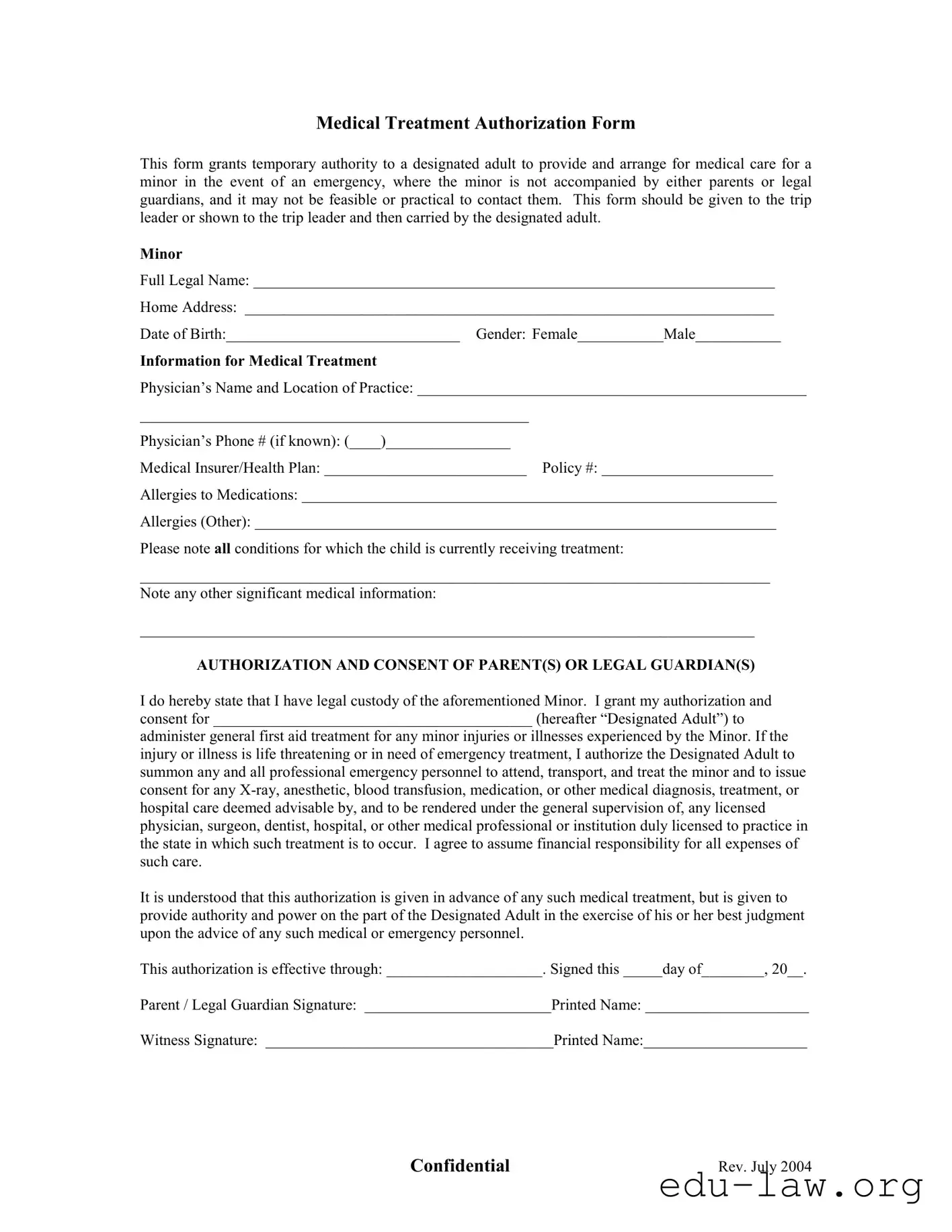
MEDICAL TREATMENT AUTHORIZATION FORM
This form grants temporary authority to a designated adult to provide and arrange for medical care for a minor in the event of an emergency, where the minor is not accompanied by either parents or legal guardians, and it may not be feasible or practical to contact them. This form should be given to the trip leader or shown to the trip leader and then carried by the designated adult.
MINOR
Full Legal Name: ___________________________________________________________________
Home Address: ____________________________________________________________________
Date of Birth:______________________________ Gender: Female___________Male___________
INFORMATION FOR MEDICAL TREATMENT
Physician’s Name and Location of Practice: __________________________________________________
__________________________________________________
Physician’s Phone # (if known): (____)________________
Medical Insurer/Health Plan: __________________________ Policy #: ______________________
Allergies to Medications: _____________________________________________________________
Allergies (Other): ___________________________________________________________________
Please note ALL conditions for which the child is currently receiving treatment:
_________________________________________________________________________________
Note any other significant medical information:
_______________________________________________________________________________
AUTHORIZATION AND CONSENT OF PARENT(S) OR LEGAL GUARDIAN(S)
I do hereby state that I have legal custody of the aforementioned Minor. I grant my authorization and consent for _________________________________________ (hereafter “Designated Adult”) to
administer general first aid treatment for any minor injuries or illnesses experienced by the Minor. If the injury or illness is life threatening or in need of emergency treatment, I authorize the Designated Adult to summon any and all professional emergency personnel to attend, transport, and treat the minor and to issue consent for any
It is understood that this authorization is given in advance of any such medical treatment, but is given to provide authority and power on the part of the Designated Adult in the exercise of his or her best judgment upon the advice of any such medical or emergency personnel.
This authorization is effective through: ____________________. Signed this _____day of________, 20__.
Parent / Legal Guardian Signature: ________________________Printed Name: _____________________
Witness Signature: _____________________________________Printed Name:_____________________
CONFIDENTIAL |
Rev. July 2004 |
| Fact Name | Details |
|---|---|
| Purpose | The Consumer Closing Disclosure form is designed to provide borrowers with clear and comprehensive information about the final terms of their mortgage loan, including loan terms, monthly payments, and closing costs. |
| Timing | Lenders must provide the Closing Disclosure at least three business days before the closing date. This allows borrowers time to review the document and ask questions. |
| Contents | The form includes key details such as loan amount, interest rate, monthly payment, and a breakdown of closing costs, ensuring borrowers understand their financial obligations. |
| Legal Requirement | The Consumer Closing Disclosure is mandated by the Truth in Lending Act (TILA) and the Real Estate Settlement Procedures Act (RESPA), ensuring transparency in the mortgage process. |
| State-Specific Regulations | Some states may have additional requirements or variations of the Closing Disclosure. For example, California requires specific disclosures regarding the interest rate and loan terms. |
| Comparison Tool | Borrowers can use the Closing Disclosure to compare the final terms with the Loan Estimate they received earlier in the process, helping them identify any changes. |
| Signatures | While not required, it is advisable for borrowers to sign the Closing Disclosure to acknowledge their understanding of the terms before closing. |
Filling out the Consumer Closing Disclosure form is an important step in the home buying process. This document provides detailed information about the terms of the loan and the costs associated with closing. Completing it accurately ensures that all parties have a clear understanding of the financial obligations involved. Follow the steps below to fill out the form correctly.
After completing the form, it is essential to review it carefully for any errors or omissions. Once verified, the form should be distributed to all relevant parties involved in the transaction. This ensures that everyone has the necessary information moving forward.
What is the Consumer Closing Disclosure form?
The Consumer Closing Disclosure form is a crucial document that provides detailed information about the final terms of a mortgage loan. It outlines the loan's costs, the monthly payment amount, and other essential financial details. This form helps borrowers understand their obligations and ensures they are fully informed before closing on their home purchase.
Why is the Closing Disclosure important?
This form is important because it serves as a summary of all the financial aspects of your mortgage. It allows you to compare the final terms with the initial loan estimate you received, ensuring there are no unexpected surprises. Understanding this document helps you make informed decisions and prepares you for your financial responsibilities as a homeowner.
When should I receive the Closing Disclosure?
Typically, you should receive the Closing Disclosure at least three business days before your closing date. This timeframe allows you to review the document thoroughly and ask any questions you might have. It's essential to take this time seriously to ensure everything is in order before you sign any agreements.
What information is included in the Closing Disclosure?
The Closing Disclosure includes several key sections: loan terms, projected payments, costs at closing, and additional information about the loan. You'll find details like the loan amount, interest rate, monthly payment, and a breakdown of closing costs, including fees for services like appraisals and inspections. Each section is designed to give you a clear picture of your financial commitment.
Can I negotiate fees listed in the Closing Disclosure?
Yes, you can negotiate some fees listed in the Closing Disclosure. While certain costs are fixed, others may be negotiable. If you notice any fees that seem unusually high, don’t hesitate to discuss them with your lender or real estate agent. Being proactive can help you save money and ensure you are comfortable with your closing costs.
What should I do if I find an error in the Closing Disclosure?
If you spot an error in the Closing Disclosure, it's essential to address it immediately. Contact your lender or closing agent to discuss the discrepancy. They can help clarify any misunderstandings and make necessary corrections. It's crucial to resolve these issues before closing to avoid complications down the line.
What happens if I don’t understand something in the Closing Disclosure?
If you don’t understand something in the Closing Disclosure, ask questions! Reach out to your lender, real estate agent, or a trusted advisor for clarification. It’s vital to fully comprehend every aspect of the document before signing, as it directly impacts your financial future.
How does the Closing Disclosure protect me as a borrower?
The Closing Disclosure protects you by ensuring transparency in the loan process. It provides a comprehensive overview of your loan terms and closing costs, allowing you to make informed decisions. By reviewing this document, you can identify any discrepancies or unclear terms, which empowers you to advocate for your best interests throughout the closing process.
Not checking for accuracy in personal information. Ensure that the minor's full legal name, home address, and date of birth are correctly entered. Errors can lead to complications in medical situations.
Failing to provide complete medical history. It is crucial to note all allergies and medical conditions. This information can be vital in emergencies.
Leaving out insurance details. Always include the medical insurer and policy number. This information helps medical personnel in billing and treatment decisions.
Not specifying the designated adult. Clearly state who is authorized to make medical decisions. This prevents confusion during emergencies.
Overlooking the authorization expiration date. Indicate when the authorization ends. Without this, it may cause issues later.
Neglecting to sign the form. A parent or legal guardian's signature is essential. Without it, the form is not valid.
Not providing a witness signature. Including a witness can add an extra layer of verification and legitimacy to the authorization.
Ignoring the need for updates. If there are changes in the minor's health or the designated adult, update the form promptly to reflect this information.
The Consumer Closing Disclosure form is an essential document in real estate transactions, providing a detailed overview of the costs associated with a mortgage. However, it is not the only form you will encounter during the closing process. Several other documents often accompany the Closing Disclosure, each serving a specific purpose to ensure a smooth transaction. Below are some commonly used forms that you may come across.
Understanding these documents can empower you as a buyer or seller, making the closing process less daunting. Each form plays a vital role in ensuring that your rights are protected and that the transaction is conducted fairly. Being informed will help you navigate the complexities of real estate transactions with confidence.
The Medical Power of Attorney (MPOA) is a legal document that grants an individual the authority to make medical decisions on behalf of another person in the event they become incapacitated. Similar to the Consumer Closing Disclosure form, which outlines important financial details in a real estate transaction, the MPOA provides clear, essential information regarding medical preferences and the authority granted to the designated individual. Both documents require signatures from the principal party and often a witness, ensuring that the intentions of the individual are documented and respected in critical situations.
The Durable Power of Attorney (DPOA) serves as another comparable document, allowing a person to appoint someone else to manage their financial and legal affairs if they become unable to do so. Like the Consumer Closing Disclosure, which details the financial obligations and terms of a real estate transaction, the DPOA clearly outlines the powers granted to the designated agent. Both documents emphasize the importance of informed consent, ensuring that the principal understands the implications of granting authority to another person.
The Authorization for Release of Medical Information is a document that permits healthcare providers to share a patient’s medical records with designated individuals. This form shares similarities with the Consumer Closing Disclosure, as both require explicit consent from the individual involved. The Consumer Closing Disclosure ensures that all parties are aware of the financial terms, while the medical authorization form ensures that sensitive health information is only disclosed to those authorized by the patient. Both documents prioritize transparency and informed decision-making.
Lastly, the Living Will is a document that outlines an individual’s wishes regarding medical treatment in the event they are unable to communicate their preferences. This document is akin to the Consumer Closing Disclosure in that both serve to clarify intentions and expectations. While the Closing Disclosure provides clarity on financial obligations in a real estate transaction, the Living Will articulates a person’s desires concerning end-of-life care. Both documents are crucial for ensuring that individual choices are respected and upheld, even when direct communication is not possible.
When filling out the Consumer Closing Disclosure form, it is essential to be accurate and thorough. Here are four important do's and don'ts to consider:
Understanding the Consumer Closing Disclosure form is crucial for anyone involved in a real estate transaction. However, several misconceptions can lead to confusion. Here are nine common misunderstandings:
Clearing up these misconceptions can empower individuals to navigate the closing process with confidence and understanding.
When dealing with the Consumer Closing Disclosure form, there are several important points to keep in mind. Understanding these can help ensure a smooth closing process.