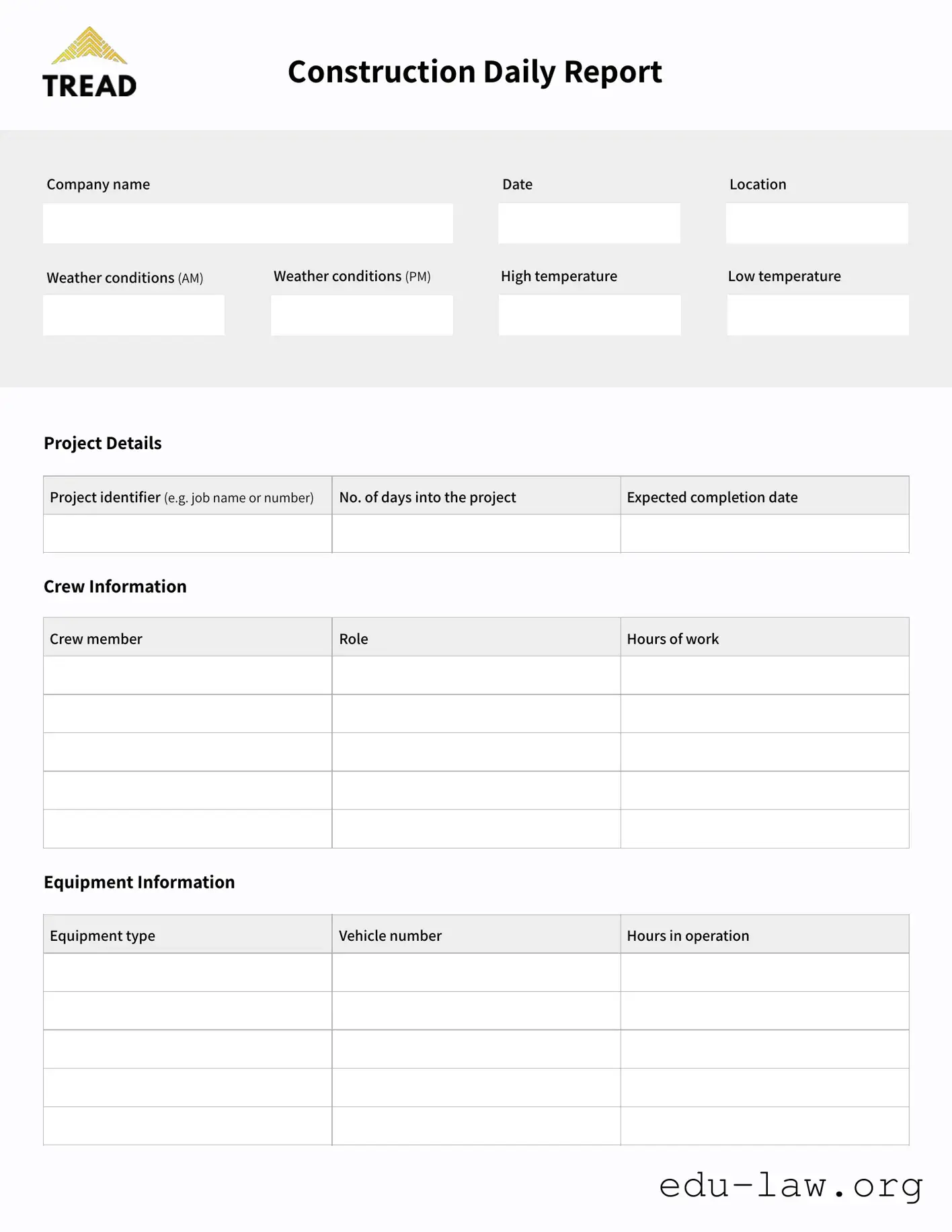
The Construction Daily Report form serves as a vital tool for documenting the daily activities and conditions on a construction site. This comprehensive form captures essential information, including the company name, date, and location of the project, as well as detailed weather conditions for both the morning and afternoon. Notably, it records temperature highs and lows, providing context for the day's work environment. Project specifics, such as the project identifier and the number of days into the project, are also included, along with the expected completion date. Crew information is meticulously outlined, detailing each crew member's role and hours worked, which is crucial for labor tracking. Equipment usage is another key aspect, noting the type of equipment, vehicle numbers, and hours in operation. The form also addresses material deliveries, highlighting expected and actual arrival times, which can impact project timelines. In addition, it allows for the documentation of any issues or delays encountered, along with descriptions and hours delayed if applicable. Noteworthy events, visitor details, and safety inspections are also captured, ensuring a thorough account of daily operations. Lastly, the form provides space for additional comments and action items, promoting accountability and clear communication among team members.
Construction Daily Report
|
Company name |
|
|
|
Date |
|
Location |
|
|
|
|
|
|
|
|
|
|
|
|
|
|
|
|
|
|
|
|
Weather conditions (AM) |
|
Weather conditions (PM) |
|
High temperature |
|
Low temperature |
|
|
|
|
|
|
|
|
|
|
|
|
|
|
|
|
|
|
|
|
|
|
|
|
|
|
|
|
Project Details
Project identifier (e.g. job name or number)
No. of days into the project
Expected completion date
Crew Information
Crew member
Role
Hours of work
Equipment Information
Equipment type
Vehicle number
Hours in operation

Delivery Information
Material(s)
Expected arrival
Actual arrival
Issues/Delays
Description
Hours delayed (if applicable)
Additional/Notable events (if applicable)
Visitors
Name
Title
Purpose
Safety
Inspection performed? ☐ Yes ☐ No Incident(s)? ☐ Yes(box to explain) ☐ No
Additional Information
Comments/Remarks
Action items
Name: |
|
Title: |
|
Signature: |
| Fact Name | Description |
|---|---|
| Purpose | The Construction Daily Report form serves to document daily activities, weather conditions, and project progress on construction sites. |
| Essential Components | This form includes sections for project details, crew information, equipment information, delivery information, issues or delays, and notable events. |
| State-Specific Requirements | In California, the use of daily reports is governed by the California Code of Regulations, Title 8, which mandates documentation for safety and compliance. |
| Importance of Accuracy | Accurate completion of the report is crucial, as it can serve as evidence in disputes and help ensure compliance with safety regulations. |
Once you have gathered all necessary information, you can begin filling out the Construction Daily Report form. This report is essential for documenting daily activities on the job site and ensuring all details are recorded accurately.
What is a Construction Daily Report form?
A Construction Daily Report form is a document used to record daily activities on a construction site. It includes important details such as weather conditions, crew information, equipment usage, material deliveries, and any notable events or issues. This report helps keep track of the progress and challenges faced during the project.
Why is it important to complete a Construction Daily Report?
Completing a Construction Daily Report is crucial for maintaining accurate records of the project. It provides a clear account of daily operations, which can be beneficial for project management, dispute resolution, and compliance with legal or contractual obligations. Additionally, it helps in tracking progress and identifying any potential delays or issues early on.
What information should be included in the report?
The report should include the company name, date, location, and weather conditions for both the morning and afternoon. It should also detail the project identifier, the number of days into the project, and the expected completion date. Crew information, equipment details, material delivery status, and any issues or delays encountered should also be documented. Notable events and visitor information can provide additional context to the day's activities.
How do I record weather conditions?
Weather conditions should be recorded for both the morning and afternoon. You can note aspects such as temperature, precipitation, wind conditions, and any other relevant weather phenomena that might impact construction activities. This information is vital for understanding how weather may have affected work on that day.
What should I do if there are issues or delays?
If you encounter issues or delays, it is important to provide a detailed description in the report. Note the nature of the problem, how it impacted the work, and the number of hours delayed, if applicable. This transparency helps project managers address challenges effectively and keeps everyone informed about the project's status.
Who should fill out the Construction Daily Report?
The report should ideally be completed by a designated individual on-site, such as a site supervisor or foreman. This person is typically familiar with the daily operations and can provide accurate information regarding crew activities, equipment usage, and any incidents that may have occurred during the day.
What if there were no incidents or issues during the day?
Even if there were no incidents or issues, it is still important to complete the report. You can simply note that everything went smoothly. This helps maintain a comprehensive record of the project and can be useful for future reference or audits.
Can visitors be included in the report?
Yes, visitors should be documented in the report. Include their names, titles, and the purpose of their visit. This information helps track who was on-site and can be useful for safety and accountability purposes.
How should I handle comments or additional information?
If there are any comments or additional information relevant to the day's activities, include them in the designated section of the report. This could involve observations about the work environment, suggestions for improvement, or notes on upcoming tasks. Providing this context can enhance communication among team members and stakeholders.
Failing to include the company name. This can lead to confusion about which project the report pertains to.
Not specifying the date. Without a clear date, tracking progress over time becomes difficult.
Inaccurate or missing weather conditions. This information is essential for understanding how weather may have impacted work.
Omitting project details such as the project identifier. This can cause miscommunication regarding the specific project.
Incorrectly recording crew information. Each crew member's role and hours worked should be accurately documented.
Neglecting to provide equipment information. Details like equipment type and hours in operation are crucial for tracking usage.
Not detailing issues or delays. If there are delays, it's important to specify the description and hours delayed.
Forgetting to note additional events or visitors. This information can be important for project oversight and safety compliance.
The Construction Daily Report form is a crucial document that captures daily activities, weather conditions, crew details, and any issues that arise on a construction site. However, it is often used in conjunction with several other forms and documents that help ensure the project runs smoothly and meets all regulatory requirements. Below is a list of other important forms commonly associated with the Construction Daily Report.
Incorporating these forms alongside the Construction Daily Report enhances project management and communication among all parties involved. Each document plays a specific role in ensuring that the construction process is efficient, safe, and compliant with all regulations.
The Daily Log is a document that shares similarities with the Construction Daily Report form. Like the report, it captures essential details about the day-to-day activities on a construction site. It includes information such as weather conditions, crew activities, and any incidents that may have occurred. The Daily Log serves as a comprehensive record, helping project managers track progress and address any issues that arise during the construction process.
The Job Site Safety Report is another document closely related to the Construction Daily Report. This report focuses specifically on safety measures and incidents on the job site. It includes details about safety inspections, any accidents that occurred, and the actions taken to mitigate risks. While the Construction Daily Report provides a broader overview, the Job Site Safety Report zeroes in on safety-related aspects, ensuring compliance with regulations and promoting a safe working environment.
The Project Status Report is also similar in nature. This document offers an overview of the project's current standing, including timelines, milestones, and any delays. While the Construction Daily Report provides daily insights, the Project Status Report aggregates this information over a longer period. It helps stakeholders understand the overall health of the project and make informed decisions based on the reported data.
The Equipment Usage Log complements the Construction Daily Report by focusing specifically on the equipment used during construction. It records details such as the type of equipment, hours of operation, and any maintenance performed. This log is crucial for tracking equipment efficiency and managing costs, much like how the Construction Daily Report tracks labor and materials.
The Material Delivery Log is another document that aligns with the Construction Daily Report. This log tracks the materials needed for the project, noting expected and actual delivery times. It ensures that project managers have a clear understanding of material availability, which is essential for maintaining the project schedule. Both documents work together to ensure that resources are adequately managed throughout the construction process.
The Incident Report is closely related to the Construction Daily Report, particularly regarding documenting any accidents or issues on-site. This report provides a detailed account of incidents, including what happened, who was involved, and the response taken. While the Construction Daily Report may mention incidents briefly, the Incident Report goes into greater detail, allowing for thorough investigations and improvements in safety practices.
The Work Order is another document that shares similarities with the Construction Daily Report. Work Orders detail specific tasks assigned to crews or subcontractors, including timelines and materials needed. They help ensure that everyone is on the same page regarding responsibilities and expectations. The Construction Daily Report can reference these orders to show progress and completion status.
The Attendance Sheet is also a key document that complements the Construction Daily Report. It tracks the presence of crew members on-site, noting who worked each day and for how long. This information is vital for payroll and labor management. While the Construction Daily Report summarizes crew information, the Attendance Sheet provides a more granular look at workforce participation.
Lastly, the Change Order form relates closely to the Construction Daily Report. Change Orders document modifications to the original project plan, including changes in scope, materials, or timelines. They capture the reasons for changes and any associated costs. The Construction Daily Report may reference these changes to provide context for delays or adjustments in project progress.
When filling out the Construction Daily Report form, it is essential to be thorough and accurate. Here are some important do's and don'ts to keep in mind:
Misconceptions about the Construction Daily Report form can lead to misunderstandings and inefficiencies on the job site. Here are five common misconceptions:
Filling out and using the Construction Daily Report form is essential for effective project management. Here are some key takeaways to keep in mind:
By keeping these takeaways in mind, you can ensure that the Construction Daily Report form serves its purpose effectively, enhancing communication and project oversight.