When engaging in various activities that require personal information or participation, understanding the significance of a consent form becomes essential. This document serves as a written agreement, ensuring that individuals are fully informed about the nature of the activity, the potential risks involved, and their rights regarding participation. Consent forms typically include details such as the purpose of the activity, any potential benefits, and the extent of confidentiality regarding personal information. Furthermore, they often outline the rights of the participant, including the ability to withdraw consent at any time without facing repercussions. By emphasizing transparency and informed decision-making, consent forms play a crucial role in fostering trust between parties, whether in medical settings, research studies, or other scenarios requiring personal involvement. In essence, they empower individuals to make choices that align with their values and comfort levels, ultimately enhancing the ethical landscape of any undertaking.
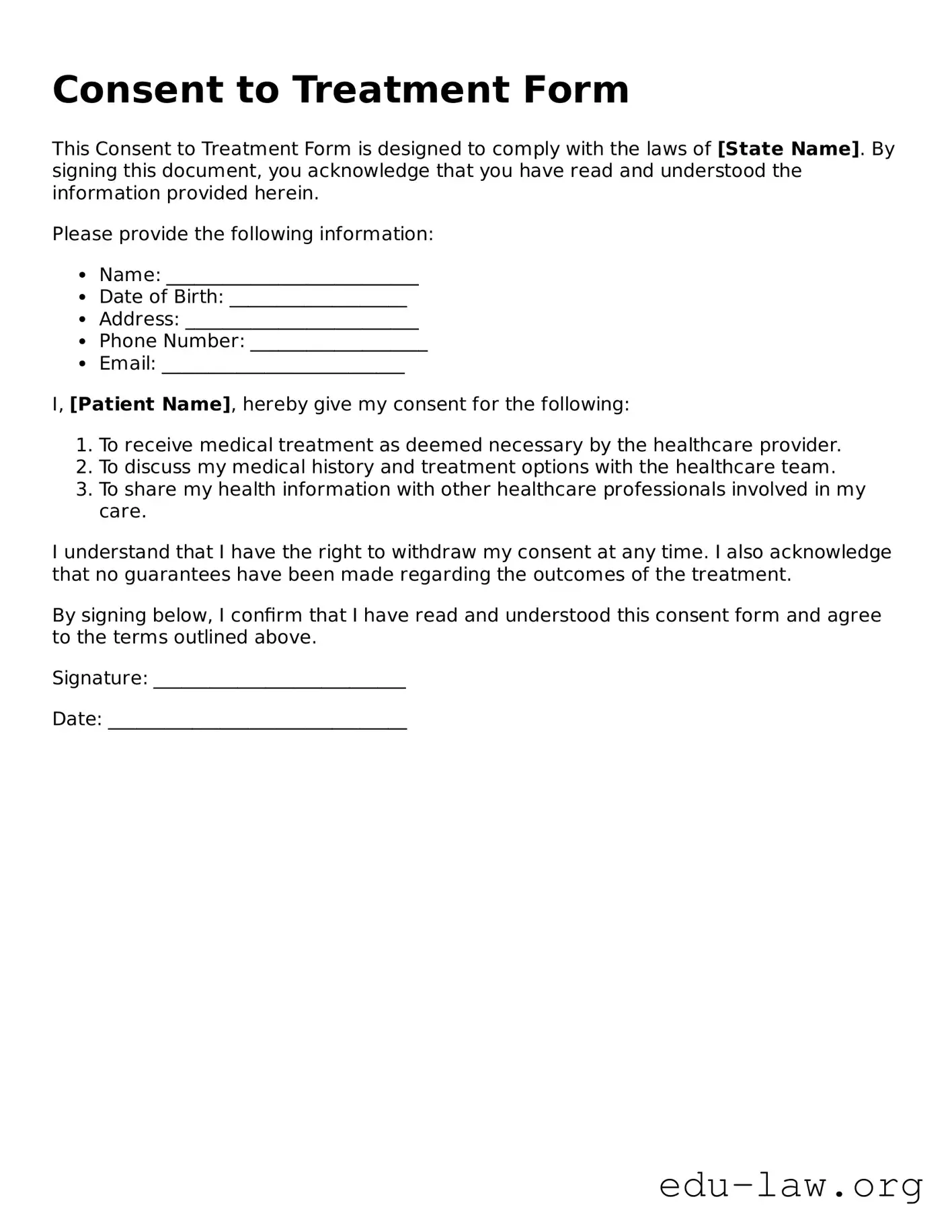
Consent to Treatment Form
This Consent to Treatment Form is designed to comply with the laws of [State Name]. By signing this document, you acknowledge that you have read and understood the information provided herein.
Please provide the following information:
I, [Patient Name], hereby give my consent for the following:
I understand that I have the right to withdraw my consent at any time. I also acknowledge that no guarantees have been made regarding the outcomes of the treatment.
By signing below, I confirm that I have read and understood this consent form and agree to the terms outlined above.
Signature: ___________________________
Date: ________________________________
| Fact Name | Description | Governing Law |
|---|---|---|
| Definition | A consent form is a document that outlines the agreement between parties regarding specific actions or permissions. | Varies by state |
| Purpose | It serves to inform individuals about what they are consenting to, ensuring transparency and understanding. | Varies by state |
| Legal Requirement | In many cases, consent forms are legally required to protect the rights of all parties involved. | Varies by state |
| Types | Consent forms can be used in various contexts, including medical procedures, research participation, and legal agreements. | Varies by state |
| Revocation | Individuals generally have the right to revoke their consent at any time, depending on the specific circumstances. | Varies by state |
Once you have the Consent form ready, it’s important to fill it out accurately to ensure everything is in order. Follow these steps to complete the form correctly.
After filling out the form, review all the information for accuracy. Make sure everything is legible and complete before submitting it as instructed.
What is a consent form?
A consent form is a document that allows individuals to give permission for specific actions, such as participating in a study, receiving medical treatment, or sharing personal information. It ensures that individuals are informed about what they are agreeing to and that they understand the implications of their consent.
Why is a consent form important?
Consent forms protect both parties involved. They ensure that individuals are fully aware of what they are consenting to, which helps prevent misunderstandings. For organizations, having a signed consent form can provide legal protection and demonstrate that they have followed ethical guidelines.
Who needs to sign a consent form?
Typically, any individual participating in an activity that requires consent must sign the form. This includes patients in medical settings, participants in research studies, or individuals sharing sensitive information. If the participant is a minor, a parent or guardian must provide consent on their behalf.
What should be included in a consent form?
A consent form should clearly outline the purpose of the activity, what participation involves, any potential risks or benefits, and the right to withdraw consent at any time. It should also include contact information for questions and a space for the participant's signature and date.
Can I withdraw my consent after signing the form?
Yes, you can withdraw your consent at any time, even after signing the form. It is important to communicate your decision to the relevant party as soon as possible. They will provide you with information on how to proceed after your withdrawal.
What happens if I don’t sign the consent form?
If you choose not to sign the consent form, you may not be able to participate in the activity or receive the treatment outlined in the form. It is crucial to understand your rights and the implications of not providing consent.
Is a verbal consent sufficient?
While verbal consent may be acceptable in some situations, written consent is generally preferred. A signed consent form provides clear documentation of your agreement and protects both you and the organization involved.
How is my information protected after I sign the consent form?
Organizations are required to handle your information confidentially and in accordance with privacy laws. The consent form should outline how your information will be used, stored, and shared, ensuring your privacy is respected.
What if I have questions about the consent form?
If you have any questions or concerns about the consent form, do not hesitate to ask the person or organization requesting your consent. They should provide you with clear answers and ensure you fully understand the document before signing.
Failing to read the entire consent form before signing it. Understanding the content is crucial.
Not providing accurate personal information. Double-check names, addresses, and contact details.
Overlooking the need for a witness signature, if required. Some forms need validation by a third party.
Using incorrect dates. Ensure that the date of signing is clearly stated and accurate.
Neglecting to ask questions about unclear sections. If something is confusing, seek clarification.
Forgetting to initial or sign all required sections. Every part of the form may need your attention.
Not keeping a copy of the signed consent form. Having a record is important for future reference.
Assuming that all consent forms are the same. Each form may have different requirements.
Ignoring deadlines for submission. Timeliness can affect the validity of the consent.
Rushing through the process. Take your time to ensure everything is filled out correctly.
When working with consent forms, several other documents may be necessary to ensure clarity and compliance. Each of these documents serves a specific purpose and helps facilitate effective communication between parties. Below is a list of commonly used forms and documents that often accompany a consent form.
These documents play a vital role in ensuring that consent is informed and that all parties are on the same page. Utilizing them effectively can enhance communication and streamline processes, ultimately leading to better outcomes for everyone involved.
The Consent Form is often compared to the Release of Liability form. Both documents serve to protect one party from legal claims arising from certain actions or events. While the Consent Form typically seeks permission for an activity, the Release of Liability explicitly states that the signer waives their right to sue in the event of injury or damage. This makes both forms crucial in contexts such as sports, recreational activities, and medical procedures, where inherent risks are involved.
Another similar document is the Waiver form. Like the Consent Form, a Waiver is designed to inform individuals about the risks associated with an activity. However, a Waiver goes a step further by requiring the individual to relinquish their right to hold the organization responsible for any injuries that may occur. This document is commonly used in fitness centers, adventure sports, and other high-risk environments, emphasizing the participant's acceptance of the risks involved.
The Medical Release form also shares similarities with the Consent Form. This document grants permission for healthcare providers to share a patient's medical information with specific individuals or entities. While the Consent Form often pertains to participation in activities, the Medical Release focuses on the sharing of sensitive health information, ensuring that individuals are aware of and agree to how their medical data will be handled.
Informed Consent forms are closely related to the Consent Form, particularly in medical and research settings. Informed Consent ensures that individuals are fully aware of the risks, benefits, and alternatives associated with a procedure or study before agreeing to participate. This document is vital in upholding ethical standards in healthcare and research, ensuring that individuals make well-informed decisions.
The Authorization for Release of Information form is another document that resembles the Consent Form. This form allows individuals to authorize the release of their personal information to third parties. While the Consent Form often pertains to participation in activities, the Authorization for Release of Information focuses on the sharing of personal data, ensuring that individuals have control over who accesses their information.
Confidentiality Agreements, or Non-Disclosure Agreements (NDAs), also share characteristics with the Consent Form. These documents protect sensitive information from being disclosed to unauthorized parties. While the Consent Form typically addresses participation in activities, Confidentiality Agreements ensure that private information remains secure, particularly in business and professional settings.
Parental Consent forms are particularly relevant in contexts involving minors. These documents require a parent or guardian's approval for a child to participate in certain activities, such as school trips or medical procedures. Similar to the Consent Form, the Parental Consent form emphasizes the importance of informed decision-making, ensuring that guardians are aware of the associated risks and implications for their children.
Employment Consent forms are also akin to the Consent Form. These documents often require employees to consent to various policies, such as drug testing or background checks. While the Consent Form typically pertains to activities or treatments, Employment Consent forms ensure that individuals are informed about and agree to specific workplace practices that may affect their employment.
Lastly, the Terms and Conditions agreement bears resemblance to the Consent Form. This document outlines the rules and guidelines for using a service or product. When individuals agree to the Terms and Conditions, they consent to abide by the stated policies. While the Consent Form focuses on participation in activities, Terms and Conditions agreements ensure that users understand their rights and responsibilities when engaging with a service or product.
Filling out a consent form can seem straightforward, but there are important dos and don'ts to keep in mind. Here’s a helpful list to guide you through the process:
Many people have misunderstandings about consent forms. Here are eight common misconceptions:
While often associated with healthcare, consent forms are used in various situations, including research studies, legal agreements, and even photography releases.
This is not true. A consent form outlines specific permissions but does not eliminate your legal rights. You retain the right to withdraw consent at any time.
In many cases, consent forms can be amended or revoked. Communication with the involved parties is key to making any necessary changes.
Consent forms vary widely depending on the context. Each form is tailored to the specific situation and should reflect the details of what is being consented to.
While written consent is preferred for documentation, verbal consent can be valid in certain situations. However, it is always best to have written consent for clarity.
Minors can provide consent in some cases, but often it requires parental or guardian approval. The rules vary based on jurisdiction and the nature of the consent.
Even low-risk activities can require consent forms. It’s important to ensure that all parties understand their rights and responsibilities, regardless of risk level.
This is a common misconception. Most consent forms allow individuals to withdraw their consent at any time, as long as they communicate their decision.
Filling out and using a Consent form is a critical process that ensures clarity and understanding between parties involved. Here are some key takeaways to keep in mind:
Being diligent in filling out and using the Consent form can prevent misunderstandings and protect your interests.