The Concrete Checklist Form serves as an essential tool for construction supervisors, ensuring that all critical aspects of a concrete pour are thoroughly examined. It helps to streamline the inspection process, allowing supervisors to focus on both the obvious and often overlooked details during site visits. The checklist is designed to accompany the project specifications, providing a concise summary of necessary inspections and guidelines. It highlights key areas such as formwork, reinforcing steel, concrete delivery, and placement methods. Each section includes specific items that need to be verified, with space for notes and comments, making it easier to track any required actions. Additionally, the form identifies Hold Points, Witness Points, and Tests that must receive supervisor approval, emphasizing the importance of compliance and quality control. This resource not only aids in preventing potential issues but also fosters collaboration by enabling experienced supervisors to share insights and project-specific checks with their less experienced counterparts. Ultimately, the Concrete Checklist Form is a practical guide that enhances the efficiency and effectiveness of concrete pouring operations on construction sites.

project check lists concrete pour
use in conjunction with the specification for the subject project

INTRODUCTION
It is difficult during a visit to a construction site to memorise all of the details that need to be checked and while the obvious ones stand out, many other items that should be checked are forgotten. Supervisors may get distracted or over extended due to time constraints and overlook items that may have more serious consequences later in the project.
These Check Lists provide a guide to the inspections that are required on site for a particular project. They are a précis of the full clauses in the project specification and can be referred back to the specification if the full text of the particular item is required. The Check Lists will remind you of virtually every potential problem in materials, workmanship and coordination between trades.
The Check Lists include a list of the Hold Points, Witness Points and Tests that are required to be signed off by the Supervisor on projects that include the Project Control section. The rest of the checks are simply dot points to jog the memory of the Supervisor.
Project specific checks may be added to the Check Lists for individual projects and the experience of Supervisors can be shared by the addition of particular checks on items or operations that are generally of concern on site. In this case less experienced Supervisors can use these Check Lists to provide them with the back up of more experienced officers.
Provide one copy of the Check Lists book to the Supervisor and one copy to the Contractor for the particular project.
HOW TO USE THESE CHECK LISTS
Take photocopies of the relevant Check List sections before going on site and study these. This book of Check Lists is spiral bound to allow pages to be photocopied easily.
Mark any items in the Check List that are of particular concern.
At the project site, check off the work against the Check Lists and make notes of any action required in the space provided.
When the work is completed and the final check has been made sign off and date in the box provided. There is also space to provide comments.
Keep a record of all of the completed Check Lists for future reference if required. These could prove to be valuable if disputes arise on the project.
There is no better way to document actual site conditions or details than by photographs, so don’t forget to take a digital camera on site and take images to go with particular items in the Check lists.
FURTHER DEVELOPMENT
If you have any suggestions to improve on these Check Lists or the system in general please contact Lawrie Foscaro, Manager, Specification Services, 3rd Floor Highway House, Palmerston. Tel; 8946 5021 or email [email protected].
Doc ID |
Version |
Issued |
Printed |
Page |
2016.03 |
Sept 2016 |
19/09/2016 |
2 of 4 |
Comments from
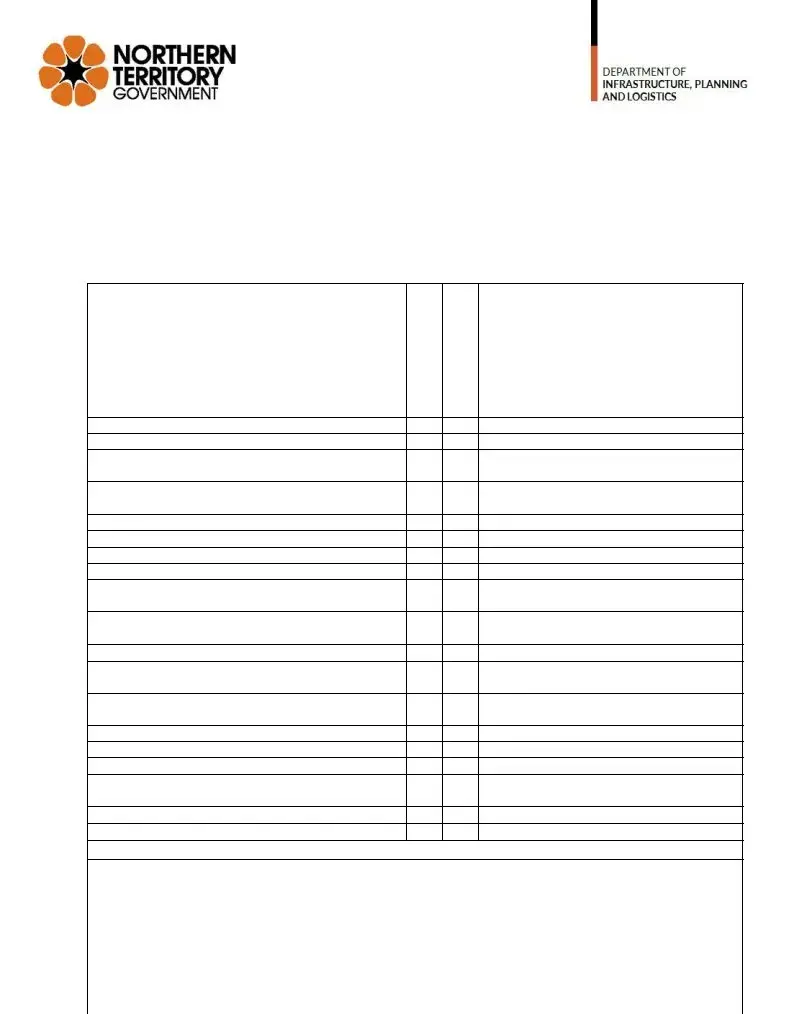
CONCRETE POUR CHECKLIST
Project/Job Name:
Contract No:
Audit Date:
Contractor:
Concrete Supplier:
Mix Design Approved/Not Approved
|
Audit Item |
Y |
N |
Comments |
|
1. Preliminary |
|
|
|
• |
Description |
|
|
|
• |
Lot Number/s |
|
|
|
• |
Previous Lots Conform |
|
|
|
• |
Casting Program Accepted |
|
|
|
|
|
|
|
|
• |
Curing Method |
|
|
|
|
(Stream) (Water) (Fog) (Other) |
|
|
|
2. Formwork and Falsework
• Formwork Dimensions in Accordance with Design, including void lengths
• Forms Clean, Smooth and Watertight and Free
of Deleterious/Extraneous/Foreign Materials
• Formwork within Dimension Tolerances
• Forms Meet Line and Level Requirements
3. Reinforcing Steel
• Steel Located/Fixed in Accordance with Drawings
• Reinforcing Clean and Free of Deleterious
Materials
• Critical Cover of 30mm Checked at all locations
• All Splices to Reinforcement at Approved Locations
• All Welds in Accordance with Australian Standards and RFT
4. Concrete Inclusions
• Embedded Dowels, Bolts, Conduits and Ducts
• Cored Holes, Weepholes, Block Outs, transverse stressing holes
• Lifting/Carrying Lugs etc
• Located as Shown on Drawings
Audit Results and Comments
Signature: |
|
|
Date |
|
|
|
|
|
|
|
|
|
|
|
|
|
|
|
|
|
Doc ID |
Version |
|
Issued |
Printed |
Page |
|
2016.03 |
Sept 2016 |
19/09/2016 |
3 of 4 |
|
||
|
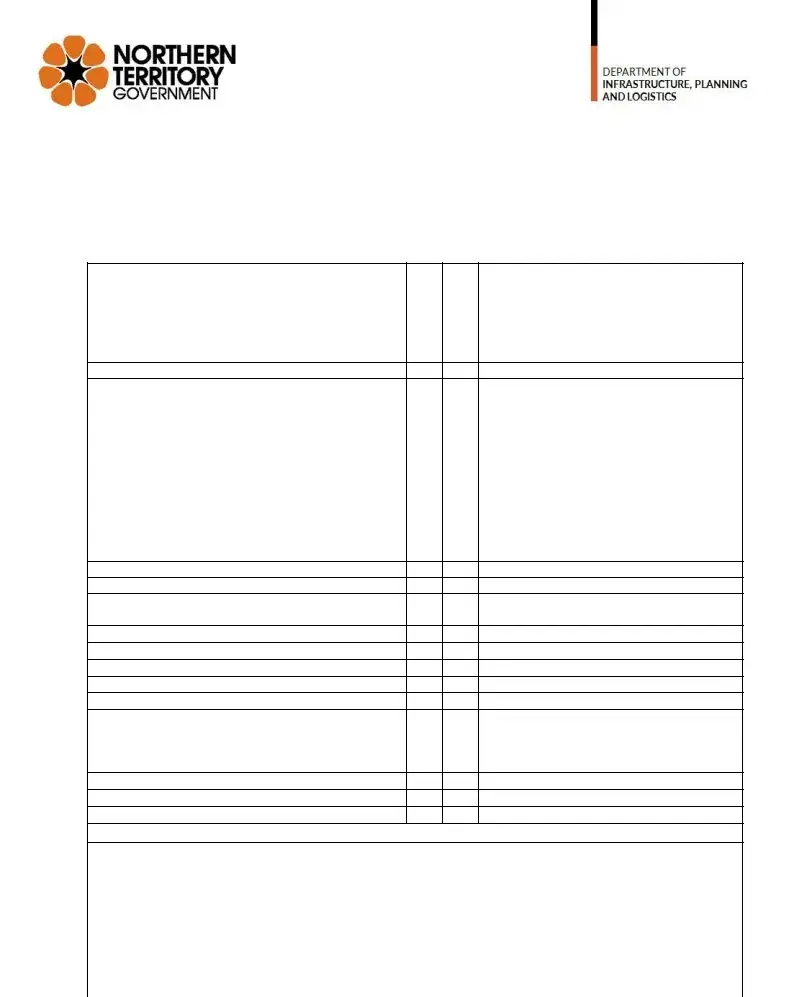
Audit Item |
Y |
N |
Comments |
|
|
5. Concrete Delivery |
|
|
|
|
• |
Number of Batches |
|
|
|
|
• Batch Time (From Delivery Docket) |
|
1. |
2. |
3. |
|
• Arrival Time at Site |
|
1. |
2. |
3. |
|
• |
Finish Time |
|
1. |
2. |
3. |
|
6. Concrete Testing |
|
|
|
• |
NATA Approved Testing Authority |
Name: |
|
|
• Ambient Temperature (Between 5oC and 35oC) |
|
|
|
|
• |
Actual Concrete Temperature |
1. |
2. |
3. |
• |
Target Slump 50 mm ± 10mm. Actual Slump |
1. |
|
|
|
|
2. |
|
|
|
|
3. |
|
|
• |
Amount of Admixture added |
1. |
2. |
3. |
• |
Amount of water added |
1. |
2. |
3. |
• Number of Cylinders Taken |
|
|
|
|
• |
Target Strength |
|
|
|
7. Concrete Placement
• Placement Method (Pump, Tremie, Chute,
Other)
• Sufficient Personnel for Finishing etc.
• Approved Vibration Method
• Back up Vibrators on Hand
• Reinforcement Cover Maintained During Pour
• Formwork Stable During Placing and Vibration
• Concrete Placed and Compacted Within: 25oC – 28oC = 75mins
28oC – 32oC = 60 mins 32oC – 35oC = 45 mins
• Provision for Closure of Access/Openings
• Forms Free of Foreign Matter Prior to Pouring
• Concrete Finished to Approved Tolerances
Audit Results and Comments
Signature: |
|
|
Date |
|
|
|
|
|
|
|
|
|
|
|
|
|
|
|
|
|
Doc ID |
Version |
|
Issued |
Printed |
Page |
|
2016.03 |
Sept 2016 |
19/09/2016 |
4 of 4 |
|
||
| Fact Name | Details |
|---|---|
| Purpose of Checklists | The checklists serve as a guide for inspections required on construction sites, helping supervisors remember crucial details that may be overlooked. |
| Project Specificity | These checklists can be customized for individual projects, allowing supervisors to add specific checks based on their experiences and concerns. |
| Documentation Importance | Keeping a record of completed checklists is essential. It can provide valuable evidence in case disputes arise during or after the project. |
| Use of Photographs | Taking photographs of site conditions is encouraged. Visual documentation can complement the checklist items and enhance understanding. |
| Supervisor's Role | Supervisors are responsible for checking off items on the checklist and signing off upon completion, ensuring accountability in the construction process. |
| Governing Laws | In the United States, construction projects are often governed by state-specific building codes and regulations, which may vary by location. |
Completing the Concrete Checklist Form is essential for ensuring that all necessary inspections are conducted during a concrete pour. The following steps will guide you through the process of filling out the form accurately. Ensure that you have all relevant information and documentation handy before you begin.
What is the purpose of the Concrete Checklist Form?
The Concrete Checklist Form serves as a comprehensive guide for supervisors during concrete pours on construction sites. It helps ensure that all necessary inspections are conducted and that critical details are not overlooked. By providing a structured list of items to check, the form assists in identifying potential problems related to materials, workmanship, and coordination among trades. This proactive approach can prevent serious issues later in the project.
How should I use the Concrete Checklist Form on-site?
Before visiting the construction site, it is essential to photocopy the relevant sections of the checklist. Familiarize yourself with these items to ensure you are prepared. During the site visit, check off each item as it is completed and make notes of any actions required in the designated spaces. After the work is finished, sign and date the form in the provided box. Additionally, keep a record of all completed checklists, as they may be valuable for future reference or in case of disputes.
What types of items are included in the checklist?
The checklist includes various categories such as preliminary checks, formwork and falsework inspections, reinforcing steel evaluations, concrete inclusions, delivery, testing, and placement. Each category contains specific items that need to be verified, ensuring that every aspect of the concrete pour meets project specifications. This thorough approach helps maintain quality and safety standards throughout the construction process.
Can project-specific checks be added to the Concrete Checklist Form?
Yes, project-specific checks can and should be added to the Concrete Checklist Form. This flexibility allows supervisors to tailor the checklist to address unique concerns or requirements for individual projects. By incorporating feedback from experienced supervisors, less experienced personnel can benefit from shared insights and avoid common pitfalls on-site.
What should I do if I have suggestions for improving the checklist?
If you have suggestions for enhancing the Concrete Checklist Form or the overall system, it is encouraged to reach out to the designated contact person, Lawrie Foscaro, Manager of Specification Services. Providing feedback can lead to valuable improvements that benefit everyone involved in the construction process.
Why is it important to document site conditions with photographs?
Documenting site conditions with photographs is crucial for several reasons. Visual records can provide clarity and support for the checklist items, helping to illustrate completed work or any issues that arise. In case of disputes, having photographic evidence can serve as a reliable reference, ensuring that all parties have a clear understanding of the project's status and conditions at various stages of construction.
Neglecting to Study the Checklist Beforehand: Many individuals rush to the construction site without thoroughly reviewing the relevant sections of the checklist. This can lead to missing critical items that need attention. Taking the time to familiarize oneself with the checklist can make a significant difference in the inspection process.
Failing to Document Observations: Some supervisors forget to make notes in the comments section provided. Without these notes, it becomes challenging to track what has been inspected and what actions are required. Documentation is key to ensuring that all necessary steps are taken and can be referred back to later.
Overlooking the Importance of Sign-Off: After completing the checks, some may forget to sign off and date the checklist. This oversight can lead to confusion about whether specific tasks were completed. A signature serves as a formal acknowledgment that the inspection was carried out and can help prevent disputes down the line.
Ignoring the Use of Photographs: Many people underestimate the value of taking photographs during inspections. Visual documentation can provide clarity and support for any comments made in the checklist. It is essential to capture images that correspond to specific items, as these can serve as evidence if issues arise later in the project.
When managing a concrete project, several forms and documents complement the Concrete Checklist Form. These documents ensure thorough oversight and adherence to project specifications. Below are five commonly used forms that enhance the concrete pouring process.
Using these forms alongside the Concrete Checklist Form can significantly improve project oversight and communication among team members. Proper documentation ensures a smoother process and helps mitigate potential issues throughout the construction project.
The Concrete Pour Checklist Form is similar to the Quality Control Checklist used in construction projects. Both documents serve as tools for ensuring that specific standards and requirements are met before, during, and after construction activities. They guide supervisors and contractors through critical checkpoints, helping to prevent oversights that could lead to costly mistakes. Each checklist item corresponds to specific project specifications, making it easier to verify compliance and maintain quality throughout the construction process.
Another comparable document is the Safety Inspection Checklist. This checklist focuses on identifying potential hazards and ensuring that safety protocols are followed on the job site. Like the Concrete Pour Checklist, it provides a systematic approach to inspections, helping to ensure that all necessary precautions are taken. Both checklists require sign-offs to confirm that items have been reviewed and addressed, reinforcing accountability among team members.
The Pre-Construction Checklist also shares similarities with the Concrete Pour Checklist. It outlines essential tasks and requirements that need to be completed before construction begins. Both documents aim to ensure that all necessary preparations are in place, reducing the risk of issues arising during the project. They help streamline communication between contractors and supervisors, ensuring everyone is on the same page regarding project expectations.
Lastly, the Equipment Inspection Checklist is akin to the Concrete Pour Checklist in its purpose of verifying that all tools and machinery are in proper working order before use. This checklist helps identify any maintenance needs or safety concerns that could impact the project. Both documents emphasize the importance of thorough inspections and documentation, ultimately contributing to the overall success and safety of construction projects.
When filling out the Concrete Checklist Form, attention to detail is essential. Here are nine important do's and don'ts to keep in mind:
Misconception 1: The Concrete Checklist Form is only necessary for large projects.
This is not true. While larger projects may have more complexities, every construction project benefits from using a checklist. Even smaller jobs can have hidden issues that a checklist can help identify. It serves as a reminder for critical elements that need attention, regardless of the project's size.
Misconception 2: The checklist is just a formality and does not impact project outcomes.
In reality, the checklist is a vital tool that can significantly influence the quality of the work. By ensuring that all necessary inspections and checks are completed, it helps prevent costly mistakes and delays. Proper use of the checklist can lead to smoother operations and better overall project results.
Misconception 3: Supervisors can rely solely on their memory to conduct inspections.
Relying on memory can lead to oversights, especially in busy environments. The checklist acts as a safeguard against forgetfulness. It is designed to jog the memory and ensure that no critical elements are overlooked during inspections. This can save time and resources in the long run.
Misconception 4: The checklist is too complicated to use effectively.
On the contrary, the checklist is straightforward and user-friendly. It is designed to be easily understood and utilized by supervisors of all experience levels. With clear sections and prompts, it guides users through the inspection process without overwhelming them. This makes it an invaluable resource on any job site.
Utilizing the Concrete Checklist Form is essential for ensuring a successful concrete pour. Here are some key takeaways to keep in mind:
By following these guidelines, you can help ensure that the concrete pour process runs smoothly and efficiently, reducing the risk of oversight and promoting collaboration among team members.