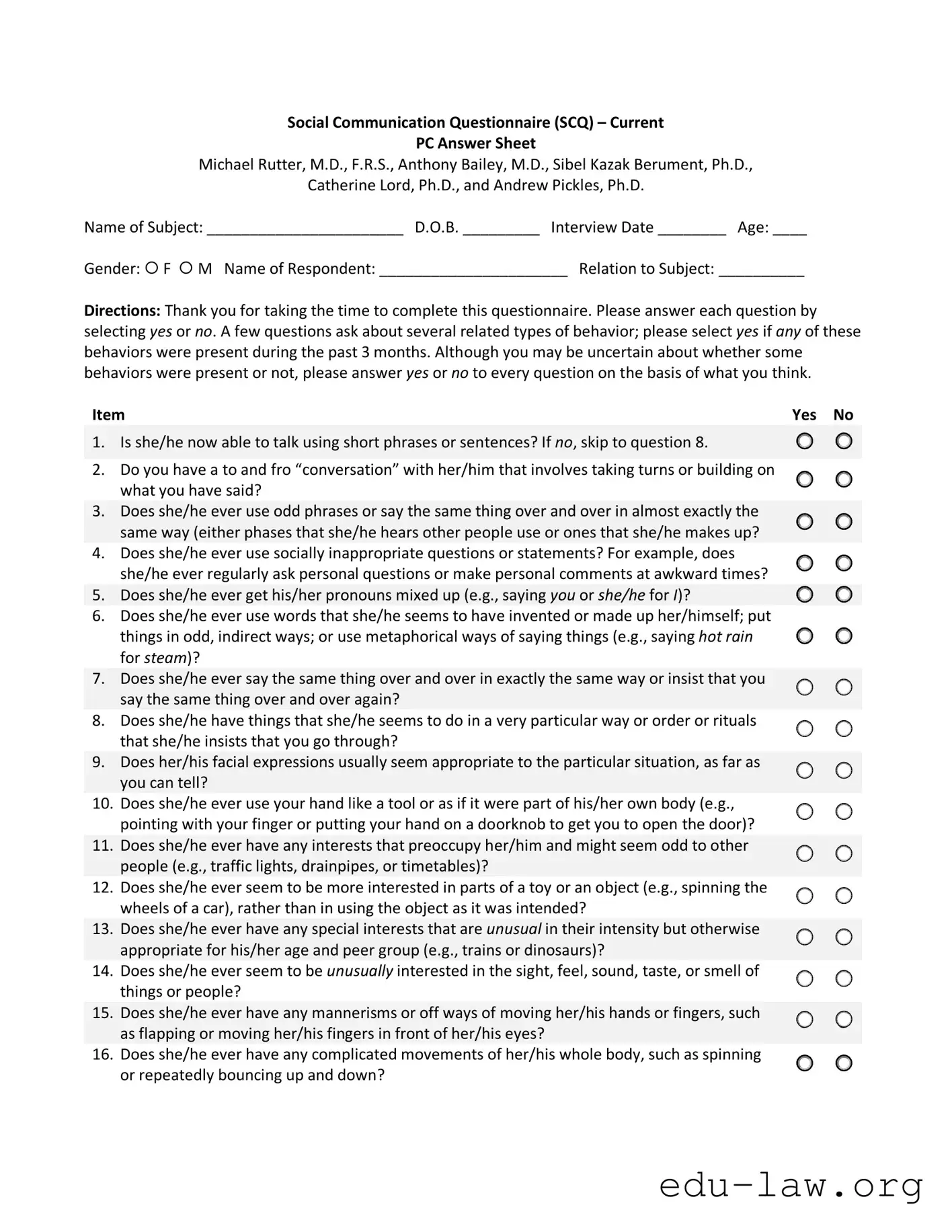
The Communication Questionnaire form serves as a vital tool for assessing social communication skills in individuals, particularly in the context of developmental disorders. Designed by a team of experts, including Michael Rutter and Catherine Lord, this questionnaire aims to gather insights from a respondent—often a parent or caregiver—about the subject's communication abilities and social interactions. It contains a series of straightforward yes-or-no questions that cover a range of behaviors observed over the past three months. Questions focus on various aspects of communication, such as the ability to engage in conversation, the use of language, and the appropriateness of social responses. Additionally, the form explores non-verbal cues, interests, and play behaviors, providing a comprehensive view of the subject's social engagement. By systematically addressing these areas, the questionnaire helps identify potential communication challenges and informs further evaluation or intervention strategies.

SOCIAL COMMUNICATION QUESTIONNAIRE (SCQ) – CURRENT
PC ANSWER SHEET
Michael Rutter, M.D., F.R.S., Anthony Bailey, M.D., Sibel Kazak Berument, Ph.D.,
Catherine Lord, Ph.D., and Andrew Pickles, Ph.D.
Name of Subject: _______________________ D.O.B. _________ Interview Date ________ Age: ____
Gender: F M Name of Respondent: ______________________ Relation to Subject: __________
DIRECTIONS: Thank you for taking the time to complete this questionnaire. Please answer each question by selecting yes or no. A few questions ask about several related types of behavior; please select yes if any of these behaviors were present during the past 3 months. Although you may be uncertain about whether some behaviors were present or not, please answer yes or no to every question on the basis of what you think.
ITEM |
|
YES |
NO |
||||||
|
|
|
|
|
|
|
|
|
|
|
1. |
Is she/he now able to talk using short phrases or sentences? If no, skip to question 8. |
|
|
|
|
|
|
|
|
|
|
|
|
|
|
|
|
|
|
|
|
|
|
|
|
|
|
|
2. |
Do you have a to and fro “conversation” with her/him that involves taking turns or building on |
|
|
|
|||||
|
|
what you have said? |
|
|
|
|
|
|
|
|
3. |
Does she/he ever use odd phrases or say the same thing over and over in almost exactly the |
|
|
|
|
|
|
|
|
|
|
|
|
|||||
|
|
same way (either phases that she/he hears other people use or ones that she/he makes up? |
|
|
|||||
|
|
|
|
|
|
|
|
|
|
4. |
Does she/he ever use socially inappropriate questions or statements? For example, does |
|
|
|
|||||
|
|
she/he ever regularly ask personal questions or make personal comments at awkward times? |
|
||||||
|
|
|
|
|
|
||||
|
5. |
Does she/he ever get his/her pronouns mixed up (e.g., saying you or she/he for I)? |
|
|
|
|
|
||
6. |
Does she/he ever use words that she/he seems to have invented or made up her/himself; put |
|
|
|
|
|
|
||
|
|
things in odd, indirect ways; or use metaphorical ways of saying things (e.g., saying hot rain |
|
|
|
||||
|
|
for steam)? |
|
|
|
|
|
|
|
|
7. |
Does she/he ever say the same thing over and over in exactly the same way or insist that you |
|
|
|
|
|
|
|
|
|
|
|
|
|||||
|
|
say the same thing over and over again? |
|
|
|||||
|
|
|
|
|
|
|
|
|
|
8. |
Does she/he have things that she/he seems to do in a very particular way or order or rituals |
|
|
|
|||||
|
|
that she/he insists that you go through? |
|
||||||
|
|
|
|
|
|
|
|
||
|
9. |
Does her/his facial expressions usually seem appropriate to the particular situation, as far as |
|
|
|
|
|
||
|
|
|
|
||||||
|
|
|
|
||||||
|
|
you can tell? |
|
|
|
||||
|
|
|
|
|
|
|
|
|
|
10. |
Does she/he ever use your hand like a tool or as if it were part of his/her own body (e.g., |
|
|
|
|||||
|
|
pointing with your finger or putting your hand on a doorknob to get you to open the door)? |
|
||||||
|
|
|
|
|
|
|
|
||
|
|
|
|
|
|
|
|
||
|
11. |
Does she/he ever have any interests that preoccupy her/him and might seem odd to other |
|
|
|
|
|
|
|
|
|
|
|
|
|||||
|
|
people (e.g., traffic lights, drainpipes, or timetables)? |
|
|
|||||
|
|
|
|
|
|
|
|
|
|
12. |
Does she/he ever seem to be more interested in parts of a toy or an object (e.g., spinning the |
|
|
|
|||||
|
|
wheels of a car), rather than in using the object as it was intended? |
|
|
|
|
|
|
|
|
13. |
Does she/he ever have any special interests that are unusual in their intensity but otherwise |
|
|
|
|
|
|
|
|
|
|
|
|
|
||||
|
|
appropriate for his/her age and peer group (e.g., trains or dinosaurs)? |
|
|
|
|
|||
|
|
|
|
|
|
|
|
|
|
|
|
|
|
|
|
|
|
|
|
14. |
Does she/he ever seem to be unusually interested in the sight, feel, sound, taste, or smell of |
|
|
|
|||||
|
|
things or people? |
|
||||||
|
|
|
|
|
|
|
|
||
|
|
|
|
|
|
|
|
||
|
15. |
Does she/he ever have any mannerisms or off ways of moving her/his hands or fingers, such |
|
|
|
|
|
|
|
|
|
|
|
|
|||||
|
|
|
|
|
|||||
|
|
as flapping or moving her/his fingers in front of her/his eyes? |
|
|
|||||
|
|
|
|
|
|
|
|
|
|
16. |
Does she/he ever have any complicated movements of her/his whole body, such as spinning |
|
|
|
|||||
|
|
or repeatedly bouncing up and down? |
|
||||||
|
|
|
|
|
|
|
|
||

ITEM |
|
|
YES |
NO |
|||||
|
|
|
|
|
|
|
|
|
|
|
17. |
Does she/he ever injure her/himself deliberately, such as by biting her/his arm or banging |
|
|
|
|
|
|
|
|
|
|
|
|
|
||||
|
|
her/his head? |
|
|
|
|
|
||
|
|
|
|
|
|
|
|
|
|
|
|
|
|
|
|
|
|
|
|
18. |
Does she/he ever have any objects (other than a soft toy or comfort blanket) that she/he has |
|
|
|
|
||||
|
|
to carry around? |
|
|
|||||
|
|
|
|
|
|
|
|
|
|
|
|
|
|
|
|
|
|
|
|
|
19. |
Does she/he have any particular friends or a best friend? |
|
|
|
|
|||
|
|
|
|
|
|
|
|||
20. |
Does she/he ever talk with you just to be friendly (rather than to get something)? |
|
|
|
|
||||
|
|
|
|
|
|
|
|
|
|
|
21. |
Does she/he ever spontaneously copy you (or other people) or what you are doing (such as |
|
|
|
|
|
|
|
|
|
|
|
|
|||||
|
|
|
|
|
|||||
|
|
vacuuming, gardening, or mending things)? |
|
|
|||||
|
|
|
|
|
|
|
|
|
|
22. |
Does she/he ever spontaneously point at things around her/him just to show you things (not |
|
|
|
|
||||
|
|
because she/he wants them? |
|
|
|||||
|
|
|
|
|
|
|
|
|
|
|
|
|
|
|
|
|
|
|
|
|
23. |
Does she/he ever use gestures, other than pointing or pulling your hand, to let you know |
|
|
|
|
|
||
|
|
|
|
||||||
|
|
|
|
||||||
|
|
what she/he wants? |
|
|
|
||||
|
|
|
|
|
|
|
|
|
|
24. |
Does she/he nod her/his head to indicate yes? |
|
|
|
|
||||
|
|
|
|
|
|
||||
|
|
|
|
|
|
||||
|
25. |
Does she/he shake her/his head to indicate no? |
|
|
|
|
|
|
|
|
|
|
|
|
|
|
|
|
|
|
|
|
|
|
|
||||
26. |
Does she/he usually look at you directly in the face when doing things with you or talking with |
|
|
|
|
||||
|
|
you? |
|
|
|
|
|
|
|
|
|
|
|
|
|
|
|
|
|
|
27. |
Does she/he smile back if someone smiles at her/him? |
|
|
|
|
|
||
|
|
|
|
||||||
|
|
|
|
|
|
||||
28. |
Does she/he ever show you things that interest her/him to engage your attention? |
|
|
|
|
||||
|
|
|
|
|
|
||||
|
|
|
|
|
|
|
|
|
|
|
29. |
Does she/he ever offer to share things other than food with you? |
|
|
|
|
|
||
|
|
|
|
||||||
|
|
|
|
|
|
||||
30. |
Does she/he ever seem to want you to join in her/his enjoyment of something? |
|
|
|
|
||||
|
|
|
|
|
|
||||
|
|
|
|
|
|
|
|
|
|
|
31. |
Does she/he ever try to comfort you if you are sad or hurt? |
|
|
|
|
|
||
|
|
|
|
||||||
|
|
|
|
|
|
|
|
|
|
32. |
If she/he wants something or wants help, does she/he look at you and use gestures with |
|
|
|
|
||||
|
|
sounds or words to get your attention? |
|
|
|||||
|
|
|
|
|
|
|
|
|
|
|
|
|
|
|
|
||||
|
|
|
|
|
|
|
|
|
|
|
33. |
Does she/he show a normal range of facial expressions? |
|
|
|
|
|
||
|
|
|
|
||||||
|
|
|
|
|
|
|
|
|
|
34. |
Does she/he ever spontaneously join in and try to copy the actions in social games, such as |
|
|
|
|
||||
|
|
The Mulberry Bush or London Bridges Is Falling Down? |
|
|
|||||
|
|
|
|
|
|
|
|
|
|
|
|
|
|
|
|
|
|
|
|
|
35. |
Does she/he play any pretend or |
|
|
|
|
|
|
|
|
|
|
|
|
|
|
|
|
|
|
|
|
|
|
|
|
|
|
|
36. |
Does she/he seem interested in other children of approximately the same age whom she/he |
|
|
|
|
||||
|
|
does not know? |
|
|
|||||
|
|
|
|
|
|
|
|
|
|
|
|
|
|
|
|
||||
|
|
|
|
|
|
|
|
|
|
|
37. |
Does she/he respond positively when another child approaches her/him? |
|
|
|
|
|
|
|
|
|
|
|
|
|
|
|
|
|
|
|
|
|
|
|
|
|
|
|
38. |
If you come into a room and start talking to her/him without calling her/his name, does |
|
|
|
|
||||
|
|
she/he usually look up and pay attention to you? |
|
|
|||||
|
|
|
|
|
|
|
|
|
|
|
39. |
Does she/he ever play imaginative games with another child in such a way that you can tell |
|
|
|
|
|
|
|
|
|
|
|
|
|||||
|
|
that each child understands what the other is pretending? |
|
|
|||||
|
|
|
|
|
|
|
|
|
|
40. |
Does she/he play cooperatively in games that need some form of joining in with a group of |
|
|
|
|
||||
|
|
other children, such as |
|
|
|||||
|
|
|
|
|
|
|
|
|
|
| Fact Name | Description |
|---|---|
| Purpose | The Communication Questionnaire is designed to assess social communication skills in individuals, particularly in children. |
| Authors | This questionnaire was developed by notable researchers, including Michael Rutter, M.D., and Catherine Lord, Ph.D. |
| Format | The form consists of a series of questions that require a simple yes or no response regarding the subject's communication behaviors. |
| Age Range | It is typically used for children, but can be applicable to individuals of varying ages depending on the context. |
| Behavioral Focus | The questionnaire covers various aspects of communication, including conversation skills, use of language, and social interactions. |
| Completion Time | Respondents are encouraged to complete the questionnaire based on observations over the past three months. |
| State-Specific Forms | Some states may have specific versions of the form governed by local laws related to child assessment and welfare. |
| Confidentiality | All information provided in the questionnaire is treated with confidentiality and is used for assessment purposes only. |
Completing the Communication Questionnaire form requires careful attention to detail. The information provided will be used to assess various aspects of social communication. Below are the steps to fill out the form correctly.
What is the purpose of the Communication Questionnaire?
The Communication Questionnaire is designed to assess social communication skills in individuals, particularly children. It aims to gather information from a respondent, usually a caregiver or parent, about the subject's communication behaviors and social interactions over the past three months. This data can help professionals understand the individual's communication abilities and identify any areas of concern.
Who should fill out the Communication Questionnaire?
The questionnaire should be completed by someone who knows the subject well, such as a parent, guardian, or caregiver. This respondent should have observed the subject's communication behaviors and social interactions regularly to provide accurate and meaningful responses.
What kind of questions are included in the questionnaire?
The questionnaire consists of a series of yes or no questions that cover various aspects of communication and social behavior. Questions may address whether the subject can engage in conversations, use appropriate language, or demonstrate social awareness. The questions are designed to capture a range of behaviors, from basic communication skills to more complex social interactions.
How should the respondent answer the questions?
Respondents should answer each question based on their observations of the subject's behavior over the past three months. If the respondent is unsure about a behavior, they should still select either yes or no based on their best judgment. It is important to provide honest and thoughtful responses to ensure the results are accurate and useful.
What if the subject has not displayed certain behaviors?
If the subject has not displayed certain behaviors, the respondent should answer "no" to those specific questions. The questionnaire is structured to assess a wide range of behaviors, and it is perfectly acceptable for the subject to not exhibit all of them. Each response contributes to a comprehensive understanding of the subject's communication skills.
Is there a specific age range for subjects of this questionnaire?
While the Communication Questionnaire can be used for individuals of various ages, it is primarily designed for children. The questions are tailored to assess developmental communication milestones typical for younger individuals. However, it can also be useful for older individuals who may have communication challenges.
How is the information from the questionnaire used?
The information gathered from the questionnaire can be used by healthcare professionals, educators, or therapists to evaluate the subject's communication abilities. It may inform further assessments, guide intervention strategies, or help in developing individualized support plans. The insights gained can lead to better understanding and support for the subject's needs.
Can the questionnaire be completed online?
Many versions of the Communication Questionnaire are available in both paper and online formats. The online version may offer convenience and ease of use, allowing respondents to complete the questionnaire at their own pace. Check with the administering professional to see which format is preferred or available.
What should be done after completing the questionnaire?
Once the questionnaire is completed, it should be submitted to the appropriate professional, such as a psychologist or speech-language pathologist. They will review the responses, interpret the results, and provide feedback or recommendations based on the findings. It is essential to discuss any concerns or questions with the professional to ensure clarity and understanding.
Is there a cost associated with using the Communication Questionnaire?
The cost of using the Communication Questionnaire can vary depending on the context in which it is administered. Some professionals may include it as part of a comprehensive assessment, while others may charge a fee for its use. It is advisable to inquire about any costs with the professional administering the questionnaire.
Incomplete Information: Failing to fill out the subject's name, date of birth, or interview date can lead to confusion. Ensure all basic information is provided.
Skipping Questions: Some respondents may skip questions they find difficult or unclear. It is essential to answer every question, even if uncertain.
Misunderstanding Directions: Not fully grasping the instructions can result in incorrect answers. Take a moment to read the directions carefully before proceeding.
Inconsistent Responses: Providing conflicting answers to similar questions can create discrepancies. Consistency is key for accurate assessment.
Overthinking Answers: Some respondents may overanalyze the behaviors described. It’s important to answer based on what is most typical over the past three months.
Neglecting Context: Failing to consider the context in which behaviors occur can lead to misleading answers. Think about the situations in which behaviors are observed.
Ignoring the Age Factor: Some may forget to consider age-appropriate behaviors. Be mindful of what is typical for the subject's age group.
Rushing Through the Questionnaire: Completing the form too quickly may lead to careless mistakes. Take the time needed to reflect on each question.
Not Consulting Others: Sometimes, input from other caregivers or family members can provide valuable insights. Don’t hesitate to discuss with others who know the subject well.
The Communication Questionnaire form is an important tool for assessing social communication skills. Along with this form, several other documents can provide a comprehensive understanding of an individual's communication abilities and related behaviors. Below are five commonly used forms and documents that complement the Communication Questionnaire.
Utilizing these documents alongside the Communication Questionnaire can enhance the assessment process. Together, they provide a clearer picture of an individual's communication skills and needs, facilitating more effective interventions and support strategies.
The Social Communication Questionnaire (SCQ) shares similarities with the Autism Spectrum Quotient (AQ), which is designed to assess the presence of autistic traits in adults. Both tools use a series of questions that require respondents to provide yes or no answers, facilitating a straightforward evaluation process. The AQ focuses on social skills, communication, and repetitive behaviors, mirroring the SCQ's emphasis on social communication difficulties and behavioral patterns, making them complementary in assessing autism spectrum conditions.
Another document that aligns with the SCQ is the Childhood Autism Rating Scale (CARS). This assessment tool is used to identify children with autism and evaluate the severity of their symptoms. Like the SCQ, CARS includes behavioral observations and responses from caregivers, allowing for a comprehensive understanding of a child's communication abilities and social interactions. Both instruments aim to provide insights into the social functioning of individuals, focusing on key behavioral indicators.
The Vineland Adaptive Behavior Scales (Vineland-3) also bears resemblance to the SCQ. This tool assesses adaptive behaviors essential for daily living, including communication and socialization skills. Respondents answer questions about the individual's behavior in various settings, similar to how the SCQ gathers information about social communication. Both documents aim to identify areas of concern and support the development of targeted interventions.
The Developmental Behavior Checklist (DBC) is another assessment tool that parallels the SCQ. The DBC evaluates a range of behavioral and emotional problems in children, including communication difficulties. Both questionnaires require caregivers to respond to specific behaviors observed in the past months, allowing for a snapshot of the child’s current functioning. This similarity enables practitioners to compare findings and create a more comprehensive profile of the child's needs.
The Social Responsiveness Scale (SRS) is also comparable to the SCQ, as it assesses social behavior and communication skills in children and adolescents. The SRS uses a rating scale format, where respondents evaluate the frequency of specific behaviors. Like the SCQ, it focuses on social interaction and communication challenges, providing a detailed view of the individual’s social competencies and difficulties.
The Behavior Assessment System for Children (BASC) is another relevant document. This tool evaluates various behavioral and emotional aspects in children and adolescents, including social skills and communication. Similar to the SCQ, the BASC employs a structured questionnaire format, allowing caregivers to report on their observations. Both instruments aim to identify behavioral issues and inform treatment planning.
Lastly, the Autism Diagnostic Interview-Revised (ADI-R) shares common features with the SCQ. The ADI-R is a structured interview conducted with caregivers to gather comprehensive information about a child's developmental history and current behavior. Like the SCQ, it focuses on communication and social interaction, making it a valuable tool for diagnosing autism spectrum disorders. Both documents contribute to a deeper understanding of the individual's challenges and strengths.
When filling out the Communication Questionnaire form, it’s important to approach the task with care. Here are some guidelines to help ensure accuracy and clarity:
Following these simple dos and don’ts can help ensure that the information provided is both useful and reliable.
This form is designed to assess a range of social communication skills, not just for those already diagnosed. It can be useful for identifying potential issues in various age groups.
Anyone who interacts regularly with the subject can complete the form. Personal observations and experiences are valuable and sufficient for answering the questions.
The Communication Questionnaire is a screening tool. It helps identify areas of concern but should not be used as a standalone diagnostic instrument.
Respondents are encouraged to answer based on their perceptions and experiences, even if they are unsure about certain behaviors.
This form can be utilized for various ages, as it assesses social communication skills that are important throughout life.
While it may seem extensive, the format is straightforward, and each question is designed to elicit clear responses. Completing it can be done in a relatively short time.
Results should be interpreted by professionals who can provide guidance on next steps. The questionnaire serves as a starting point for further evaluation.
Completing the Communication Questionnaire form is an important step in understanding social communication behaviors. Here are some key takeaways to keep in mind: