When entering into a commercial lease agreement, both landlords and tenants need to understand the essential components that make up this important document. A well-structured lease outlines the terms of the rental arrangement, including the duration of the lease, the rent amount, and payment due dates. It specifies the responsibilities of each party, covering maintenance, repairs, and utilities. The agreement also addresses the use of the property, ensuring that tenants understand any restrictions or obligations related to their business operations. Additionally, provisions for security deposits, renewal options, and termination clauses help protect the interests of both parties. By clearly laying out these details, a commercial lease agreement serves as a roadmap for a successful landlord-tenant relationship, minimizing misunderstandings and potential disputes.
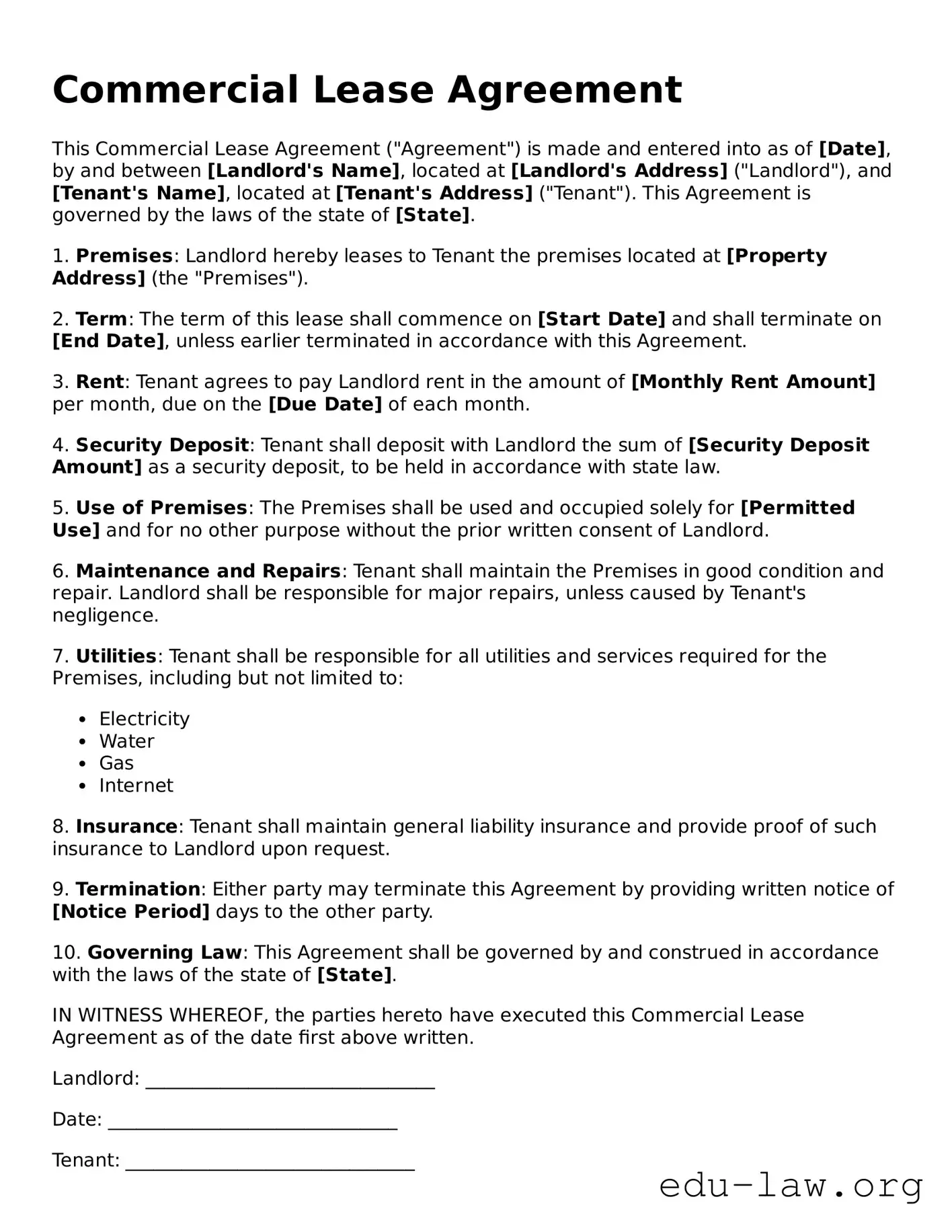
Commercial Lease Agreement
This Commercial Lease Agreement ("Agreement") is made and entered into as of [Date], by and between [Landlord's Name], located at [Landlord's Address] ("Landlord"), and [Tenant's Name], located at [Tenant's Address] ("Tenant"). This Agreement is governed by the laws of the state of [State].
1. Premises: Landlord hereby leases to Tenant the premises located at [Property Address] (the "Premises").
2. Term: The term of this lease shall commence on [Start Date] and shall terminate on [End Date], unless earlier terminated in accordance with this Agreement.
3. Rent: Tenant agrees to pay Landlord rent in the amount of [Monthly Rent Amount] per month, due on the [Due Date] of each month.
4. Security Deposit: Tenant shall deposit with Landlord the sum of [Security Deposit Amount] as a security deposit, to be held in accordance with state law.
5. Use of Premises: The Premises shall be used and occupied solely for [Permitted Use] and for no other purpose without the prior written consent of Landlord.
6. Maintenance and Repairs: Tenant shall maintain the Premises in good condition and repair. Landlord shall be responsible for major repairs, unless caused by Tenant's negligence.
7. Utilities: Tenant shall be responsible for all utilities and services required for the Premises, including but not limited to:
8. Insurance: Tenant shall maintain general liability insurance and provide proof of such insurance to Landlord upon request.
9. Termination: Either party may terminate this Agreement by providing written notice of [Notice Period] days to the other party.
10. Governing Law: This Agreement shall be governed by and construed in accordance with the laws of the state of [State].
IN WITNESS WHEREOF, the parties hereto have executed this Commercial Lease Agreement as of the date first above written.
Landlord: _______________________________
Date: _______________________________
Tenant: _______________________________
Date: _______________________________
| Fact Name | Description |
|---|---|
| Definition | A Commercial Lease Agreement is a contract between a landlord and a business tenant for renting commercial property. |
| Purpose | This agreement outlines the terms under which the tenant can occupy and use the property for business purposes. |
| Duration | Leases typically specify a fixed term, which can range from a few months to several years. |
| Rent Payment | The agreement specifies the amount of rent, payment schedule, and any penalties for late payments. |
| Security Deposit | Most leases require a security deposit, which protects the landlord against damages or unpaid rent. |
| Maintenance Responsibilities | The lease outlines who is responsible for maintenance and repairs, either the landlord or the tenant. |
| Governing Laws | Each state has specific laws governing commercial leases. For example, California follows the California Civil Code. |
| Use of Property | The agreement often includes clauses that define acceptable uses for the property and any restrictions. |
| Termination Clause | Most leases include terms for termination, detailing how either party can end the agreement early. |
| Renewal Options | Some leases provide options for renewal, allowing tenants to extend their lease under specified conditions. |
Filling out the Commercial Lease Agreement form is an important step in establishing a formal agreement between a landlord and a tenant. It is essential to provide accurate information to ensure that both parties understand their rights and responsibilities. The following steps will guide you through the process of completing the form.
Once you have completed these steps, review the entire document for accuracy before finalizing it. Ensure that both parties retain a signed copy for their records. This careful approach will help foster a positive leasing relationship moving forward.
What is a Commercial Lease Agreement?
A Commercial Lease Agreement is a legally binding contract between a landlord and a business tenant. This document outlines the terms and conditions under which a tenant can occupy a commercial property, such as an office, retail space, or warehouse. Key elements typically include the lease duration, rental amount, payment schedule, and responsibilities for maintenance and repairs. It serves to protect the interests of both parties and ensures clarity regarding their obligations.
What are the essential components of a Commercial Lease Agreement?
Essential components of a Commercial Lease Agreement often include the following: the names of the parties involved, a detailed description of the property, the lease term (length of time the lease is in effect), the rental amount and payment schedule, and any security deposit requirements. Additionally, clauses regarding maintenance responsibilities, property use restrictions, and termination conditions are crucial. These components help prevent misunderstandings and provide a clear framework for the landlord-tenant relationship.
How can a tenant negotiate terms in a Commercial Lease Agreement?
Negotiating terms in a Commercial Lease Agreement is a common practice. Tenants should start by thoroughly reviewing the lease and identifying areas that may require adjustments. It is beneficial to research market rates for similar properties to understand what is reasonable. During negotiations, clear communication is vital. Tenants can propose changes to rental rates, lease duration, or maintenance responsibilities. Engaging a real estate attorney or broker can also provide valuable insights and strengthen a tenant's negotiating position.
What happens if a tenant violates the lease terms?
If a tenant violates the terms of a Commercial Lease Agreement, the landlord typically has several options. The lease may specify a grace period for the tenant to remedy the violation, such as paying overdue rent or addressing property damage. If the violation is not corrected within the specified time, the landlord may issue a notice to terminate the lease. In some cases, legal action may be pursued to recover unpaid rent or seek eviction. It is essential for both parties to understand their rights and obligations to navigate these situations effectively.
Not Reading the Entire Document: Many individuals overlook the importance of thoroughly reading the entire Commercial Lease Agreement. Skimming through the document can lead to misunderstandings about terms and conditions, potentially resulting in unfavorable obligations or costs.
Failing to Specify Lease Terms: It is crucial to clearly define the lease term, including the start and end dates. Some people neglect to specify these details, which can create confusion and disputes later on.
Ignoring Maintenance Responsibilities: The agreement should outline maintenance responsibilities for both the landlord and tenant. Failing to address who is responsible for repairs can lead to conflicts and unexpected expenses.
Not Including Renewal Options: Many tenants forget to include options for lease renewal. Without this clause, tenants may find themselves at the end of their lease with no guaranteed ability to extend their occupancy.
A Commercial Lease Agreement is an essential document for businesses renting or leasing a commercial space. However, several other forms and documents often accompany it to ensure clarity and protection for both parties involved. Below is a list of common documents that may be used alongside a Commercial Lease Agreement.
Utilizing these documents alongside a Commercial Lease Agreement can help ensure that both parties have a clear understanding of their rights and obligations. This proactive approach can lead to a smoother leasing experience and mitigate potential conflicts in the future.
A Commercial Lease Agreement is similar to a Residential Lease Agreement in that both documents outline the terms and conditions under which a property can be occupied. While a residential lease typically pertains to living spaces, a commercial lease focuses on business premises. Both agreements specify the duration of the lease, the rent amount, and the responsibilities of both the landlord and tenant. They also address issues like maintenance, repairs, and what happens if the lease is broken. Understanding these similarities can help business owners navigate their leasing options more effectively.
Another document that shares similarities with a Commercial Lease Agreement is a Rental Agreement. While often used interchangeably, a rental agreement is generally more short-term and less formal than a lease. Both documents detail the terms of occupancy, including payment schedules and property use. However, a rental agreement might be more flexible, allowing for month-to-month arrangements, whereas a commercial lease often involves longer commitments. This distinction is crucial for businesses seeking stability or flexibility in their operations.
A Partnership Agreement can also resemble a Commercial Lease Agreement in that both documents define the terms of a business relationship. While a lease focuses on property use, a partnership agreement outlines how partners will work together, share profits, and manage responsibilities. Both agreements require clear communication and mutual understanding to prevent disputes. They serve as foundational documents that help ensure all parties are aligned on expectations, whether it’s regarding space or business operations.
Franchise Agreements share similarities with Commercial Lease Agreements as they both involve terms that govern the use of property and brand. A franchise agreement allows a business to operate under the franchisor's brand, often requiring the franchisee to maintain specific standards. Like a lease, it includes details about fees, duration, and operational guidelines. Understanding these agreements can help business owners make informed decisions about their brand and location.
Lastly, a Service Agreement can be likened to a Commercial Lease Agreement in that both establish the terms of a business relationship. A service agreement outlines the specifics of services provided, payment terms, and responsibilities of both parties. While a lease focuses on property use, a service agreement can cover various services necessary for business operations, such as maintenance or utilities. Both documents are essential for clarifying expectations and protecting the interests of each party involved.
When filling out a Commercial Lease Agreement form, it is important to approach the task with care and attention to detail. Here are some essential do's and don'ts to keep in mind:
By following these guidelines, you can help ensure that the Commercial Lease Agreement is filled out correctly and meets your needs.
When it comes to commercial leases, many people hold misconceptions that can lead to confusion and potentially costly mistakes. Here’s a look at ten common misconceptions about the Commercial Lease Agreement form:
Understanding these misconceptions can help tenants and landlords navigate the leasing process more effectively. Always take the time to read the lease thoroughly and consult with a professional if needed.
Understanding the Commercial Lease Agreement is crucial for both landlords and tenants. Here are some key takeaways to consider:
Each of these points plays a vital role in ensuring a successful leasing experience. Approach the Commercial Lease Agreement with diligence and care.