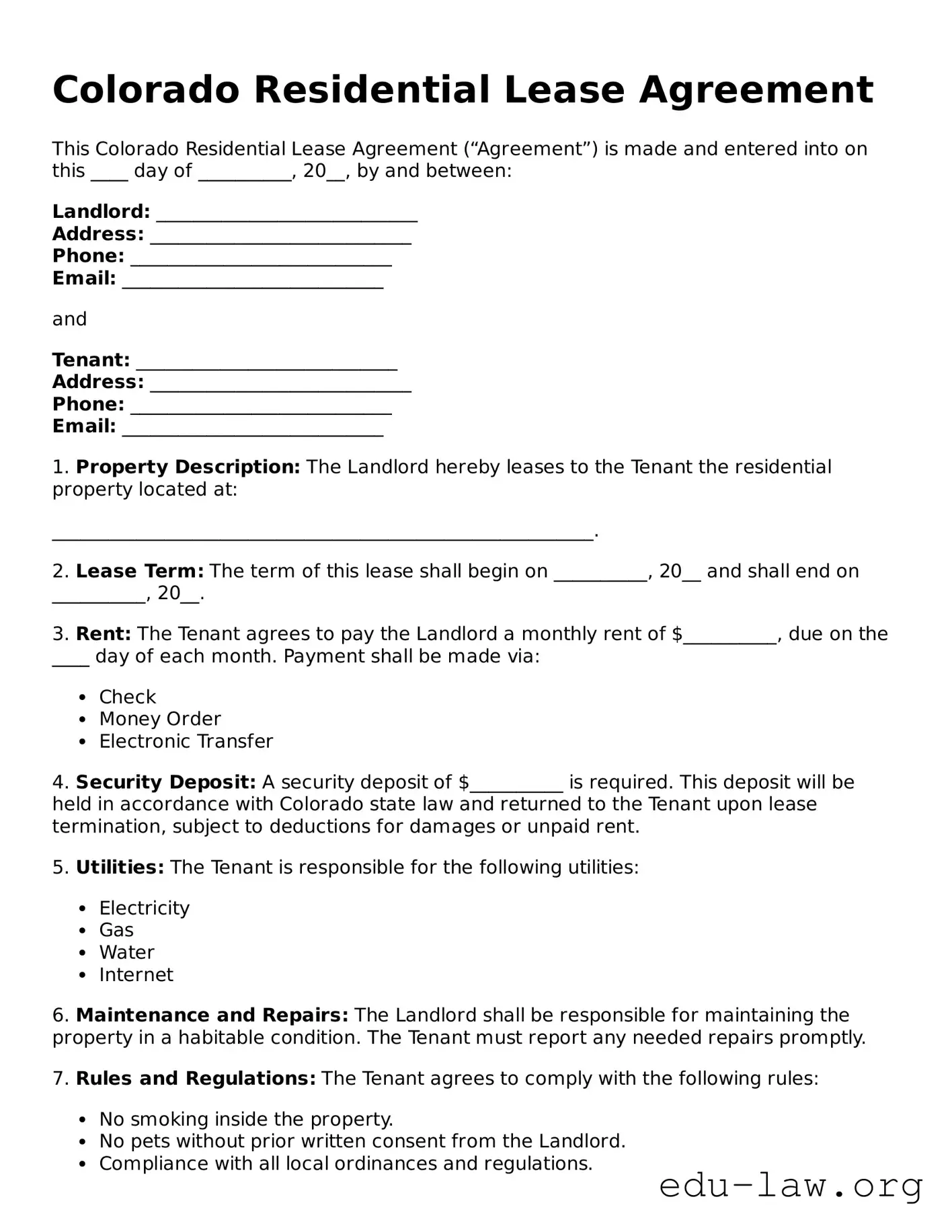
The Colorado Residential Lease Agreement is a crucial document for both landlords and tenants, serving as the foundation for their rental relationship. This form outlines essential terms such as the duration of the lease, monthly rent amount, and payment due dates. It also specifies the responsibilities of each party regarding maintenance, repairs, and utilities. Additionally, the agreement addresses security deposits, including how much can be collected and the conditions for its return. Important provisions related to late fees, termination procedures, and tenant rights are also included to ensure clarity and compliance with state laws. Understanding this form is vital for anyone entering into a rental arrangement in Colorado, as it protects the interests of both parties and helps prevent disputes down the line.
Colorado Residential Lease Agreement
This Colorado Residential Lease Agreement (“Agreement”) is made and entered into on this ____ day of __________, 20__, by and between:
Landlord: ____________________________
Address: ____________________________
Phone: ____________________________
Email: ____________________________
and
Tenant: ____________________________
Address: ____________________________
Phone: ____________________________
Email: ____________________________
1. Property Description: The Landlord hereby leases to the Tenant the residential property located at:
__________________________________________________________.
2. Lease Term: The term of this lease shall begin on __________, 20__ and shall end on __________, 20__.
3. Rent: The Tenant agrees to pay the Landlord a monthly rent of $__________, due on the ____ day of each month. Payment shall be made via:
4. Security Deposit: A security deposit of $__________ is required. This deposit will be held in accordance with Colorado state law and returned to the Tenant upon lease termination, subject to deductions for damages or unpaid rent.
5. Utilities: The Tenant is responsible for the following utilities:
6. Maintenance and Repairs: The Landlord shall be responsible for maintaining the property in a habitable condition. The Tenant must report any needed repairs promptly.
7. Rules and Regulations: The Tenant agrees to comply with the following rules:
8. Termination: This Agreement may be terminated by either party with a written notice of ____ days prior to the end of the lease term.
9. Governing Law: This Agreement shall be governed by the laws of the State of Colorado.
IN WITNESS WHEREOF, the parties hereto have executed this Colorado Residential Lease Agreement as of the date first above written.
Landlord Signature: ____________________________
Date: ____________________________
Tenant Signature: ____________________________
Date: ____________________________
| Fact Name | Description |
|---|---|
| Purpose | The Colorado Residential Lease Agreement is a legal document that outlines the terms and conditions of renting a residential property. |
| Governing Law | This agreement is governed by the laws of the State of Colorado, specifically the Colorado Revised Statutes Title 38, Article 12. |
| Duration | Typically, lease agreements specify a duration of one year, but they can be customized for shorter or longer terms based on the agreement between the landlord and tenant. |
| Security Deposit | Landlords in Colorado can require a security deposit, which is usually capped at one month's rent, to cover potential damages or unpaid rent. |
| Tenant Rights | Tenants have specific rights under Colorado law, including the right to a habitable living environment and protection against unlawful eviction. |
Filling out the Colorado Residential Lease Agreement form is an important step in establishing a rental relationship. Completing this form accurately ensures both parties understand their rights and responsibilities. Follow these steps carefully to fill out the form correctly.
After completing the form, keep a copy for your records. Ensure both parties have signed copies to reference in the future.
What is a Colorado Residential Lease Agreement?
A Colorado Residential Lease Agreement is a legally binding document that outlines the terms and conditions under which a landlord rents property to a tenant. This agreement details the rights and responsibilities of both parties, including rental amount, duration of the lease, and rules for the property. It serves to protect both the landlord and tenant by clearly stating expectations and obligations.
What are the key components of a Colorado Residential Lease Agreement?
The key components include the names of the landlord and tenant, the property address, the rental amount, payment due dates, lease duration, security deposit information, maintenance responsibilities, and rules regarding pets or smoking. Each section is designed to clarify the agreement and prevent misunderstandings.
How long is a typical lease term in Colorado?
Lease terms can vary widely. Most commonly, leases are for one year, but they can also be month-to-month or for a shorter duration. It is essential to agree on a term that suits both the landlord's and tenant's needs. Always ensure that the lease duration is clearly stated in the agreement.
Can a landlord increase the rent during the lease term?
Generally, landlords cannot increase the rent during the lease term unless the lease agreement specifically allows for it. However, if the lease is month-to-month, the landlord can raise the rent with proper notice. It is crucial to understand the terms of your lease regarding rent increases.
What is a security deposit, and how is it handled in Colorado?
A security deposit is a sum of money that a tenant pays to the landlord to cover potential damages or unpaid rent. In Colorado, landlords can charge up to one month's rent as a security deposit. The law requires landlords to return the deposit within one month after the tenant moves out, minus any deductions for damages or unpaid rent.
Are there specific rules about pets in a Colorado Residential Lease Agreement?
Yes, pet policies can vary widely and should be clearly outlined in the lease agreement. Some landlords may allow pets with an additional pet deposit or fee, while others may prohibit pets altogether. It is important for tenants to discuss pet policies before signing the lease to avoid any surprises later.
What happens if a tenant wants to break the lease early?
If a tenant needs to break the lease early, they should review the agreement for any specific clauses regarding early termination. Often, tenants may be required to provide notice and may also be responsible for paying rent until a new tenant is found. Communication with the landlord is essential in these situations.
Can a landlord enter the rental property without notice?
In Colorado, landlords must provide reasonable notice before entering a tenant's rental property, typically 24 hours. However, in emergencies, such as a fire or flood, a landlord may enter without prior notice. It's crucial for both parties to understand the terms regarding entry to maintain trust and respect privacy.
What should a tenant do if they have a dispute with their landlord?
If a tenant has a dispute with their landlord, they should first attempt to resolve the issue directly through communication. If that fails, reviewing the lease agreement for any specific dispute resolution procedures is advisable. Additionally, tenants may seek assistance from local housing authorities or legal aid organizations if needed.
Failing to include all necessary tenant information. This includes full names, contact details, and any additional occupants. Incomplete information can lead to misunderstandings later.
Not specifying the lease term clearly. A vague description of the lease duration can create confusion. Clearly state the start and end dates to avoid disputes.
Neglecting to outline the security deposit terms. It is essential to specify the amount, conditions for its return, and any deductions that may apply. This information protects both parties.
Overlooking the inclusion of maintenance responsibilities. Clearly define who is responsible for repairs and maintenance. This prevents conflicts regarding property upkeep.
When entering into a rental agreement in Colorado, several additional forms and documents may be beneficial for both landlords and tenants. These documents help clarify responsibilities, protect rights, and ensure a smooth rental experience. Here are four commonly used forms that often accompany the Colorado Residential Lease Agreement.
Utilizing these forms alongside the Colorado Residential Lease Agreement can create a more organized and transparent rental process. By ensuring that all parties are on the same page, these documents help foster a positive landlord-tenant relationship.
The Colorado Rental Application is a document that precedes the lease agreement. It is used by landlords to gather information about potential tenants. This application typically includes personal details, rental history, and financial information. The purpose is to assess whether the applicant is a suitable candidate for renting the property. Like the lease agreement, it establishes a formal relationship between the landlord and tenant, but it focuses on the vetting process instead of the terms of occupancy.
The Colorado Lease Extension Agreement is another important document. It is used when both the landlord and tenant agree to extend the duration of the original lease. This document outlines the new lease term and any changes to the original terms. Similar to the Residential Lease Agreement, it formalizes the arrangement but focuses specifically on the continuation of the tenancy rather than the initial terms.
The Colorado Move-In Checklist is a document that complements the lease agreement. It is used to document the condition of the rental property at the time of move-in. Both documents serve to protect the interests of both parties. The checklist helps ensure that tenants are aware of existing issues and that landlords can avoid disputes over damages when the tenant moves out.
The Colorado Security Deposit Receipt is closely related to the lease agreement as well. This document is issued when a tenant pays their security deposit. It provides proof of the amount received and outlines the terms regarding the return of the deposit. Like the lease agreement, it aims to clarify financial responsibilities and protect both parties' interests.
Finally, the Colorado Notice to Quit is a document that may be used in the context of lease agreements. This notice is issued when a tenant must vacate the property, often due to lease violations or non-payment of rent. While the Residential Lease Agreement establishes the terms of occupancy, the Notice to Quit serves as a formal communication to terminate that occupancy, highlighting the legal obligations of both parties involved.
When filling out the Colorado Residential Lease Agreement form, there are important steps to follow to ensure accuracy and compliance. Here’s a helpful list of what to do and what to avoid.
Following these guidelines will help you navigate the lease agreement process smoothly and protect your rights as a tenant.
There are several misconceptions about the Colorado Residential Lease Agreement form. Understanding these can help both landlords and tenants navigate their rights and responsibilities more effectively. Here are six common misconceptions:
Being informed about these misconceptions can help ensure a smoother rental experience for everyone involved.
When engaging with the Colorado Residential Lease Agreement form, there are several important considerations to keep in mind. These takeaways will help ensure clarity and compliance for both landlords and tenants.
By following these key takeaways, both landlords and tenants can navigate the lease agreement process with greater confidence and understanding.