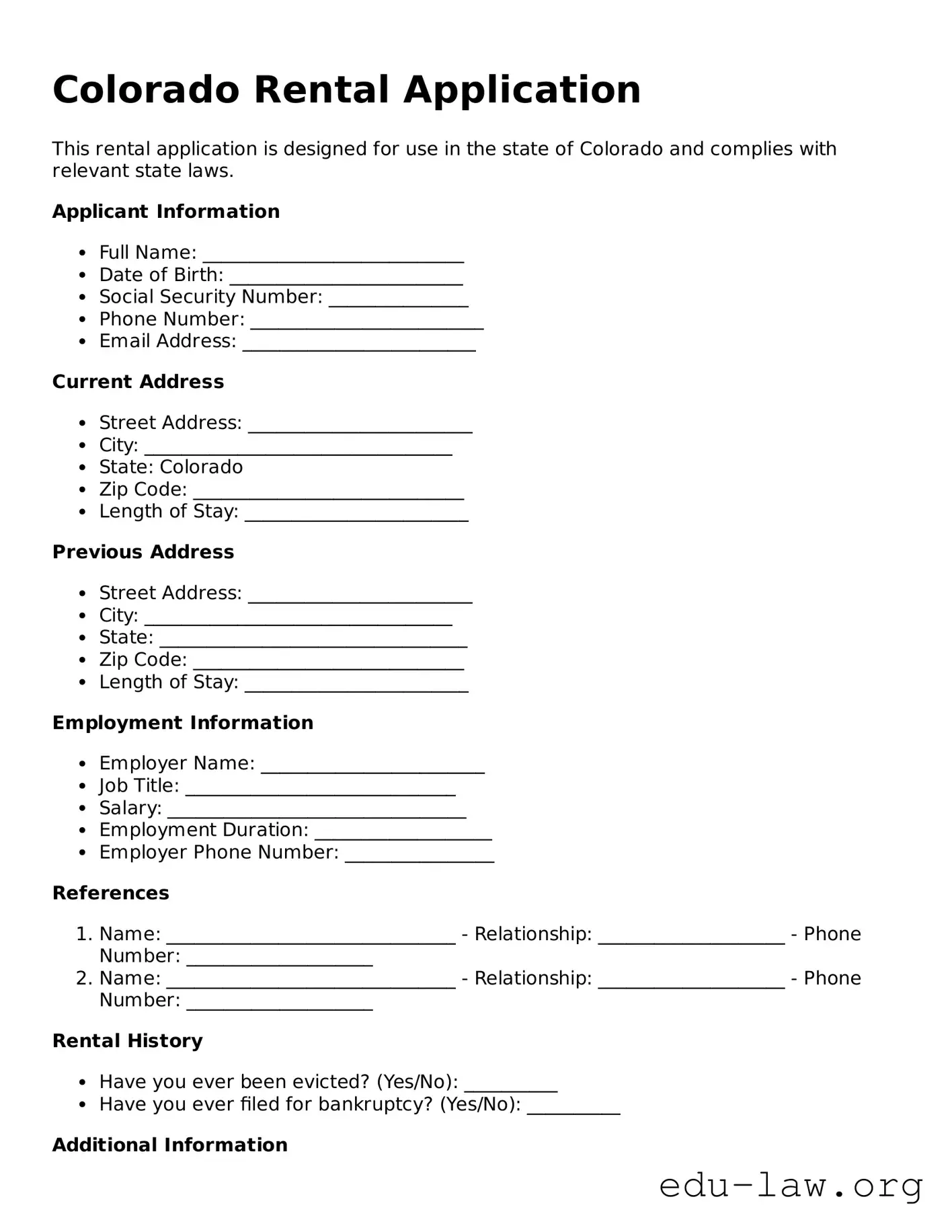
When seeking a rental property in Colorado, prospective tenants encounter the Colorado Rental Application form, a vital tool in the leasing process. This form serves as a comprehensive document that landlords use to assess the suitability of potential renters. Key components typically include personal information, employment history, income verification, and references. Additionally, applicants may be asked about their rental history and any criminal background, which helps landlords make informed decisions. Understanding the nuances of this form can significantly impact a tenant's chances of securing their desired home. With accurate and complete information, applicants can present themselves in the best light, while landlords can streamline their selection process. Overall, the Colorado Rental Application form plays a crucial role in the rental landscape, influencing both tenant experiences and landlord decisions.
Colorado Rental Application
This rental application is designed for use in the state of Colorado and complies with relevant state laws.
Applicant Information
Current Address
Previous Address
Employment Information
References
Rental History
Additional Information
Signature
By signing below, I certify that the information provided is true and complete to the best of my knowledge.
Signature: _____________________________
Date: _________________________________
| Fact Name | Description |
|---|---|
| Purpose | The Colorado Rental Application form is used by landlords to screen potential tenants. |
| Required Information | The form typically requires personal information, rental history, employment details, and references. |
| Application Fee | Landlords may charge a non-refundable application fee to cover the cost of background checks. |
| Fair Housing Laws | Landlords must comply with federal and state fair housing laws when using the application. |
| Governing Laws | The application process in Colorado is governed by the Colorado Revised Statutes, particularly Title 38, Article 12. |
Completing the Colorado Rental Application form is an important step in securing a rental property. This process involves providing personal information and details that landlords use to evaluate potential tenants. Following these steps will help ensure that your application is filled out correctly and completely.
Once you have completed the application, it will be reviewed by the landlord or property manager. They will assess your qualifications and may contact you for further information or to schedule an interview. Patience is key during this waiting period, as landlords often receive multiple applications for rental properties.
What is a Colorado Rental Application form?
The Colorado Rental Application form is a document that prospective tenants fill out when applying to rent a property. This form collects essential information about the applicant, including their employment history, rental history, and personal references. Landlords use this information to evaluate potential tenants and make informed decisions about whom to rent to.
What information do I need to provide on the application?
You will typically need to provide personal details such as your name, address, phone number, and email. Additionally, the application may require information about your employment, including your employer's name, your job title, and your income. Rental history, including previous addresses and landlord contact information, is also usually requested. Some applications may ask for personal references as well.
Is there a fee to submit a rental application in Colorado?
Yes, many landlords charge a fee to process rental applications. This fee covers the cost of background checks and credit reports. In Colorado, the fee cannot exceed a certain amount, typically around $50. Always check with the landlord for the exact amount and ensure it is clearly stated in the rental application.
How long does it take to process a rental application?
The processing time for a rental application can vary. Generally, it may take anywhere from a few hours to several days. Factors influencing the timeline include the responsiveness of previous landlords and employers, as well as the thoroughness of the background checks. It's a good idea to ask the landlord about their typical processing time when you submit your application.
Can I be denied a rental application? If so, why?
Yes, landlords can deny a rental application for various reasons. Common reasons include a poor credit history, insufficient income, negative rental history, or a criminal background. Landlords must follow fair housing laws and cannot discriminate based on race, color, religion, sex, national origin, disability, or familial status.
What should I do if my application is denied?
If your application is denied, the landlord is required to provide you with a reason. You can request a copy of your credit report if it was used in the decision. If you believe the denial was unjust, you can address any issues directly with the landlord or seek assistance from a local housing authority or legal advisor.
Can I withdraw my application after submitting it?
Yes, you can withdraw your application at any time before a lease is signed. However, keep in mind that application fees are often non-refundable. It’s best to communicate your decision to the landlord as soon as possible to avoid any misunderstandings.
Do I need to provide a co-signer on my application?
If you have a limited credit history or income, a landlord may request a co-signer. A co-signer agrees to take responsibility for the lease if you are unable to meet your obligations. This can improve your chances of securing the rental, especially if your financial situation is not ideal.
What happens after my application is approved?
Once your application is approved, the landlord will typically contact you to discuss the next steps. This may include signing a lease agreement, paying a security deposit, and setting a move-in date. Be prepared to review the lease carefully and ask any questions before signing.
Incomplete Information: Failing to fill out all required fields can lead to delays or outright rejection of the application. Ensure every section is completed thoroughly.
Inaccurate Personal Details: Providing incorrect information, such as misspelled names or wrong Social Security numbers, can create complications during the background check.
Omitting Employment History: Not including a complete employment history can raise red flags. Landlords want to see stability and reliability in your work history.
Neglecting References: Failing to provide personal or professional references can weaken your application. Strong references can bolster your credibility.
Ignoring the Rental History: Leaving out previous addresses or landlords can lead to suspicion. Always disclose your rental history accurately.
Not Disclosing Pets: If you have pets, be upfront about it. Many landlords have specific pet policies, and failing to disclose can result in termination of the lease.
Providing Insufficient Income Verification: Landlords often require proof of income. Be prepared with pay stubs or bank statements to support your application.
Neglecting to Sign the Application: An unsigned application is not valid. Always double-check that you have signed and dated the form.
Failing to Read the Terms: Not reviewing the application terms can lead to misunderstandings later. Take the time to understand what you are agreeing to.
When applying for a rental property in Colorado, several documents often accompany the rental application form. These documents provide additional information to landlords or property managers, helping them assess the suitability of potential tenants. Below is a list of common forms and documents used alongside the Colorado Rental Application.
Having these documents ready can streamline the application process and demonstrate preparedness to potential landlords. Each form serves a specific purpose, contributing to a comprehensive view of the applicant's qualifications and reliability as a tenant.
The Colorado Rental Application form shares similarities with a standard lease agreement. Both documents are essential in the rental process. A lease agreement outlines the terms of the rental, including duration, rent amount, and responsibilities of both parties. Like the rental application, it requires personal information and background checks to ensure the tenant is suitable for the property. Both documents aim to protect the interests of the landlord while providing a clear framework for the tenant's rights and obligations.
Another document that resembles the Colorado Rental Application is the tenant screening report. This report often includes credit history, rental history, and criminal background checks. Just like the rental application, it helps landlords assess a potential tenant's reliability. Both documents serve as tools for evaluating whether a tenant will meet the obligations of the lease agreement and maintain the property responsibly.
The rental agreement addendum is also similar to the Colorado Rental Application. An addendum modifies or adds specific terms to the original lease. When a landlord uses a rental application, they may later include an addendum to clarify pet policies or maintenance responsibilities. Both documents require clear communication and mutual agreement between the landlord and tenant, ensuring everyone understands their roles.
The eviction notice is another document that shares characteristics with the rental application. While the rental application is about securing a tenant, an eviction notice is a formal way to terminate a tenancy. Both documents reflect the relationship between landlord and tenant. If issues arise, such as non-payment of rent, the eviction notice serves as a reminder of the responsibilities outlined in the rental application and lease agreement.
Lastly, the move-in checklist is similar to the Colorado Rental Application in that it documents the condition of the rental unit. This checklist is often completed at the beginning of a tenancy, just like the rental application is filled out before signing a lease. Both documents help protect the interests of the landlord and tenant. They provide a clear record of expectations and conditions, which can prevent disputes later on.
When filling out the Colorado Rental Application form, it's essential to be thorough and accurate. Here are some important dos and don'ts to consider:
When dealing with the Colorado Rental Application form, several misconceptions can lead to confusion for both landlords and tenants. Understanding these misconceptions can help streamline the rental process.
By clarifying these misconceptions, both landlords and tenants can navigate the rental application process more effectively.
When filling out and using the Colorado Rental Application form, there are several important considerations to keep in mind. Here are key takeaways to ensure a smooth process:
By keeping these points in mind, individuals can navigate the Colorado Rental Application process more effectively.