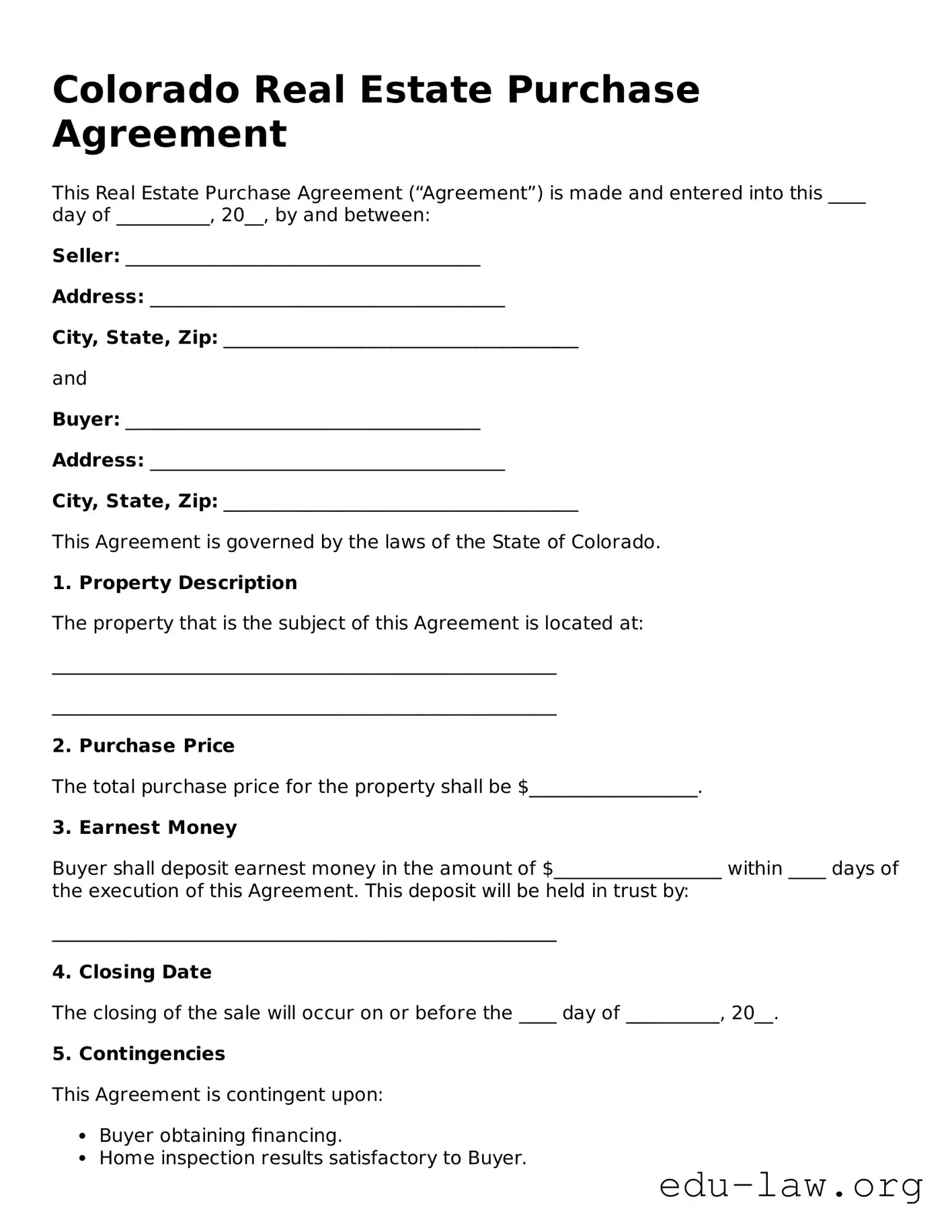
In the dynamic landscape of Colorado's real estate market, the Real Estate Purchase Agreement form stands as a vital document that facilitates the buying and selling of property. This form outlines the essential terms and conditions agreed upon by both the buyer and seller, ensuring a clear understanding of each party's responsibilities and rights. Key components include the purchase price, earnest money deposit, and closing date, all of which play a crucial role in the transaction process. Additionally, the agreement addresses contingencies, such as inspections and financing, which protect the interests of both parties. By detailing the specific property being sold and including provisions for disclosures and title transfer, the form serves as a comprehensive guide throughout the transaction. Understanding these aspects is essential for anyone involved in a real estate deal in Colorado, as they lay the groundwork for a successful and legally binding agreement.
Colorado Real Estate Purchase Agreement
This Real Estate Purchase Agreement (“Agreement”) is made and entered into this ____ day of __________, 20__, by and between:
Seller: ______________________________________
Address: ______________________________________
City, State, Zip: ______________________________________
and
Buyer: ______________________________________
Address: ______________________________________
City, State, Zip: ______________________________________
This Agreement is governed by the laws of the State of Colorado.
1. Property Description
The property that is the subject of this Agreement is located at:
______________________________________________________
______________________________________________________
2. Purchase Price
The total purchase price for the property shall be $__________________.
3. Earnest Money
Buyer shall deposit earnest money in the amount of $__________________ within ____ days of the execution of this Agreement. This deposit will be held in trust by:
______________________________________________________
4. Closing Date
The closing of the sale will occur on or before the ____ day of __________, 20__.
5. Contingencies
This Agreement is contingent upon:
6. Additional Terms
______________________________________________________
______________________________________________________
7. Signatures
By signing below, both parties agree to the terms of this Agreement:
Seller Signature: ___________________________ Date: ______________
Buyer Signature: ___________________________ Date: ______________
This Agreement is binding upon both parties and their respective heirs, successors, and assigns.
| Fact Name | Description |
|---|---|
| Governing Law | The Colorado Real Estate Purchase Agreement is governed by Colorado state law, specifically under Title 38 of the Colorado Revised Statutes. |
| Standard Use | This form is commonly used for residential real estate transactions in Colorado, ensuring clarity and legal compliance between buyers and sellers. |
| Key Components | The agreement typically includes sections on purchase price, earnest money, contingencies, and closing details, which are essential for a successful transaction. |
| Disclosure Requirements | Colorado law mandates that sellers provide specific disclosures regarding the property's condition, which must be acknowledged by the buyer in the agreement. |
Completing the Colorado Real Estate Purchase Agreement form is an important step in the process of buying or selling property. This document outlines the terms and conditions agreed upon by both parties. After filling out the form, it will be necessary to review it carefully before submitting it for signatures and finalizing the transaction.
What is the Colorado Real Estate Purchase Agreement form?
The Colorado Real Estate Purchase Agreement is a legal document used to outline the terms and conditions of a real estate transaction in Colorado. It serves as a binding contract between the buyer and seller, detailing the obligations of each party regarding the sale of a property.
What information is typically included in the form?
This agreement generally includes essential details such as the names of the buyer and seller, the property address, the purchase price, financing terms, and any contingencies. Additionally, it may specify the closing date and any included fixtures or personal property.
Do I need a lawyer to complete the Colorado Real Estate Purchase Agreement?
What are contingencies, and why are they important?
Contingencies are conditions that must be met for the sale to proceed. Common contingencies include financing, home inspections, and appraisal requirements. They protect buyers by allowing them to back out of the agreement without penalty if certain conditions are not satisfied.
Can the terms of the agreement be negotiated?
Yes, the terms of the Colorado Real Estate Purchase Agreement can be negotiated. Buyers and sellers may discuss and modify aspects such as the purchase price, closing date, and contingencies. Clear communication is essential to ensure that both parties agree to the final terms.
What happens after the agreement is signed?
Once both parties sign the agreement, it becomes legally binding. The buyer typically submits an earnest money deposit to demonstrate their commitment. Following this, the parties will work to fulfill any contingencies before the closing date, which is when the property officially changes hands.
What is earnest money, and how does it work?
Earnest money is a deposit made by the buyer to show their serious intent to purchase the property. This amount is usually held in escrow and is applied toward the purchase price at closing. If the buyer backs out of the deal without a valid reason, they may forfeit this deposit to the seller.
How long is the Colorado Real Estate Purchase Agreement valid?
The agreement remains valid until the closing date or until one party withdraws from the contract under the terms specified within it. If contingencies are not met within the agreed-upon timeframe, the agreement may also become void.
What should I do if I want to cancel the agreement?
If you wish to cancel the agreement, it is crucial to review the terms outlined in the contract. Depending on the circumstances, you may be able to withdraw without penalty if certain contingencies are not met. Consulting with a legal professional can help clarify your options and potential consequences.
Where can I obtain a Colorado Real Estate Purchase Agreement form?
You can obtain the Colorado Real Estate Purchase Agreement form from various sources, including real estate agents, legal professionals, or online legal document services. Ensure that you are using the most current version of the form to comply with state laws.
Incomplete Information: Buyers and sellers often leave sections blank. This can lead to misunderstandings or disputes later on. Ensure that all fields are filled out completely.
Incorrect Dates: Failing to provide accurate dates for important milestones can create confusion. Double-check all date entries to ensure they align with the agreed-upon timeline.
Missing Signatures: All parties involved must sign the agreement. A missing signature can invalidate the contract. Review the document carefully before submission to confirm that all necessary signatures are present.
Not Specifying Contingencies: Buyers sometimes forget to include important contingencies, such as financing or inspection clauses. Clearly outline any contingencies to protect your interests.
Ignoring Local Regulations: Each municipality may have specific requirements that must be adhered to. Familiarize yourself with local regulations to ensure compliance and avoid potential issues.
When engaging in a real estate transaction in Colorado, several documents accompany the Real Estate Purchase Agreement to ensure a smooth process. Each of these forms serves a specific purpose and helps protect the interests of both buyers and sellers. Below is a list of commonly used documents along with brief descriptions of their functions.
Understanding these documents can greatly assist in navigating the complexities of real estate transactions. Each plays a vital role in ensuring that both parties are informed and protected throughout the buying or selling process.
The Colorado Real Estate Purchase Agreement (REPA) is similar to the Residential Purchase Agreement used in many states. Both documents serve the same fundamental purpose: to outline the terms of a real estate transaction between a buyer and a seller. They detail the purchase price, financing contingencies, and closing date, ensuring that both parties have a clear understanding of their obligations and rights. The language and structure may vary slightly, but the core components remain consistent across these agreements.
Another comparable document is the Commercial Purchase Agreement. This form is specifically tailored for commercial real estate transactions. While it shares the basic framework of the REPA, it often includes additional clauses related to zoning laws, property use, and environmental assessments. These differences reflect the unique considerations involved in commercial properties, such as leasing agreements and business operations.
The Exclusive Right to Sell Agreement is also relevant. This document establishes a relationship between a seller and a real estate agent. Like the REPA, it outlines terms, but it focuses on the agent's commission and the duration of the listing. Both documents aim to protect the interests of the parties involved, but they serve different roles in the real estate process.
The Lease Agreement is another document that, while not a purchase agreement, shares similarities in its structure and purpose. It outlines the terms under which a tenant may occupy a property, including rent, duration, and responsibilities. While the REPA deals with the sale of property, both agreements require clear communication of terms to prevent disputes.
The Option to Purchase Agreement is closely related as well. This document grants a potential buyer the right to purchase a property at a specified price within a certain timeframe. Similar to the REPA, it includes terms that protect both the buyer and seller, though it focuses on the buyer's option rather than an outright sale.
The Seller’s Disclosure Statement is another important document that complements the REPA. While the REPA outlines the transaction terms, the disclosure statement provides crucial information about the property’s condition. Sellers must disclose known issues, ensuring buyers are fully informed before making a purchase. This transparency is vital for both parties and aligns with the REPA's goal of clarity in the transaction.
The Counteroffer form is also relevant in this context. When a buyer or seller wishes to modify the terms of the initial offer, they may use a counteroffer. This document communicates changes and allows for negotiation, similar to how the REPA facilitates the agreement process between the parties.
The Addendum is another document that works in conjunction with the REPA. It allows for the addition of terms or conditions after the initial agreement has been made. This flexibility is crucial in real estate transactions, as it can address unique situations that arise, ensuring that both parties can agree on any necessary adjustments.
Lastly, the Closing Statement is essential in the real estate transaction process. It summarizes the final financial details of the sale, including closing costs and the distribution of funds. While it serves a different purpose than the REPA, it is a critical document that ensures both parties understand the financial implications of the transaction, completing the real estate process initiated by the REPA.
When filling out the Colorado Real Estate Purchase Agreement form, it’s important to approach the process with care and attention to detail. Here’s a helpful list of things to do and avoid to ensure a smooth transaction.
By following these guidelines, individuals can navigate the Colorado Real Estate Purchase Agreement form with greater confidence and accuracy.
The Colorado Real Estate Purchase Agreement form is an essential document for anyone involved in buying or selling property in Colorado. However, several misconceptions surround this form. Here are four common misunderstandings:
Understanding these misconceptions can help buyers and sellers navigate the real estate process more effectively. Always ensure you have the right information before proceeding with any transaction.
When filling out and using the Colorado Real Estate Purchase Agreement form, there are several important considerations to keep in mind. This form serves as a crucial document in the real estate transaction process, and understanding its components can help ensure a smooth experience for both buyers and sellers.
By keeping these key takeaways in mind, individuals can approach the Colorado Real Estate Purchase Agreement with greater confidence and understanding, leading to a more successful transaction.