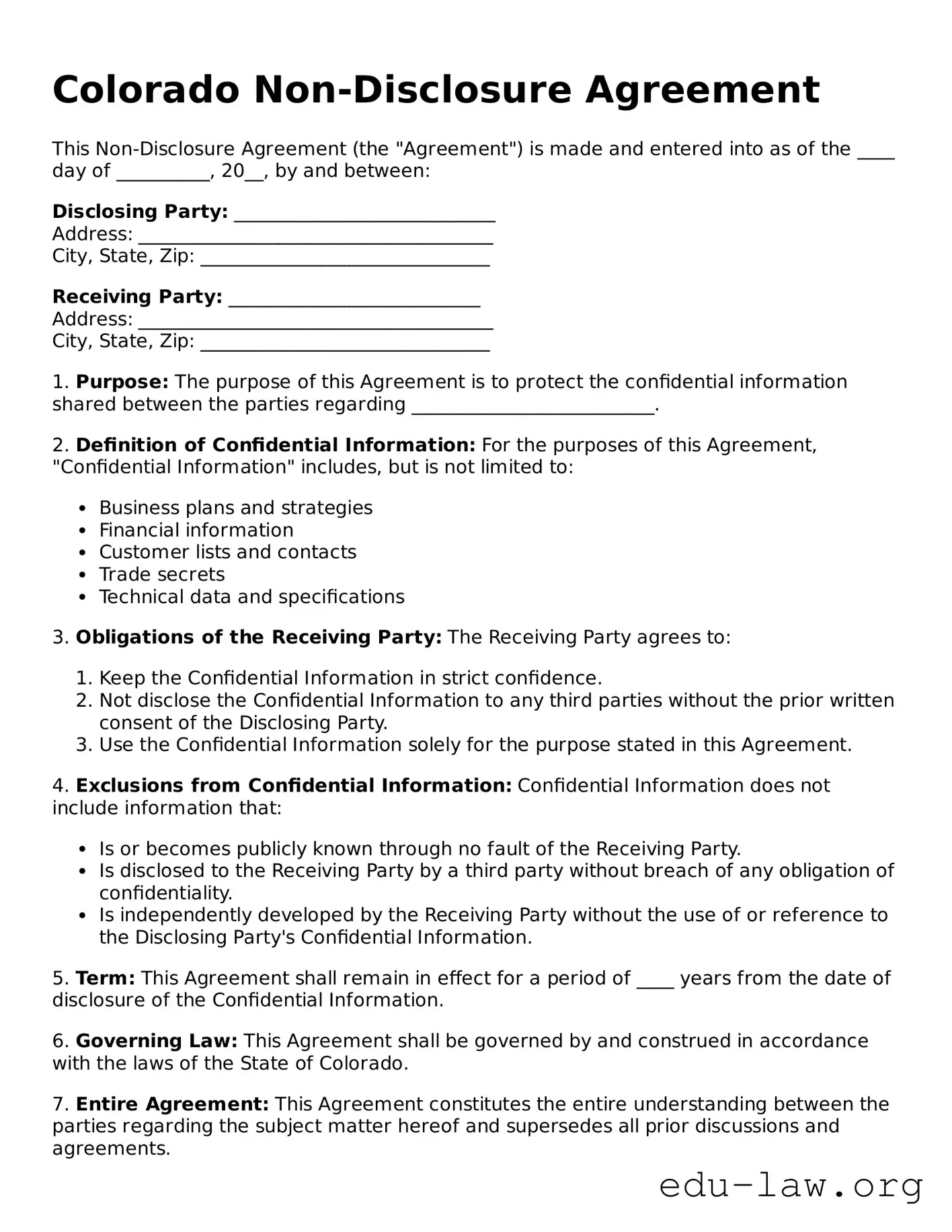
In the state of Colorado, a Non-disclosure Agreement (NDA) serves as a vital tool for protecting sensitive information. This legal document establishes a confidential relationship between parties, ensuring that shared information remains private. Typically, NDAs are used in various situations, such as business partnerships, employment agreements, and during negotiations. The form outlines the specific information that must be kept confidential, the obligations of the parties involved, and the duration of the confidentiality requirement. By clearly defining what constitutes confidential information, the NDA helps prevent unauthorized disclosure that could harm a business's competitive edge or an individual's privacy. Understanding the key elements of this agreement is essential for anyone looking to safeguard their proprietary information in Colorado.
Colorado Non-Disclosure Agreement
This Non-Disclosure Agreement (the "Agreement") is made and entered into as of the ____ day of __________, 20__, by and between:
Disclosing Party: ____________________________
Address: ______________________________________
City, State, Zip: _______________________________
Receiving Party: ___________________________
Address: ______________________________________
City, State, Zip: _______________________________
1. Purpose: The purpose of this Agreement is to protect the confidential information shared between the parties regarding __________________________.
2. Definition of Confidential Information: For the purposes of this Agreement, "Confidential Information" includes, but is not limited to:
3. Obligations of the Receiving Party: The Receiving Party agrees to:
4. Exclusions from Confidential Information: Confidential Information does not include information that:
5. Term: This Agreement shall remain in effect for a period of ____ years from the date of disclosure of the Confidential Information.
6. Governing Law: This Agreement shall be governed by and construed in accordance with the laws of the State of Colorado.
7. Entire Agreement: This Agreement constitutes the entire understanding between the parties regarding the subject matter hereof and supersedes all prior discussions and agreements.
IN WITNESS WHEREOF, the parties have executed this Non-Disclosure Agreement as of the date first above written.
______________________________
Disclosing Party Signature
______________________________
Receiving Party Signature
| Fact Name | Description |
|---|---|
| Purpose | The Colorado Non-disclosure Agreement (NDA) is used to protect confidential information shared between parties. |
| Governing Law | The agreement is governed by Colorado state law. |
| Parties Involved | Typically, two parties are involved: the disclosing party and the receiving party. |
| Duration | The NDA specifies how long the confidentiality obligation lasts, often ranging from 1 to 5 years. |
| Exclusions | Information that is publicly available or already known to the receiving party is usually excluded from the NDA. |
| Enforcement | Violating the NDA can lead to legal action, including potential damages for the disclosing party. |
Once you have the Colorado Non-disclosure Agreement form in hand, you can begin the process of filling it out. This form is essential for protecting sensitive information shared between parties. Completing it accurately ensures that both parties understand their obligations regarding confidentiality.
What is a Colorado Non-disclosure Agreement (NDA)?
A Colorado Non-disclosure Agreement is a legal contract designed to protect sensitive information shared between parties. This agreement ensures that the receiving party does not disclose or misuse the confidential information for any unauthorized purposes. It is commonly used in business relationships, employment situations, and partnerships to safeguard trade secrets and proprietary information.
Who can use a Colorado NDA?
Any individual or entity that needs to protect confidential information can use a Colorado NDA. This includes businesses, freelancers, employees, and contractors. Whether you are sharing sensitive data with a potential partner or employee, an NDA can provide the necessary legal protection.
What information is typically covered by a Colorado NDA?
A Colorado NDA typically covers any proprietary or confidential information that one party shares with another. This can include business plans, financial data, marketing strategies, client lists, and technical specifications. The agreement should clearly define what constitutes confidential information to avoid ambiguity.
How long does a Colorado NDA last?
The duration of a Colorado NDA can vary based on the agreement between the parties. Generally, the confidentiality obligations last for a specified period, often ranging from one to five years. However, some information may remain confidential indefinitely, especially if it pertains to trade secrets.
What happens if someone breaches a Colorado NDA?
If a party breaches a Colorado NDA, the injured party may seek legal remedies. This can include monetary damages, injunctions to prevent further disclosure, and, in some cases, punitive damages. The specific consequences will depend on the terms outlined in the NDA and the nature of the breach.
Do I need a lawyer to draft a Colorado NDA?
While it is not legally required to have a lawyer draft a Colorado NDA, it is highly advisable. A legal professional can ensure that the agreement is comprehensive, enforceable, and tailored to your specific needs. This can prevent potential issues and misunderstandings in the future.
Can a Colorado NDA be enforced in court?
Yes, a Colorado NDA can be enforced in court if it is properly drafted and executed. If a dispute arises, the courts will evaluate the agreement's terms and the circumstances surrounding the breach. A well-structured NDA increases the likelihood of successful enforcement.
Not Identifying the Parties Clearly: It’s crucial to specify all parties involved in the agreement. Failing to include full names and addresses can lead to confusion later.
Vague Definitions of Confidential Information: When filling out the form, it’s important to define what constitutes confidential information clearly. A broad or unclear definition can weaken the agreement's effectiveness.
Ignoring the Duration of the Agreement: Many overlook specifying how long the confidentiality obligations last. Without a clear timeframe, it may be difficult to enforce the agreement in the future.
Not Including Consequences for Breach: It's essential to outline what happens if the agreement is violated. Not addressing potential consequences can leave parties unprotected.
When entering into a Non-disclosure Agreement (NDA) in Colorado, it's often beneficial to have additional forms and documents to support the agreement. These documents help clarify terms, protect interests, and ensure compliance with legal standards. Below is a list of forms commonly used alongside the Colorado NDA.
Using these forms in conjunction with a Colorado Non-disclosure Agreement can provide a more comprehensive approach to protecting confidential information. Each document serves a unique purpose and can help mitigate risks associated with sharing sensitive data.
The Colorado Non-disclosure Agreement (NDA) shares similarities with the Confidentiality Agreement. Both documents serve to protect sensitive information shared between parties. They establish a legal framework that prevents one party from disclosing proprietary information without consent. Typically, both agreements outline the definition of confidential information, the obligations of the parties, and the duration of confidentiality. This ensures that sensitive business information remains secure and confidential, fostering trust in professional relationships.
Another document akin to the Colorado NDA is the Non-compete Agreement. While the primary focus of a Non-disclosure Agreement is on confidentiality, a Non-compete Agreement restricts an individual from engaging in similar business activities that could harm a company's interests after leaving the organization. Both documents aim to protect a business's competitive edge, but they do so through different means. Non-compete Agreements often specify geographical limits and timeframes for restrictions, while NDAs focus on safeguarding confidential information.
The Mutual Non-disclosure Agreement is also similar to the Colorado NDA. In this case, both parties share sensitive information with each other, necessitating mutual protection. This type of agreement is particularly useful in joint ventures or partnerships, where both parties need to disclose proprietary information to collaborate effectively. Like the Colorado NDA, a Mutual NDA outlines the definition of confidential information and the responsibilities of each party regarding that information.
The Proprietary Information Agreement (PIA) is another document that resembles the Colorado NDA. A PIA specifically addresses the protection of proprietary information, similar to how an NDA focuses on confidentiality. Both documents define what constitutes proprietary information and outline the obligations of the receiving party to protect that information. While the terms may vary, the core purpose remains the same: to safeguard valuable business secrets and intellectual property from unauthorized disclosure.
Lastly, the Employment Agreement often contains a confidentiality clause similar to that found in the Colorado NDA. This clause requires employees to keep certain information confidential during and after their employment. While the Employment Agreement encompasses various employment terms, including job responsibilities and compensation, the confidentiality clause ensures that sensitive company information remains protected. Both documents aim to create a secure environment for sharing information, thereby fostering a culture of trust within the organization.
When filling out the Colorado Non-disclosure Agreement form, it is important to follow certain guidelines to ensure that the document is completed correctly. Here are some things you should and shouldn't do:
Non-disclosure agreements (NDAs) are often misunderstood. In Colorado, as in other states, there are several common misconceptions about these legal documents. Here are eight of those misconceptions explained.
Understanding these misconceptions can help individuals and businesses make informed decisions about using non-disclosure agreements in Colorado.
When engaging in business or sharing sensitive information in Colorado, understanding the Non-disclosure Agreement (NDA) is crucial. Here are key takeaways to consider when filling out and using the Colorado NDA form:
By carefully considering these aspects, individuals and businesses can effectively use the Colorado Non-disclosure Agreement to safeguard their sensitive information.