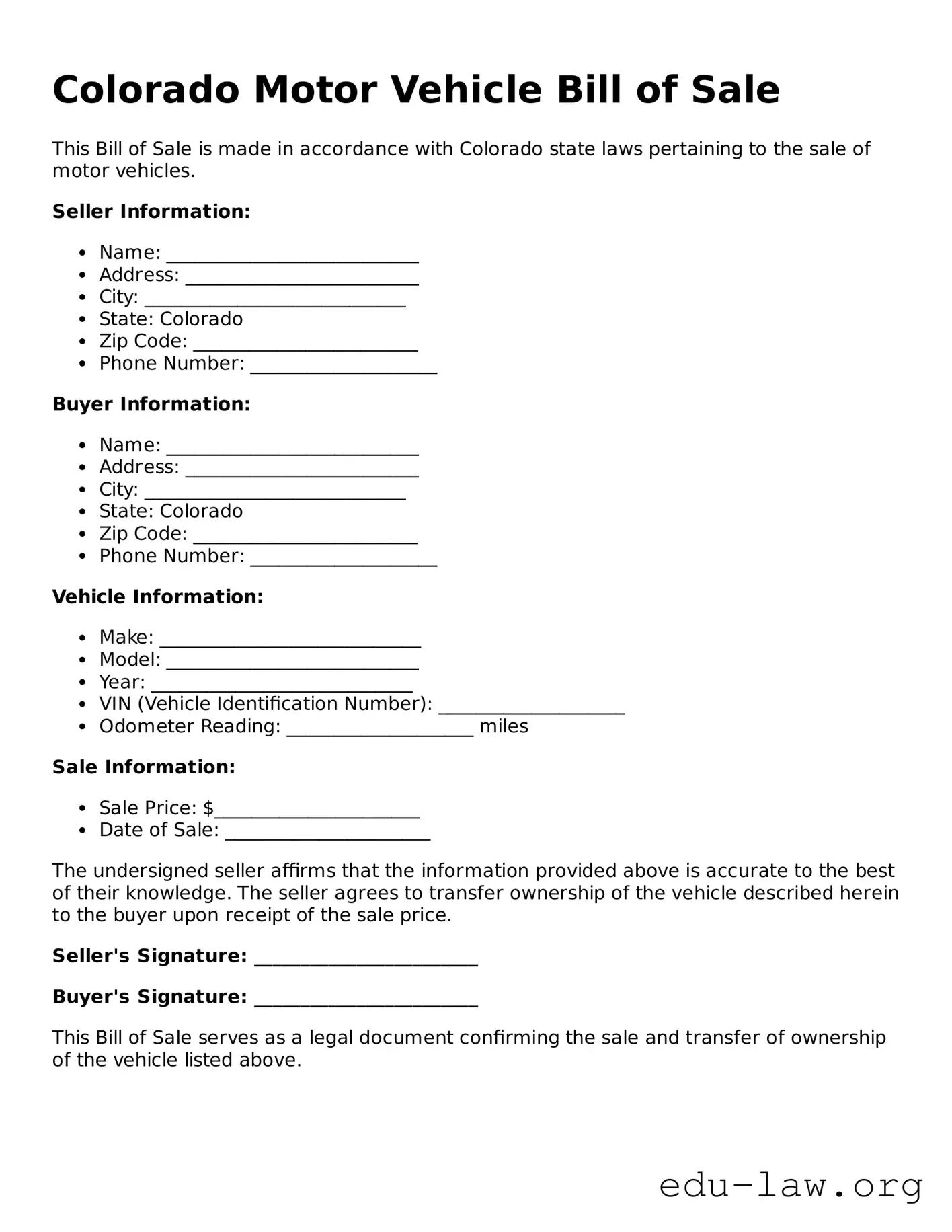
When buying or selling a vehicle in Colorado, having the right documentation is crucial for a smooth transaction. One essential document in this process is the Colorado Motor Vehicle Bill of Sale form. This form serves as a legal record of the sale, capturing important details such as the vehicle's make, model, year, and Vehicle Identification Number (VIN). Additionally, it includes the sale price and the names and addresses of both the buyer and the seller. By completing this form, both parties can protect their interests and ensure that the transfer of ownership is clear and official. Not only does it provide proof of the transaction, but it also aids in the registration process with the Colorado Department of Revenue. Understanding the nuances of this form can save both buyers and sellers from potential disputes down the road, making it a vital component of vehicle transactions in the state.
Colorado Motor Vehicle Bill of Sale
This Bill of Sale is made in accordance with Colorado state laws pertaining to the sale of motor vehicles.
Seller Information:
Buyer Information:
Vehicle Information:
Sale Information:
The undersigned seller affirms that the information provided above is accurate to the best of their knowledge. The seller agrees to transfer ownership of the vehicle described herein to the buyer upon receipt of the sale price.
Seller's Signature: ________________________
Buyer's Signature: ________________________
This Bill of Sale serves as a legal document confirming the sale and transfer of ownership of the vehicle listed above.
| Fact Name | Description |
|---|---|
| Purpose | The Colorado Motor Vehicle Bill of Sale form is used to document the sale of a motor vehicle between a buyer and a seller. |
| Governing Law | This form is governed by Colorado Revised Statutes, specifically Title 42, which addresses motor vehicles and their regulation. |
| Required Information | Essential details include the vehicle identification number (VIN), make, model, year, and the sale price. |
| Notarization | While notarization is not required, it is recommended to enhance the document's validity and provide additional proof of the transaction. |
Completing the Colorado Motor Vehicle Bill of Sale form is an important step in the process of transferring ownership of a vehicle. Once the form is filled out correctly, it serves as a legal document that both the seller and buyer can refer to during the transaction. Follow these steps to ensure that the form is completed accurately.
After completing the form, the buyer can proceed with the necessary steps to register the vehicle in their name. This may involve visiting a local motor vehicle office and providing the Bill of Sale along with other required documents.
What is a Colorado Motor Vehicle Bill of Sale?
The Colorado Motor Vehicle Bill of Sale is a legal document that records the sale of a motor vehicle between a seller and a buyer. It serves as proof of the transaction and outlines essential details such as the vehicle's identification number (VIN), make, model, year, and the sale price. This document is important for both parties to ensure a smooth transfer of ownership.
Is a Bill of Sale required in Colorado?
While a Bill of Sale is not legally required for every vehicle sale in Colorado, it is highly recommended. Having this document can protect both the buyer and seller by providing clear evidence of the transaction. It can also be useful when registering the vehicle with the Department of Motor Vehicles (DMV).
What information should be included in the Bill of Sale?
A comprehensive Bill of Sale should include the following information: the full names and addresses of both the buyer and seller, the vehicle's make, model, year, and VIN, the sale price, and the date of the transaction. Additionally, both parties should sign the document to validate the agreement.
Can I create my own Bill of Sale?
Yes, you can create your own Bill of Sale. However, it is essential to ensure that all necessary information is included and that the document complies with Colorado state laws. There are templates available online that can help you structure the document correctly.
Do I need to have the Bill of Sale notarized?
Notarization is not required for a Bill of Sale in Colorado. However, having it notarized can provide an extra layer of protection, as it verifies the identities of both parties and the authenticity of their signatures. This can be particularly useful if any disputes arise later.
What should I do with the Bill of Sale after the sale?
After the sale, both the buyer and seller should keep a copy of the Bill of Sale for their records. The buyer will need it when registering the vehicle with the DMV. The seller should retain it as proof of the sale, which can be important for tax purposes or in case of any future issues regarding the vehicle.
How does a Bill of Sale affect vehicle registration?
The Bill of Sale is an important document when registering a vehicle in Colorado. The buyer must present the Bill of Sale to the DMV along with other required documents, such as the title and proof of insurance, to complete the registration process. It helps establish the new ownership of the vehicle.
Can a Bill of Sale be used for a trade-in vehicle?
Yes, a Bill of Sale can be used for a trade-in vehicle. When trading in a vehicle, you can document the transaction with a Bill of Sale, noting the details of the trade-in. This can be beneficial for both the dealership and the individual, providing a record of the exchange.
What if the vehicle has a lien on it?
If the vehicle has a lien, it is crucial to address this before completing the sale. The seller should ensure that the lien is paid off and released before transferring ownership. The Bill of Sale should indicate that the seller has the right to sell the vehicle and that the lien has been resolved, protecting the buyer from potential legal issues.
Incomplete Information: Failing to fill out all required fields can lead to issues during the title transfer process. Ensure that the names, addresses, and vehicle details are complete and accurate.
Incorrect Vehicle Identification Number (VIN): The VIN must match the one on the vehicle. Double-check this number to avoid complications with registration.
Not Including Odometer Reading: The odometer reading is a crucial piece of information. Omitting it can create legal challenges regarding the vehicle’s mileage.
Failure to Sign: Both the seller and buyer must sign the document. A missing signature can render the bill of sale invalid.
Not Keeping Copies: After completing the bill of sale, it’s important to keep copies for both parties. This ensures that there is a record of the transaction for future reference.
The Colorado Motor Vehicle Bill of Sale form is an essential document for individuals buying or selling a vehicle in Colorado. Along with this form, several other documents may be necessary to complete the transaction and ensure proper registration and title transfer.
Having these documents ready can streamline the process of buying or selling a vehicle in Colorado. It ensures that all legal requirements are met and helps protect both the buyer and seller during the transaction.
The Colorado Motor Vehicle Bill of Sale form shares similarities with the standard Bill of Sale document used in various transactions. Both documents serve as proof of the transfer of ownership from one party to another. They typically include essential details such as the names and addresses of the buyer and seller, a description of the item being sold, and the sale price. In addition, both forms require signatures from both parties to validate the transaction, ensuring that both the buyer and seller acknowledge the agreement.
Another document akin to the Colorado Motor Vehicle Bill of Sale is the Vehicle Title. This document is crucial in establishing legal ownership of a vehicle. Like the Bill of Sale, the Vehicle Title includes information about the vehicle, such as its make, model, and Vehicle Identification Number (VIN). It also requires the signatures of the seller and buyer to facilitate the transfer of ownership. While the Bill of Sale acts as a receipt for the transaction, the Vehicle Title serves as the official record of ownership with the state.
The Odometer Disclosure Statement is another document related to vehicle sales. This statement is often required when transferring ownership of a vehicle, especially in private sales. It confirms the vehicle's mileage at the time of sale, which protects the buyer from potential fraud. Similar to the Bill of Sale, it must be signed by both the buyer and seller. This document ensures transparency regarding the vehicle's condition and history, further safeguarding both parties in the transaction.
The Affidavit of Heirship is also comparable, particularly in cases where a vehicle is inherited. This document serves as a legal declaration that outlines the relationship between the deceased and the heir, confirming the heir's right to the vehicle. Like the Bill of Sale, it requires signatures from the involved parties. This affidavit helps streamline the process of transferring ownership without the need for probate, making it a vital document in the context of inherited vehicles.
When filling out the Colorado Motor Vehicle Bill of Sale form, it is important to ensure accuracy and completeness. Here are some key dos and don'ts to keep in mind:
When dealing with the Colorado Motor Vehicle Bill of Sale form, several misconceptions often arise. Understanding the truth behind these misconceptions can help ensure a smooth transaction when buying or selling a vehicle. Here’s a list of common misunderstandings:
By clarifying these misconceptions, both buyers and sellers can navigate the vehicle transaction process with greater confidence and understanding.
When filling out and using the Colorado Motor Vehicle Bill of Sale form, keep these key takeaways in mind:
Following these steps can help ensure a smooth transaction and protect both the buyer and seller.