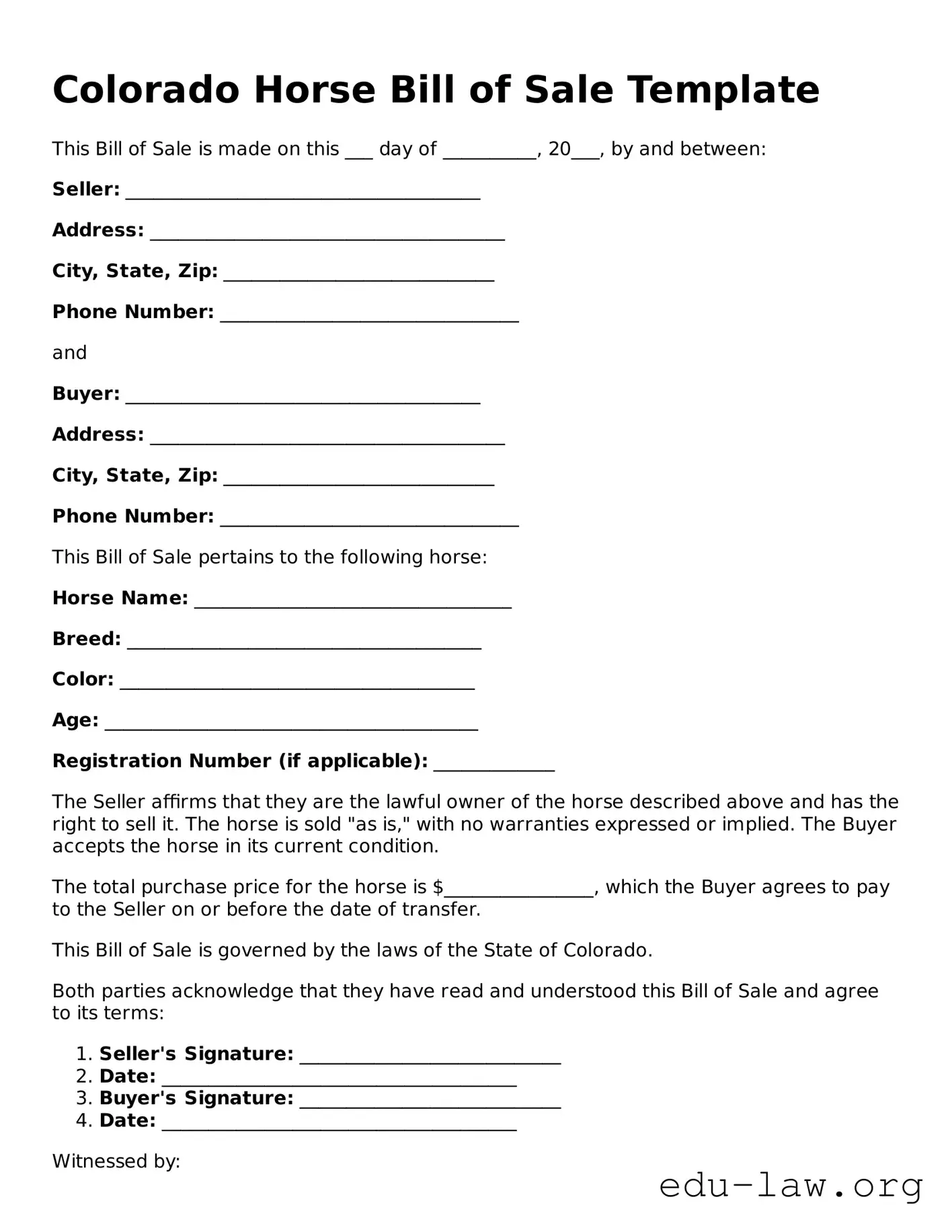
The Colorado Horse Bill of Sale form serves as an essential document for anyone involved in the buying or selling of horses in the state. This form not only provides legal protection for both the buyer and seller but also ensures that all relevant details about the transaction are clearly outlined. Key aspects include the identification of the horse, such as breed, age, color, and any unique markings, which help to confirm the animal's identity. The form also stipulates the purchase price, payment terms, and any warranties or guarantees associated with the sale. Additionally, it addresses the responsibilities of both parties regarding the horse's health and any disclosures about prior injuries or conditions. By documenting these elements, the Horse Bill of Sale fosters transparency and trust, making it a vital tool for equine transactions in Colorado.
Colorado Horse Bill of Sale Template
This Bill of Sale is made on this ___ day of __________, 20___, by and between:
Seller: ______________________________________
Address: ______________________________________
City, State, Zip: _____________________________
Phone Number: ________________________________
and
Buyer: ______________________________________
Address: ______________________________________
City, State, Zip: _____________________________
Phone Number: ________________________________
This Bill of Sale pertains to the following horse:
Horse Name: __________________________________
Breed: ______________________________________
Color: ______________________________________
Age: ________________________________________
Registration Number (if applicable): _____________
The Seller affirms that they are the lawful owner of the horse described above and has the right to sell it. The horse is sold "as is," with no warranties expressed or implied. The Buyer accepts the horse in its current condition.
The total purchase price for the horse is $________________, which the Buyer agrees to pay to the Seller on or before the date of transfer.
This Bill of Sale is governed by the laws of the State of Colorado.
Both parties acknowledge that they have read and understood this Bill of Sale and agree to its terms:
Witnessed by:
Name: ________________________________________
Signature: ____________________________________
Date: ______________________________________
| Fact Name | Description |
|---|---|
| Purpose | The Colorado Horse Bill of Sale form serves as a legal document that records the sale and transfer of ownership of a horse from one party to another. |
| Governing Laws | This form is governed by the Colorado Revised Statutes, specifically under Title 4, Article 2, which pertains to the sale of goods. |
| Required Information | Essential details include the names and addresses of both the seller and buyer, a description of the horse, and the sale price. |
| Signatures | Both parties must sign the form to validate the transaction, ensuring that the transfer of ownership is legally recognized. |
Once you have the Colorado Horse Bill of Sale form in hand, you are ready to start filling it out. This process involves providing specific information about the horse being sold, the buyer, and the seller. Follow these steps carefully to ensure all necessary details are accurately recorded.
After completing the form, keep it in a safe place. This document serves as proof of the transaction and can be important for future reference. Make sure both parties understand the terms outlined in the bill of sale.
What is a Colorado Horse Bill of Sale?
A Colorado Horse Bill of Sale is a legal document that serves as proof of the sale and purchase of a horse. This form outlines the details of the transaction, including the buyer's and seller's information, a description of the horse, and the sale price. It is essential for both parties to have a clear record of the transaction to avoid any potential disputes in the future.
Why is a Bill of Sale important?
A Bill of Sale is important for several reasons. First, it provides legal protection for both the buyer and the seller. It establishes ownership and can serve as evidence in case of disputes. Additionally, it can be useful for registering the horse with breed associations or for insurance purposes. Having a written record of the sale can also help in the event of any future legal issues related to the horse.
What information should be included in the Bill of Sale?
The Bill of Sale should include specific details to ensure clarity and legality. Key information includes the names and addresses of both the buyer and seller, a thorough description of the horse (including breed, age, color, and any identifying marks), the sale price, and the date of the transaction. It's also advisable to include any warranties or representations made by the seller regarding the horse's health or behavior.
Do I need to have the Bill of Sale notarized?
In Colorado, notarization is not a legal requirement for a Bill of Sale for a horse. However, having the document notarized can add an extra layer of authenticity and may be beneficial if any disputes arise later. It can also provide peace of mind for both parties involved in the transaction.
Can a Bill of Sale be used for other types of livestock?
Yes, a Bill of Sale can be used for various types of livestock, not just horses. While the specific details may differ depending on the animal, the fundamental purpose of the document remains the same: to provide proof of sale and transfer of ownership. It is advisable to tailor the Bill of Sale to reflect the specifics of the animal being sold.
What should I do if I lose my Bill of Sale?
If you lose your Bill of Sale, it is important to act quickly. You can try to obtain a copy from the seller if you are the buyer, or vice versa. If a replacement is not possible, consider creating a new Bill of Sale that includes the original transaction details and both parties' signatures. This new document can serve as a record of the sale, although it may not have the same legal standing as the original.
Incomplete Information: One common mistake is failing to provide all required details. This includes the names and addresses of both the buyer and seller, as well as the horse's identification information.
Incorrect Horse Description: Some individuals do not accurately describe the horse. Essential details such as breed, age, color, and any unique markings should be included to avoid confusion.
Omitting Sale Price: It is important to clearly state the sale price of the horse. Leaving this section blank can lead to misunderstandings later on.
Not Including Signatures: Both parties must sign the document for it to be valid. Forgetting to obtain signatures can invalidate the sale.
Failure to Date the Document: A date is crucial for establishing when the sale occurred. Without a date, it may be difficult to prove the timeline of the transaction.
Ignoring Local Laws: Some people overlook the importance of checking local regulations regarding horse sales. Not adhering to these laws can result in legal complications.
When buying or selling a horse in Colorado, the Horse Bill of Sale form is a crucial document. However, several other forms and documents can enhance the transaction's clarity and legality. Below is a list of these additional documents, each serving a specific purpose in the process.
Having these documents prepared and organized can facilitate a smoother transaction. They help protect both parties and ensure that all necessary information is clearly communicated and documented.
The Colorado Horse Bill of Sale is similar to a general Bill of Sale used for various types of personal property transactions. Both documents serve as a formal record of the transfer of ownership from one party to another. They typically include essential details such as the names and addresses of the buyer and seller, a description of the item being sold, and the sale price. This document helps protect both parties by providing proof of the transaction, which can be important for future reference or in case of disputes.
Another document akin to the Horse Bill of Sale is the Vehicle Bill of Sale. Like the Horse Bill of Sale, this document outlines the transfer of ownership of a vehicle, including cars, trucks, and motorcycles. It includes similar details such as the Vehicle Identification Number (VIN), make, model, and year of the vehicle, along with the buyer's and seller's information. Both documents are crucial for registering the new ownership with the appropriate authorities and can serve as evidence in legal matters.
The Pet Bill of Sale is also comparable to the Horse Bill of Sale. This document is used when transferring ownership of pets, such as dogs or cats. Similar to the Horse Bill of Sale, it includes details about the pet, such as breed, age, and any identifying features. The Pet Bill of Sale often includes information about vaccinations or health records, ensuring that the new owner is aware of the pet's history. Both documents emphasize the importance of responsible ownership and can help resolve disputes regarding the pet's ownership.
A Boat Bill of Sale serves a similar purpose for watercraft transactions. This document records the sale of boats, jet skis, and other water vehicles. It contains vital information such as the hull identification number, make, model, and year of the boat. Just like the Horse Bill of Sale, the Boat Bill of Sale protects both parties involved in the transaction and is often required for registration with state authorities.
The RV Bill of Sale is another document that parallels the Horse Bill of Sale. This form is used when selling or buying recreational vehicles, such as motorhomes or travel trailers. It includes details about the RV, including its VIN, make, model, and year. Both the RV and Horse Bills of Sale serve to document the transfer of ownership and provide essential information for registration and future reference.
The Equipment Bill of Sale is similar in function to the Horse Bill of Sale, particularly when it comes to transferring ownership of farm or construction equipment. This document outlines the specifics of the equipment being sold, including make, model, and serial number. Both documents provide a written record of the transaction, which can be useful for tax purposes or in case of disputes regarding ownership.
A Motorcycle Bill of Sale is closely related to the Horse Bill of Sale as well. This document is specifically designed for the sale of motorcycles and contains similar information, including the motorcycle's VIN, make, model, and year. Both documents serve to protect the interests of both the buyer and the seller, ensuring that the transfer of ownership is clearly documented.
The Mobile Home Bill of Sale is another document that shares similarities with the Horse Bill of Sale. This form is used for the sale of mobile homes and includes critical information such as the home’s identification number, make, model, and year. Just like the Horse Bill of Sale, it provides a legal record of the transaction and can be important for future ownership verification and registration with local authorities.
Finally, the Firearm Bill of Sale is comparable to the Horse Bill of Sale in terms of documenting the transfer of ownership of firearms. This document includes details about the firearm, such as its make, model, and serial number. Both documents serve to protect the rights of both parties and ensure that the sale complies with applicable laws and regulations.
When filling out the Colorado Horse Bill of Sale form, attention to detail is crucial. Here are five important do's and don'ts to keep in mind:
The Colorado Horse Bill of Sale form is an important document for anyone involved in buying or selling a horse in the state. However, several misconceptions exist about this form. Below are eight common misunderstandings, along with clarifications to help you better understand its purpose and requirements.
Some people believe that a verbal agreement is sufficient for the sale of a horse. However, having a written bill of sale provides legal protection for both the buyer and the seller.
This form can be used for any horse, regardless of whether it is registered or not. It serves to document the sale and transfer of ownership.
While notarization can add an extra layer of authenticity, it is not a requirement for the Colorado Horse Bill of Sale to be valid.
The bill of sale is important for both commercial and private sales. It protects the interests of all parties involved, regardless of the transaction type.
Even in trusted relationships, having a written record is crucial. It helps clarify terms and conditions, reducing the risk of misunderstandings.
Including specific details about the horse, such as breed, age, and health status, is essential. This information helps prevent disputes later on.
While the form is specific to Colorado, it can be used for transactions involving horses that will be moved to other states. Always check local laws for any additional requirements.
It is best practice to complete the bill of sale at the time of the transaction. This ensures that both parties have a clear record of the sale from the outset.
When dealing with the sale or purchase of a horse in Colorado, using the Horse Bill of Sale form is essential. Here are some key takeaways to consider:
By following these guidelines, individuals can ensure a smooth transaction and protect their interests in the sale or purchase of a horse in Colorado.