In the beautiful state of Colorado, engaging in various activities—whether it’s skiing on the slopes, participating in a community event, or renting out a venue—often comes with inherent risks. To navigate these risks, many individuals and organizations utilize a Hold Harmless Agreement form. This essential document serves as a protective measure, ensuring that one party agrees to take responsibility for any potential injuries or damages that may arise during an activity. By signing this agreement, participants can feel more secure, knowing that they are not held liable for accidents that may occur beyond their control. It typically outlines the scope of the activity, specifies the responsibilities of each party, and emphasizes the importance of safety. Moreover, it can include clauses about indemnification, which means one party agrees to cover the costs associated with claims or damages, providing an extra layer of protection. Understanding the nuances of this agreement can empower individuals and organizations to engage in activities with confidence, while also fostering a culture of safety and responsibility.
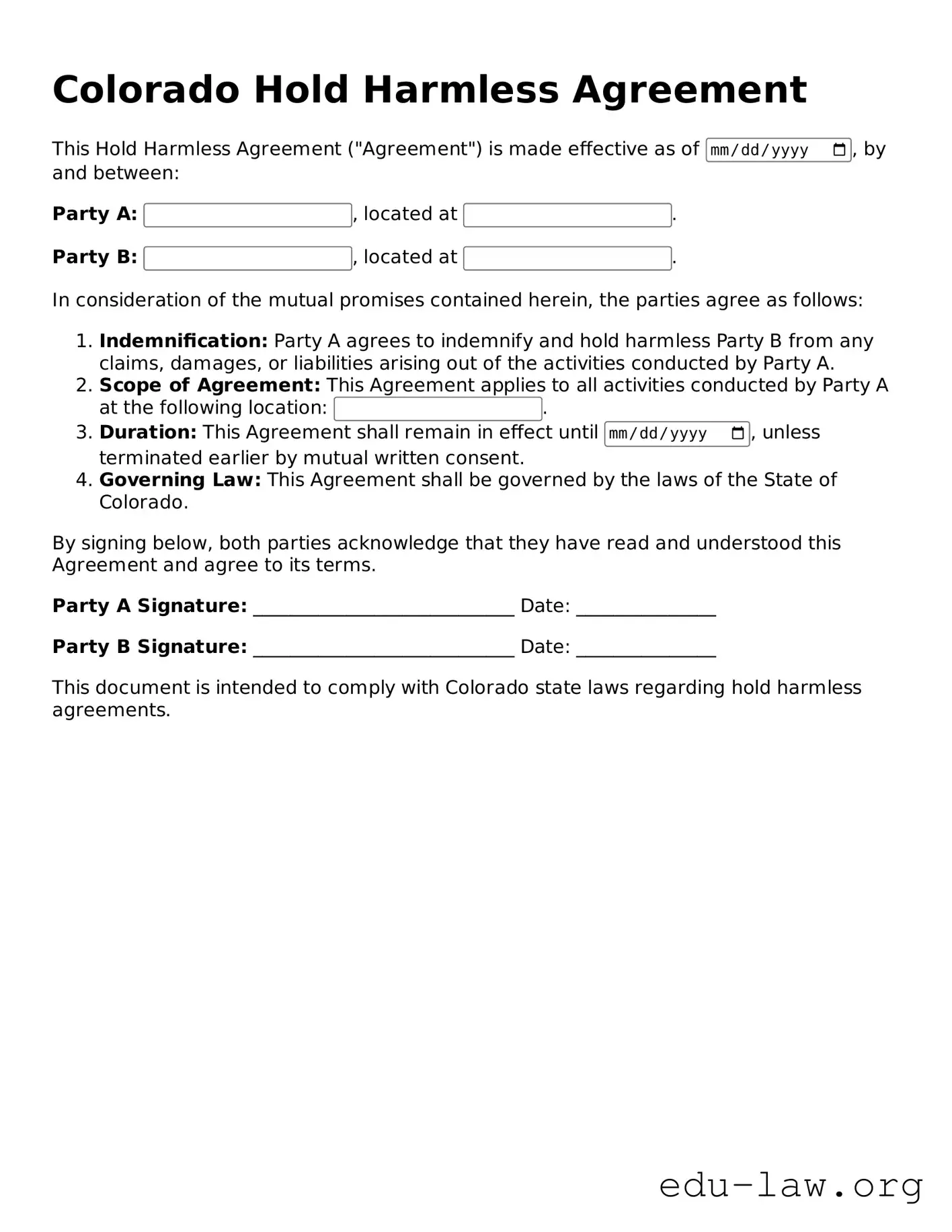
Colorado Hold Harmless Agreement
This Hold Harmless Agreement ("Agreement") is made effective as of , by and between:
Party A: , located at .
Party B: , located at .
In consideration of the mutual promises contained herein, the parties agree as follows:
By signing below, both parties acknowledge that they have read and understood this Agreement and agree to its terms.
Party A Signature: ____________________________ Date: _______________
Party B Signature: ____________________________ Date: _______________
This document is intended to comply with Colorado state laws regarding hold harmless agreements.
| Fact Name | Details |
|---|---|
| Definition | A Hold Harmless Agreement is a legal document where one party agrees not to hold another party liable for any damages or injuries that may occur during a specific activity. |
| Purpose | This agreement is commonly used in situations where risks are involved, such as events, construction projects, or recreational activities. |
| Governing Law | The laws governing Hold Harmless Agreements in Colorado are primarily based on state statutes and case law, particularly concerning liability and indemnity. |
| Enforceability | These agreements are generally enforceable in Colorado, provided they are clear, specific, and not against public policy. |
| Types | There are two main types of Hold Harmless Agreements: unilateral, where one party assumes all liability, and mutual, where both parties share the risk. |
| Limitations | Some limitations exist, such as not being able to waive liability for gross negligence or willful misconduct in Colorado. |
Completing the Colorado Hold Harmless Agreement form is a straightforward process that requires attention to detail. After filling out the form, it will need to be submitted as per the instructions provided by the relevant authority or organization. Follow these steps to ensure accurate completion of the form.
What is a Colorado Hold Harmless Agreement?
A Colorado Hold Harmless Agreement is a legal document that protects one party from liability for any injuries or damages that may occur during a specific activity or event. By signing this agreement, one party agrees not to hold the other party responsible for any claims, losses, or damages that may arise. This type of agreement is commonly used in various situations, including rental agreements, event planning, and construction contracts.
Who should use a Hold Harmless Agreement?
This agreement is beneficial for anyone involved in activities where there is a risk of injury or damage. For example, event organizers may require vendors to sign a Hold Harmless Agreement to protect themselves from liability. Property owners may also use it when renting out their space. It is important for both parties to understand their rights and responsibilities before entering into this agreement.
What are the key elements of a Hold Harmless Agreement?
A typical Hold Harmless Agreement includes several key elements. First, it identifies the parties involved in the agreement. Next, it clearly outlines the scope of the activities covered by the agreement. Additionally, it specifies the extent of liability being waived. Finally, both parties must sign and date the agreement to make it legally binding. Clarity in language is crucial to ensure that all parties understand their commitments.
Is a Hold Harmless Agreement enforceable in Colorado?
Yes, Hold Harmless Agreements are generally enforceable in Colorado, provided they meet certain legal requirements. The agreement must be clear and specific about the liabilities being waived. It should also not violate public policy or involve gross negligence. To ensure enforceability, it is advisable for both parties to consult with a legal professional before signing the agreement.
Incomplete Information: One common mistake is failing to provide all required details. It's essential to fill out every section of the form, including names, addresses, and dates. Leaving any part blank can lead to delays or issues with the agreement's validity.
Not Understanding the Terms: Many individuals sign the agreement without fully grasping its implications. It’s crucial to read and understand what you are agreeing to, especially regarding liability and responsibilities. Misunderstanding can lead to unexpected consequences.
Incorrect Signatures: Another frequent error is not signing the form correctly. Ensure that all parties involved sign in the designated areas. In some cases, a witness or notary may also be required, so check the specific requirements for your situation.
Failure to Keep Copies: After completing the form, some people forget to make copies for their records. Keeping a copy is important for future reference and can help resolve any disputes that may arise later on.
When engaging in activities that may involve risk, individuals and organizations often use a Colorado Hold Harmless Agreement. This document helps protect one party from liability for injuries or damages incurred by another party. Along with this agreement, several other forms and documents may be necessary to ensure comprehensive coverage and clarity in legal responsibilities. Here are some commonly used documents that may accompany the Hold Harmless Agreement.
Each of these documents serves a specific purpose and can provide additional protection and clarity in various situations. It is essential to consider the unique circumstances surrounding the activity or event to determine which forms are necessary to ensure adequate coverage and understanding among all parties involved.
The Colorado Hold Harmless Agreement is similar to a Waiver of Liability. Both documents aim to protect one party from legal claims resulting from injuries or damages. A Waiver of Liability typically requires the participant to acknowledge the risks involved in an activity and agree not to hold the organization responsible for any accidents. This mutual understanding can help reduce the likelihood of lawsuits in recreational activities or events.
Another related document is the Indemnity Agreement. Like the Hold Harmless Agreement, an Indemnity Agreement involves one party agreeing to compensate another for certain damages or losses. While the Hold Harmless Agreement focuses on preventing claims against a party, the Indemnity Agreement emphasizes financial responsibility for damages incurred. Both documents serve to clarify the responsibilities of each party and can be crucial in business contracts.
The Release of Liability form shares similarities with the Hold Harmless Agreement as well. Both documents require individuals to waive their right to sue for injuries or damages. A Release of Liability is often used in situations where participants engage in activities that carry inherent risks, such as sports or adventure activities. By signing this form, individuals acknowledge the risks and agree not to hold the organization liable for any accidents.
A Participant Agreement is another document that resembles the Hold Harmless Agreement. This type of agreement outlines the expectations and responsibilities of participants in a program or event. It often includes clauses that protect the organizing party from liability, similar to the Hold Harmless Agreement. By signing a Participant Agreement, individuals agree to follow rules and acknowledge potential risks, thereby reducing the likelihood of disputes.
The Service Agreement is also comparable to the Hold Harmless Agreement, particularly in contexts where services are provided. This document often includes clauses that limit liability for the service provider. By outlining the terms and conditions of the service, both parties can have a clearer understanding of their rights and responsibilities. This can help prevent misunderstandings and protect against potential legal claims.
A Construction Contract often contains provisions similar to those found in a Hold Harmless Agreement. In construction, these contracts frequently include clauses that protect contractors from liability for certain damages. By agreeing to these terms, the parties involved can clarify who is responsible for various risks associated with the project. This helps ensure that all parties understand their roles and limits their exposure to legal claims.
Finally, a Non-Disclosure Agreement (NDA) can share some similarities, especially regarding protecting sensitive information. While an NDA primarily focuses on confidentiality, it may include clauses that limit liability for breaches. Both documents aim to protect the interests of the parties involved, though they address different aspects of risk and liability. Understanding these nuances is essential for anyone entering into such agreements.
When filling out the Colorado Hold Harmless Agreement form, it's essential to approach the task with care and attention. Here’s a list of things to do and avoid to ensure you complete the form correctly and effectively.
By following these guidelines, you can navigate the Hold Harmless Agreement form with confidence and clarity. Remember, this document is designed to protect you, so it’s worth the effort to fill it out correctly.
Understanding the Colorado Hold Harmless Agreement form is essential for anyone considering its use. However, several misconceptions often cloud its purpose and implications. Below is a list of six common misconceptions, along with clarifications to help illuminate the truth.
By addressing these misconceptions, individuals can make informed decisions about using a Colorado Hold Harmless Agreement. Understanding its limitations and appropriate applications is crucial for ensuring that it serves its intended purpose effectively.
When filling out and using the Colorado Hold Harmless Agreement form, consider the following key takeaways: