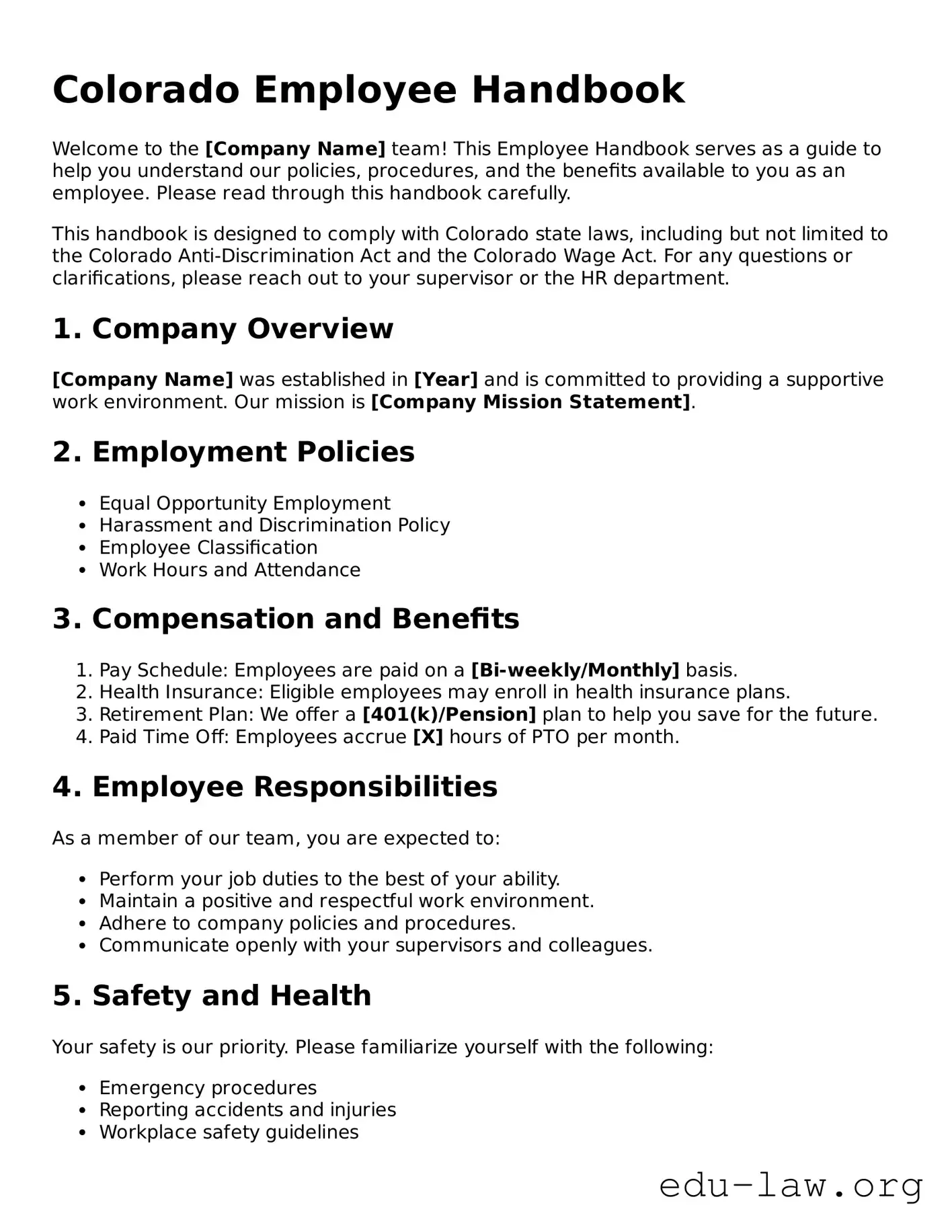
Creating a comprehensive Employee Handbook is essential for any business operating in Colorado. This vital document serves as a roadmap for employees, outlining company policies, procedures, and expectations. It covers critical areas such as workplace conduct, employee rights, and benefits, ensuring that all team members understand their roles and responsibilities. Additionally, the handbook addresses important legal requirements, including anti-discrimination policies and workplace safety regulations, which are crucial for compliance with state and federal laws. By providing clear guidelines on topics like leave policies, performance evaluations, and disciplinary procedures, the Colorado Employee Handbook form helps foster a positive work environment while protecting both the employer and employees. Crafting this handbook with care not only enhances communication within the organization but also minimizes potential disputes and misunderstandings, making it an indispensable tool for any employer in the state.
Colorado Employee Handbook
Welcome to the [Company Name] team! This Employee Handbook serves as a guide to help you understand our policies, procedures, and the benefits available to you as an employee. Please read through this handbook carefully.
This handbook is designed to comply with Colorado state laws, including but not limited to the Colorado Anti-Discrimination Act and the Colorado Wage Act. For any questions or clarifications, please reach out to your supervisor or the HR department.
1. Company Overview
[Company Name] was established in [Year] and is committed to providing a supportive work environment. Our mission is [Company Mission Statement].
2. Employment Policies
3. Compensation and Benefits
4. Employee Responsibilities
As a member of our team, you are expected to:
5. Safety and Health
Your safety is our priority. Please familiarize yourself with the following:
6. Acknowledgment of Receipt
Please sign below to acknowledge that you have received and read the [Company Name] Employee Handbook.
Employee Name: [Employee Name]
Date: [Date]
Thank you for being part of our team!
| Fact Name | Description |
|---|---|
| Purpose | The Colorado Employee Handbook serves as a guide for employees about company policies, procedures, and expectations. |
| Legal Requirement | While not legally required, having an employee handbook is highly recommended to clarify workplace rules and protect against legal disputes. |
| Governing Laws | Key governing laws include the Colorado Anti-Discrimination Act and the Colorado Wage Act, which influence policies on discrimination and wages. |
| Contents | A typical handbook includes sections on workplace conduct, benefits, leave policies, and safety protocols. |
| Employee Acknowledgment | Employers often require employees to sign an acknowledgment form to confirm they have received and understood the handbook. |
| Updates | Regular updates are essential to ensure compliance with changing laws and to reflect new company policies. |
Completing the Colorado Employee Handbook form is an important step in ensuring that employees understand their rights and responsibilities within the workplace. Follow these steps carefully to fill out the form accurately.
Once the form is completed, it should be submitted to the human resources department for record-keeping. This ensures that both the employee and employer have a clear understanding of the expectations set forth in the handbook.
What is the purpose of the Colorado Employee Handbook form?
The Colorado Employee Handbook form serves as a comprehensive guide for employees regarding the company's policies, procedures, and expectations. It outlines important information about workplace conduct, benefits, and employee rights. This handbook helps ensure that all employees understand their roles and responsibilities, fostering a positive work environment.
Is it mandatory for employers in Colorado to provide an employee handbook?
While it's not legally required for employers in Colorado to provide an employee handbook, doing so is highly recommended. A well-crafted handbook can protect both the employer and the employees by clearly stating policies and procedures. It can also help mitigate misunderstandings and disputes in the workplace.
What key topics should be included in the Colorado Employee Handbook?
Essential topics to include in the handbook are workplace policies, attendance and punctuality expectations, anti-discrimination and harassment policies, benefits information, and procedures for reporting issues. Additionally, it should cover safety procedures, dress code, and any specific state laws that may apply to your industry.
How often should the employee handbook be updated?
It’s important to review and update the employee handbook regularly, ideally at least once a year. Changes in laws, company policies, or industry standards may necessitate updates. Keeping the handbook current ensures that employees have the latest information and helps the company remain compliant with legal requirements.
What should an employee do if they have questions about the handbook?
If an employee has questions about the handbook, they should feel encouraged to reach out to their supervisor or the human resources department. Open communication is vital, and HR can provide clarification on any policies or procedures that may be unclear. Employees should never hesitate to seek guidance when needed.
Can employees be disciplined for not following the policies outlined in the handbook?
Yes, employees can face disciplinary action for not adhering to the policies outlined in the handbook. It is crucial for employees to familiarize themselves with the handbook and understand the consequences of non-compliance. Employers should enforce policies consistently to maintain fairness and uphold workplace standards.
Inaccurate Personal Information: One common mistake is providing incorrect or outdated personal details. This includes your name, address, and contact information. Always double-check that the information matches your identification documents.
Failure to Read Policies Thoroughly: Many individuals skim through the handbook without fully understanding the policies. This can lead to misunderstandings about workplace expectations and employee rights. Take the time to read and comprehend each section.
Not Asking Questions: If something is unclear, not seeking clarification is a mistake. Employees often hesitate to ask questions, fearing they might seem uninformed. However, asking for clarification can prevent future issues and misunderstandings.
Ignoring Signature Requirements: Some people forget to sign or date the acknowledgment section of the form. This step is crucial as it confirms that you have read and understood the policies outlined in the handbook. Failing to do so could lead to complications later on.
When creating a comprehensive employee handbook in Colorado, it's helpful to have additional forms and documents that complement it. These documents can clarify policies, outline expectations, and ensure compliance with state and federal laws. Here’s a list of common forms you might consider using alongside the Colorado Employee Handbook.
Having these documents on hand can streamline processes and enhance communication within your organization. Each form plays a vital role in maintaining clarity and ensuring a positive work environment.
The Colorado Employee Handbook is similar to an Employee Manual. Both documents serve as essential resources for employees, outlining company policies, procedures, and expectations. An Employee Manual typically includes information on workplace conduct, benefits, and disciplinary procedures. Like the Employee Handbook, it aims to provide clarity and consistency in the employer-employee relationship, ensuring that employees understand their rights and responsibilities within the organization.
Another document comparable to the Colorado Employee Handbook is the Company Policy Guide. This guide focuses specifically on the rules and regulations that govern workplace behavior and operations. It may address topics such as attendance, dress code, and workplace safety. Similar to the Employee Handbook, the Company Policy Guide is designed to promote a positive work environment and minimize misunderstandings between employees and management.
The Colorado Employee Handbook also shares similarities with an Onboarding Packet. An Onboarding Packet is often provided to new hires and includes essential information about the company, its culture, and initial job responsibilities. While the Employee Handbook serves as a comprehensive reference throughout employment, the Onboarding Packet focuses on the early stages of an employee's journey, ensuring they have the necessary tools and knowledge to succeed from day one.
Lastly, the Employee Rights Document bears resemblance to the Colorado Employee Handbook. This document outlines the rights and protections afforded to employees under federal and state laws. While the Employee Handbook provides a broader overview of company policies, the Employee Rights Document focuses specifically on legal entitlements, such as anti-discrimination policies and workplace safety regulations. Both documents aim to empower employees by informing them of their rights and fostering a fair workplace.
When filling out the Colorado Employee Handbook form, it’s important to follow certain guidelines to ensure accuracy and compliance. Here’s a list of things you should and shouldn’t do:
When it comes to the Colorado Employee Handbook form, several misconceptions often arise. Understanding these misunderstandings can help employers and employees navigate the requirements more effectively.
While it's true that Colorado law does not mandate an employee handbook, having one is highly beneficial. It serves as a tool to communicate workplace policies and expectations, which can help protect the company from potential legal disputes.
Every business is unique, and so should be its employee handbook. While there are common elements that many handbooks include, such as anti-discrimination policies and leave policies, the specific content should reflect the company's culture, values, and operational needs.
Many believe that an employee handbook, once written, does not need to be updated. However, this is not the case. As laws change and company policies evolve, it is essential to review and revise the handbook regularly to ensure compliance and relevance.
It is a common assumption that employees will read and understand the handbook in its entirety. In reality, many may skim or overlook important sections. Therefore, employers should consider providing training sessions or summaries to highlight key policies and ensure that employees are well-informed.
When filling out and utilizing the Colorado Employee Handbook form, it is essential to keep several key points in mind to ensure clarity and compliance. Below are important takeaways to consider:
By keeping these key points in mind, organizations can create an effective Employee Handbook that supports a positive work environment and fosters clear communication between employees and management.