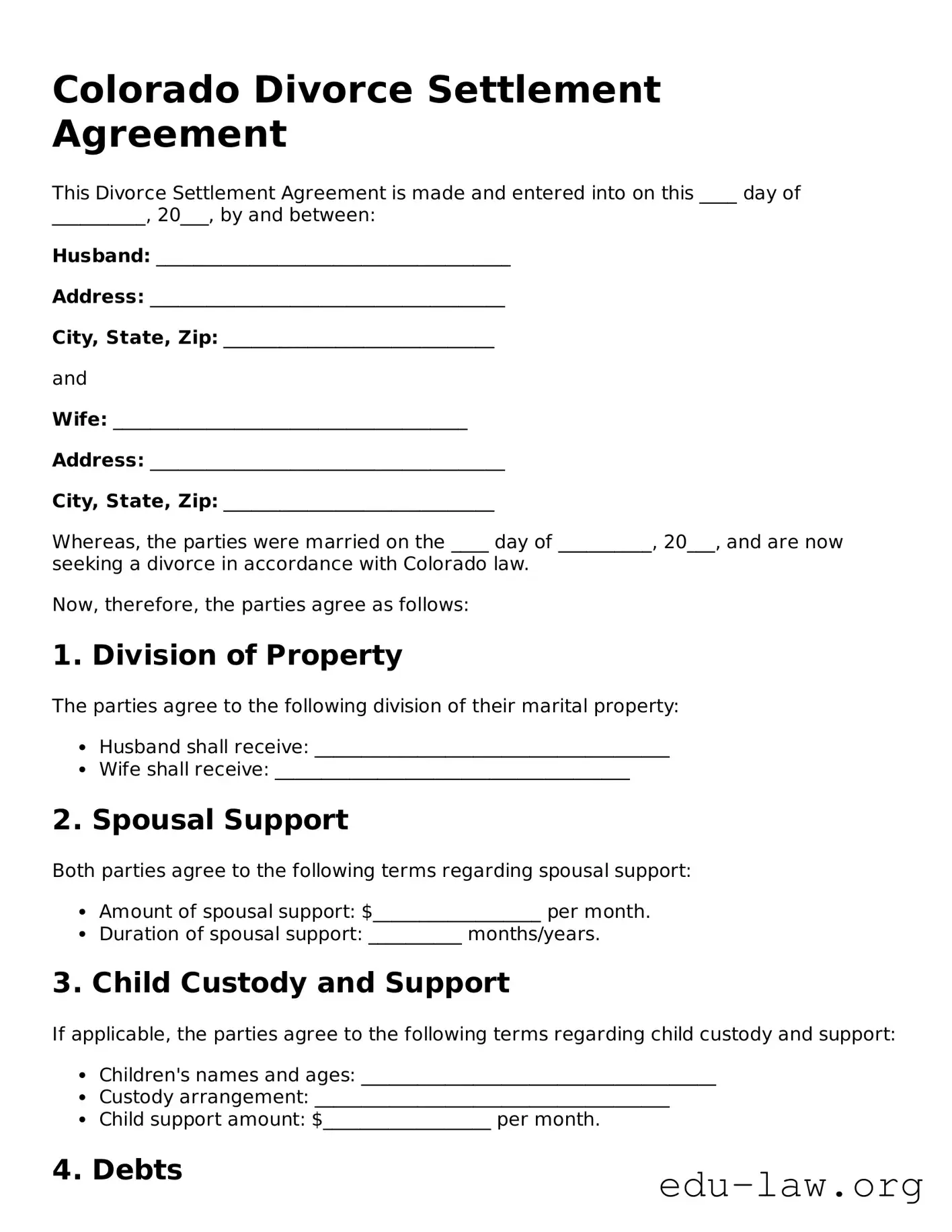
When navigating the complexities of divorce, a Colorado Divorce Settlement Agreement form serves as a crucial document for couples seeking to formalize the terms of their separation. This form outlines essential aspects such as the division of property, allocation of debts, and arrangements for child custody and support. It ensures that both parties have a clear understanding of their rights and responsibilities moving forward. Additionally, the agreement addresses spousal support, if applicable, and may include provisions for health insurance and tax considerations. By detailing these elements, the form helps to prevent misunderstandings and disputes, promoting a smoother transition for both individuals and any children involved. Understanding the significance of each section in the agreement can lead to a more amicable resolution, allowing both parties to move on with their lives with clarity and peace of mind.
Colorado Divorce Settlement Agreement
This Divorce Settlement Agreement is made and entered into on this ____ day of __________, 20___, by and between:
Husband: ______________________________________
Address: ______________________________________
City, State, Zip: _____________________________
and
Wife: ______________________________________
Address: ______________________________________
City, State, Zip: _____________________________
Whereas, the parties were married on the ____ day of __________, 20___, and are now seeking a divorce in accordance with Colorado law.
Now, therefore, the parties agree as follows:
1. Division of Property
The parties agree to the following division of their marital property:
2. Spousal Support
Both parties agree to the following terms regarding spousal support:
3. Child Custody and Support
If applicable, the parties agree to the following terms regarding child custody and support:
4. Debts
The parties agree to the following division of debts:
5. Miscellaneous Provisions
This Agreement shall be governed by the laws of the State of Colorado. The parties acknowledge that they have read and understood this Agreement and that they are entering into it voluntarily.
In witness whereof, the parties have executed this Divorce Settlement Agreement as of the day and year first above written.
Husband's Signature: _______________________________
Date: _____________________________________________
Wife's Signature: _______________________________
Date: _____________________________________________
| Fact Name | Description |
|---|---|
| Purpose | The Colorado Divorce Settlement Agreement form is used to outline the terms agreed upon by both parties in a divorce, including asset division, child custody, and support arrangements. |
| Governing Law | This form is governed by Colorado state law, specifically the Colorado Revised Statutes Title 14, Article 10, which covers divorce and family law. |
| Mutual Agreement | Both spouses must agree on the terms included in the settlement agreement for it to be valid and enforceable. |
| Filing Requirement | The completed form must be filed with the court as part of the divorce proceedings to ensure that the agreement is recognized legally. |
| Modification | Once finalized, any changes to the agreement must be made through a formal process, requiring both parties' consent and possibly court approval. |
After gathering the necessary information, you will need to complete the Colorado Divorce Settlement Agreement form. This form outlines the terms of your divorce and ensures both parties are in agreement regarding various aspects such as property division, child custody, and support obligations. Follow the steps below to fill out the form correctly.
Once the form is filled out, it will need to be filed with the appropriate court. Ensure you follow local rules regarding submission and any required fees.
What is a Colorado Divorce Settlement Agreement?
A Colorado Divorce Settlement Agreement is a legal document that outlines the terms agreed upon by both spouses during a divorce. This document typically addresses issues such as property division, child custody, child support, and spousal support. It serves as a formal record of the agreement reached by both parties and is submitted to the court for approval.
Why is a Divorce Settlement Agreement important?
This agreement is crucial because it helps to ensure that both parties are on the same page regarding their rights and responsibilities after the divorce. It can prevent future disputes by clearly defining how assets will be divided and how children will be cared for. Additionally, having a court-approved agreement can provide legal protection for both parties.
Who needs to sign the Divorce Settlement Agreement?
Both spouses must sign the Divorce Settlement Agreement. Their signatures indicate that they understand and agree to the terms laid out in the document. If one party does not agree to the terms, the divorce cannot proceed based on that agreement, and negotiations may need to continue.
Can the Divorce Settlement Agreement be modified after it is signed?
Yes, the Divorce Settlement Agreement can be modified after it is signed, but both parties must agree to any changes. If circumstances change significantly, such as a job loss or a change in child custody needs, either party can petition the court to modify the agreement. It’s essential to document any changes formally to ensure they are enforceable.
What happens if one party does not comply with the agreement?
If one party fails to comply with the terms of the Divorce Settlement Agreement, the other party can seek enforcement through the court. The court may order the non-compliant party to fulfill their obligations, which can include financial penalties or other legal consequences. It’s important to keep records of any violations for court proceedings.
Is legal representation necessary to create a Divorce Settlement Agreement?
While it is not legally required to have an attorney to create a Divorce Settlement Agreement, having legal representation can be beneficial. An attorney can provide guidance on the legal implications of the agreement, help ensure that it is fair and comprehensive, and assist with the filing process. For those unfamiliar with legal terms and procedures, professional advice can be invaluable.
How long does it take to finalize a Divorce Settlement Agreement?
The time it takes to finalize a Divorce Settlement Agreement can vary widely depending on the complexity of the issues involved and how well both parties communicate. If both spouses are cooperative and can agree on terms quickly, the process may take just a few weeks. However, if there are significant disagreements, it could take months to reach a resolution.
What should be included in the Divorce Settlement Agreement?
A comprehensive Divorce Settlement Agreement should include details about the division of marital property, child custody arrangements, child support obligations, spousal support, and any other relevant issues. It’s important to be thorough and clear to avoid misunderstandings in the future.
Where do I file the Divorce Settlement Agreement?
The Divorce Settlement Agreement should be filed with the court where the divorce proceedings are taking place. After filing, the court will review the agreement to ensure it is fair and complies with state laws. Once approved, the agreement becomes part of the official court record.
What if we cannot reach an agreement?
If both parties cannot reach an agreement, they may need to consider mediation or other dispute resolution methods. Mediation involves a neutral third party who helps facilitate discussions and negotiations. If mediation fails, the case may proceed to court, where a judge will make the final decisions regarding the divorce terms.
Incomplete Information: Many individuals fail to provide all required details. Missing names, addresses, or dates can lead to delays or complications in the divorce process.
Incorrect Financial Disclosures: Some people do not accurately report their income or assets. This can result in unfair settlements or legal repercussions later on.
Overlooking Child Support Guidelines: Parents often miscalculate child support obligations. It’s essential to refer to Colorado's guidelines to ensure compliance and fairness.
Ignoring Tax Implications: Failing to consider the tax consequences of asset division can lead to unexpected financial burdens after the divorce is finalized.
Not Reviewing Legal Terms: Some individuals skip reviewing the legal language in the agreement. Understanding terms is crucial to avoid future disputes.
Failing to Seek Professional Guidance: Many overlook the importance of consulting a lawyer or financial advisor. Expert advice can prevent costly mistakes and ensure a fair agreement.
When navigating a divorce in Colorado, several forms and documents may accompany the Divorce Settlement Agreement to ensure that all aspects of the separation are addressed comprehensively. Understanding these documents can streamline the process and help both parties reach a fair resolution.
Each of these documents plays a vital role in the divorce process in Colorado. By familiarizing yourself with them, you can better navigate the complexities of your situation and work towards a resolution that meets the needs of all parties involved.
The Colorado Divorce Settlement Agreement form shares similarities with the Marital Settlement Agreement. Both documents aim to outline the terms of a divorce, detailing how assets, debts, and responsibilities will be divided between spouses. The Marital Settlement Agreement is often used in various states and serves the same purpose: to provide a clear framework for the dissolution of the marriage. This ensures that both parties understand their rights and obligations, minimizing potential disputes in the future.
Another document that resembles the Colorado Divorce Settlement Agreement is the Child Custody Agreement. While the focus of this document is specifically on the care and custody of children, it is essential in the divorce process when children are involved. Like the Divorce Settlement Agreement, it lays out the responsibilities of each parent, visitation schedules, and decision-making authority. This agreement helps parents avoid misunderstandings and conflicts regarding their children’s upbringing after the divorce.
The Separation Agreement is also quite similar to the Divorce Settlement Agreement. This document is often used when couples decide to live apart but are not yet ready to divorce. It addresses issues such as property division, spousal support, and child custody, much like the Divorce Settlement Agreement does. By establishing clear terms while the couple is separated, it can lead to a smoother transition into divorce if that becomes the next step.
Lastly, the Property Settlement Agreement bears a close resemblance to the Divorce Settlement Agreement. This document specifically focuses on the division of property and debts between spouses during a divorce. It details who will keep what assets and how debts will be handled. While the Divorce Settlement Agreement encompasses broader issues, including child custody and support, the Property Settlement Agreement zeroes in on financial matters, ensuring both parties understand their financial responsibilities moving forward.
When filling out the Colorado Divorce Settlement Agreement form, it is important to follow certain guidelines to ensure accuracy and completeness. Here is a list of things you should and shouldn't do:
Understanding the Colorado Divorce Settlement Agreement form is crucial for anyone navigating the divorce process in the state. However, several misconceptions can lead to confusion. Below is a list of ten common misunderstandings regarding this form, along with explanations to clarify each point.
By addressing these misconceptions, individuals can better navigate the complexities of the Colorado Divorce Settlement Agreement form and make informed decisions during their divorce process.
Filling out and using the Colorado Divorce Settlement Agreement form requires careful attention to detail. Here are key takeaways to consider: