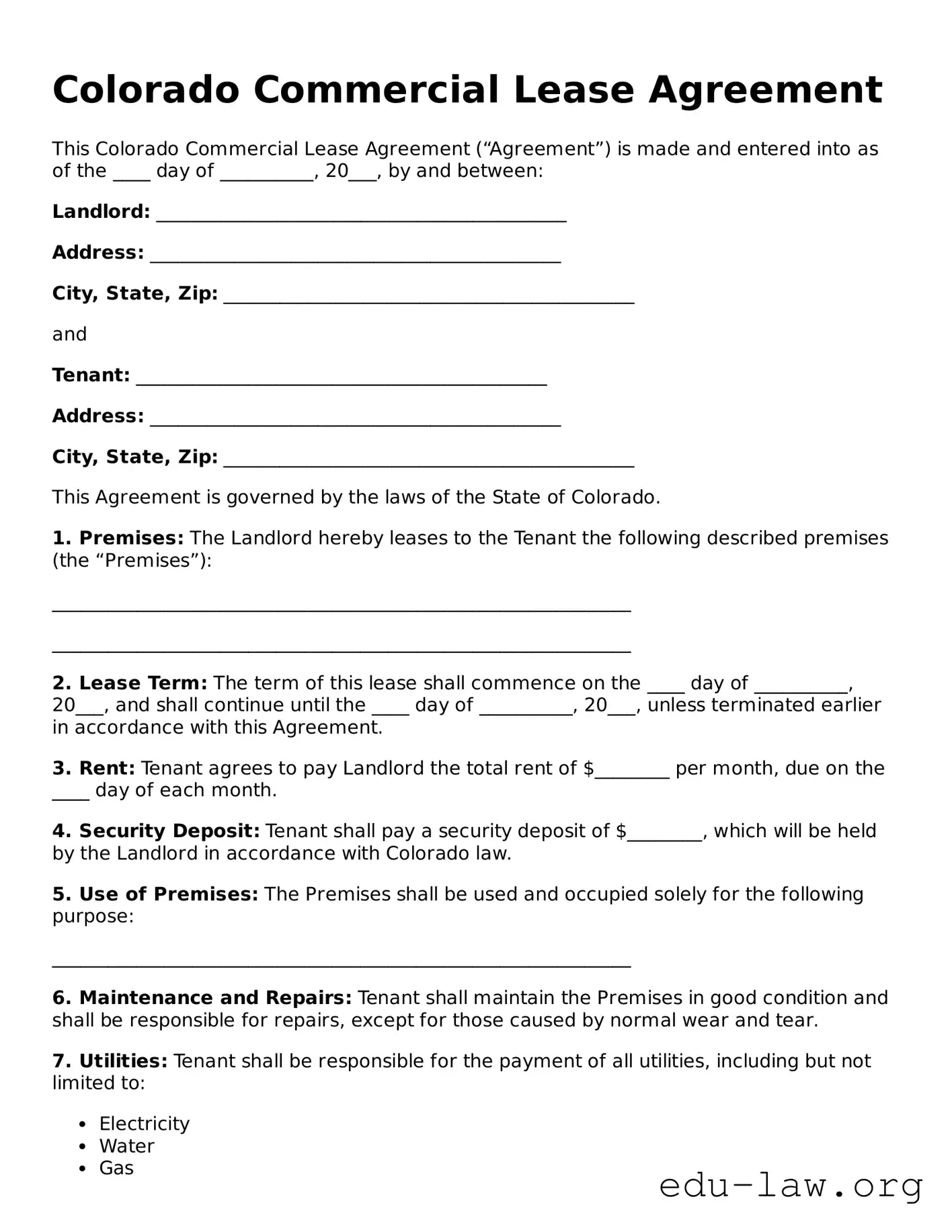
When entering into a commercial lease in Colorado, understanding the Colorado Commercial Lease Agreement form is essential for both landlords and tenants. This legally binding document outlines the terms and conditions governing the rental of commercial property, ensuring that both parties are clear on their rights and responsibilities. Key aspects of the form include the duration of the lease, the amount of rent, and the payment schedule, which are vital for financial planning. Additionally, the agreement specifies the permitted use of the property, maintenance obligations, and any restrictions that may apply. It also addresses security deposits, insurance requirements, and the process for handling disputes. By carefully reviewing and negotiating these terms, both landlords and tenants can protect their interests and foster a successful business relationship.
Colorado Commercial Lease Agreement
This Colorado Commercial Lease Agreement (“Agreement”) is made and entered into as of the ____ day of __________, 20___, by and between:
Landlord: ____________________________________________
Address: ____________________________________________
City, State, Zip: ____________________________________________
and
Tenant: ____________________________________________
Address: ____________________________________________
City, State, Zip: ____________________________________________
This Agreement is governed by the laws of the State of Colorado.
1. Premises: The Landlord hereby leases to the Tenant the following described premises (the “Premises”):
______________________________________________________________
______________________________________________________________
2. Lease Term: The term of this lease shall commence on the ____ day of __________, 20___, and shall continue until the ____ day of __________, 20___, unless terminated earlier in accordance with this Agreement.
3. Rent: Tenant agrees to pay Landlord the total rent of $________ per month, due on the ____ day of each month.
4. Security Deposit: Tenant shall pay a security deposit of $________, which will be held by the Landlord in accordance with Colorado law.
5. Use of Premises: The Premises shall be used and occupied solely for the following purpose:
______________________________________________________________
6. Maintenance and Repairs: Tenant shall maintain the Premises in good condition and shall be responsible for repairs, except for those caused by normal wear and tear.
7. Utilities: Tenant shall be responsible for the payment of all utilities, including but not limited to:
8. Insurance: Tenant shall maintain liability insurance in an amount not less than $________ and shall provide proof of such insurance to Landlord.
9. Governing Law: This Agreement shall be governed by and construed in accordance with the laws of the State of Colorado.
10. Signatures: This Agreement may be executed in counterparts, each of which shall be deemed an original, but all of which together shall constitute one and the same instrument.
IN WITNESS WHEREOF, the parties hereto have executed this Agreement as of the date first above written.
Landlord Signature: _______________________________
Date: ________________________________________
Tenant Signature: _______________________________
Date: ________________________________________
| Fact Name | Description |
|---|---|
| Governing Law | The Colorado Commercial Lease Agreement is governed by Colorado state law. |
| Parties Involved | The lease agreement involves a landlord (lessor) and a tenant (lessee). |
| Lease Term | The agreement specifies the duration of the lease, which can vary widely. |
| Rent Payment | The lease outlines the amount of rent, payment due dates, and accepted payment methods. |
| Security Deposit | A security deposit may be required, and the terms for its return are defined. |
| Use of Premises | The lease should specify the permitted use of the commercial space. |
| Maintenance Responsibilities | The agreement details who is responsible for maintenance and repairs of the property. |
| Termination Clause | Provisions for terminating the lease early or upon expiration are included. |
Completing the Colorado Commercial Lease Agreement form is an important step in establishing the terms of your lease. This document will outline the responsibilities of both the landlord and the tenant, ensuring clarity and mutual understanding. Follow these steps carefully to ensure accuracy and compliance.
What is a Colorado Commercial Lease Agreement?
A Colorado Commercial Lease Agreement is a legal document that outlines the terms and conditions under which a landlord rents commercial property to a tenant. This agreement typically includes details about the rental amount, duration of the lease, responsibilities of both parties, and any specific rules or regulations that apply to the property. It serves to protect the interests of both the landlord and tenant throughout the leasing period.
Who should use a Commercial Lease Agreement?
This type of agreement is essential for business owners seeking to rent commercial space for their operations, such as retail stores, offices, or warehouses. Landlords offering commercial properties for lease should also use this agreement to establish clear expectations and legal protections. Both parties benefit from having a formalized contract that details their rights and obligations.
What key terms should be included in the agreement?
Important terms in a Colorado Commercial Lease Agreement include the lease duration, rental amount, payment schedule, security deposit requirements, maintenance responsibilities, and clauses regarding property use. Additionally, the agreement should address options for renewal, termination conditions, and any restrictions on subleasing. Clear definitions of these terms help prevent misunderstandings later on.
How is the rental amount determined?
The rental amount is typically determined by various factors, including the location of the property, market rates for similar spaces, and the specific needs of the tenant. Landlords may also consider the size of the space, amenities offered, and the overall condition of the property. It is advisable for both parties to conduct thorough research to arrive at a fair and reasonable rental rate.
Can the lease be modified after it is signed?
Yes, a lease can be modified after it is signed, but both parties must agree to the changes. Modifications should be documented in writing and signed by both the landlord and tenant to ensure enforceability. This may include adjustments to the rental amount, lease duration, or other terms. Clear communication is crucial to maintaining a positive landlord-tenant relationship.
What happens if a tenant fails to pay rent?
If a tenant fails to pay rent, the landlord typically has the right to take specific actions as outlined in the lease agreement. This may include charging late fees, initiating eviction proceedings, or seeking legal remedies. It is important for tenants to communicate with their landlords if they are facing financial difficulties, as some landlords may be willing to negotiate payment plans or temporary relief.
Are there any specific laws governing commercial leases in Colorado?
Yes, commercial leases in Colorado are governed by state laws, which outline the rights and responsibilities of landlords and tenants. These laws cover various aspects, including lease enforcement, eviction procedures, and security deposit regulations. It is crucial for both parties to familiarize themselves with these laws to ensure compliance and protect their interests throughout the leasing process.
What should I do if I have a dispute regarding the lease?
In the event of a dispute regarding the lease, both parties should first attempt to resolve the issue through open communication. If this does not lead to a satisfactory resolution, mediation or arbitration may be considered as alternative dispute resolution methods. If necessary, legal action can be pursued, but it is advisable to consult with a qualified attorney to understand the best course of action based on the specific circumstances of the dispute.
Failing to include the correct property address. It is crucial to specify the exact location of the leased property. Missing or incorrect addresses can lead to confusion and disputes.
Not clearly defining the lease term. The start and end dates of the lease should be explicitly stated. Ambiguity in this section can create misunderstandings later.
Overlooking the rent amount and payment terms. Ensure that the monthly rent is clearly outlined, along with due dates and acceptable payment methods. This prevents payment disputes.
Neglecting to specify maintenance responsibilities. Clearly delineate who is responsible for repairs and maintenance. This clarity helps avoid conflicts between landlords and tenants.
Not including security deposit details. The amount of the security deposit and the conditions for its return should be detailed. This protects both parties' interests.
Failing to outline termination conditions. It is important to specify how either party can terminate the lease. This includes notice periods and any penalties involved.
Ignoring the need for signatures. Both parties must sign the lease agreement for it to be legally binding. Without signatures, the lease may not be enforceable.
When entering into a commercial lease agreement in Colorado, several other forms and documents may be necessary to ensure a smooth transaction. These documents help clarify the terms of the lease, protect the rights of both parties, and facilitate the leasing process. Below is a list of commonly used forms that often accompany a Colorado Commercial Lease Agreement.
Understanding these forms and documents can significantly ease the leasing process. Each one serves a unique purpose, helping both landlords and tenants navigate their rights and responsibilities effectively. Being well-informed can lead to a more successful leasing experience.
The Colorado Commercial Lease Agreement is similar to the Residential Lease Agreement. Both documents outline the terms under which a property is rented. They detail the responsibilities of the landlord and tenant, including payment terms, maintenance obligations, and rules for using the property. While the commercial lease is tailored for business use, the residential lease focuses on living arrangements, yet both serve to protect the rights of both parties involved.
Another document that shares similarities is the Sublease Agreement. A sublease allows a tenant to rent out part or all of their leased space to another party. Like the commercial lease, it contains terms about rent, duration, and responsibilities. Both agreements require the original landlord's consent, ensuring that all parties are aware of the arrangements being made.
The Assignment of Lease Agreement is also comparable. This document allows a tenant to transfer their lease obligations to another party. Similar to the commercial lease, it requires the landlord's approval and outlines the terms of the transfer. Both agreements ensure that the new tenant understands their responsibilities and the conditions of the lease.
The Letter of Intent is another related document. While it is not a lease itself, it outlines the preliminary terms of a lease agreement before formalization. Both documents serve to clarify the expectations of the parties involved. The Letter of Intent sets the stage for the commercial lease by summarizing key points such as rent, lease duration, and property use.
A Purchase Agreement shares some features with the commercial lease. This document outlines the terms for buying a property, including price and contingencies. Both agreements detail the responsibilities of the parties and often include provisions for inspections and disclosures. While one is for leasing and the other for purchasing, both aim to protect the interests of the involved parties.
The Property Management Agreement is another document that is similar. This agreement outlines the relationship between a property owner and a management company. Both the property management agreement and the commercial lease specify duties, such as maintenance and rent collection. They ensure that the property is managed effectively and that the tenant's needs are met.
Finally, the Confidentiality Agreement, often used in conjunction with a commercial lease, is also relevant. This document protects sensitive information shared during negotiations. While the commercial lease focuses on the rental terms, the confidentiality agreement ensures that proprietary information remains secure. Both documents work together to create a trustworthy environment for business dealings.
When filling out the Colorado Commercial Lease Agreement form, it's important to follow certain guidelines to ensure accuracy and compliance. Here’s a list of things you should and shouldn’t do:
Understanding the Colorado Commercial Lease Agreement is essential for both landlords and tenants. However, several misconceptions can lead to confusion and potential issues. Below is a list of common misunderstandings about this important document.
Being aware of these misconceptions can help both landlords and tenants navigate the leasing process more effectively. A clear understanding of the Colorado Commercial Lease Agreement will lead to a smoother and more successful leasing experience.
When dealing with a Colorado Commercial Lease Agreement, it's essential to understand the critical aspects to ensure a smooth leasing process. Here are some key takeaways:
Taking the time to carefully fill out and review the Colorado Commercial Lease Agreement can help protect both parties and foster a positive leasing experience.