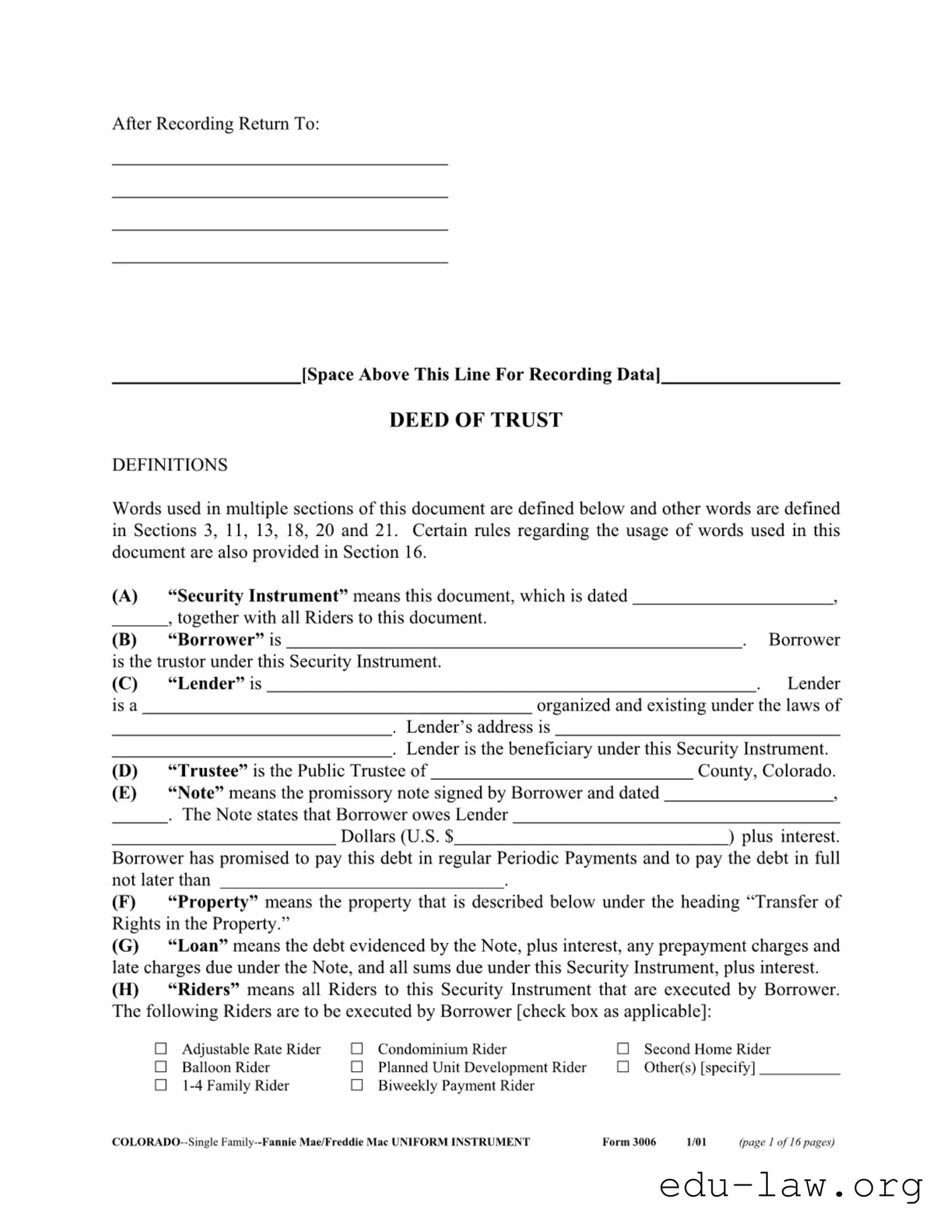
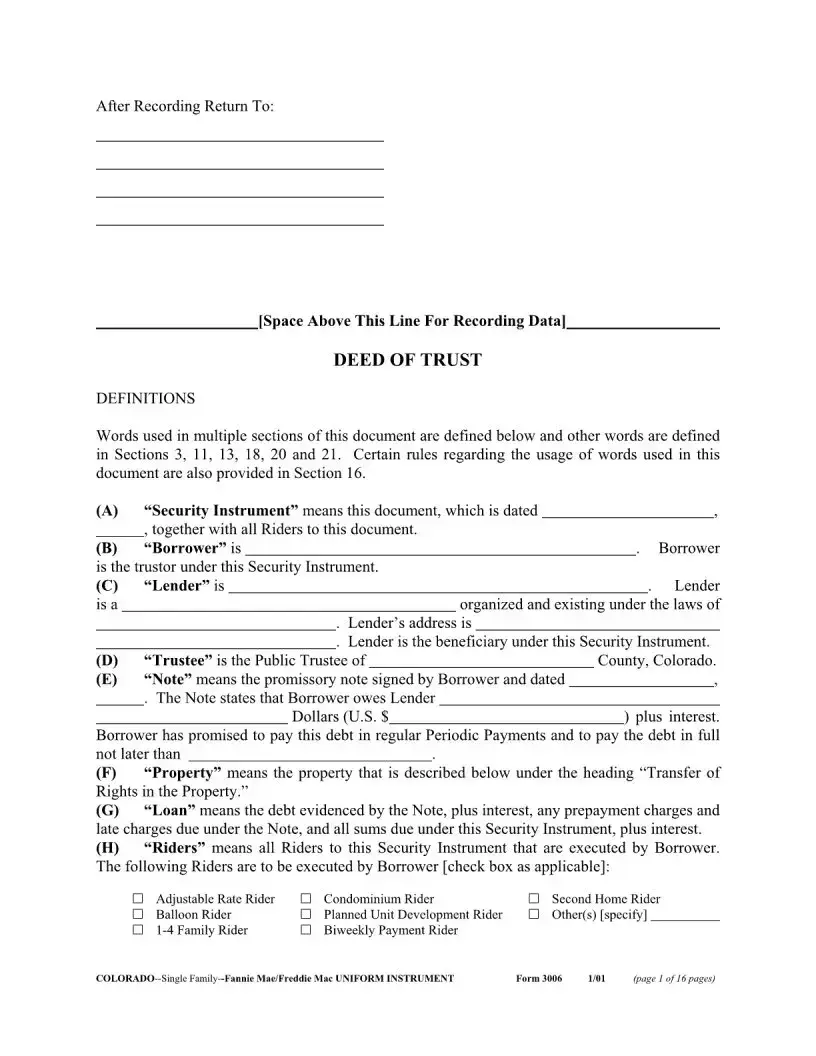
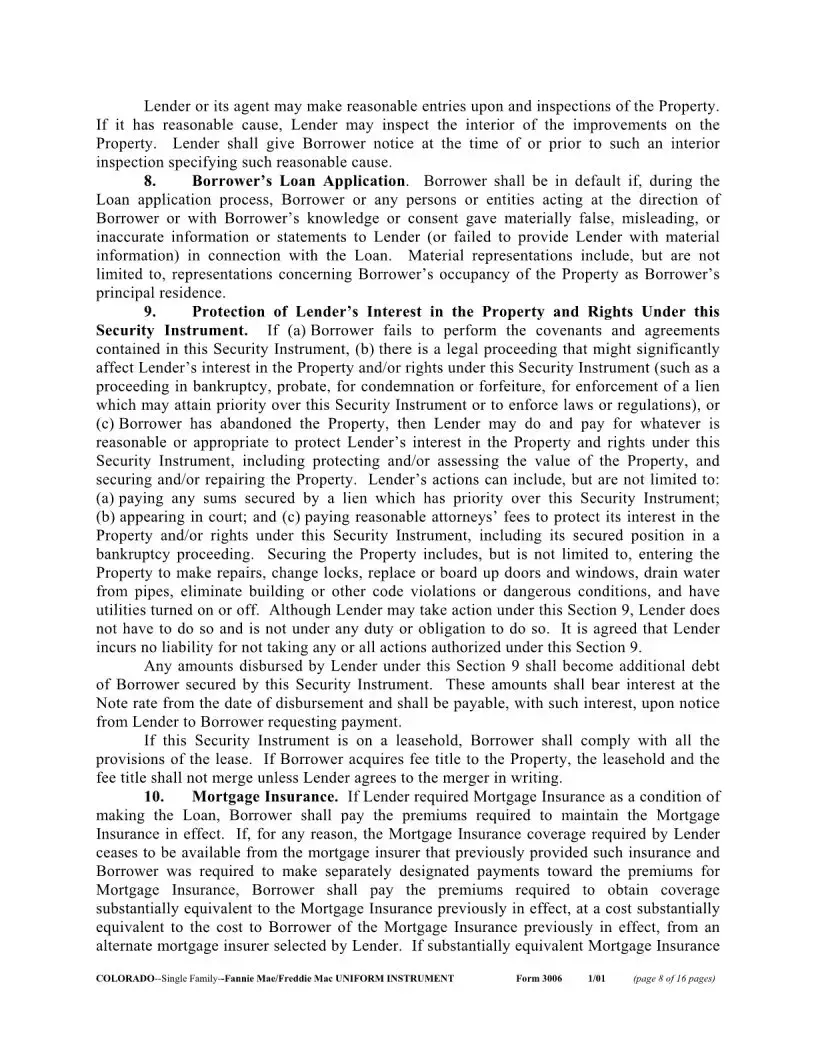
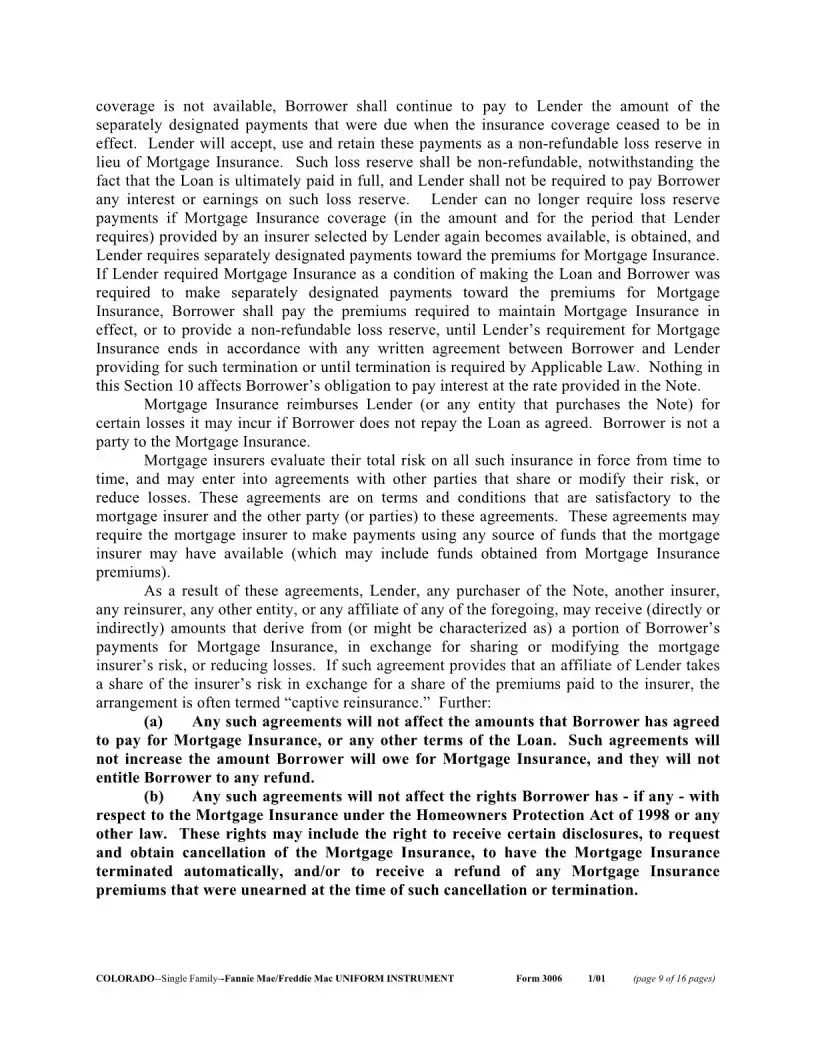
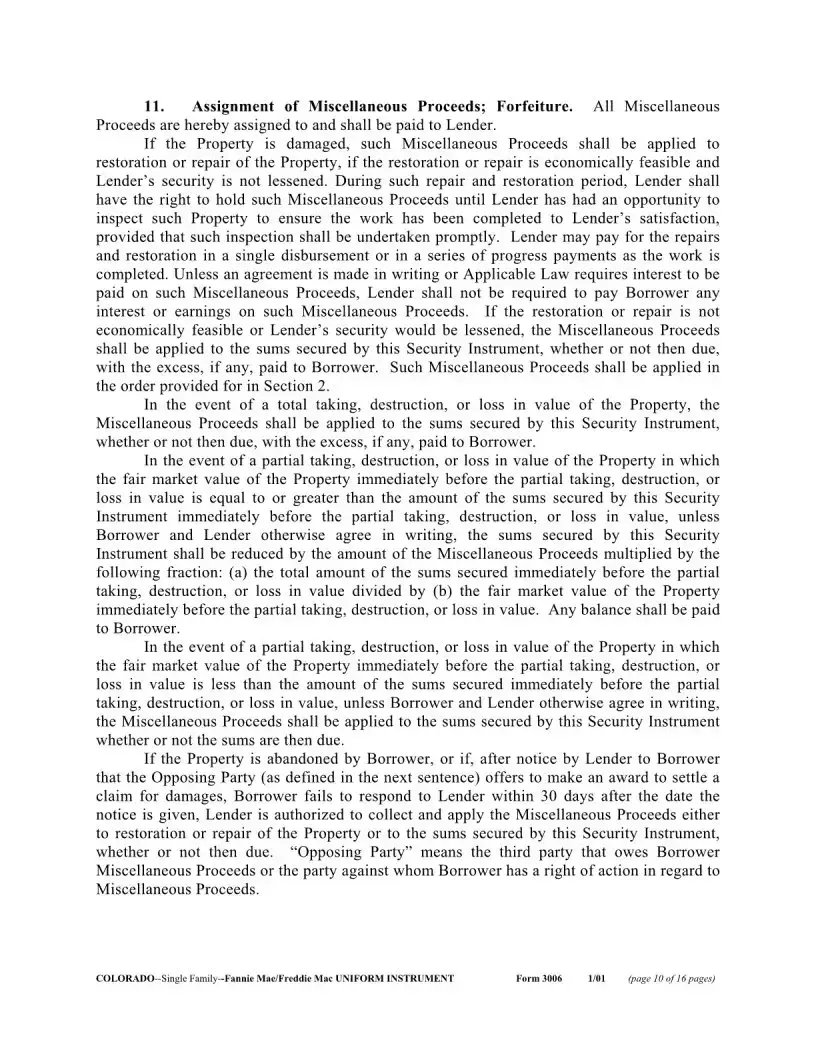
The Colorado 3006 form is a critical document in the realm of real estate transactions, specifically designed for use in securing loans through a deed of trust. This form establishes the relationship between the borrower, lender, and trustee, outlining essential definitions and terms that govern the agreement. It includes the identification of the parties involved, such as the borrower, who is the trustor, and the lender, who benefits from the security instrument. The document specifies the property being secured, the amount owed, and the interest terms, while also detailing the borrower's obligations regarding payments. Notably, the Colorado 3006 form incorporates various riders that may apply to the loan, such as adjustable rate or second home riders, enhancing its adaptability to different borrowing situations. It also addresses community association dues and the implications of electronic funds transfers, ensuring comprehensive coverage of financial responsibilities. Additionally, the form includes provisions for miscellaneous proceeds and mortgage insurance, safeguarding the lender's interests in case of borrower default. By setting forth uniform covenants alongside jurisdiction-specific variations, the Colorado 3006 form serves as a foundational instrument in real estate finance, facilitating clarity and legal protection for all parties involved.
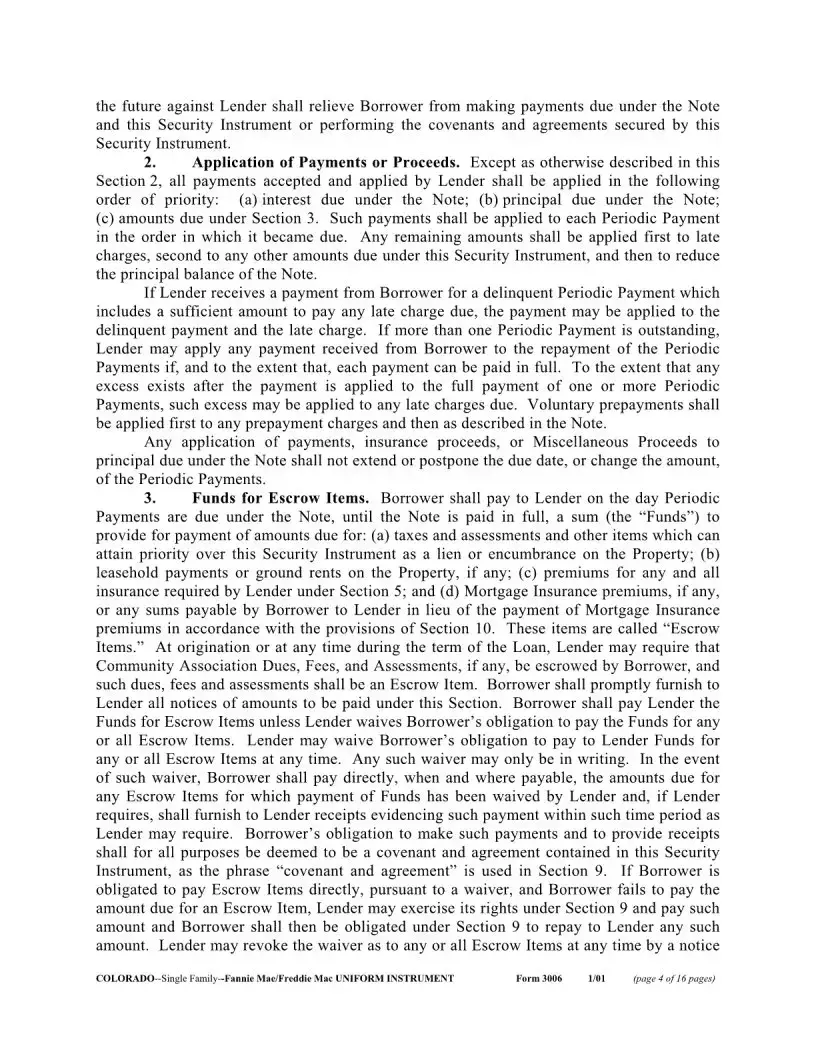
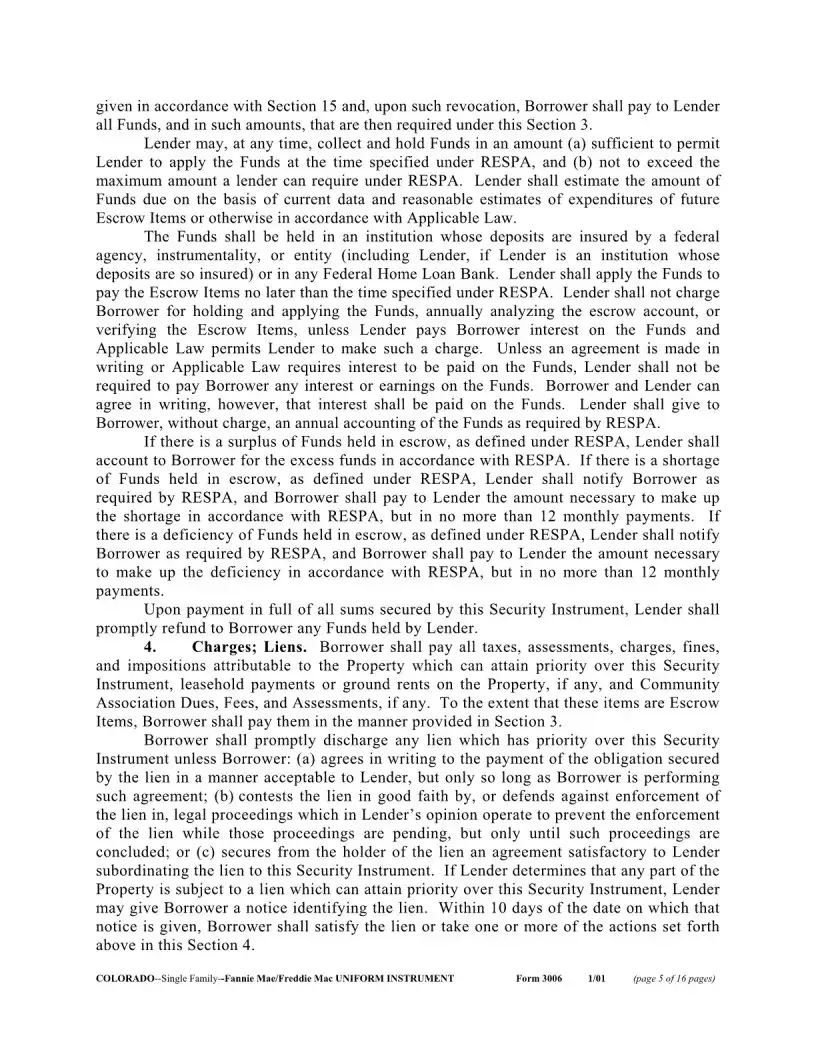
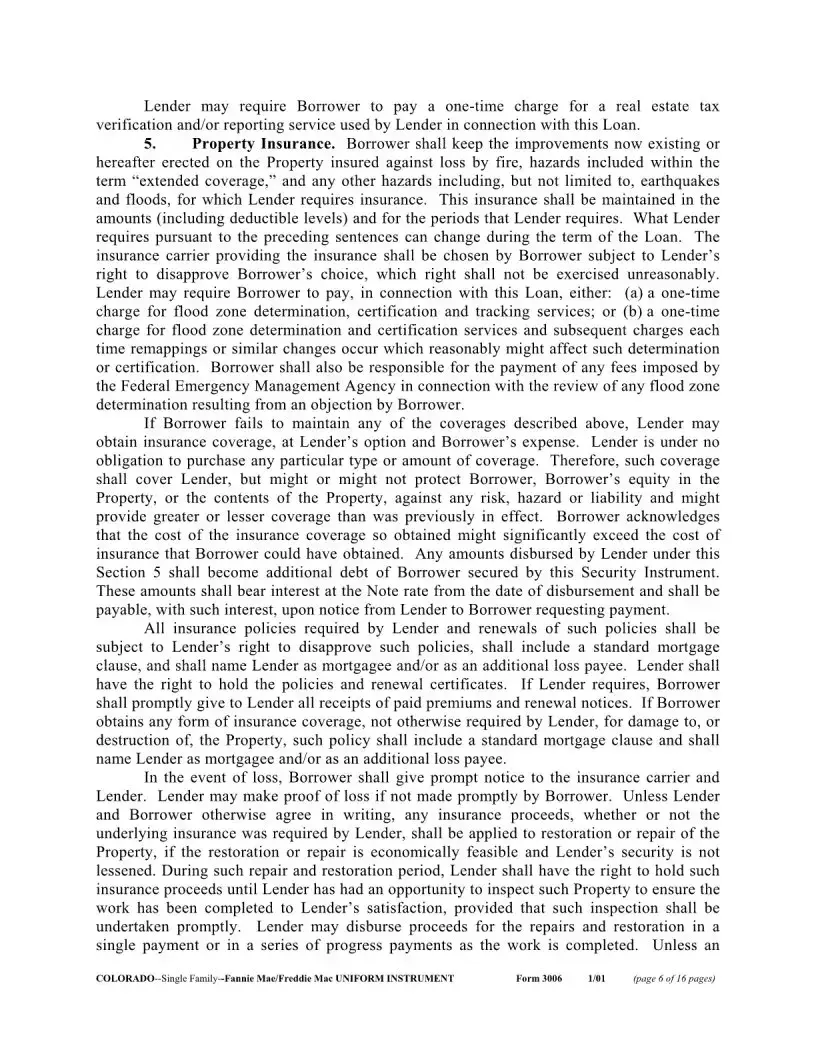
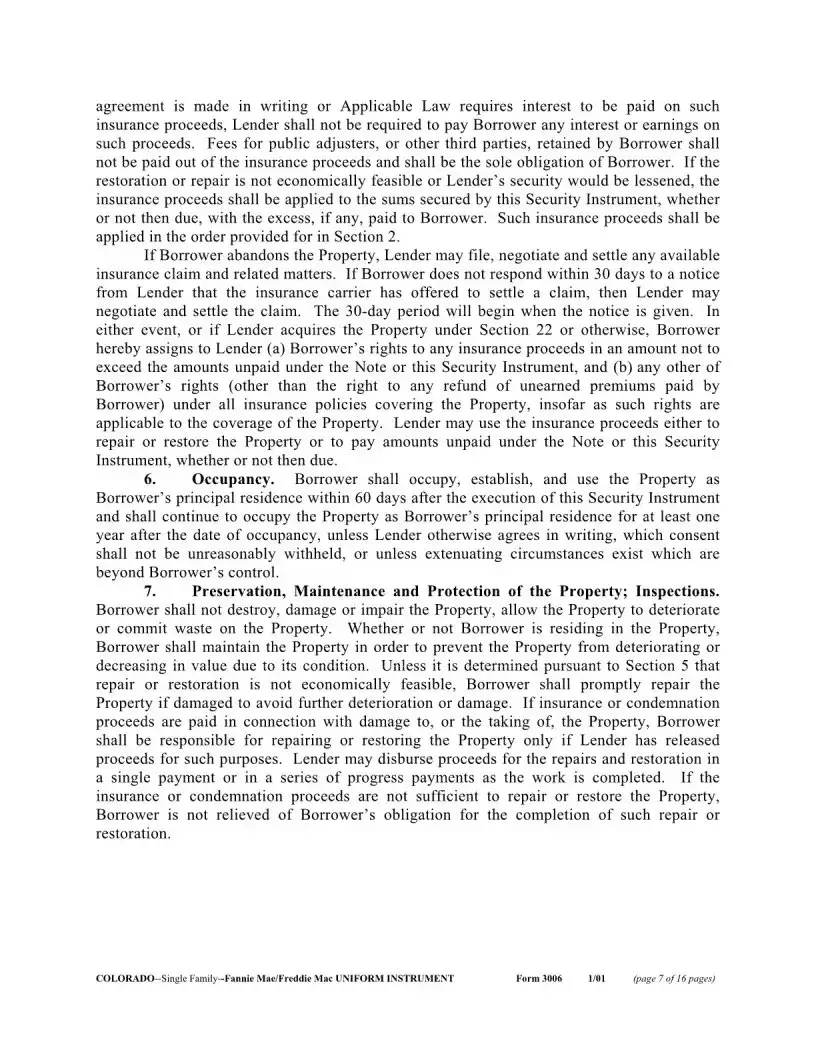
| Fact Name | Description |
|---|---|
| Document Purpose | The Colorado 3006 form serves as a Deed of Trust, which secures a loan by granting the lender a security interest in the borrower's property. |
| Governing Laws | This form is governed by Colorado state law, particularly the Colorado Revised Statutes related to real property and secured transactions. |
| Parties Involved | The key parties in this document include the Borrower (trustor), Lender (beneficiary), and Trustee (Public Trustee of the jurisdiction). |
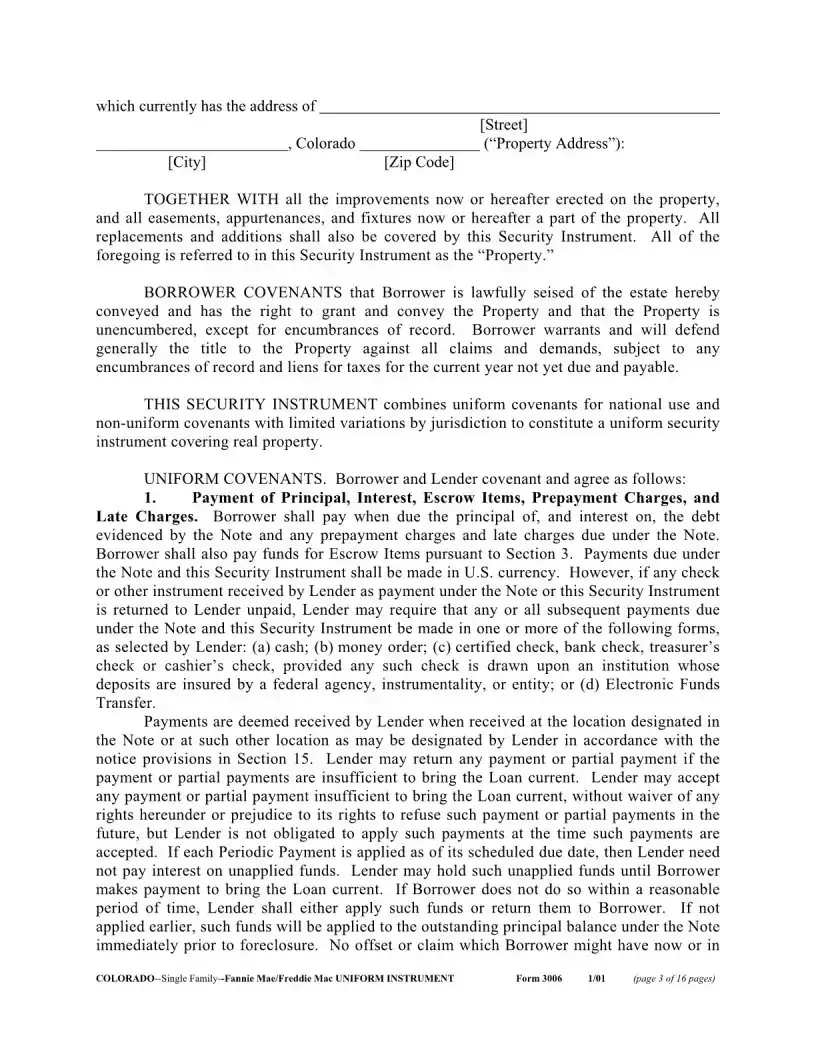
| Definition of Property | The term "Property" refers to the real estate described in the document, which includes all improvements and fixtures on the property. |
| Riders | The form allows for various Riders to be attached, such as Adjustable Rate Rider or Condominium Rider, which modify the terms of the Deed of Trust. |
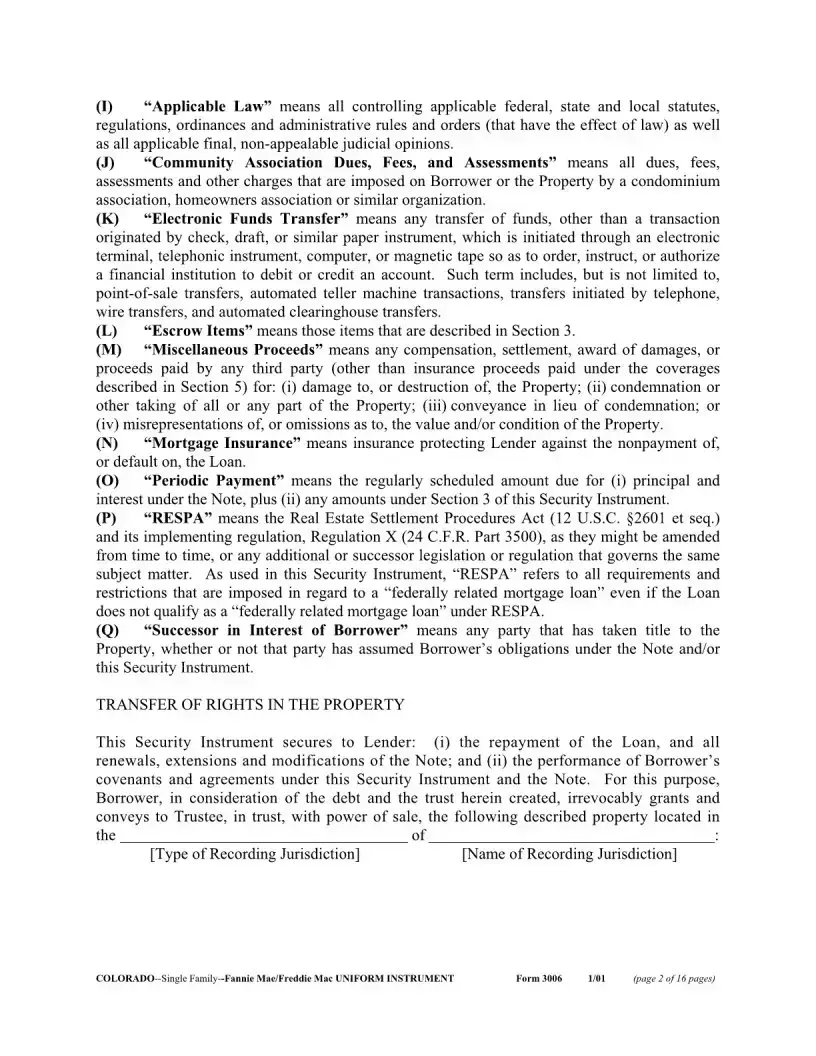
| Electronic Funds Transfer | The form defines "Electronic Funds Transfer" as any non-paper-based transaction initiated to debit or credit an account, enhancing payment flexibility. |
| Community Association Dues | It specifies that any dues or fees imposed by community associations are the responsibility of the Borrower and may affect the property. |
| Periodic Payments | The Borrower is required to make regular payments, which include principal, interest, and any additional amounts as specified in the Security Instrument. |
The Colorado 3006 form is a deed of trust that serves as a security instrument for a loan. It outlines the rights and responsibilities of the borrower, lender, and trustee. Completing this form accurately is essential for ensuring that all parties understand their obligations. Below are the steps to fill out the form properly.
What is the purpose of the Colorado 3006 form?
The Colorado 3006 form serves as a Deed of Trust, which is a legal document that secures a loan by placing a lien on the property being financed. This form establishes a trust relationship between the borrower (the individual taking out the loan), the lender (the financial institution providing the loan), and the trustee (usually a public official or entity responsible for holding the title until the loan is repaid). The form outlines the rights and responsibilities of each party involved, ensuring that the lender has a claim to the property if the borrower defaults on the loan.
Who are the parties involved in the Colorado 3006 form?
There are three main parties involved in the Colorado 3006 form: the borrower, the lender, and the trustee. The borrower is the individual or entity that takes out the loan and is responsible for repaying it. The lender is the financial institution that provides the funds and holds the security interest in the property. The trustee is typically a public trustee who holds the title to the property in trust for the benefit of the lender until the loan is paid off. Each party has specific rights and obligations as defined in the form.
What are the key components included in the Colorado 3006 form?
The Colorado 3006 form includes several key components that define the terms of the loan and the responsibilities of each party. These components include definitions of important terms such as "Security Instrument," "Borrower," "Lender," and "Trustee." It also outlines the transfer of rights in the property, detailing how the property serves as collateral for the loan. Additionally, the form specifies payment obligations, including principal, interest, and any applicable fees, as well as the consequences of defaulting on the loan. Riders may also be included, which are additional agreements or stipulations that apply to the loan.
How does the Colorado 3006 form protect the lender's interests?
The Colorado 3006 form protects the lender's interests by establishing a legal claim to the property through the Deed of Trust. If the borrower fails to make payments as agreed, the lender has the right to initiate foreclosure proceedings, allowing them to recover the outstanding debt by selling the property. The form also includes provisions that require the borrower to maintain the property and pay any associated fees, ensuring that the property's value is preserved. By clearly outlining the terms of the loan and the consequences of default, the form helps to minimize risks for the lender.
Failing to provide accurate information about the Lender. It is crucial to ensure that the name, address, and legal status of the Lender are correctly filled out. Inaccuracies can lead to significant delays or complications in the loan process.
Neglecting to specify the Property Address. The address must be complete and accurate, including the street, city, and zip code. Missing or incorrect details can result in issues with property identification.
Omitting the necessary Riders. Borrowers should carefully check the appropriate boxes for any Riders that apply to their loan. Failing to include relevant Riders can affect the terms and conditions of the loan.
Not signing the form where required. All parties involved must sign the document to validate it. A missing signature can invalidate the agreement and delay the loan process.
Providing incomplete or incorrect Borrower information. This includes ensuring that the name and legal status of the Borrower are accurate. Errors in this section can lead to legal complications down the line.
Ignoring the Applicable Law section. Borrowers should familiarize themselves with the relevant federal, state, and local laws that apply to their loan. Ignorance of these laws can lead to unintentional violations.
The Colorado 3006 form is a crucial document used in real estate transactions, particularly in securing loans against property. Alongside this form, several other documents may be required to ensure a comprehensive understanding of the obligations and rights involved in the transaction. Below is a list of commonly associated forms and documents.
Understanding these documents is essential for anyone involved in a real estate transaction. They collectively ensure that all parties are aware of their rights and responsibilities, promoting a smoother process and reducing the risk of disputes.
The Colorado 3006 form is similar to a Mortgage Agreement, which outlines the terms and conditions under which a borrower receives a loan secured by real estate. Like the Colorado 3006, a Mortgage Agreement includes definitions of key terms such as borrower, lender, and property. Both documents detail the obligations of the borrower, including the repayment of the loan and any associated fees. They also specify the rights of the lender in case of default, making it clear how the lender can recover the loan amount through the sale of the property.
Another document similar to the Colorado 3006 is the Deed of Trust. This document serves a similar purpose in securing a loan with real property. In both cases, the borrower conveys an interest in the property to a trustee, who holds that interest until the loan is paid off. The Deed of Trust, like the Colorado 3006, includes provisions for default and outlines the process for foreclosure if the borrower fails to meet their obligations. The structure and legal implications are comparable, ensuring that the lender has a secure interest in the property.
The Promissory Note is also akin to the Colorado 3006 form. This document serves as a written promise from the borrower to repay the loan amount, detailing the interest rate and payment schedule. Both the Promissory Note and the Colorado 3006 specify the consequences of non-payment, including late fees and potential foreclosure. They work in tandem, with the Promissory Note often being referenced in the Colorado 3006 as part of the security agreement.
The Real Estate Settlement Procedures Act (RESPA) disclosures are another related document. RESPA outlines the requirements for informing borrowers about the costs associated with their mortgage and the servicing of the loan. Like the Colorado 3006, RESPA aims to protect borrowers by ensuring transparency in the lending process. Both documents emphasize the importance of understanding financial obligations, although RESPA focuses more on the settlement process rather than the loan agreement itself.
A Loan Estimate is similar to the Colorado 3006 in that it provides borrowers with a clear summary of the loan terms, including interest rates and closing costs. Both documents aim to facilitate informed decision-making for borrowers. The Loan Estimate must be provided within three business days of a loan application, ensuring that borrowers have a clear understanding of their financial commitments before proceeding with the loan process.
Lastly, a Closing Disclosure is akin to the Colorado 3006 as it outlines the final terms of the loan before closing. This document details the final costs associated with the mortgage, including fees and charges that may have changed since the Loan Estimate. Both the Closing Disclosure and the Colorado 3006 serve to ensure that borrowers are fully aware of their financial obligations, reinforcing the importance of transparency in real estate transactions.
When filling out the Colorado 3006 form, there are some important dos and don'ts to keep in mind. Following these guidelines will help ensure that your form is completed correctly and efficiently.
Understanding the Colorado 3006 form can be crucial for anyone involved in real estate transactions in the state. However, several misconceptions often arise. Here are seven common misunderstandings about this important document:
Being aware of these misconceptions can help individuals navigate the complexities of real estate transactions more effectively. Understanding the role and requirements of the Colorado 3006 form is essential for all parties involved.
Key Takeaways for Filling Out and Using the Colorado 3006 Form: