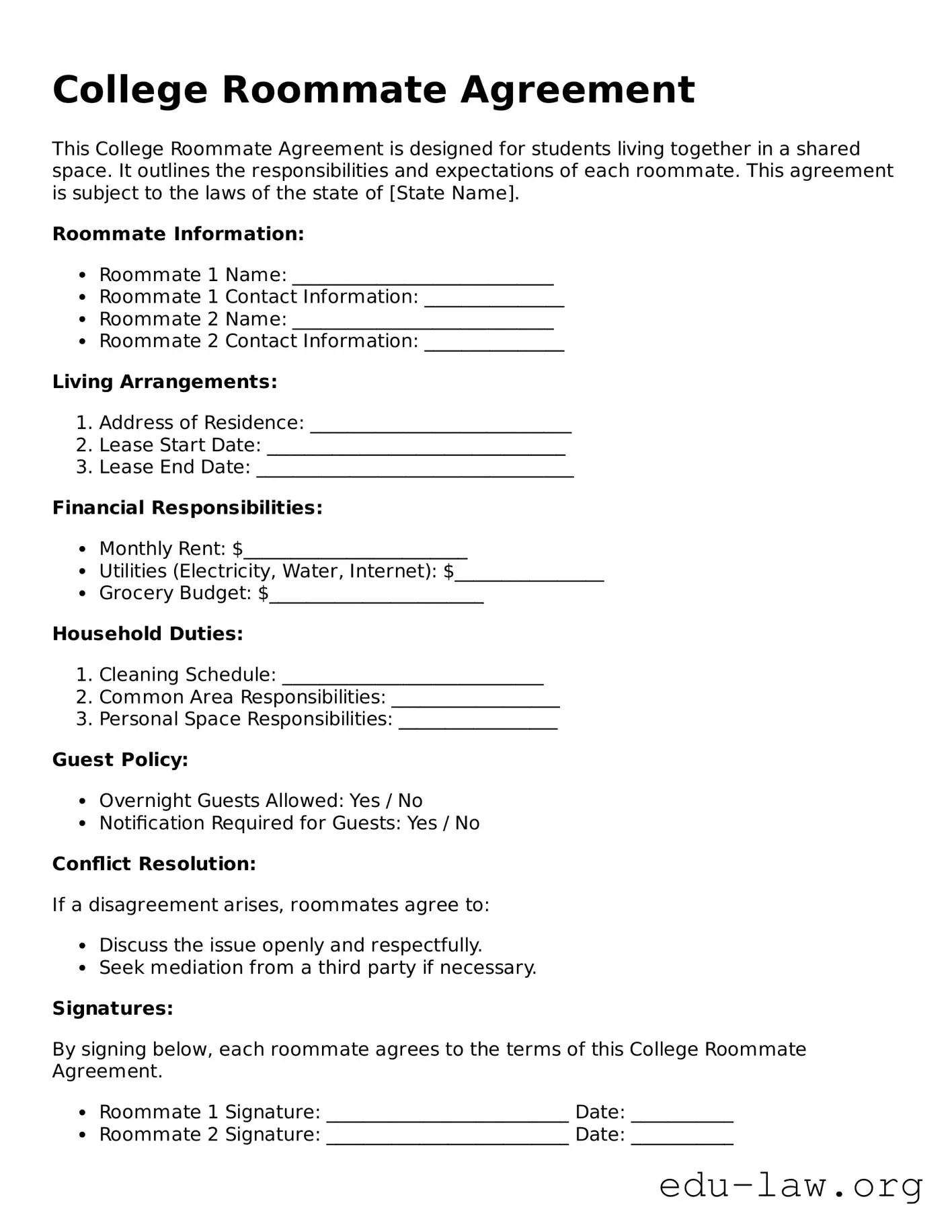
Living with a roommate during college can be a rewarding experience, but it also comes with its own set of challenges. To help navigate these challenges, many students find it beneficial to create a College Roommate Agreement. This form serves as a practical tool for establishing clear expectations and boundaries between roommates, fostering a harmonious living environment. Key aspects of the agreement often include guidelines on shared responsibilities, such as cleaning duties, dividing expenses, and managing common spaces. Additionally, it addresses personal preferences, like study hours, guest policies, and noise levels, ensuring that both roommates are on the same page. By discussing these important topics upfront and documenting them in the agreement, students can reduce misunderstandings and conflicts, paving the way for a more enjoyable cohabitation experience. Ultimately, a well-crafted College Roommate Agreement not only sets the tone for a positive living arrangement but also encourages open communication and mutual respect.
College Roommate Agreement
This College Roommate Agreement is designed for students living together in a shared space. It outlines the responsibilities and expectations of each roommate. This agreement is subject to the laws of the state of [State Name].
Roommate Information:
Living Arrangements:
Financial Responsibilities:
Household Duties:
Guest Policy:
Conflict Resolution:
If a disagreement arises, roommates agree to:
Signatures:
By signing below, each roommate agrees to the terms of this College Roommate Agreement.
| Fact Name | Description |
|---|---|
| Purpose | The College Roommate Agreement form helps roommates outline their expectations and responsibilities, fostering a harmonious living environment. |
| Customization | This form can be tailored to fit the specific needs and preferences of the roommates, allowing them to address issues like cleanliness, noise levels, and shared expenses. |
| State-Specific Forms | Some states may have specific requirements or recommendations for roommate agreements, often guided by local housing laws. |
| Legal Standing | While not legally binding in all jurisdictions, a well-drafted agreement can serve as a reference point for resolving disputes between roommates. |
Filling out the College Roommate Agreement form is an important step in establishing a harmonious living situation with your roommate. By completing this form, you will create a clear understanding of expectations, responsibilities, and preferences, which can help prevent conflicts down the road. Here’s how to fill it out effectively.
What is a College Roommate Agreement form?
The College Roommate Agreement form is a document that helps college roommates outline their expectations and responsibilities while living together. It serves as a guide to promote a harmonious living environment. By discussing and agreeing on rules and preferences, roommates can avoid misunderstandings and conflicts throughout the school year.
Why should I fill out a College Roommate Agreement form?
Filling out a College Roommate Agreement form can significantly enhance your living situation. It encourages open communication between roommates about important topics such as cleaning duties, quiet hours, and shared expenses. By addressing these issues upfront, you can create a more comfortable and respectful living space, which can lead to a better overall college experience.
What topics should we discuss when completing the form?
When completing the College Roommate Agreement form, discuss several key topics. These can include cleaning schedules, sharing of food and supplies, study hours, and guests. It’s also helpful to talk about personal preferences, such as noise levels and privacy. Taking the time to cover these areas can help set clear expectations and reduce potential conflicts later on.
Can we change the agreement later if needed?
Yes, you can absolutely change the agreement later if needed. Life in a college dorm can be dynamic, and circumstances may change. If you find that certain rules or expectations aren’t working, it’s important to have a conversation with your roommate. You can revise the agreement together to ensure it still meets both of your needs. Open communication is key to maintaining a positive living environment.
Not discussing preferences beforehand: Many students fill out the form without first having a conversation with their roommate. This can lead to misunderstandings later on.
Ignoring the importance of cleanliness: Failing to specify cleaning responsibilities can result in conflicts over messy living spaces.
Overlooking quiet hours: Not agreeing on study times or quiet hours can disrupt each other's routines and lead to frustration.
Assuming everyone is on the same page: It's easy to assume that your roommate shares your views on guests or shared items. Clear communication is essential.
Neglecting to address shared expenses: Not discussing how to split costs for shared items like cleaning supplies or groceries can lead to resentment.
Failing to establish boundaries: Not setting limits on personal space or privacy can create tension in the living situation.
Not reviewing the agreement regularly: Some students forget to revisit the agreement as the semester progresses. Situations may change, and adjustments might be necessary.
Rushing through the form: Taking the time to thoughtfully complete the agreement can prevent future issues. Quick answers often lead to incomplete agreements.
Ignoring conflict resolution methods: Not including a plan for resolving disputes can leave both roommates unprepared for potential disagreements.
The College Roommate Agreement form is an important document that helps establish expectations and responsibilities among college roommates. In addition to this agreement, several other forms and documents may be relevant for students living together. Below is a list of these documents, each serving a specific purpose in promoting a harmonious living environment.
Each of these documents plays a crucial role in ensuring a positive living experience for college students. By clearly defining expectations and responsibilities, roommates can work together more effectively and minimize misunderstandings.
The College Roommate Agreement form serves as a foundational document for establishing expectations between roommates. Similarly, a Lease Agreement outlines the terms and conditions under which a tenant can occupy a rental property. Both documents aim to create a clear understanding of responsibilities, whether it's regarding payment of rent or shared living arrangements. Just as the College Roommate Agreement covers aspects like cleaning duties and quiet hours, a Lease Agreement details rules about property maintenance and use of common areas.
Another document that shares similarities is the Rental Application. This form is typically completed before entering into a lease and helps landlords screen potential tenants. Much like a College Roommate Agreement, it gathers essential information about the individuals involved, such as their background and financial stability. Both documents help ensure that all parties are compatible and agree to the terms laid out, fostering a harmonious living situation.
The Roommate Mediation Agreement is also akin to the College Roommate Agreement. This document is utilized when conflicts arise between roommates, providing a structured way to address and resolve issues. While the College Roommate Agreement sets initial expectations, the Mediation Agreement serves as a tool for ongoing communication and problem-solving, ensuring that all parties can express their concerns in a constructive manner.
Another relevant document is the House Rules Agreement. This form establishes specific guidelines for shared living spaces, similar to the College Roommate Agreement. It may cover issues such as guest policies, noise levels, and shared expenses. Both documents aim to create a peaceful living environment by clearly outlining acceptable behaviors and responsibilities.
The Sublease Agreement is another document that bears resemblance to the College Roommate Agreement. When a tenant wants to rent out their room to another person, a Sublease Agreement outlines the terms of that arrangement. Like the College Roommate Agreement, it defines the rights and responsibilities of both parties, ensuring that everyone is on the same page regarding living conditions and financial obligations.
The Shared Living Agreement is also comparable. This document is often used in co-housing situations where multiple individuals share a home. It addresses similar issues as the College Roommate Agreement, such as division of chores, payment of utilities, and communal responsibilities. Both documents aim to create a cooperative living environment by clarifying expectations and fostering mutual respect among roommates.
Lastly, the Move-In Checklist can be seen as a related document. This checklist is used to document the condition of a rental unit before a tenant moves in. While it may not directly address roommate relationships, it is essential for establishing accountability. Just as the College Roommate Agreement sets expectations for behavior and responsibilities, the Move-In Checklist ensures that all parties agree on the state of the living space, preventing disputes over damages or cleanliness later on.
When filling out the College Roommate Agreement form, it’s important to approach the task thoughtfully. This form can set the tone for your living situation, so here are some tips on what to do and what to avoid.
By following these guidelines, you can create a positive living environment that works for both you and your roommate. Good luck!
When it comes to the College Roommate Agreement form, many misunderstandings can arise. Here are nine common misconceptions that students often have:
Understanding these misconceptions can help create a healthier living environment for college roommates. Open communication is key to a successful roommate relationship.
When filling out and using the College Roommate Agreement form, it is essential to keep several key points in mind. This form can help establish clear expectations and promote a harmonious living environment. Here are some important takeaways:
By following these guidelines, roommates can create a more enjoyable and respectful living experience.