When applying to college, students often seek the support of teachers, counselors, or mentors to provide a recommendation letter that highlights their strengths and accomplishments. The College Recommendation Letter form serves as a vital tool in this process, allowing recommenders to articulate their insights and observations about the applicant. This form typically includes sections for the recommender’s contact information, their relationship to the student, and specific qualities or experiences they wish to emphasize. Additionally, it may prompt the recommender to discuss the student's academic performance, extracurricular involvement, and personal character. By providing a structured format, the College Recommendation Letter form ensures that the recommendation is both comprehensive and focused, helping admissions committees gain a clearer picture of the applicant's potential. Understanding how to effectively complete this form can significantly impact a student's chances of acceptance into their desired college or university.
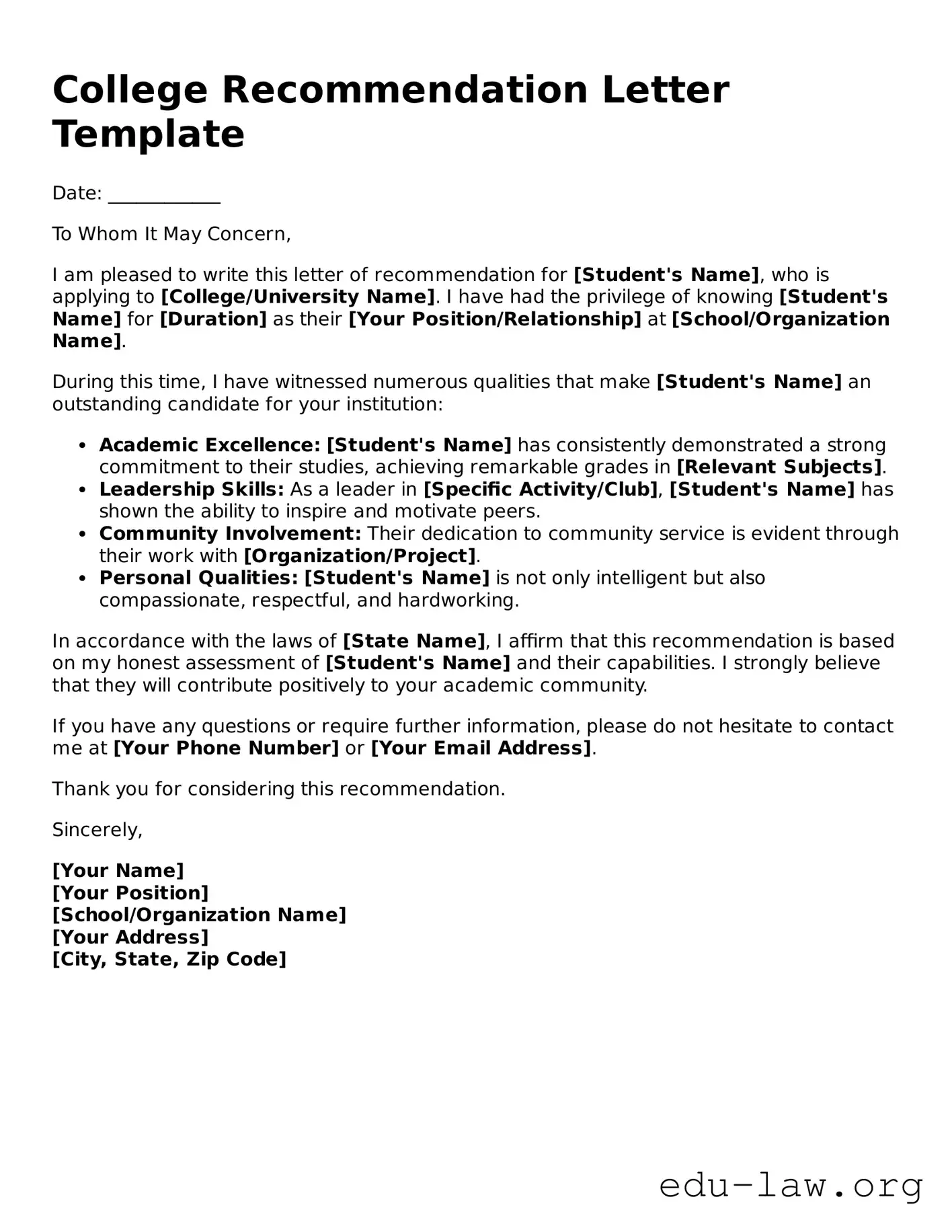
College Recommendation Letter Template
Date: ____________
To Whom It May Concern,
I am pleased to write this letter of recommendation for [Student's Name], who is applying to [College/University Name]. I have had the privilege of knowing [Student's Name] for [Duration] as their [Your Position/Relationship] at [School/Organization Name].
During this time, I have witnessed numerous qualities that make [Student's Name] an outstanding candidate for your institution:
In accordance with the laws of [State Name], I affirm that this recommendation is based on my honest assessment of [Student's Name] and their capabilities. I strongly believe that they will contribute positively to your academic community.
If you have any questions or require further information, please do not hesitate to contact me at [Your Phone Number] or [Your Email Address].
Thank you for considering this recommendation.
Sincerely,
[Your Name]
[Your Position]
[School/Organization Name]
[Your Address]
[City, State, Zip Code]
| Fact Name | Description |
|---|---|
| Purpose | The College Recommendation Letter form is used to provide insights into a student's character and academic abilities. |
| Eligibility | Typically, students in their senior year of high school or those applying for college can request these letters. |
| Who Can Write | Teachers, counselors, or other mentors familiar with the student’s achievements can write the letter. |
| Content Requirements | The letter should include specific examples of the student’s strengths and contributions. |
| Length | Most recommendation letters are one to two pages long, providing enough detail without being overly lengthy. |
| Submission Method | Letters can be submitted electronically or in hard copy, depending on the college's requirements. |
| State-Specific Forms | Some states may have specific guidelines for recommendation letters, governed by local education laws. |
| Confidentiality | Students often have the option to waive their right to view the letter, which can enhance its credibility. |
| Deadline | Recommendation letters must be submitted by the college's application deadline to be considered. |
Once you have the College Recommendation Letter form in hand, it's time to complete it carefully. Following the steps below will ensure that you provide all the necessary information clearly and accurately. This process is essential for helping the applicant present their best self to prospective colleges.
After filling out the form, ensure that it is submitted according to the guidelines provided by the college or the student. This may involve mailing it directly or uploading it to an online portal. Your thoughtful input can significantly impact the student's application journey.
What is a College Recommendation Letter?
A College Recommendation Letter is a document written by someone who knows a student well, such as a teacher, counselor, or mentor. This letter provides insights into the student’s character, achievements, and potential. Colleges often require these letters as part of the application process to better understand the applicant beyond their grades and test scores.
Who should I ask to write my recommendation letter?
It is best to ask someone who knows you well and can speak positively about your abilities and character. Teachers from core subjects, coaches, or community leaders are good choices. Ensure that the person you ask is familiar with your accomplishments and can provide specific examples of your strengths.
How far in advance should I request a recommendation letter?
Request your recommendation letter at least four to six weeks before the application deadline. This gives the writer ample time to prepare a thoughtful and detailed letter. It’s also courteous to give them enough notice, as they may have other commitments.
What information should I provide to the person writing my letter?
Provide the writer with your resume, a list of your achievements, and details about the colleges you are applying to. Include information about your goals and why you are interested in those schools. This context helps the writer create a more personalized and impactful letter.
Can I read my recommendation letter before it is submitted?
Typically, recommendation letters are confidential. This means that you won’t be able to read the letter before it is submitted. Most colleges expect that the letter reflects an honest assessment of your abilities. If you have concerns, discuss them with the writer beforehand.
How many recommendation letters do I need?
Most colleges require one to three recommendation letters. Check the specific requirements for each college you are applying to, as they can vary. Some schools may specify which types of recommenders they prefer, such as a teacher in your major field or a guidance counselor.
What if my recommender misses the deadline?
If your recommender misses the deadline, contact them as soon as possible to remind them. If they are unable to submit the letter in time, consider asking another person to write a letter for you. Always have a backup plan to ensure your application is complete.
Can I thank my recommender after they submit the letter?
Yes, it’s a good idea to thank your recommender after they submit the letter. A simple thank-you note or email expressing your gratitude can go a long way. It shows appreciation for their time and effort in supporting your college application.
What should I do if I need to change my recommender?
If you need to change your recommender, communicate your decision politely and as early as possible. Explain your reasons and thank them for their willingness to help. Then, ask someone else who can provide a strong recommendation. Make sure to inform the new recommender about the deadlines and any necessary details.
Not following the guidelines: Many recommenders overlook specific instructions provided by the college. Each institution may have unique requirements, such as the length of the letter or specific qualities to highlight. Ignoring these can lead to a less effective recommendation.
Being too generic: A common mistake is writing a letter that lacks personalization. Generic comments do not showcase the student’s unique strengths or experiences. Instead, recommenders should provide specific examples that illustrate the student’s character and achievements.
Missing deadlines: Timeliness is crucial. Some recommenders forget to submit their letters by the college’s deadline. This can jeopardize the student’s application, so it’s essential to keep track of submission dates and plan ahead.
Focusing on irrelevant details: Some letters include information that does not relate to the student’s potential for college success. Recommenders should focus on the qualities that matter most to the admissions committee, such as leadership skills, academic performance, and personal growth.
Not proofreading: Spelling and grammatical errors can detract from the credibility of the letter. It’s important for recommenders to review their letters carefully. A polished letter reflects well on both the recommender and the student.
When applying to colleges, students often need to submit various forms and documents alongside their College Recommendation Letter. These documents help provide a comprehensive view of the applicant's qualifications and character. Below are some common forms and documents that are frequently used in conjunction with the recommendation letter.
These documents work together to create a complete application package, allowing admissions committees to make informed decisions. Each component plays a vital role in presenting the applicant's strengths and potential contributions to the college community.
The College Recommendation Letter form shares similarities with the Job Reference Letter. Both documents serve to endorse an individual's qualifications and character. A job reference letter typically highlights the candidate's professional skills, work ethic, and accomplishments. Similarly, a college recommendation letter emphasizes a student's academic abilities, extracurricular involvement, and personal traits that make them a strong candidate for admission. Each document aims to provide a third-party perspective that supports the individual's application, whether for a job or college admission.
Another document akin to the College Recommendation Letter is the Graduate School Recommendation Letter. This type of letter is specifically tailored for students seeking advanced degrees. Just like the college recommendation, it focuses on the applicant's academic performance and potential for success in graduate studies. The recommender often discusses the applicant’s research capabilities, critical thinking skills, and motivation, paralleling the attributes highlighted in a college recommendation letter.
The Letter of Recommendation for Scholarships also bears resemblance to the College Recommendation Letter. Both documents are intended to bolster an application by providing insight into the applicant's qualifications and character. A scholarship recommendation letter may emphasize financial need, academic excellence, and community involvement, while a college recommendation letter may focus more on the applicant's readiness for higher education. In both cases, the recommender plays a crucial role in advocating for the applicant.
Similarly, the Letter of Recommendation for Internships serves a comparable purpose. This document is written to support a student's application for an internship position. It highlights relevant skills, experiences, and attributes that make the student a suitable candidate. Like the college recommendation letter, it provides an endorsement from someone familiar with the applicant's abilities and potential, thereby enhancing their chances of securing the opportunity.
The Professional Reference Letter is another document that aligns closely with the College Recommendation Letter. This letter is often requested in professional settings to validate an individual’s skills and experiences. While a college recommendation focuses on academic and personal qualities, a professional reference letter may concentrate on work-related competencies and accomplishments. Both documents aim to provide credibility and support to the individual’s application.
The Personal Reference Letter also shares some similarities with the College Recommendation Letter. This document is typically written by someone who knows the applicant well, such as a family friend or mentor. It focuses on personal attributes, character, and relationships. While the college recommendation letter is more formal and academic in nature, both types of letters serve to affirm the applicant’s suitability for their respective pursuits.
Another related document is the Character Reference Letter. This letter is often used in various situations, such as job applications or legal matters, to attest to an individual's character and integrity. Similar to the college recommendation letter, it provides a personal perspective on the applicant’s qualities, emphasizing trustworthiness and moral standing. Both letters aim to offer a well-rounded view of the individual being recommended.
The Academic Reference Letter is also comparable to the College Recommendation Letter. This document is often required for academic programs or scholarships and focuses on the applicant's educational achievements and scholarly potential. While a college recommendation letter may include personal anecdotes, an academic reference letter primarily emphasizes grades, coursework, and intellectual capabilities, yet both serve to advocate for the applicant’s future opportunities.
Lastly, the Teaching Reference Letter mirrors the College Recommendation Letter in its objective to support a student’s application. Written by a teacher or educator, this letter discusses the student’s academic performance, engagement in class, and potential for success in further education. Both documents provide insights into the applicant's abilities, albeit from different perspectives, and aim to strengthen their application by showcasing their strengths and achievements.
When filling out a College Recommendation Letter form, it is important to approach the task with care and consideration. Below is a list of things to do and avoid during this process.
Following these guidelines can help ensure that the recommendation letter is both effective and impactful.
Misconceptions about the College Recommendation Letter form can lead to confusion for both students and recommenders. Here are seven common misunderstandings:
Not all colleges mandate recommendation letters. Some institutions have a more holistic application process and may not require them at all.
Generic letters often fail to provide a true representation of the student. Colleges appreciate personalized letters that highlight specific strengths and experiences.
While teachers are common recommenders, other individuals such as coaches, employers, or community leaders can also provide valuable insights.
Students can and should communicate with recommenders about their achievements and aspirations, helping to guide the content of the letter.
While there are common elements, the format can vary widely depending on the recommender's style and the specific requirements of the college.
These letters can significantly impact an application. They provide context and depth that grades and test scores alone cannot convey.
Many recommenders juggle multiple responsibilities. It is important for students to request letters well in advance of deadlines.
Filling out and using the College Recommendation Letter form can seem daunting, but understanding a few key points can make the process smoother. Here are some essential takeaways to keep in mind:
By keeping these points in mind, you can navigate the recommendation letter process with confidence and clarity.