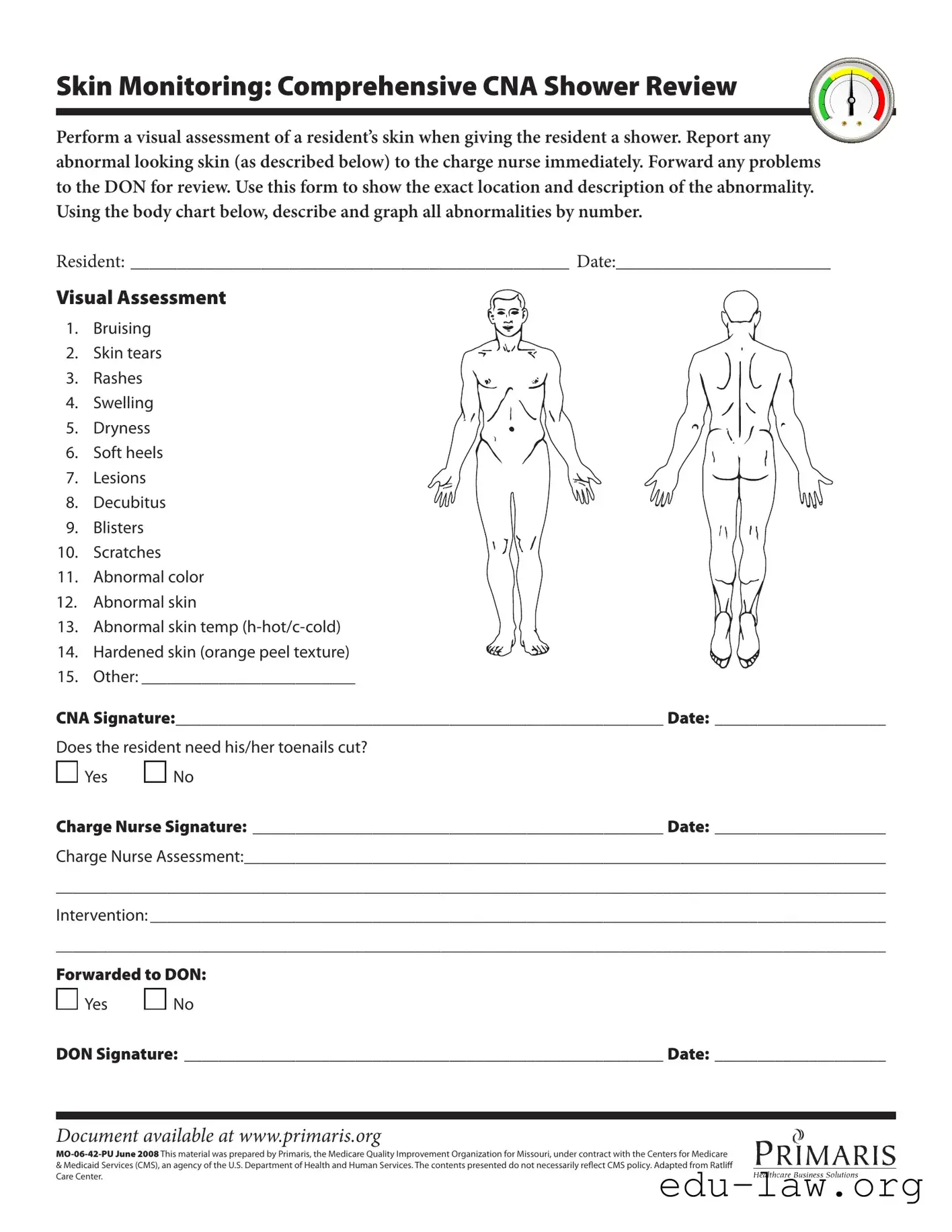
The CNA Shower Sheets form is an essential tool for caregivers in monitoring residents' skin health during showers. It emphasizes the importance of conducting a thorough visual assessment to identify any skin abnormalities. Caregivers must report any unusual findings, such as bruising, skin tears, rashes, or signs of dryness, to the charge nurse right away. This form not only allows for detailed documentation of the resident's condition but also includes a body chart for pinpointing the exact locations of any issues. Additionally, it addresses other important factors, like whether the resident needs toenail care. The signatures of both the CNA and the charge nurse ensure accountability and facilitate further review by the Director of Nursing (DON) if necessary. By following this structured approach, caregivers can help maintain the residents' skin integrity and overall well-being, making the CNA Shower Sheets form a vital part of quality care in any healthcare setting.
Skin Monitoring: Comprehensive CNA Shower Review
Perform a visual assessment of a resident’s skin when giving the resident a shower. Report any abnormal looking skin (as described below) to the charge nurse immediately. Forward any problems to the DON for review. Use this form to show the exact location and description of the abnormality. Using the body chart below, describe and graph all abnormalities by number.
RESIDENT: _______________________________________________ DATE:_______________________
Visual Assessment
1. Bruising
2. Skin tears
3. Rashes
4. Swelling
5. Dryness
6. Soft heels
7. Lesions
8. Decubitus
9. Blisters
10. Scratches
11. Abnormal color
12. Abnormal skin
13. Abnormal skin temp
14. Hardened skin (orange peel texture)
15. Other: _________________________
CNA Signature:_________________________________________________________ Date: ____________________
Does the resident need his/her toenails cut?
Yes No
Charge Nurse Signature: ________________________________________________ Date: ____________________
Charge Nurse Assessment:___________________________________________________________________________
_________________________________________________________________________________________________
Intervention: ______________________________________________________________________________________
_________________________________________________________________________________________________
Forwarded to DON:
Yes No
DON Signature: ________________________________________________________ Date: ____________________
Document available at www.primaris.org
&Medicaid Services (CMS), an agency of the U.S. Department of Health and Human Services. The contents presented do not necessarily relect CMS policy. Adapted from Ratlif Care Center.
| Fact Name | Details |
|---|---|
| Purpose | The CNA Shower Sheets form is used to document skin assessments during resident showers, ensuring any abnormalities are reported and addressed promptly. |
| Skin Monitoring | It requires a visual assessment of the resident's skin, focusing on various conditions such as bruising, rashes, and lesions. |
| Reporting Protocol | Any abnormalities must be reported to the charge nurse immediately and forwarded to the Director of Nursing (DON) for further review. |
| Documentation | The form includes a body chart for graphing abnormalities and requires signatures from both the CNA and the charge nurse. |
| Regulatory Compliance | This form is governed by state-specific laws regarding nursing home care and documentation, ensuring compliance with health regulations. |
Completing the CNA Shower Sheets form requires careful attention to detail. This process involves assessing the resident's skin condition during their shower and documenting any abnormalities. Follow these steps to ensure accurate and thorough completion of the form.
What is the purpose of the CNA Shower Sheets form?
The CNA Shower Sheets form is designed to facilitate the visual assessment of a resident's skin during showering. It helps Certified Nursing Assistants (CNAs) document any abnormalities they observe, such as bruising, rashes, or skin tears. This documentation is essential for ensuring that any issues are reported to the charge nurse and addressed appropriately, promoting the resident's overall health and well-being.
What should a CNA do if they notice an abnormality on a resident's skin?
If a CNA observes any abnormal skin conditions during the shower, they must report these findings to the charge nurse immediately. It is crucial to document the exact location and description of the abnormality on the form. Following this, the charge nurse will evaluate the situation and may forward the information to the Director of Nursing (DON) for further review and intervention.
What types of skin conditions should be monitored using the CNA Shower Sheets form?
The form includes a list of various skin conditions that CNAs should monitor, including bruising, skin tears, rashes, swelling, dryness, lesions, and decubitus ulcers, among others. Each condition is numbered, allowing for a clear and organized way to document findings. Additionally, CNAs can note any other abnormalities that may not be listed.
How does the form assist in the documentation process?
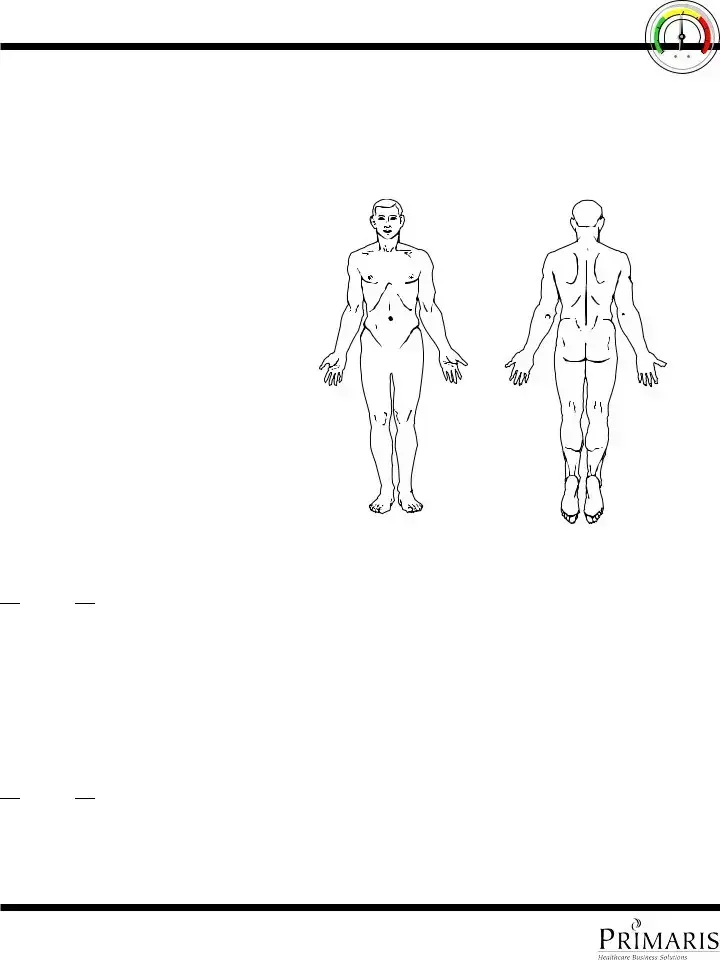
The CNA Shower Sheets form provides a structured way for CNAs to record their observations. It includes a body chart for graphically representing the location of skin abnormalities. This visual representation, combined with written descriptions, helps ensure that all relevant information is captured and communicated effectively to other healthcare professionals.
What happens after the charge nurse assesses the resident?
After the charge nurse reviews the findings documented by the CNA, they will conduct their own assessment. The charge nurse will then determine the appropriate intervention or treatment needed for the resident. This may involve further monitoring, treatment, or referral to the DON for additional action. The charge nurse's assessment is also recorded on the form for continuity of care.
Is there a section for documenting toenail care on the form?
Yes, the CNA Shower Sheets form includes a specific question regarding whether the resident needs their toenails cut. This question helps ensure that all aspects of personal care are addressed. The CNA can mark "Yes" or "No," and this information is important for maintaining the resident's comfort and hygiene.
Neglecting to Perform a Thorough Skin Assessment: One of the most critical mistakes is failing to conduct a complete visual assessment of the resident's skin during the shower. This step is essential for identifying any abnormalities that may require immediate attention.
Inaccurate Documentation: When filling out the form, it’s important to accurately describe and graph the location of any skin abnormalities. Mislabeling or omitting details can lead to misunderstandings and inadequate care.
Ignoring Abnormal Findings: If a CNA notices any unusual skin conditions, such as bruising or rashes, these should be reported to the charge nurse without delay. Failing to do so can jeopardize the resident's health.
Overlooking Toenail Care: The question regarding whether the resident needs toenails cut is often overlooked. Proper foot care is an essential part of overall skin health, and neglecting this can lead to complications.
Not Following Up on Recommendations: After documenting any abnormalities and interventions, it's crucial to ensure that these notes are forwarded to the Director of Nursing (DON) for further review. Skipping this step can hinder proper follow-up care.
The CNA Shower Sheets form is an essential document used in the care of residents, particularly for monitoring skin conditions during showers. It is often accompanied by several other forms that facilitate comprehensive care and documentation. Below are four commonly used forms and documents that work in conjunction with the CNA Shower Sheets.
Each of these documents plays a critical role in ensuring effective communication among caregivers and maintaining high standards of resident care. Together, they support a thorough and systematic approach to monitoring and addressing the health needs of individuals in care facilities.
The CNA Shower Sheets form is similar to the Patient Assessment Form, which is used in healthcare settings to document a patient’s overall health status. Both documents require a thorough evaluation of the patient, focusing on their physical condition and any changes. Just as the CNA Shower Sheets emphasize skin monitoring during a shower, the Patient Assessment Form includes sections for vital signs, skin integrity, and any notable symptoms. Both documents serve as critical tools for communication among healthcare providers, ensuring that any issues are promptly addressed.
Another comparable document is the Incident Report Form. This form is utilized to document any unexpected events or accidents involving patients. Similar to the CNA Shower Sheets, the Incident Report Form requires detailed descriptions of the circumstances surrounding the event, including the location and nature of any injuries. Both documents emphasize the importance of timely reporting to maintain patient safety and improve care quality. They also facilitate follow-up actions and interventions by the healthcare team.
The Skin Integrity Assessment Tool shares similarities with the CNA Shower Sheets as well. This tool is specifically designed to evaluate and monitor skin conditions in patients. Like the CNA Shower Sheets, it includes criteria for assessing various skin abnormalities, such as rashes, lesions, and pressure sores. Both documents serve to document findings systematically, allowing for ongoing monitoring and intervention planning to prevent further skin issues.
The Care Plan is another document that aligns with the CNA Shower Sheets. A Care Plan outlines the specific needs and interventions required for each patient. Similar to the CNA Shower Sheets, it incorporates assessments of the patient’s condition, including skin health. Both documents are essential for creating a cohesive approach to patient care, ensuring that all team members are aware of the resident's needs and any necessary interventions.
Furthermore, the Daily Progress Notes are akin to the CNA Shower Sheets in that they provide a snapshot of a patient’s status on a given day. These notes capture observations made by healthcare staff, including any changes in skin condition noted during daily activities. Both documents serve as a means of communication among caregivers, allowing for continuity of care and timely interventions based on the patient’s evolving needs.
Lastly, the Nursing Assessment Form is similar to the CNA Shower Sheets in that it documents a comprehensive evaluation of a patient’s health. This form typically includes various assessments, including skin assessments, much like the CNA Shower Sheets. Both documents require detailed observations and promote effective communication among healthcare providers, ensuring that patient care is consistent and responsive to any identified issues.
When filling out the CNA Shower Sheets form, consider the following do's and don'ts:
Misconception 1: The CNA Shower Sheets form is only for reporting serious skin issues.
This form is designed to document a range of skin conditions, not just severe problems. It helps ensure that even minor issues are monitored and addressed promptly.
Misconception 2: Only licensed nurses can fill out the CNA Shower Sheets form.
CNA staff are trained to complete this form. Their observations during showers are critical for maintaining resident skin health.
Misconception 3: The form is optional and can be ignored if the resident appears fine.
Completing the form is essential for consistent skin monitoring. It provides a documented history that can be vital for future assessments.
Misconception 4: Skin abnormalities only need to be reported if they are severe.
Even minor abnormalities should be reported. Early detection can prevent more serious issues from developing.
Misconception 5: The body chart included in the form is unnecessary.
The body chart is crucial for accurately documenting the location of any skin issues. This helps in tracking changes over time.
Misconception 6: The CNA Shower Sheets form is not reviewed by higher management.
All completed forms are forwarded to the Director of Nursing (DON) for review. This ensures that all skin issues are taken seriously.
Misconception 7: Once the form is filled out, it is no longer relevant.
The form serves as an ongoing record. It can be referenced in future assessments and care plans, making it an important part of resident care.
When using the CNA Shower Sheets form, consider these key takeaways:
These steps help ensure proper care and documentation, enhancing resident safety and well-being.