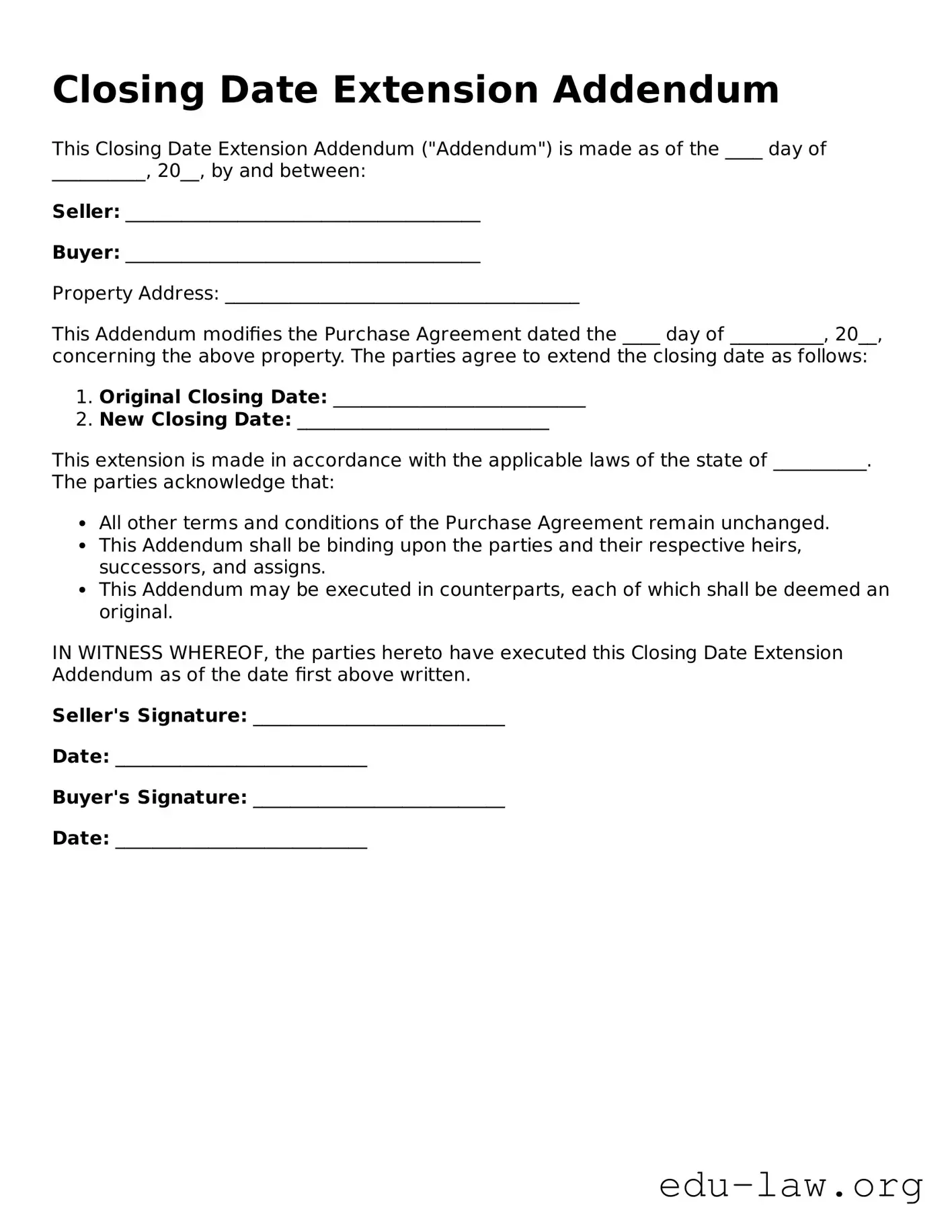
When navigating the complexities of real estate transactions, timing is often crucial. The Closing Date Extension Addendum form serves as a vital tool for buyers and sellers who find themselves needing more time to finalize the details of their agreement. This form allows parties to officially extend the closing date beyond the originally agreed-upon timeframe, ensuring that all necessary inspections, financing arrangements, and paperwork can be completed without the pressure of an impending deadline. By utilizing this addendum, both parties can maintain clarity and avoid potential disputes that may arise from rushed decisions. It outlines the new closing date and ensures that all involved are on the same page, fostering a smoother transaction process. Understanding the nuances of this form can provide peace of mind, allowing buyers and sellers to focus on what truly matters—making their real estate dreams a reality.
Closing Date Extension Addendum
This Closing Date Extension Addendum ("Addendum") is made as of the ____ day of __________, 20__, by and between:
Seller: ______________________________________
Buyer: ______________________________________
Property Address: ______________________________________
This Addendum modifies the Purchase Agreement dated the ____ day of __________, 20__, concerning the above property. The parties agree to extend the closing date as follows:
This extension is made in accordance with the applicable laws of the state of __________. The parties acknowledge that:
IN WITNESS WHEREOF, the parties hereto have executed this Closing Date Extension Addendum as of the date first above written.
Seller's Signature: ___________________________
Date: ___________________________
Buyer's Signature: ___________________________
Date: ___________________________
| Fact Name | Description |
|---|---|
| Purpose | The Closing Date Extension Addendum is used to extend the closing date of a real estate transaction. |
| Parties Involved | This form is typically signed by the buyer and seller involved in the transaction. |
| Governing Law | The form is governed by the laws of the state where the property is located. |
| Signature Requirement | Both parties must sign the addendum for it to be valid. |
| Modification of Terms | The addendum modifies the original purchase agreement, specifically the closing date. |
| Notice of Change | Parties should provide notice to each other regarding the new closing date. |
| State-Specific Variations | Some states may have specific requirements or forms for extending the closing date. |
Once you have the Closing Date Extension Addendum form ready, it’s important to ensure all necessary information is accurately filled out. This will help facilitate a smooth process moving forward.
What is a Closing Date Extension Addendum?
A Closing Date Extension Addendum is a document that allows the parties involved in a real estate transaction to extend the closing date. This addendum modifies the original contract to accommodate new timelines, ensuring that both buyer and seller agree to the changes.
When should I use a Closing Date Extension Addendum?
You should consider using this addendum if unforeseen circumstances arise that prevent the closing from occurring on the originally scheduled date. Common reasons include delays in financing, issues with inspections, or necessary repairs that have not been completed.
Who needs to sign the Closing Date Extension Addendum?
Both the buyer and the seller must sign the addendum. It’s important that all parties involved in the transaction agree to the new closing date to avoid any potential disputes later on.
How do I fill out the Closing Date Extension Addendum?
To fill out the addendum, start by entering the original closing date and the new proposed closing date. Include any additional terms that may be relevant to the extension. Ensure that all parties review the document for accuracy before signing.
Is there a fee associated with extending the closing date?
There may be fees related to extending the closing date, depending on your contract and lender. It’s advisable to check with your real estate agent or attorney to understand any potential costs involved in this process.
What happens if the new closing date is missed?
If the new closing date is missed, it can lead to complications. The seller may have the right to terminate the contract or impose penalties. It’s crucial to communicate promptly with all parties if delays occur and to consider another extension if necessary.
Can the Closing Date Extension Addendum be used multiple times?
Yes, the addendum can be used multiple times if further extensions are needed. However, each extension should be documented clearly and agreed upon by all parties to maintain transparency and avoid misunderstandings.
Where can I obtain a Closing Date Extension Addendum form?
You can typically obtain a Closing Date Extension Addendum form from your real estate agent, attorney, or online legal resources. Ensure that the form you use is compliant with your state’s laws and regulations.
Not specifying a new closing date: One common mistake is failing to clearly indicate the new closing date. This can lead to confusion and potential disputes later on. Always ensure that the new date is explicitly stated.
Ignoring the need for signatures: Some individuals forget that all parties involved must sign the addendum. Without the necessary signatures, the extension may not be legally binding.
Leaving out important details: It’s crucial to provide all relevant information, such as the reason for the extension and any conditions that may apply. Omitting these details can result in misunderstandings.
Not adhering to local laws: Each state has its own regulations regarding real estate transactions. Failing to comply with these can render the addendum ineffective. Always check local laws before submitting.
Assuming verbal agreements are sufficient: Some people mistakenly believe that a verbal agreement for an extension is enough. However, it’s essential to have everything documented in writing to protect all parties involved.
The Closing Date Extension Addendum form is a document that allows parties involved in a real estate transaction to extend the closing date. This form is often used in conjunction with other documents to ensure all aspects of the transaction are clearly outlined and agreed upon. Below is a list of other forms and documents that are commonly associated with the Closing Date Extension Addendum.
Each of these documents plays a crucial role in facilitating a smooth real estate transaction. Understanding their purpose can help all parties involved navigate the process more effectively.
The Purchase Agreement is a key document in real estate transactions. It outlines the terms and conditions under which a buyer agrees to purchase a property from a seller. Similar to the Closing Date Extension Addendum, it can be modified to extend timelines, including the closing date. Both documents require mutual consent from both parties to ensure clarity and agreement on the new terms.
The Loan Commitment Letter is another important document. It is issued by a lender to confirm that a borrower has been approved for a loan under specific conditions. Like the Closing Date Extension Addendum, it often includes deadlines for fulfilling certain requirements. If these deadlines are not met, parties may need to negotiate extensions, reflecting the same need for flexibility in timelines.
The Addendum to Purchase Agreement serves to modify or add to the original Purchase Agreement. It can address various aspects, including closing dates. This document, like the Closing Date Extension Addendum, ensures that all parties are on the same page regarding changes to previously agreed terms, promoting transparency in the transaction process.
The Escrow Agreement outlines the terms under which funds and documents are held by a neutral third party until certain conditions are met. If closing dates change, the Escrow Agreement may need to be adjusted accordingly. Both documents emphasize the importance of clear communication and agreement on timelines to prevent misunderstandings.
The Inspection Contingency Addendum allows buyers to request inspections of the property before finalizing the purchase. If inspections reveal issues, buyers may need additional time to negotiate repairs or reconsider their offer. This is similar to the Closing Date Extension Addendum in that both documents can lead to adjustments in timelines based on new information or circumstances.
The Seller's Disclosure Statement is a document where sellers disclose known issues with the property. If significant problems arise during the disclosure process, buyers may require more time to assess their options. This need for additional time mirrors the purpose of the Closing Date Extension Addendum, which is to allow flexibility in meeting closing deadlines.
The Lease Agreement, while typically used in rental situations, can also include clauses about the duration of the lease and any extensions. Similar to the Closing Date Extension Addendum, it requires both parties to agree on any changes to the timeline. Both documents aim to ensure that all parties are aware of and agree to any adjustments in their commitments.
When filling out the Closing Date Extension Addendum form, it is important to follow certain guidelines to ensure accuracy and compliance. Here are six things to consider:
Many people have misunderstandings about the Closing Date Extension Addendum form. Here are four common misconceptions:
Understanding these points can help clarify the purpose and use of the Closing Date Extension Addendum form.
When dealing with a Closing Date Extension Addendum form, there are several important points to keep in mind. This form is typically used in real estate transactions to extend the closing date of a property sale. Here are some key takeaways:
By understanding these key points, you can navigate the process of using a Closing Date Extension Addendum more effectively, ensuring a smoother transaction for everyone involved.