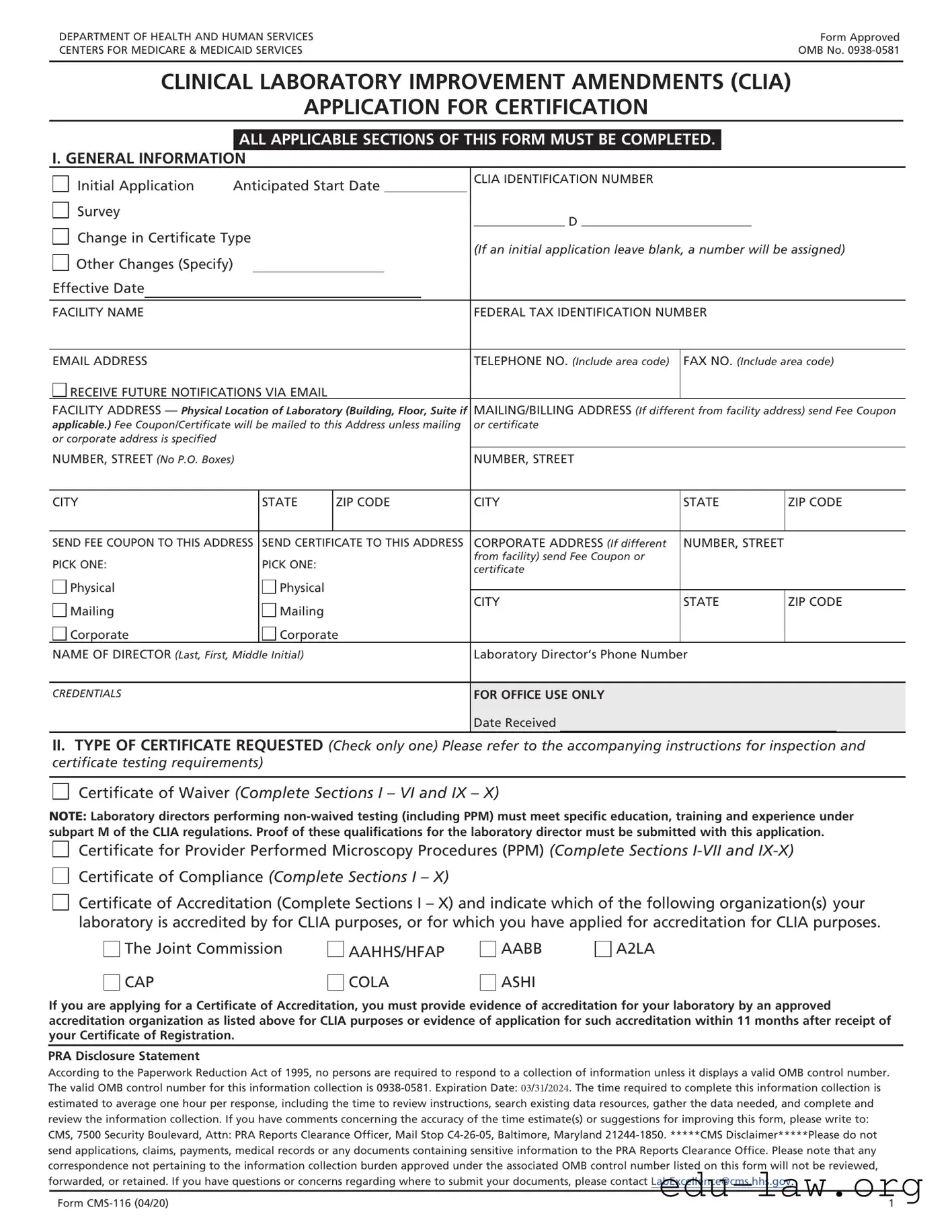
The CMS 116 form, an essential document for laboratories seeking certification under the Clinical Laboratory Improvement Amendments (CLIA), serves multiple purposes in the certification process. This form requires applicants to provide a range of information, including general details about the laboratory, such as its name, address, and contact information. Additionally, it allows laboratories to specify the type of certificate they are applying for, whether it be a Certificate of Waiver, a Certificate for Provider Performed Microscopy Procedures, a Certificate of Compliance, or a Certificate of Accreditation. Each type of certificate has specific requirements, and the form guides applicants through the necessary sections to ensure compliance. Furthermore, the CMS 116 includes sections for detailing the types of tests performed, estimated annual test volumes, and the laboratory's operational hours. It also addresses multiple site applications, allowing for streamlined certification across various locations under certain conditions. Completing this form accurately is crucial for laboratories to maintain compliance and ensure the quality of testing services provided to the public.
DEPARTMENT OF HEALTH AND HUMAN SERVICES |
Form Approved |
CENTERS FOR MEDICARE & MEDICAID SERVICES |
OMB No. |
|
|
CLINICAL LABORATORY IMPROVEMENT AMENDMENTS (CLIA)
APPLICATION FOR CERTIFICATION
ALL APPLICABLE SECTIONS OF THIS FORM MUST BE COMPLETED.
I. GENERAL INFORMATION
Initial Application |
Anticipated Start Date |
|
CLIA IDENTIFICATION NUMBER |
|
|
|
|||||||||
|
|
|
|
|
|
|
|||||||||
Survey |
|
|
|
|
|
|
|
|
|
D |
|
|
|
|
|
Change in Certificate Type |
|
|
|
|
|
|
|
|
|
|
|
||||
|
|
|
|
|
|
(If an initial application leave blank, a number will be assigned) |
|||||||||
|
|
|
|
|
|
|
|
|
|
||||||
Other Changes (Specify) |
|
|
|
|
|
|
|
|
|
|
|
|
|||
Effective Date |
|
|
|
|
|
|
|
|
|
|
|
|
|
|
|
|
|
|
|
|
|
|
|
|
|
|
|
|
|
|
|
FACILITY NAME |
|
|
|
|
|
|
|
|
FEDERAL TAX IDENTIFICATION NUMBER |
|
|||||
|
|
|
|
|
|
|
|
|
|
|
|
|
|
|
|
EMAIL ADDRESS |
|
|
|
|
|
|
|
|
TELEPHONE NO. (Include area code) |
FAX NO. (Include area code) |
|||||
RECEIVE FUTURE NOTIFICATIONS VIA EMAIL |
|
|
|
|
|
|
|
|
|
|
|
||||
FACILITY ADDRESS — Physical Location of Laboratory (Building, Floor, Suite if |
|
MAILING/BILLING ADDRESS (If different from facility address) send Fee Coupon |
|||||||||||||
applicable.) Fee Coupon/Certificate will be mailed to this Address unless mailing |
|
or certificate |
|
|
|
||||||||||
or corporate address is specified |
|
|
|
|
|
|
|
|
|
|
|
|
|
|
|
NUMBER, STREET (No P.O. Boxes) |
|
|
|
|
|
|
NUMBER, STREET |
|
|
|
|||||
|
|
|
|
|
|
|
|
|
|
|
|
|
|
|
|
CITY |
|
|
STATE |
ZIP CODE |
|
CITY |
STATE |
ZIP CODE |
|||||||
|
|
|
|
|
|
|
|
|
|
|
|
|
|
|
|
SEND FEE COUPON TO THIS ADDRESS |
SEND CERTIFICATE TO THIS ADDRESS |
|
CORPORATE ADDRESS (If different |
NUMBER, STREET |
|
||||||||||
PICK ONE: |
|
|
PICK ONE: |
|
|
|
|
|
from facility) send Fee Coupon or |
|
|
|
|||
|
|
|
|
|
|
|
certificate |
|
|
|
|||||
|
|
|
|
|
|
|
|
|
|
|
|
|
|||
Physical |
|
|
Physical |
|
|
|
|
|
|
|
|
|
|
|
|
Mailing |
|
|
Mailing |
|
|
|
|
|
CITY |
STATE |
ZIP CODE |
||||
|
|
|
|
|
|
|
|
|
|
|
|
|
|||
Corporate |
|
|
Corporate |
|
|
|
|
|
|
|
|||||
NAME OF DIRECTOR (Last, First, Middle Initial) |
|
|
|
|
|
Laboratory Director’s Phone Number |
|
||||||||
|
|
|
|
|
|
|
|
|
|
|
|
|
|
|
|
CREDENTIALS |
|
|
|
|
|
|
|
|
FOR OFFICE USE ONLY |
|
|
|
|||
Date Received
II.TYPE OF CERTIFICATE REQUESTED (Check only one) Please refer to the accompanying instructions for inspection and certificate testing requirements)
Certificate of Waiver (Complete Sections I – VI and IX – X)
NOTE: Laboratory directors performing
Certificate for Provider Performed Microscopy Procedures (PPM) (Complete Sections
Certificate of Compliance (Complete Sections I – X)
Certificate of Accreditation (Complete Sections I – X) and indicate which of the following organization(s) your laboratory is accredited by for CLIA purposes, or for which you have applied for accreditation for CLIA purposes.
The Joint Commission
CAP
AAHHS/HFAP
COLA
AABB
ASHI
A2LA
If you are applying for a Certificate of Accreditation, you must provide evidence of accreditation for your laboratory by an approved accreditation organization as listed above for CLIA purposes or evidence of application for such accreditation within 11 months after receipt of your Certificate of Registration.
PRA Disclosure Statement
According to the Paperwork Reduction Act of 1995, no persons are required to respond to a collection of information unless it displays a valid OMB control number. The valid OMB control number for this information collection is
Form |
1 |
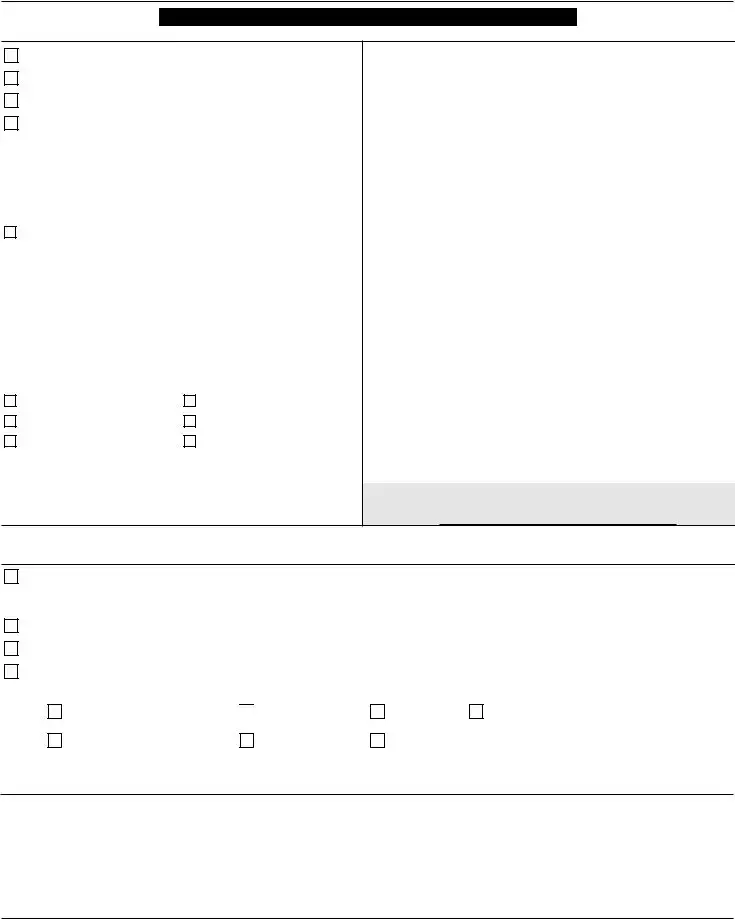
III. TYPE OF LABORATORY (Check the one most descriptive of facility type)
01 Ambulance
02Ambulatory Surgery Center
03Ancillary Testing Site in Health Care Facility
04Assisted Living Facility
05Blood Bank
06Community Clinic
07Comp. Outpatient Rehab Facility
08End Stage Renal Disease Dialysis Facility
09Federally Qualified Health Center
10Health Fair
11Health Main. Organization
12Home Health Agency
13Hospice
14Hospital
15Independent
16Industrial
17Insurance
18Intermediate Care Facilities for Individuals with Intellectual Disabilities
19Mobile Laboratory
20Pharmacy
21Physician Office
22Practitioner Other (Specify)
23Prison
24Public Health Laboratories
25Rural Health Clinic
26School/Student Health Service
27Skilled Nursing Facility/ Nursing Facility
28Tissue Bank/Repositories
29Other (Specify)
IV. HOURS OF LABORATORY TESTING (List times during which laboratory testing is performed in HH:MM format) If testing 24/7 Check Here
SUNDAY |
MONDAY |
TUESDAY WEDNESDAY THURSDAY |
FRIDAY |
SATURDAY |
FROM:
TO:
(For multiple sites, attach the additional information using the same format.)
V. MULTIPLE SITES (must meet one of the regulatory exceptions to apply for this provision in
Are you applying for a single site CLIA certificate to cover multiple testing locations?
No. If no, go to section VI.
Yes. If yes, complete remainder of this section.
Indicate which of the following regulatory exceptions applies to your facility’s operation.
1.Is this a laboratory that is not at a fixed location, that is, a laboratory that moves from testing site to testing site, such as mobile unit providing laboratory testing, health screening fairs, or other temporary testing locations, and may be covered under the certificate of the designated primary site or home base, using its address?
Yes
No
If yes and a mobile unit is providing the laboratory testing, record the vehicle identification number(s) (VINs) and attach to the application.
2.Is this a
multiple sites?
Yes
No
If yes, provide the number of sites under the certificate |
|
and list name, address and test performed for each |
site below. |
|
|
3.Is this a hospital with several laboratories located at contiguous buildings on the same campus within the same physical location or street address and under common direction that is filing for a single certificate for these locations?
Yes
No
If yes, provide the number of sites under this certificateand list name or department, location within hospital and specialty/subspecialty areas performed at each site below.
If additional space is needed, check here
and attach the additional information using the same format.
|
NAME AND ADDRESS/LOCATION |
TESTS PERFORMED/SPECIALTY/SUBSPECIALTY |
|
|
|
|
|
NAME OF LABORATORY OR HOSPITAL DEPARTMENT |
|
||
|
|
|
|
ADDRESS/LOCATION (Number, Street, Location if applicable) |
|
||
|
|
|
|
CITY, STATE, ZIP CODE |
|
TELEPHONE NO. (Include area code) |
|
|
|
|
|
NAME OF LABORATORY OR HOSPITAL DEPARTMENT |
|
||
|
|
||
ADDRESS/LOCATION (Number, Street, Location if applicable) |
|
||
|
|
|
|
CITY, STATE, ZIP CODE |
|
TELEPHONE NO. (Include area code) |
|
|
|
|
|
|
|
|
|
Form |
2 |
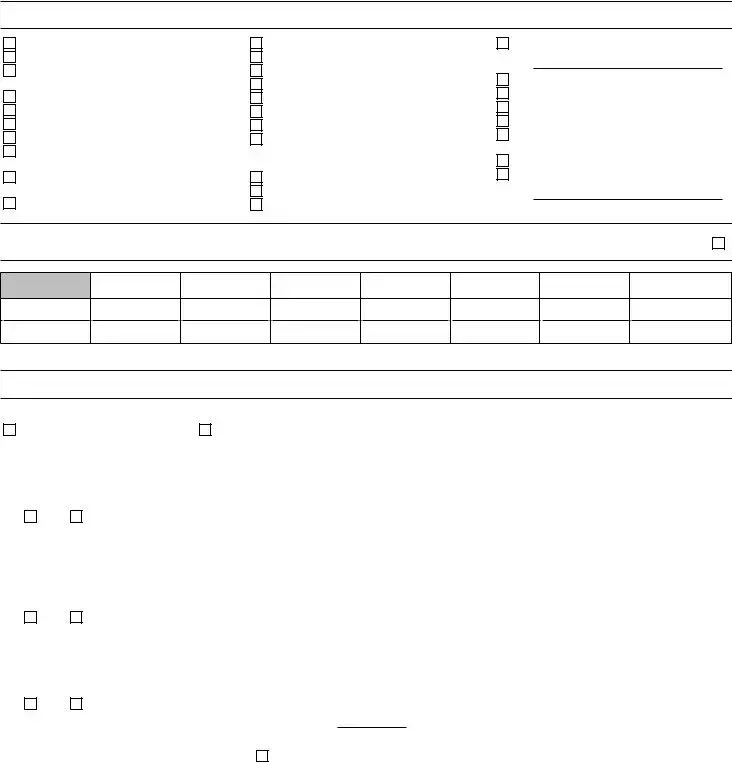
In the next three sections, indicate testing performed and estimated annual test volume.
VI. WAIVED TESTING If only applying for a Certificate of Waiver, complete this section and skip sections VII (PPM Testing) and VIII
Identify the waived testing (to be) performed by completing the table below. Include each analyte, test system, or device used in the laboratory.
|
ANALYTE / TEST |
TEST NAME |
MANUFACTURER |
|
|
Example: Streptococcus group A |
Ace Rapid Strep Test |
Acme Corporation |
|
|
|
|
|
|
|
|
|
|
|
|
|
|
|
|
|
|
|
|
|
|
|
|
|
|
|
|
|
|
|
|
|
|
|
|
|
|
|
|
|
|
|
|
|
|
|
|
|
|
|
|
|
|
|
|
|
|
|
|
|
|
|
|
|
|
|
|
|
|
|
|
|
|
|
|
|
|
|
|
|
Indicate the ESTIMATED TOTAL ANNUAL TEST volume for all waived tests performed ________________
Check if no waived tests are performed
If additional space is needed, check here
and attach additional information using the same format.
VII. PPM TESTING If only applying for a Certificate for PPM, complete this section and skip section VIII
Listed below are the only PPM tests that can be performed by a facility having a Certificate for PPM. Mark the checkbox by each PPM procedure(s) to be performed.
Direct wet mount preparations for the presence or absence of bacteria, fungi, parasites, and human cellular elements
Potassium hydroxide (KOH) preparations
Pinworm examinations
Fern tests
Urine sediment examinations
Nasal smears for granulocytes
Fecal leukocyte examinations
Qualitative semen analysis (limited to the presence or absence of sperm and detection of motility)
Indicate the ESTIMATED TOTAL ANNUAL TEST volume for all PPM tests performed ________________
If also performing waived complexity tests, complete Section VI. For laboratories applying for certificate of compliance or certificate of accreditation, also include PPM test volume in the specialty/subspecialty category and the “total estimated annual test volume” in section VIII.
Check if no PPM tests are performed
If additional space is needed, check here
and attach additional information using the same format.
Form |
3 |
VIII.
Identify the
|
ANALYTE / TEST |
TEST NAME |
MANUFACTURER |
M or H |
|
|
Example: Potassium |
Quick Potassium Test |
Acme Lab Corporation |
M |
|
|
|
|
|
|
|
|
|
|
|
|
|
|
|
|
|
|
|
|
|
|
|
|
|
|
|
|
|
|
|
|
|
|
|
|
|
|
|
|
|
|
|
|
|
|
|
|
|
|
|
|
|
|
|
If additional space is needed, check here
and attach additional information using the same format.
If you perform testing other than or in addition to waived tests, complete the information below. If applying for one certificate for multiple sites, the total volume should include testing for ALL sites.
If additional space is needed, check here and attach additional information using the same format.” Include text box similar to Section VII.
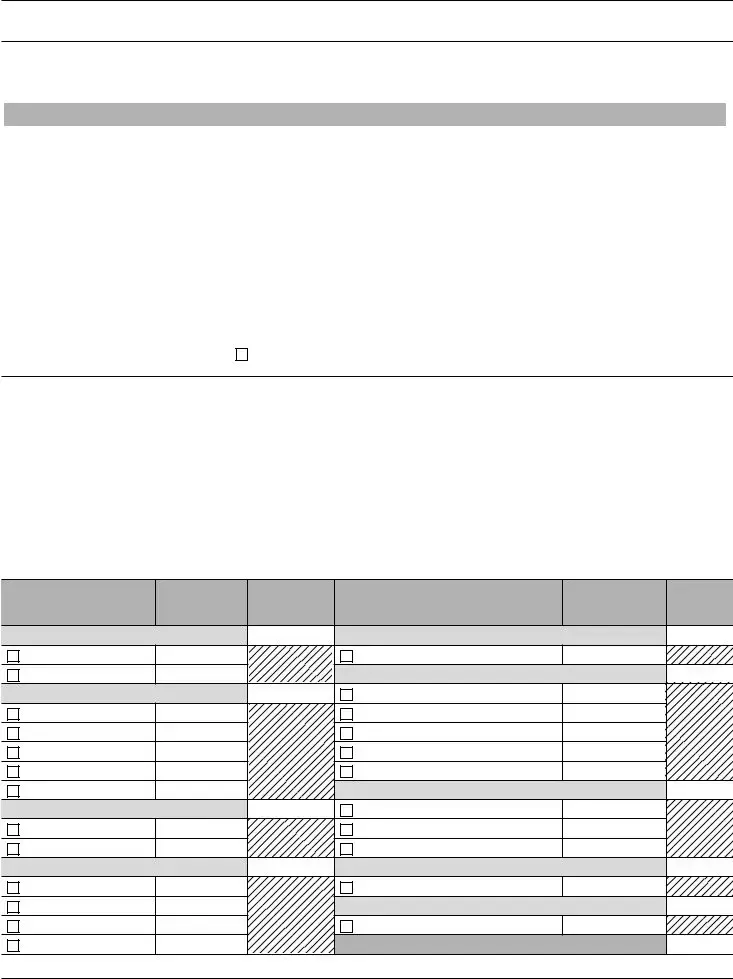
Place a check (3) in the box preceding each specialty/subspecialty in which the laboratory performs testing. Enter the
estimated annual test volume for each specialty. Do not include testing not subject to CLIA, waived tests, or tests run for quality control, calculations, quality assurance or proficiency testing when calculating test volume. (For additional guidance on counting test volume, see the instructions included with the application package.)
If applying for a Certificate of Accreditation, indicate the name of the Accreditation Organization beside the applicable specialty/ subspecialty for which you are accredited for CLIA compliance. (The Joint Commission, AAHHS/HFAP, AABB, A2LA ,CAP, COLA or ASHI)
SPECIALTY / |
ACCREDITING |
ANNUAL |
SPECIALTY / |
ACCREDITING |
ANNUAL |
|
TEST |
||||||
SUBSPECIALTY |
ORGANIZATION TEST VOLUME |
SUBSPECIALTY |
ORGANIZATION |
|||
VOLUME |
||||||
|
|
|
|
|
||
HISTOCOMPATIBILITY 010 |
|
|
HEMATOLOGY 400 |
|
|
|
Transplant |
|
|
Hematology |
|
|
|
Nontransplant |
|
|
IMMUNOHEMATOLOGY |
|
|
|
MICROBIOLOGY |
|
|
ABO Group & Rh Group 510 |
|
|
|
Bacteriology 110 |
|
|
Antibody Detection (transfusion) 520 |
|
|
|
Mycobacteriology 115 |
|
|
Antibody Detection (nontransfusion) 530 |
|
|
|
Mycology 120 |
|
|
Antibody Identification 540 |
|
|
|
Parasitology 130 |
|
|
Compatibility Testing 550 |
|
|
|
Virology 140 |
|
|
PATHOLOGY |
|
|
|
DIAGNOSTIC IMMUNOLOGY |
|
|
Histopathology 610 |
|
|
|
Syphilis Serology 210 |
|
|
Oral Pathology 620 |
|
|
|
General Immunology 220 |
|
|
Cytology 630 |
|
|
|
CHEMISTRY |
|
|
RADIOBIOASSAY 800 |
|
|
|
Routine 310 |
|
|
Radiobioassay |
|
|
|
Urinalysis 320 |
|
|
CLINICAL CYTOGENETICS 900 |
|
|
|
Endocrinology 330 |
|
|
Clinical Cytogenetics |
|
|
|
Toxicology 340 |
|
|
TOTAL ESTIMATED ANNUAL TEST VOLUME: |
|
||
Form |
|
|
|
|
4 |
|
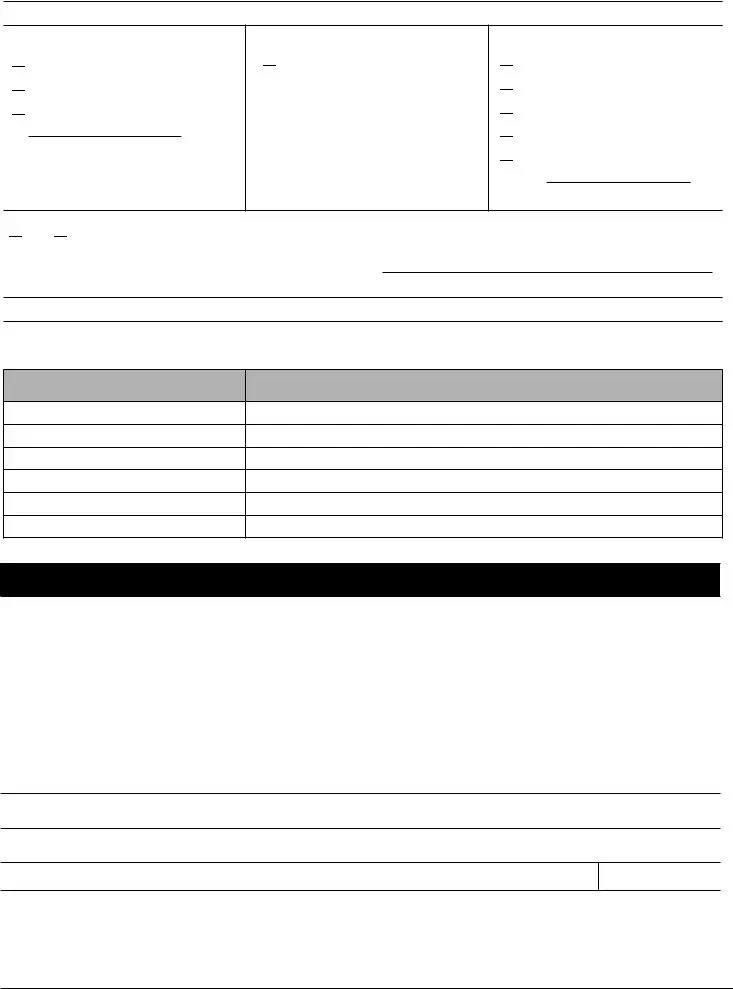
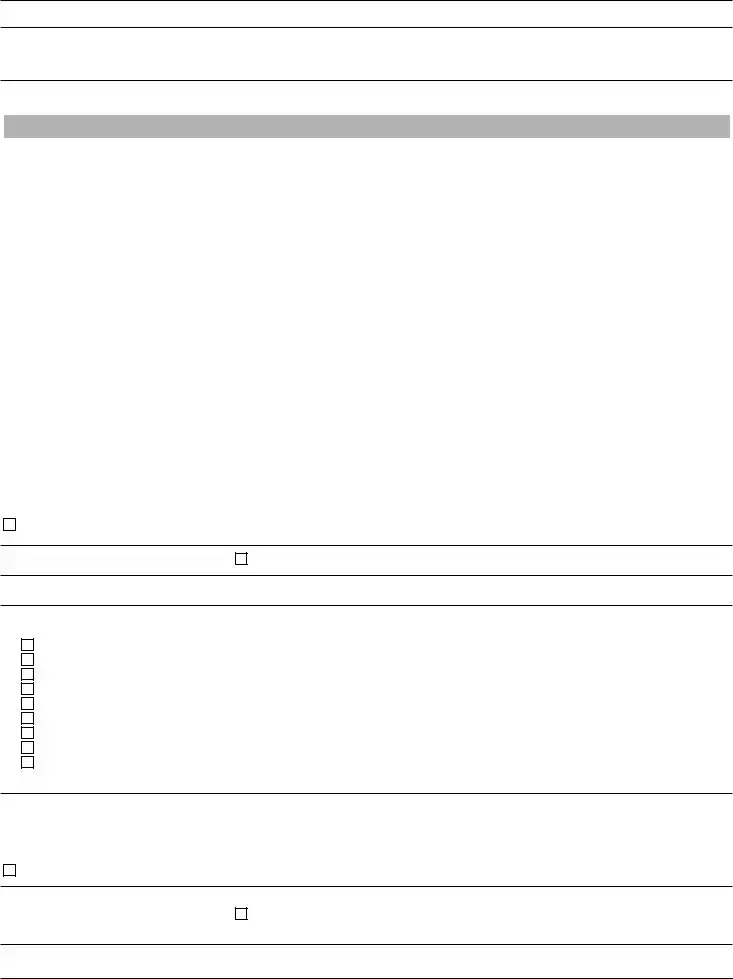
IX. TYPE OF CONTROL (CHECK THE ONE MOST DESCRIPTIVE OF OWNERSHIP TYPE)
VOLUNTARY NONPROFIT
01 Religious Affiliation
02 Private Nonprofit
03 Other Nonprofit
(Specify)
FOR PROFIT
04 Proprietary
GOVERNMENT
05 City
06 County
07 State
08 Federal
09 Other Government
(If 09 is selected, please specify the country
or the province.)
Does this facility have partial or full ownership by a foreign entity or foreign government? Yes No
If Yes, what is the country of origin for the foreign entity?
X. DIRECTOR AFFILIATION WITH OTHER LABORATORIES
If the director of this laboratory serves as director for additional laboratories that are separately certified, please complete the following:
CLIA NUMBER
NAME OF LABORATORY
ATTENTION: READ THE FOLLOWING CAREFULLY BEFORE SIGNING APPLICATION
Any person who intentionally violates any requirement of section 353 of the Public Health Service Act as amended or any regulation promulgated thereunder shall be imprisoned for not more than 1 year or fined under title
18, United States Code or both, except that if the conviction is for a second or subsequent violation of such a requirement such person shall be imprisoned for not more than 3 years or fined in accordance with title 18, United States Code or both.
Consent: The applicant hereby agrees that such laboratory identified herein will be operated in accordance with applicable standards found necessary by the Secretary of Health and Human Services to carry out the purposes of section 353 of the Public Health Service Act as amended. The applicant further agrees to permit the Secretary, or any Federal officer or employee duly designated by the Secretary, to inspect the laboratory and its operations and its pertinent records at any reasonable time and to furnish any requested information or materials necessary to determine the laboratory’s eligibility or continued eligibility for its certificate or continued compliance with CLIA requirements.
PRINT NAME OF DIRECTOR OF LABORATORY
PRINT NAME OF OWNER OF LABORATORY
SIGNATURE OF OWNER/DIRECTOR OF LABORATORY (SIGN IN INK OR USE A SECURE ELECTRONIC SIGNATURE)
DATE
NOTE: Completed 116 applications must be sent to your local State Agency. Do not send any payment with your completed 116 application.
STATE AGENCY CONTACT INFORMATION CAN BE FOUND AT:
Form |
5 |

THE CLINICAL LABORATORY IMPROVEMENT AMENDMENTS (CLIA) APPLICATION
(FORM
INSTRUCTIONS FOR COMPLETION
CLIA requires every facility that tests human specimens for the purpose of providing information for the diagnosis, prevention or treatment of any disease or impairment of, or the assessment of the health of, a human being to meet certain Federal requirements.
If your facility performs tests for these purposes, it is considered, under the law, to be a laboratory. Facilities only collecting or preparing specimens (or both) or only serving as a mailing service are not considered laboratories. CLIA does not apply to a facility that only performs forensic testing. CLIA applies even if only one or a few basic tests are performed, and even if you are not charging for testing. In addition, the CLIA legislation requires financing of all regulatory costs through fees assessed to affected facilities.
The CLIA application (Form
NOTE: WAIVED TESTS ARE NOT EXEMPT FROM CLIA. FACILITIES PERFORMING ONLY THOSE TESTS CATEGORIZED AS WAIVED MUST APPLY FOR A CLIA CERTIFICATE OF WAIVER.
NOTE: Laboratory directors performing
•Verification of State Licensure, as applicable
•Documentation of qualifications:
•Education (copy of Diploma, transcript from accredited institution, CMEs),
•Credentials, and
•Laboratory experience.
Individuals who attended foreign schools must have an evaluation of their credentials determining equivalency of their education to education obtained in the United States. Failure to submit this information will delay the processing of your application.
ALL APPLICABLE SECTIONS MUST BE COMPLETED. INCOMPLETE APPLICATIONS CANNOT BE PROCESSED AND WILL BE RETURNED TO THE FACILITY. PRINT LEGIBLY OR TYPE INFORMATION.
I. GENERAL INFORMATION
For an initial applicant, check “initial application”. For an initial survey or for a recertification, check “survey”. For a request to change the type of certificate, check “change in certificate type” and provide the effective
date of the change. For all other changes, including change in location, director, lab closure, etc., check “other changes” and provide the effective date of the change.
CLIA Identification Number: For an initial applicant, the CLIA number should be left blank. The number will be assigned when the application is processed. For all other applicants, enter the 10 digit CLIA identification number already assigned and listed on your CLIA certificate.
Facility Name: Be specific when indicating the name of your facility, particularly when it is a component of a larger entity, e.g., respiratory therapy department in XYZ Hospital. For a physician’s office, this may be the name of the physician. NOTE: the information provided is what will appear on your certificate.
Email Address: A valid Email Address is optional and will be used for communications between the CLIA program and the laboratory. Selecting the RECEIVE NOTIFICATIONS VIA EMAIL checkbox, requires the laboratory to enter a valid Email Address.
Physical Facility Address: This address is mandatory and must reflect the physical location where the laboratory testing is performed. The address may include a floor, suite and/or room location, but cannot be a Post Office box or Mail Stop.
If the laboratory has a separate mailing and/or corporate address (from the Facility Address), please complete the appropriate sections on the form.
Mailing Address: This address is optional and may be used if the laboratory wants to direct the mailing of the CLIA fee coupon and/or CLIA certificate to an alternate location, such as an accounts payable office. A Post Office box number or Mail Stop number may be used as part of the Mailing Address for this section.
Corporate Address: This address is optional and may be used if the laboratory wants to direct the mailing of the CLIA fee coupon and/or CLIA certificate to another location, such as, the main headquarters or home office for the laboratory. A Post Office box number or Mail Stop number may be used as part of the Corporate Address for this section.
Form Mailing: Select the address (Physical, Mailing, Corporate) where the CLIA fee coupon and CLIA certificate are to be mailed.
For Office Use Only: The date received is the date the form is received by the state agency or CMS regional office for processing.
II. TYPE OF CERTIFICATE REQUESTED
Select your certificate type based on the highest level of test complexity performed by your laboratory. A laboratory performing
When completing this section, please remember that a facility holding a:
Form |
Instructions |

•Certificate of Waiver can only perform tests categorized as waived;*
•Certificate for Provider Performed Microscopy Procedures (PPM) can only perform tests categorized as PPM, or tests categorized as PPM and waived tests;*
•Certificate of Compliance can perform tests categorized as waived, PPM and moderate and/or high complexity tests provided the applicable CLIA quality standards are met following a CLIA survey; and
•Certificate of Accreditation can perform tests categorized as waived, PPM and moderate and/ or high complexity
*A current list of waived and PPM tests may be obtained from your State agency. Specific test system categorizations can also be found on the Internet at: http://www.accessdata.fda.gov/scripts/cdrh/cfdocs/ cfCLIA/clia.cfm.
III. TYPE OF LABORATORY
Select the type that is most descriptive of the location where the laboratory testing is performed.
If selecting ‘mobile laboratory’ (code 19), a mobile laboratory is defined as a movable,
If selecting ‘Practitioner Other’ (code 22), this type includes practitioners such as, dentists, chiropractors, etc.
IV. HOURS OF ROUTINE OPERATION
Provide only the times when actual laboratory testing is performed in your facility. Please use the HH:MM
format and check box marked ‘24/7’ if laboratory testing is performed continuously, e.g., 24 hours a day, 7 days a week. Do not use military time.
V. MULTIPLE SITES
You can only qualify for the multiple site provision (more than one site under one certificate) if you meet one of the CLIA requirements described in 42 CFR 493.
VI. WAIVED TESTING
Indicate the estimated total annual test volume for all waived tests performed. List can be found at: https:www.cms.gov/CLIA/downloads/waivetbl.pdf
VII. PPM TESTING
Indicate the estimated total annual test volume for all PPM tests performed. List can be found at: https://www.cms.gov/CLIA/downloads/ppmplist.pdf
VIII.
The total Estimated Annual Test volume in this section includes all
IX. TYPE OF CONTROL
Select the type of ownership or control which most appropriately describes your facility.
X. DIRECTOR OF ADDITIONAL LABORATORIES List all other facilities for which the director is responsible and that are under different certificates. Note that for a Certificate of PPM, Certificate of Compliance or Certificate of Accreditation, an individual can only serve as the director for no more than five certificates.
Reminders - Before submitting the Form
1.Include the current or estimated annual test volume.
2.For Certificate for PPM, Certificate of Compliance, or Certificate of Accreditation, include the laboratory director qualifications.
3.Do not send any money with your application.
4.Send the completed Form
Once the completed Form
If you need additional information concerning CLIA, or if you have questions about completion of this form, please contact your State agency. State agency contact information can be found at:
Form |
Instructions |

VIII.
TESTS COMMONLY PERFORMED AND THEIR CORRESPONDING
LABORATORY SPECIALTIES/SUBSPECIALITIES
HISTOCOMPATIBILITY (010)
HLA Typing (disease associated antigens)
MICROBIOLOGY
Bacteriology (110)
Gram Stain Culture Susceptibility Strep screen
Antigen assays (H.pylori, Chlamydia, etc.)
Mycobacteriology (115)
Acid Fast Smear
Mycobacterial culture
Mycobacterial susceptibility
Mycology (120)
Fungal Culture
DTM
KOH Preps
Parasitology (130)
Direct Preps
Ova and Parasite Preps
Wet Preps
Virology (140)
RSV (Not including waived kits)
HPV assay
Cell culture
DIAGNOSTIC IMMUNOLOGY
Syphilis Serology (210)
RPR
FTA, MHATP
General Immunology (220)
Allergen testing
ANA Antistreptolysin O
Antigen/Antibody (hepatitis, herpes, rubella, etc.) Complement (C3, C4)
Immunoglobulin
HIV
Mononucleosis assay Rheumatoid factor
Tumor marker (AFP, CA
*Tumor markers can alternatively be listed under Routine Chemistry instead of General Immunology.
HEMATOLOGY (400)
Complete Blood Count (CBC) WBC count
RBC count Hemoglobin
Hematocrit (Not including spun micro) Platelet count
Differential
Activated Clotting Time
Prothrombin time (Not including waived instruments) Partial thromboplastin time
Fibrinogen Reticulocyte count
Manual WBC by hemocytometer Manual platelet by hemocytometer Manual RBC by hemocytometer Sperm count
IMMUNOHEMATOLOGY
ABO group (510)
Rh(D) type (510)
Antibody screening
Antibody identification (540)
Compatibility testing (550)
PATHOLOGY
Dermatopathology
Oral Pathology (620)
PAP smear interpretations (630)
Other Cytology tests (630)
Histopathology (610)
RADIOBIOASSAY (800)
Red cell volume
Schilling test
CLINICAL CYTOGENETICS (900)
Fragile X Buccal smear
FISH studies for: neoplastic disorders, congenital disorders or solid tumors.
Form |
Instructions |

CHEMISTRY
Routine Chemistry (310)
Albumin
Ammonia
Alk Phos
ALT/SGPT
AST/SGOT
Amylase
Bilirubin
Blood gas (pH, pO2, pCO2)
BUN Calcium Chloride Cholesterol Cholesterol, HDL CK/CK isoenzymes CO2 Creatinine Ferritin
Folate
GGT
Glucose (Not fingerstick) Iron
LDH/LDH isoenzymes Magnesium Potassium
Protein, electrophoresis Protein, total
PSA Sodium Triglycerides Troponin Uric acid Vitamin B12
Endocrinology (330)
Cortisol
HCG (serum pregnancy test) T3
T3 Uptake
T4
T4, free
TSH
Toxicology (340)
Acetaminophen
Blood alcohol
Blood lead (Not waived)
Carbamazepine
Digoxin
Ethosuximide
Gentamicin
Lithium
Phenobarbital
Phenytoin
Primidone
Procainamide
NAPA
Quinidine
Salicylates
Theophylline
Tobramycin
Therapeutic Drug Monitoring
Urinalysis** (320)
Automated Urinalysis (Not including waived instruments) Microscopic Urinalysis
Urine specific gravity by refractometer Urine specific gravity by urinometer Urine protein by sulfosalicylic acid
** Dipstick urinalysis is counted in Section VI. WAIVED TESTING
NOTE: This is not a complete list of tests covered by CLIA. Other
Form |
Instructions |

GUIDELINES FOR COUNTING TESTS FOR CLIA
•For chemistry, each
•For clinical cytogenetics, the number of tests is determined by the number of specimen types processed on each patient; e.g., a bone marrow and a venous blood specimen received on one patient is counted as
two tests. NOTE: For all other genetic tests, the number of tests is determined by the number of results reported in the final report.
•For manual gynecologic and nongynecologic cytology, each slide (not case) is counted as one test.
•For flow cytometry, each measured individual analyte (e.g. T cells, B cells, CD4, etc.) that is ordered and reported should be counted separately.
•For general immunology, testing for allergens should be counted as one test per individual allergen.
•Genetics tests should be placed in the specialty or subspecialty where they fit best, according to the methodology of the test.
•For hematology, each measured individual analyte of a complete blood count or flow cytometry test that is ordered and reported is counted separately. The WBC differential is counted as one test.
•For histocompatibility, each HLA typing (including disease associated antigens) is counted as one test, each HLA antibody screen is counted as one test and each HLA cross match is counted as one test. For example, a
•For histopathology, each block (not slide) is counted as one test. Autopsy services are not included. For those laboratories that perform special stains on histology slides, the test volume is determined by adding the number of special stains performed on slides to the total number of specimen blocks prepared by the laboratory.
•For immunohematology, each ABO, Rh, antibody screen, crossmatch or antibody identification is counted as one test.
•For microbiology, susceptibility testing is counted as one test per group of antibiotics used to determine sensitivity for one organism. Cultures are counted as one per test request from each specimen regardless of the extent of identification, number of organisms isolated, and number of tests/procedures required for identification. Each gram stain or
•For urinalysis, microscopic and macroscopic examinations, each count as one test. Macroscopics (dipsticks) are counted as one test regardless of the number of reagent pads on the strip.
•For all specialties/subspecialities, do not count calculations (e.g., A/G ratio, MCH, T7, etc.), quality control, quality assurance, or proficiency testing assays.
If you need additional information concerning counting tests for CLIA, please contact your State agency.
Form |
Instructions |
| Fact Name | Fact Description |
|---|---|
| Form Purpose | The CMS 116 form is used to apply for certification under the Clinical Laboratory Improvement Amendments (CLIA). |
| Application Types | Applicants can request various types of certificates, including a Certificate of Waiver, Certificate for Provider Performed Microscopy Procedures (PPM), Certificate of Compliance, or Certificate of Accreditation. |
| Required Information | All applicable sections must be completed, including general information, type of certificate requested, and details about laboratory testing. |
| Submission Instructions | Completed applications must be sent to the local State Agency, and no payment should accompany the application. |
| Governing Laws | The form is governed by the Public Health Service Act and CLIA regulations, which set standards for laboratory testing and operations. |
| OMB Control Number | The form has an OMB control number of 0938-0581, which is required for information collection purposes. |
| Expiration Date | The current expiration date for the form is March 31, 2024, after which it may need to be revised or renewed. |
Filling out the CLIA Application CMS 116 form requires careful attention to detail. Each section must be completed accurately to ensure a smooth application process. Follow these steps to fill out the form correctly.
Once the form is filled out, submit it to your local State Agency. Do not include any payment with your application. Make sure to check the state agency contact information for submission details.
What is the CLIA Application CMS 116 form?
The CLIA Application CMS 116 form is a crucial document used to apply for certification under the Clinical Laboratory Improvement Amendments (CLIA). This form collects essential information about the laboratory, including its type, ownership, and the specific tests it intends to perform. Completing this form accurately is vital for laboratories seeking to operate legally and maintain compliance with federal regulations.
Who needs to fill out the CMS 116 form?
Any laboratory that wishes to receive CLIA certification must complete the CMS 116 form. This includes a wide range of facilities, such as hospitals, independent laboratories, and mobile testing units. Whether a laboratory is applying for its initial certification or making changes to its existing certification, the CMS 116 form must be filled out thoroughly and submitted to the appropriate state agency.
What types of certificates can be requested using the CMS 116 form?
The CMS 116 form allows applicants to request several types of certificates, including a Certificate of Waiver, a Certificate for Provider Performed Microscopy Procedures (PPM), a Certificate of Compliance, and a Certificate of Accreditation. Each certificate type has specific requirements and is designed for different levels of laboratory testing complexity. Applicants should carefully select the type that aligns with their laboratory's capabilities and testing procedures.
What information is required in the CMS 116 form?
Completing the CMS 116 form requires detailed information about the laboratory, including its name, address, and ownership structure. Applicants must also specify the types of tests they will perform, the estimated annual test volume, and the qualifications of the laboratory director. Additionally, if the laboratory is seeking a Certificate of Accreditation, evidence of accreditation from an approved organization must be provided.
How long does it take to complete the CMS 116 form?
According to the information provided with the CMS 116 form, it is estimated that completing the form will take approximately one hour. This time includes reviewing the instructions, gathering necessary data, and filling out the required sections. It is advisable for applicants to prepare in advance to ensure all needed information is readily available.
Where should the completed CMS 116 form be sent?
After completing the CMS 116 form, applicants must submit it to their local state agency. It is important not to send any payment with the application. Each state has its own contact information for submission, which can typically be found on the Centers for Medicare & Medicaid Services (CMS) website.
What happens after the CMS 116 form is submitted?
Once the CMS 116 form is submitted, the appropriate state agency will review the application. If everything is in order, the laboratory will receive its CLIA certificate, allowing it to operate legally. The agency may also conduct inspections to ensure compliance with CLIA regulations. Laboratories are encouraged to maintain all records and be prepared for any potential audits or inspections following certification.
When completing the CLIA Application CMS 116 form, individuals often encounter challenges that can lead to mistakes. Here are four common errors to be aware of:
Many applicants fail to fill out all applicable sections of the form. Each section is crucial for the processing of the application. Missing information can delay certification.
Choosing the wrong type of laboratory can lead to complications. The facility type must accurately reflect the nature of the laboratory to ensure compliance with specific regulations.
Applicants often overlook the requirement to submit proof of the laboratory director’s qualifications. This documentation is essential for non-waived testing applications.
Some individuals fail to attach necessary documents or provide them in the wrong format. All supporting materials must be included and organized according to the application instructions.
By being aware of these common mistakes, applicants can improve their chances of a smooth application process and timely certification.
The CLIA Application CMS 116 form is an essential document for laboratories seeking certification under the Clinical Laboratory Improvement Amendments. Along with this application, several other forms and documents may be necessary to ensure compliance and facilitate the certification process. Below is a list of commonly used documents that accompany the CMS 116 form.
Each of these documents plays a vital role in the certification process. Submitting them accurately and completely can help facilitate a smoother application experience. If you have any questions about these documents, please reach out for assistance.
The CLIA Application CMS 116 form is similar to the Medicare Enrollment Application (CMS-855). Both documents are used by healthcare providers to enroll in Medicare and obtain necessary certifications. The CMS-855 requires detailed information about the provider's services, ownership, and operational details, much like the CMS 116 requires information about the laboratory's operations and testing capabilities. Both forms aim to ensure compliance with federal regulations and facilitate the proper functioning of healthcare services.
Another comparable document is the State Laboratory License Application. This application is required by many states for laboratories to operate legally within their jurisdiction. Similar to the CMS 116, it collects information about the laboratory's ownership, services, and compliance with state regulations. Both documents are essential for ensuring that laboratories meet the necessary standards for patient safety and quality of care.
The Clinical Laboratory Director's Credentialing Form is also similar. This document verifies the qualifications of the laboratory director, ensuring they meet the educational and professional standards required by CLIA. Like the CMS 116, it emphasizes the importance of qualified leadership in maintaining laboratory compliance and quality of testing.
The Laboratory Compliance Self-Assessment Tool shares similarities as well. This tool helps laboratories evaluate their adherence to CLIA standards and identify areas needing improvement. Both the self-assessment and the CMS 116 form focus on compliance and operational excellence, aiming to enhance laboratory performance and patient safety.
The Laboratory Accreditation Application is another related document. Laboratories seeking accreditation from organizations like The Joint Commission or CAP must complete this application. Similar to the CMS 116, it requires detailed information about laboratory operations, quality control measures, and testing capabilities, all aimed at ensuring high standards of laboratory practice.
The Application for a Certificate of Need (CON) is also relevant. While it primarily focuses on the necessity for new healthcare services or facilities, it shares the same goal of ensuring that healthcare providers meet specific standards. Both documents require comprehensive information about services offered and operational plans, reflecting a commitment to patient care and resource management.
The Laboratory Quality Management Plan is another similar document. This plan outlines how a laboratory will maintain quality and compliance with CLIA regulations. Like the CMS 116, it emphasizes the importance of systematic processes and procedures to ensure accurate and reliable laboratory testing.
The Laboratory Test Menu is also comparable. This document lists all tests a laboratory is authorized to perform, similar to the testing information required in the CMS 116. Both documents serve to inform stakeholders about the laboratory's capabilities and ensure that testing meets regulatory standards.
The Laboratory Information Management System (LIMS) documentation is another related document. LIMS tracks laboratory operations, including test results and quality control data. Similar to the CMS 116, it helps ensure compliance with CLIA regulations by providing a structured approach to managing laboratory information and operations.
Lastly, the Laboratory Safety Plan is similar in that it outlines protocols for maintaining a safe laboratory environment. Both documents reflect the importance of adhering to regulations and best practices to protect staff and patients. They emphasize the need for safety measures in laboratory operations, ensuring compliance with health and safety standards.
When filling out the CLIA Application CMS 116 form, it is crucial to ensure accuracy and completeness. Here are some important guidelines to follow:
Understanding the CLIA Application CMS 116 form is essential for laboratories seeking certification. However, several misconceptions can lead to confusion during the application process. Here are five common misconceptions:
All applicable sections of the CMS 116 form must be filled out for the application to be processed. Incomplete forms can delay certification.
Any laboratory performing testing on human specimens, regardless of size, must obtain CLIA certification. This includes small clinics and mobile testing units.
Different types of certificates—such as Certificate of Waiver, Certificate for Provider Performed Microscopy Procedures, and Certificate of Accreditation—require specific sections to be completed. Understanding these requirements is crucial.
The form is also used for changes in certificate type or for updates to existing certifications. Laboratories should submit the form whenever there are significant changes in operations.
Submitting the CMS 116 form does not guarantee immediate approval. The review process may take time, and laboratories must meet all regulatory requirements before certification is granted.
Filling out the CLIA Application CMS 116 form can seem daunting, but understanding its key components can simplify the process. Here are some essential takeaways:
By keeping these points in mind, you can navigate the CLIA Application CMS 116 form more confidently and efficiently. Proper preparation is key to ensuring your laboratory meets all necessary requirements.