The Claim Passenger Property form is a crucial document for travelers who have experienced issues with their luggage while flying with American Airlines or US Airways. This form serves as a formal request for compensation related to lost, damaged, or delayed baggage. Upon receiving the completed form, the airline commits to intensifying efforts to locate and return your property. It is essential to fill out all sections accurately and return the form within 45 days of your travel date; otherwise, your claim may be denied. If you have multiple pieces of luggage affected, each item must be itemized separately to ensure proper processing. To support your claim, you will need to provide various documents, including airline ticket receipts and baggage claim checks, along with any receipts for items valued over $150. The form also includes sections for your contact information, flight details, and a checklist to help ensure you submit all necessary documentation. Understanding the liability limitations is also vital, as compensation varies based on whether your travel was domestic or international. Completing this form accurately and promptly can significantly influence the outcome of your claim.

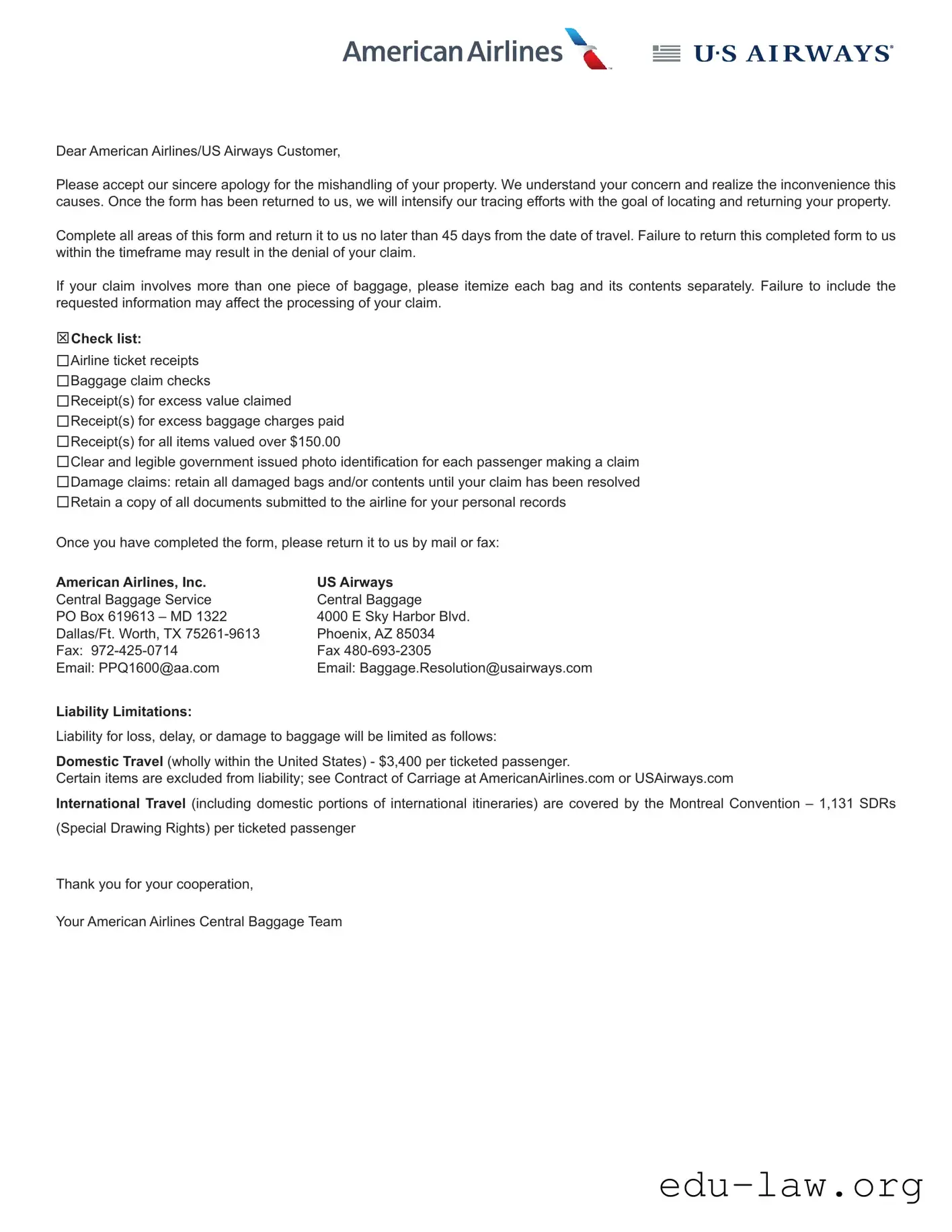
Dear American Airlines/US Airways Customer,
Please accept our sincere apology for the mishandling of your property. We understand your concern and realize the inconvenience this causes. Once the form has been returned to us, we will intensify our tracing efforts with the goal of locating and returning your property.
Complete all areas of this form and return it to us no later than 45 days from the date of travel. Failure to return this completed form to us within the timeframe may result in the denial of your claim.
If your claim involves more than one piece of baggage, please itemize each bag and its contents separately. Failure to include the requested information may affect the processing of your claim.
Check list:
Airline ticket receipts
Baggage claim checks
Receipt(s) for excess value claimed
Receipt(s) for excess baggage charges paid
Receipt(s) for all items valued over $150.00
Clear and legible government issued photo identiication for each passenger making a claim
Damage claims: retain all damaged bags and/or contents until your claim has been resolved
Retain a copy of all documents submitted to the airline for your personal records
Once you have completed the form, please return it to us by mail or fax:
American Airlines, Inc. |
US Airways |
Central Baggage Service |
Central Baggage |
PO Box 619613 – MD 1322 |
4000 E Sky Harbor Blvd. |
Dallas/Ft. Worth, TX |
Phoenix, AZ 85034 |
Fax: |
Fax |
Email: [email protected] |
Email: [email protected] |
Liability Limitations:
Liability for loss, delay, or damage to baggage will be limited as follows:
Domestic Travel (wholly within the United States) - $3,400 per ticketed passenger.
Certain items are excluded from liability; see Contract of Carriage at AmericanAirlines.com or USAirways.com
International Travel (including domestic portions of international itineraries) are covered by the Montreal Convention – 1,131 SDRs
(Special Drawing Rights) per ticketed passenger
Thank you for your cooperation,
Your American Airlines Central Baggage Team
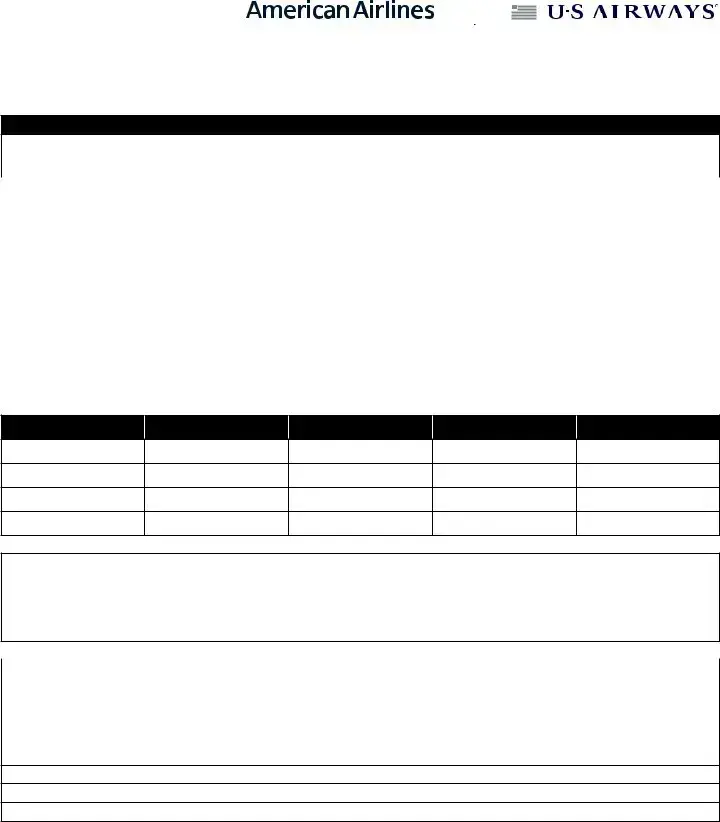
PASSENGER PROPERTY QUESTIONNAIRE
AAdvantage or US Dividend Account: ________________ |
Record Locator or File Reference Number: ________________ |
Type of Claim: (check all that apply)
Lost Luggage |
|
|
|
Missing Contents |
|
|
|
Damaged Luggage and/or Contents |
|
|
Delay Expenses |
|
|
|
|
|
|
|
|
|
|
|
|
Mr. First |
Middle |
Last Name |
|
Phone Number |
|
|
|
Mrs. |
|
|
|
|
|
|
|
Ms. |
|
|
|
Home: |
|
Business: |
|
|
|
|
|
|
|
|
|
Permanent Mailing |
Number |
Street |
Apt. |
Temporary Mailing |
Number |
Street |
Apt. |
Address |
|
|
|
Address |
|
|
|
|
|
|
|
|
|
|
|
City |
|
State |
|
City |
|
State |
|
Zip Code |
|
|
|
Zip Code |
|
|
|
|
|
|
|
|
|
|
|
Country |
|
|
|
Country |
|
|
|
Postal Code |
|
|
|
Postal Code |
|
|
|
|
|
|
|
|
|
|
|
Email Address: |
|
|
|
Employed by: |
|
|
|
|
|
|
|
Occupation: |
|
|
|
|
|
|
|
|
|
|
|
Your Complete Flight Itinerary
From
To
Airline
Flight Number
Travel Date
Have you, or any member of your household, had a previous baggage claim with AA/US or any other airline in the last 5 Years? Yes |
No |
If yes, list each airline, claimant name and dates (attach an additional page if necessary) |
|
Airline(s) __________________________________________________ Name(s) __________________________________________________
Date(s) _______________________________________________________________________________________________________________
Information gathered on this form may be shared with other airlines, local, state and federal law enforcement agencies or private insurers.
Number of ticketed passengers |
Number of passengers |
|
|
Purpose of trip? |
|
Length of stay? |
||
traveling in your party: |
claiming missing baggage: |
|
|
|
|
|
|
|
|
|
|
|
|
|
|
||
Were you charged for excess |
Yes No |
|
|
Did you declare and pay for excess value: Yes |
No |
|||
and/or overweight baggage: |
|
|
|
Value declared: $ |
|
|
|
|
|
|
|
|
|
|
|
||
|
|
|
||||||
Have you received your baggage and are you missing contents only: |
Yes No |
If yes, how many bags are missing contents? |
||||||
Was airline notiied of loss immediately? Yes No |
If yes, at what ofice? |
|
By telephone |
In person |
||||
If airline was not notiied within 4 hours, state the reason for the delay:
Where and when did you last see your baggage?
Has this loss been reported to another airline? Yes No |
If yes, please provide name of airline and city where reported. |
Certiication and Understanding
APPLICABLE IN USA ONLY. It is expressly understood and agreed by the claimant that the furnishing of this form and any assistance given by employees of American Airlines, Inc., are acts of courtesy and shall not constitute a waiver of any rights or an admission of liability by or on the part of American Airlines, Inc., its employees or agents. Any other information and/or documents relating to this statement which are required by American Airlines, Inc., will be furnished by claimant upon request and shall be considered part of this statement.
The United States Post Ofice has investigative jurisdiction under federal laws relating to sending false or fraudulent claims through the United States mail and any
such claims received by American Airlines, Inc., are reported to the United States Postal Authorities. Loss of baggage in interstate shipment or of articles from such baggage come within the purview of federal statutes relating to thefts from interstate shipment and, are therefore, subject to investigation by the Federal Bureau of
Investigation.
OP124 (Rev 11/2013) CPN 5689520 |
Complete Reverse Side |
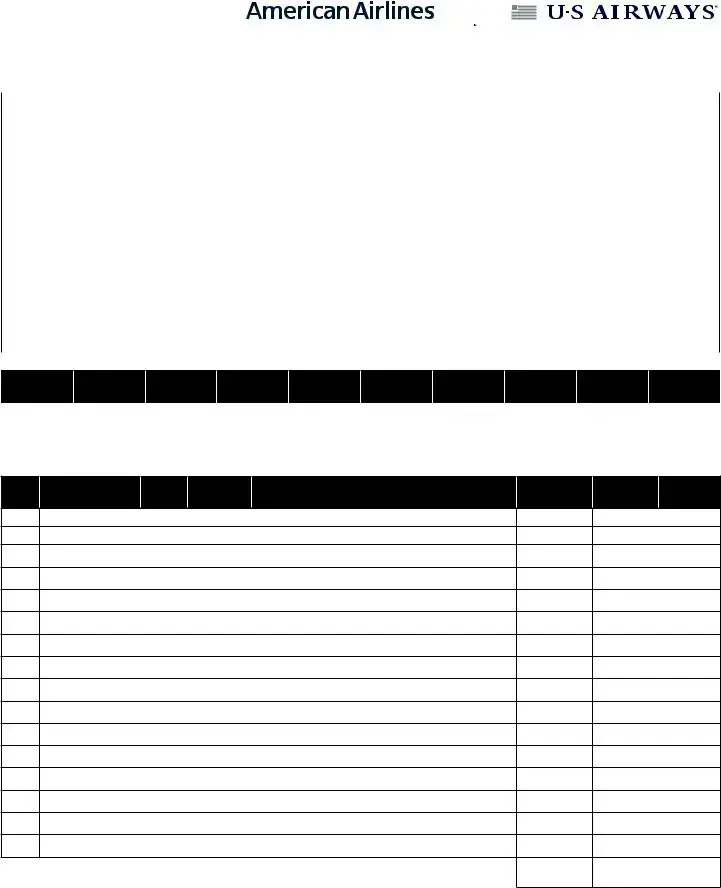
BAGGAGE AND CONTENT DESCRIPTION
NOTE: When more than one piece of baggage is lost, complete a separate baggage and content list for each missing bag.
Baggage routing: |
Flight number(s) on claim check: |
Airport checked from: |
Airport checked to: |
|
|
|
|
Baggage tag number(s): |
|
Passenger ticket number(s): |
|
|
|
|
|
Number of bags checked: |
Number of bags received: |
Baggage checked at: Curbside Ticket Counter Gate Other |
|
|
|
|
|
Was baggage rechecked and new tags issued? Yes |
No |
If yes, at what airport? |
|
|
|
||||||||
|
|
|
|
|
|
|
|
|
|
|
|
|
|
Was baggage available at Customs? Yes |
No |
N/A |
If yes, at what city? |
|
|
|
|||||||
|
|
|
|
|
|
|
|
|
|
|
|||
Give details if the original routing was changed after starting your trip: |
|
|
|
|
|
|
|||||||
|
|
|
|
|
|
|
|
|
|
|
|
||
Was your property packed in a box? Yes |
No |
Was your property packed with an external cover? (example: golf bag) Yes No |
|||||||||||
|
|
|
|
|
|
|
|
|
|
|
|||
Is the name on the bag(s) different from the passenger? If so, what name? |
|
|
|
|
|
|
|||||||
|
|
|
|
|
|
|
|
|
|
||||
Please list any initials, marks, tags, ribbons, cords, tape or other exterior markings on your bag(s): |
|
|
|
||||||||||
|
|
|
|
|
|
|
|
|
|
|
|
|
|
|
|
|
|
|
|
|
|
|
|
|
|
|
|
Bag Type |
Material |
Color(s) |
Brand |
|
Bag |
|
Open/Close |
|
Wheels |
Retractable |
Purchase |
Cost of Bag |
|
|
Dimensions |
with Zipper |
|
Handle |
Date |
||||||||
|
|
|
|
|
|
|
|
|
|||||
|
|
|
|
|
|
|
|
|
|
|
|
|
|
|
Hard |
|
|
|
|
|
|
Yes |
|
Yes |
Yes |
|
|
|
Soft |
|
|
|
|
|
|
No |
|
No |
No |
|
|
|
|
|
|
|
|
|
|
|
|
|
|||
|
|
Gender = M: Male F: Female |
CH: Child |
I: Infant (under 2 yrs) |
|
|
|||||||
Qty
Article/Item
Size
Gender |
Description |
Color |
Material |
Brand Label |
M,F,CH,I |
|
|
|
|
Store
Purchased
Purchase
Date
Original
Cost
1
4
Shoes |
12 |
M |
White with blue stripes |
Leather |
Nike |
Sears |
$55.00 |
||
L |
M |
Undershirts |
White |
Cotton |
Hanes |
JCP |
$20.00 |
||
|
|
|
|
|
|
|
|
|
|
If additional space is needed, please attach a separate page. Be sure to include a complete description and cost for each item along with receipts for all items valued over $150.00.
TOTAL:
$
I do hereby warrant the foregoing statement and those on the accompanying forms to be accurate, complete and true. I hereby make a claim against American Airlines, Inc./US Airways, in the amount of $ ______ for a loss occurring on _______________
______________________________________________________ |
___________________________________________________ |
||
Claimant signature |
Date |
Claimant signature* |
Date |
*Signatures are required for each passenger claiming lost property. Parents may sign for their children under age 18.
| Fact Name | Description |
|---|---|
| Form Purpose | This form is used by passengers to report lost, damaged, or delayed baggage and to initiate a claim for property recovery. |
| Submission Deadline | Passengers must submit the completed form within 45 days from the date of travel to ensure their claim is processed. |
| Required Documentation | Passengers need to include airline ticket receipts, baggage claim checks, and receipts for items valued over $150, among other documents. |
| Liability Limits | For domestic travel, liability is limited to $3,400 per passenger. For international travel, coverage is based on the Montreal Convention, which is 1,131 SDRs per passenger. |
| Notification Requirement | Passengers should notify the airline of lost baggage within 4 hours to avoid complications with their claim. |
| Multiple Claims | If multiple pieces of luggage are involved, each bag and its contents must be itemized separately on the form. |
| State-Specific Laws | In addition to federal regulations, state laws may apply. For example, California's Consumer Protection Laws may govern claims related to baggage handling. |
| Data Sharing | Information provided on the form may be shared with law enforcement and other airlines for investigation purposes. |
After completing the Claim Passenger Property form, it is essential to submit it within 45 days from your travel date. This ensures that your claim is processed efficiently. Ensure you have all necessary documentation ready to support your claim, as missing information may delay processing.
What is the purpose of the Claim Passenger Property form?
The Claim Passenger Property form is designed for passengers who have experienced issues with their luggage, such as loss, damage, or missing contents. By completing this form, passengers can formally submit their claims to American Airlines or US Airways. The airline will then initiate tracing efforts to locate and return the lost property, as well as process any claims for damages or missing items.
How long do I have to submit the Claim Passenger Property form?
Passengers must return the completed form to the airline no later than 45 days from the date of travel. It is crucial to adhere to this timeframe, as failure to do so may result in the denial of the claim. Timely submission ensures that the airline can effectively address the issue and increase the chances of recovering lost property.
What information do I need to provide on the form?
The form requires detailed information, including personal details such as your name, contact information, and flight itinerary. You must also specify the type of claim you are making, whether it’s for lost luggage, missing contents, or damaged items. If you are claiming for multiple pieces of baggage, it is essential to itemize each bag and its contents separately to avoid delays in processing.
What documentation should I include with my claim?
To support your claim, you should include several documents. This may include airline ticket receipts, baggage claim checks, and receipts for any excess baggage charges. If you are claiming for items valued over $150, you must provide receipts for those items as well. Additionally, it is important to retain a copy of all documents submitted for your personal records.
What are the liability limitations for baggage claims?
For domestic travel within the United States, the liability limit for lost, delayed, or damaged baggage is $3,400 per ticketed passenger. For international travel, the Montreal Convention applies, which sets the liability at 1,131 Special Drawing Rights (SDRs) per ticketed passenger. Certain items may be excluded from liability, so it’s advisable to review the airline's Contract of Carriage for more details.
What should I do if I have not received my baggage and am missing contents only?
If you have received your baggage but are missing contents, you should indicate this on the form. It is important to report the loss to the airline immediately, as doing so can significantly impact the processing of your claim. Be prepared to provide details about the number of bags involved and any relevant circumstances surrounding the loss.
Not completing all sections of the Claim Passenger Property form. Every part of the form is important for processing your claim.
Missing the 45-day deadline for submission. Make sure to return the completed form within the specified timeframe to avoid claim denial.
Failing to itemize multiple pieces of luggage. If you have more than one bag, list each separately along with its contents.
Not including required documentation. Ensure you attach all necessary receipts and identification as specified in the checklist.
Using illegible handwriting. Clear and readable information helps avoid delays in processing your claim.
Neglecting to keep copies of submitted documents. Always retain a copy for your records to reference later if needed.
Not reporting the loss of baggage immediately. Notify the airline within four hours of discovering the loss to strengthen your claim.
Overlooking the need for a government-issued ID. Include a clear copy of your ID for each passenger making a claim.
Failing to declare excess baggage charges. If you paid for excess baggage, make sure to indicate this on the form.
Not providing accurate contact information. Ensure that your phone number and email address are correct to facilitate communication.
When filing a claim for lost or damaged property with an airline, several documents may be required in addition to the Claim Passenger Property form. Each of these documents plays a crucial role in supporting your claim and facilitating its processing. Below is a list of commonly used forms and documents that can help streamline your claim experience.
By gathering these documents and ensuring they are complete, you enhance the likelihood of a smooth claims process. Proper documentation not only supports your claim but also helps the airline address your concerns more efficiently.
The Claim Passenger Property form shares similarities with the Insurance Claim Form, which is commonly used when individuals seek reimbursement for losses covered by their insurance policies. Both documents require detailed information about the loss, including dates, descriptions of the items lost, and any relevant receipts. Just as the Claim Passenger Property form emphasizes the need for specific documentation to support the claim, the Insurance Claim Form also requests proof of loss, such as photographs or police reports, to substantiate the claim being made.
Another document akin to the Claim Passenger Property form is the Lost Item Report. This report is often used in various contexts, such as in hotels or public transportation, to document missing belongings. Similar to the Claim Passenger Property form, it typically requires the individual to provide personal information, a description of the lost item, and the circumstances surrounding its disappearance. Both forms aim to facilitate the recovery of lost items by creating an official record of the claim.
The Baggage Claim Check is another related document. This check serves as proof of ownership and is issued when a passenger checks in their luggage. Like the Claim Passenger Property form, it contains vital information such as the passenger's name, flight details, and a unique identification number for the baggage. Both documents are crucial for tracking lost luggage and establishing a timeline for when and where the baggage was last accounted for.
The Damage Report Form used in various industries, including airlines, is also similar. This form is filled out when items are damaged, requiring the claimant to describe the damage and provide evidence, such as photographs or repair estimates. Much like the Claim Passenger Property form, it necessitates detailed information about the item and the circumstances of the damage to ensure a thorough review of the claim.
The Theft Report, often filed with law enforcement, shares similarities with the Claim Passenger Property form in that it documents the loss of property due to theft. Both documents require a description of the stolen items, the circumstances of the theft, and any evidence available. Each report serves to create an official record that can be used for further investigation or insurance claims.
The Refund Request Form, commonly used for returning purchased items, also parallels the Claim Passenger Property form. It requires individuals to provide details about the item being returned, the reason for the return, and proof of purchase. Both forms aim to facilitate the return process, ensuring that all necessary information is collected to expedite the resolution of the claim or request.
The Warranty Claim Form is another similar document. This form is utilized when individuals seek repairs or replacements for defective products covered under warranty. Both the Warranty Claim Form and the Claim Passenger Property form require detailed information about the item, including purchase date and description, as well as supporting documentation like receipts. The goal in both cases is to substantiate the claim and facilitate a resolution.
The Property Damage Claim Form, often used in auto or home insurance claims, mirrors the Claim Passenger Property form in its purpose of seeking compensation for lost or damaged items. Both forms require detailed information about the loss, including descriptions, dates, and supporting evidence. This documentation is essential for the insurance company or airline to assess the claim and determine liability.
The Personal Property Inventory Form, typically used for insurance purposes, is also comparable. This form lists all personal belongings and their values, similar to how the Claim Passenger Property form requires itemization of lost baggage and its contents. Both documents help establish a clear record of what was owned and the associated values, which is crucial in processing claims efficiently.
Lastly, the Travel Insurance Claim Form is similar as it is used to file claims for losses incurred during travel, such as trip cancellations or lost luggage. Like the Claim Passenger Property form, it requires detailed information about the incident, supporting documentation, and may include specific timeframes for submission. Both forms aim to ensure that the claimant has a structured process to recover losses associated with their travel experience.
When filling out the Claim Passenger Property form, it is crucial to follow specific guidelines to ensure your claim is processed smoothly. Here are seven things you should and shouldn't do:
By adhering to these guidelines, you can help facilitate the processing of your claim and increase the likelihood of a successful resolution.
Here are some common misconceptions about the Claim Passenger Property form:
Many believe they need to submit the form right away. However, you have up to 45 days from your travel date to return the completed form.
Some think they can only claim one bag. If you have multiple bags, you can itemize each one separately on the form.
It’s important to note that not all claims will be approved. Missing information can lead to a denial of your claim.
If you are claiming damage, you must retain all damaged bags and contents until your claim is resolved.
Don’t assume the airline will reach out. It’s your responsibility to provide complete and accurate information.
Items valued over $150 require receipts. Without them, your claim may be affected.
While you can return the form by mail or fax, ensure you use the correct addresses provided by the airline.
The process can take time. Be prepared for potential delays and follow up if necessary.
Claims can also be made for missing contents or damaged luggage. Make sure to check all applicable boxes on the form.
When dealing with the Claim Passenger Property form, it is essential to understand the process and requirements involved. Here are some key takeaways to consider:
By following these guidelines, passengers can enhance their chances of a successful claim for lost or damaged property.