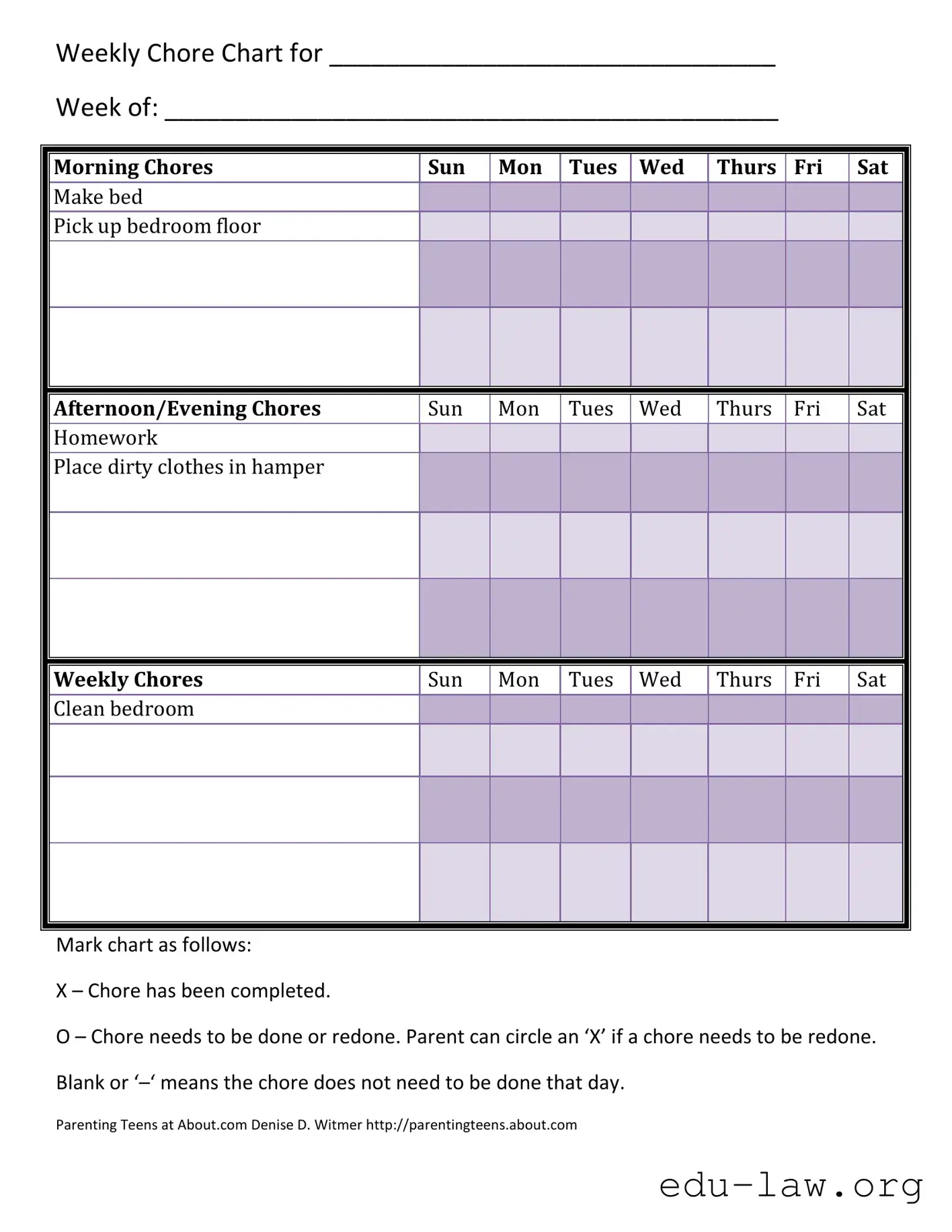
Creating a structured routine for chores can significantly ease the daily responsibilities of family life. The Chore Chart Morning Evening form is designed to help families organize and track household tasks throughout the week. This chart includes designated spaces for morning and afternoon/evening chores, allowing everyone to see what needs to be done each day. For morning chores, tasks like making the bed and picking up the bedroom floor are listed, while the afternoon and evening section includes homework and placing dirty clothes in the hamper. Additionally, a weekly chores section provides a broader view of ongoing responsibilities, such as cleaning the bedroom. To simplify tracking, the chart uses a straightforward marking system: an 'X' indicates a completed chore, an 'O' signifies a chore that needs to be done or redone, and a blank space or dash means the chore is not required that day. This visual tool not only promotes accountability but also encourages teamwork and communication within the family.
Weekly Chore Chart for ________________________________
Week of: ____________________________________________
|
|
|
|
|
|
|
|
|
|
|
Morning Chores |
Sun |
Mon |
Tues |
Wed |
Thurs |
Fri |
Sat |
|
|
|
|
|
|
|
|
|
|
|
Make bed
Pick up bedroom floor
Afternoon/Evening Chores |
Sun |
Mon |
Tues |
Wed |
Thurs |
Fri |
Sat |
Homework |
|
|
|
|
|
|
|
Place dirty clothes in hamper |
|
|
|
|
|
|
|
Weekly Chores |
Sun |
Mon |
Tues |
Wed |
Thurs |
Fri |
Sat |
Clean bedroom |
|
|
|
|
|
|
|
Mark chart as follows:
X – Chore has been completed.
O – Chore needs to be done or redone. Parent can circle an ‘X’ if a chore needs to be redone.
Blank or
Parenting Teens at About.com Denise D. Witmer http://parentingteens.about.com
| Fact Name | Description |
|---|---|
| Purpose | The Chore Chart helps families organize daily and weekly chores for children, promoting responsibility and time management. |
| Structure | The chart is divided into sections for morning chores, afternoon/evening chores, and weekly chores, making it easy to track tasks. |
| Completion Marking | Chores can be marked with an 'X' for completed, 'O' for needs to be done, or left blank if not required that day. |
| Parental Involvement | Parents can circle an 'X' if a chore needs to be redone, ensuring accountability and clear communication. |
| Customizable | The chart can be personalized with the family name and the specific week, making it unique to each household. |
| Weekly Planning | This chart encourages families to plan chores for the entire week, helping to distribute responsibilities evenly. |
| Age Appropriateness | The chores listed can be tailored to suit different age groups, allowing for age-appropriate responsibilities. |
| Visual Aid | Using a visual chart can motivate children to complete their chores, as they can see their progress throughout the week. |
| Legal Considerations | While there are no specific laws governing chore charts, they can be part of family agreements in custody arrangements in some states. |
| Resource Reference | The chart is inspired by parenting resources, such as those found on About.com, which offer guidance on managing family responsibilities. |
Filling out the Chore Chart Morning Evening form is a straightforward process that helps keep track of daily and weekly chores. By following these steps, you can ensure that everyone is aware of their responsibilities throughout the week.
What is the purpose of the Chore Chart Morning Evening form?
The Chore Chart Morning Evening form is designed to help families organize and track daily and weekly chores. It provides a structured way for children to understand their responsibilities and for parents to monitor completion. This form encourages accountability and helps instill a sense of routine in daily life.
How do I fill out the form?
Start by writing the name of the child or family member for whom the chart is created at the top. Next, fill in the week’s dates in the designated space. Then, list morning chores, afternoon/evening chores, and weekly chores in their respective sections. Each day of the week has a box for tracking completion.
What chores are included in the form?
The form includes morning chores like making the bed and picking up the bedroom floor. Afternoon and evening chores consist of completing homework and placing dirty clothes in the hamper. Weekly chores involve cleaning the bedroom. You can customize these chores based on your family’s needs.
How do I mark completed chores?
Use the symbols provided on the chart to indicate the status of each chore. An "X" signifies that a chore has been completed, while an "O" indicates that it needs to be done or redone. If a chore requires redoing, a parent can circle the "X." A blank space or a dash ("–") means the chore does not need to be done that day.
Can I customize the chores listed on the form?
Yes, the form is flexible. You can add or remove chores based on your family’s specific requirements. This customization allows you to tailor the chart to better fit your household routines and the responsibilities of each child.
How often should I update the chore chart?
It is best to update the chore chart weekly. At the beginning of each week, review the completed chores and discuss any adjustments needed for the upcoming week. This practice helps reinforce the importance of chores and encourages ongoing communication about responsibilities.
Is this form suitable for all ages?
The Chore Chart Morning Evening form is suitable for a range of ages. Younger children can manage simpler tasks, while older children or teens can take on more complex responsibilities. Adjust the chores according to the child’s age and abilities for the best results.
How can this chart benefit my family?
Using this chore chart can foster responsibility and independence in children. It creates a visual representation of their tasks, which can motivate them to complete chores. Additionally, it helps parents keep track of household duties, ensuring that everyone contributes to maintaining a clean and organized home.
Where can I find more resources on chore charts?
For more information and resources on chore charts, you can visit parenting websites and blogs, such as Parenting Teens at About.com. These platforms often provide tips, templates, and advice on effective parenting strategies related to chores and responsibilities.
Not filling in the name of the person responsible for the chores. Leaving the section for Weekly Chore Chart for blank can lead to confusion about who is accountable.
Failing to specify the week on the form. Without the Week of date, it may be unclear which week the chores apply to.
Overlooking the importance of marking completed chores. Not using the designated symbols, such as X for completed or O for chores that need to be redone, can lead to misunderstandings about what has been accomplished.
Inconsistently marking chores. Using different symbols or methods for marking chores can create confusion and may result in tasks being overlooked.
Not discussing the chores with the teens involved. Failing to communicate expectations can lead to resentment or misunderstanding about responsibilities.
Neglecting to review the chart regularly. Without regular check-ins, it can be easy to forget which chores have been completed or need attention.
Forgetting to include all necessary chores. Leaving out important tasks, such as homework or cleaning specific areas, can lead to an incomplete picture of responsibilities.
Using unclear language when describing chores. Vague descriptions can lead to different interpretations of what needs to be done.
Not allowing for flexibility in the chore schedule. Life can be unpredictable, and sticking rigidly to the chart may not always be practical.
Failing to celebrate completed chores. Recognizing accomplishments can motivate teens to continue participating actively in the chore chart.
When managing household responsibilities, several forms and documents can complement the Chore Chart Morning Evening form. These tools help keep everyone organized and accountable, making it easier to track tasks and routines. Below is a list of related documents that can enhance your chore management system.
Using these documents alongside the Chore Chart Morning Evening form can create a more structured and cooperative household. Each tool serves a unique purpose, helping families work together effectively.
The Weekly Planner is a document that helps individuals organize their tasks for the week. Similar to the Chore Chart Morning Evening form, it includes sections for daily activities and priorities. Users can write down appointments, deadlines, and personal goals. Both documents encourage accountability and provide a visual representation of what needs to be accomplished. The Weekly Planner also allows for marking completed tasks, which can motivate users to stay on track.
The Daily Task List serves a similar purpose by breaking down tasks into manageable chunks for each day. Like the Chore Chart, it provides a clear structure for organizing responsibilities. Users can list chores, work assignments, or personal errands. The Daily Task List often includes checkboxes, allowing individuals to mark off completed tasks. This feature promotes a sense of achievement and helps users manage their time effectively.
The Family Calendar is another document that shares similarities with the Chore Chart. It serves as a central hub for scheduling family activities, appointments, and chores. Each family member can add their commitments, ensuring everyone is on the same page. Like the Chore Chart, it emphasizes the importance of teamwork and communication within the household. The Family Calendar can also include reminders for specific chores, reinforcing accountability among family members.
The Homework Planner is designed specifically for students to track their assignments and study schedules. Similar to the Chore Chart, it encourages responsibility and time management. Students can list their homework tasks and due dates, marking them off as they complete them. This document not only helps with academic organization but also fosters a sense of accomplishment, much like the completion of chores in the Chore Chart.
The Cleaning Schedule is another document that aligns closely with the Chore Chart. It outlines specific cleaning tasks to be completed on designated days. Users can assign chores to different family members, promoting collaboration and shared responsibility. Just as the Chore Chart allows for marking tasks as completed or needing to be redone, the Cleaning Schedule can include similar indicators to track progress and ensure a clean living environment.
Lastly, the Goal Setting Worksheet helps individuals outline personal and professional objectives. It shares the same spirit of organization and accountability as the Chore Chart. Users can break down their goals into actionable steps, similar to how chores are divided by day. By regularly reviewing and marking off completed goals, individuals can stay motivated and focused, just as they would with their daily chores.
When filling out the Chore Chart Morning Evening form, it’s important to keep a few key practices in mind. Here are some dos and don’ts to ensure the process goes smoothly.
Misconceptions about the Chore Chart Morning Evening form can lead to confusion and ineffective use. Understanding these misconceptions is crucial for maximizing the benefits of the chore chart. Below are four common misconceptions explained.
This is not true. While the chart is designed to help children develop responsibility, it can also be beneficial for teenagers. It encourages accountability and helps establish routines, which are important at any age.
The primary purpose of the chore chart is to instill a sense of responsibility and teamwork within the family. While completing chores is important, the chart also serves as a tool for communication and planning.
It is a misconception that parents are solely responsible for managing the chart. Children should actively participate in tracking their own chores. This involvement fosters independence and accountability.
Many believe that once the chart is created, it cannot be changed. In reality, the chore chart can be customized to fit the family's needs. Adjustments can be made as schedules change or as children grow and take on new responsibilities.
Filling out and using the Chore Chart Morning Evening form can help establish a routine and promote responsibility among family members. Here are some key takeaways: