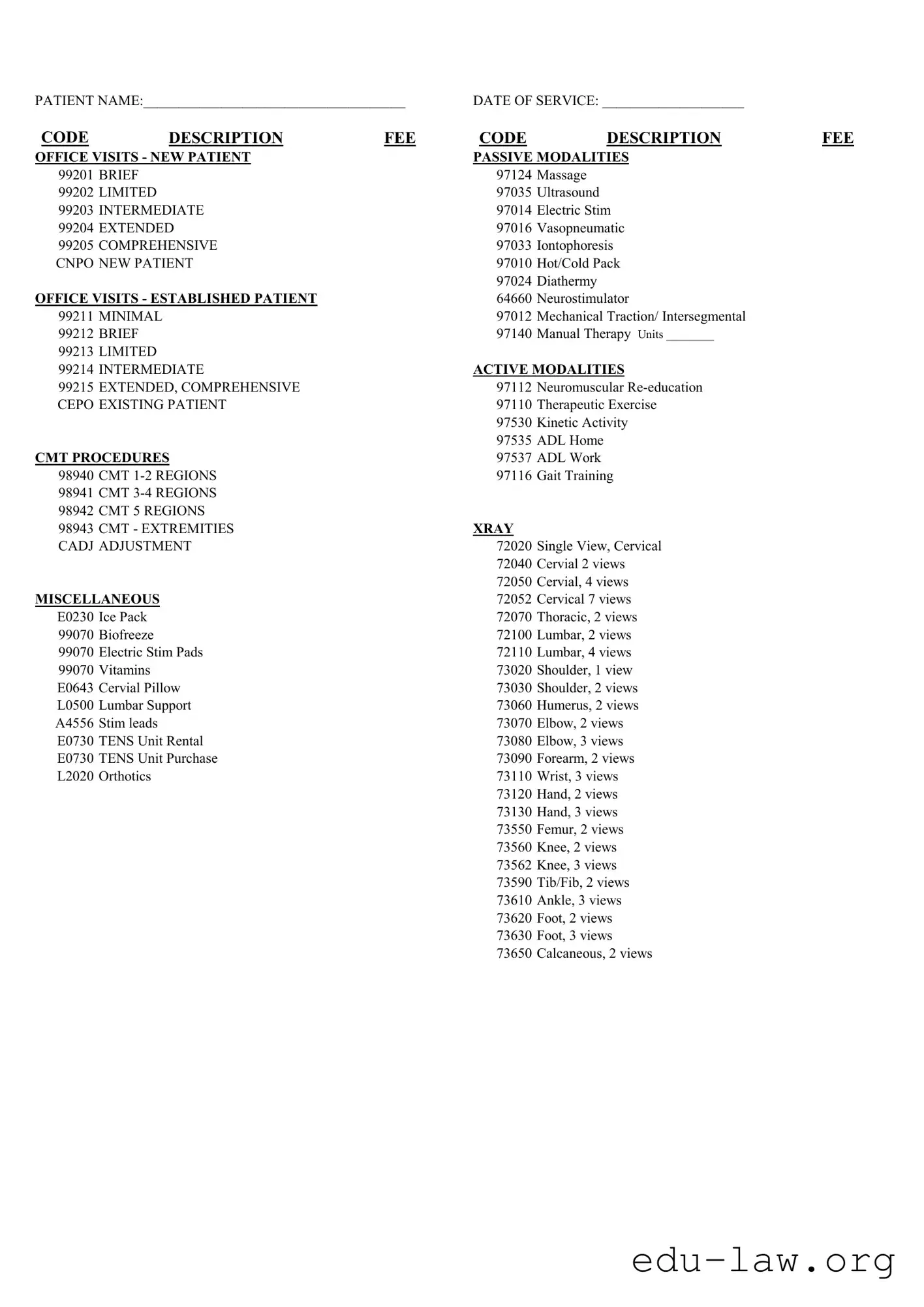
The Chiropractic Superbill form is an essential tool for both chiropractors and their patients, streamlining the process of documenting and billing for services rendered. This form captures crucial information, including the patient's name and date of service, which helps ensure accurate record-keeping. A variety of codes are listed, each corresponding to specific services provided during the visit. These codes cover a range of office visits, from new patient assessments to established patient follow-ups, detailing the complexity and duration of the consultations. Additionally, the form categorizes various treatment modalities, such as passive and active therapies, allowing practitioners to specify the exact services delivered, whether it's massage, ultrasound, or therapeutic exercises. The inclusion of chiropractic manipulation treatment (CMT) codes and miscellaneous items, like X-rays and supplies, further enhances its utility. By organizing this information clearly, the Chiropractic Superbill not only aids in billing and insurance claims but also serves as a comprehensive record of the patient's care, ensuring both compliance and clarity in the healthcare process.
PATIENT NAME:_____________________________________ DATE OF SERVICE: ____________________
CODE |
DESCRIPTION |
FEE |
CODE |
DESCRIPTION |
FEE |
OFFICE VISITS - NEW PATIENT |
|
PASSIVE MODALITIES |
|
||
99201 |
BRIEF |
|
97124 |
Massage |
|
99202 |
LIMITED |
|
97035 |
Ultrasound |
|
99203 |
INTERMEDIATE |
|
97014 |
Electric Stim |
|
99204 |
EXTENDED |
|
97016 |
Vasopneumatic |
|
99205 |
COMPREHENSIVE |
|
97033 |
Iontophoresis |
|
CNPO NEW PATIENT |
|
97010 |
Hot/Cold Pack |
|
|
|
|
|
97024 |
Diathermy |
|
OFFICE VISITS - ESTABLISHED PATIENT |
|
64660 |
Neurostimulator |
|
|
99211 |
MINIMAL |
|
97012 |
Mechanical Traction/ Intersegmental |
|
99212 |
BRIEF |
|
97140 |
Manual Therapy Units ________ |
|
99213 |
LIMITED |
|
|
|
|
99214 |
INTERMEDIATE |
|
ACTIVE MODALITIES |
|
|
99215 |
EXTENDED, COMPREHENSIVE |
|
97112 |
Neuromuscular |
|
CEPO EXISTING PATIENT |
|
97110 |
Therapeutic Exercise |
|
|
|
|
|
97530 |
Kinetic Activity |
|
|
|
|
97535 |
ADL Home |
|
CMT PROCEDURES |
|
97537 |
ADL Work |
|
|
98940 |
CMT |
|
97116 |
Gait Training |
|
98941 |
CMT |
|
|
|
|
98942 |
CMT 5 REGIONS |
|
|
|
|
98943 |
CMT - EXTREMITIES |
|
XRAY |
|
|
CADJ ADJUSTMENT |
|
72020 |
Single View, Cervical |
|
|
|
|
|
72040 |
Cervial 2 views |
|
|
|
|
72050 |
Cervial, 4 views |
|
MISCELLANEOUS |
|
72052 |
Cervical 7 views |
|
|
E0230 |
Ice Pack |
|
72070 |
Thoracic, 2 views |
|
99070 |
Biofreeze |
|
72100 |
Lumbar, 2 views |
|
99070 |
Electric Stim Pads |
|
72110 |
Lumbar, 4 views |
|
99070 |
Vitamins |
|
73020 |
Shoulder, 1 view |
|
E0643 |
Cervial Pillow |
|
73030 |
Shoulder, 2 views |
|
L0500 |
Lumbar Support |
|
73060 |
Humerus, 2 views |
|
A4556 |
Stim leads |
|
73070 |
Elbow, 2 views |
|
E0730 |
TENS Unit Rental |
|
73080 |
Elbow, 3 views |
|
E0730 |
TENS Unit Purchase |
|
73090 |
Forearm, 2 views |
|
L2020 |
Orthotics |
|
73110 |
Wrist, 3 views |
|
|
|
|
73120 |
Hand, 2 views |
|
|
|
|
73130 |
Hand, 3 views |
|
|
|
|
73550 |
Femur, 2 views |
|
|
|
|
73560 |
Knee, 2 views |
|
|
|
|
73562 |
Knee, 3 views |
|
|
|
|
73590 |
Tib/Fib, 2 views |
|
|
|
|
73610 |
Ankle, 3 views |
|
|
|
|
73620 |
Foot, 2 views |
|
|
|
|
73630 |
Foot, 3 views |
|
|
|
|
73650 |
Calcaneous, 2 views |
|
| Fact Name | Description |
|---|---|
| Patient Information | The Chiropractic Superbill form requires the patient's name and the date of service to be filled out clearly at the top. |
| Service Codes | It includes various service codes for office visits, procedures, and modalities, allowing for accurate billing and record-keeping. |
| Fee Structure | Each service code is accompanied by a corresponding fee, providing transparency in the cost of chiropractic services. |
| State-Specific Regulations | Chiropractic practices must comply with state laws regarding billing and insurance, which may vary by location. |
| Miscellaneous Items | The form also lists miscellaneous items such as ice packs and TENS units, which may be billed separately. |
To complete the Chiropractic Superbill form, gather the necessary information about the patient and services provided. This includes the patient's name, date of service, and specific codes for the treatments rendered. Follow the steps below to fill out the form accurately.
What is a Chiropractic Superbill?
A Chiropractic Superbill is a detailed document that summarizes the services provided during a chiropractic visit. It includes patient information, the date of service, the codes for the procedures performed, and the associated fees. This form is essential for patients who wish to submit claims to their insurance companies for reimbursement of chiropractic services.
How do I fill out the Chiropractic Superbill?
To complete the Chiropractic Superbill, start by entering the patient's name and the date of service at the top of the form. Next, list the appropriate codes for the services rendered from the provided code descriptions. Each code corresponds to a specific treatment or procedure, and it is crucial to ensure accuracy. Finally, total the fees for the services and include that amount on the form.
Why is it important to use the correct codes on the Superbill?
Using the correct codes on the Chiropractic Superbill is vital for several reasons. Accurate coding ensures that the insurance company understands what services were provided, which can facilitate timely reimbursement. Incorrect codes may lead to claim denials or delays, causing frustration for both the patient and the provider. Proper coding also helps maintain compliance with insurance requirements.
Can I submit the Superbill to my insurance company for reimbursement?
Yes, patients can submit the Chiropractic Superbill to their insurance companies for reimbursement. It serves as proof of the services received and can help in processing claims. However, patients should check with their insurance provider beforehand to ensure that chiropractic services are covered under their plan and to understand any specific submission requirements.
What should I do if I have questions about the charges listed on the Superbill?
If you have questions regarding the charges on the Chiropractic Superbill, it is advisable to contact the chiropractic office directly. They can provide clarification on the services rendered and the corresponding fees. Additionally, if you are uncertain about your insurance coverage or how to interpret the Superbill, reaching out to your insurance company may also be helpful.
Incomplete Patient Information: Failing to provide the full name of the patient or leaving out critical details such as date of service can lead to delays in processing. Ensure all fields are filled out completely.
Incorrect Coding: Using the wrong codes for services provided can result in claim denials. Familiarize yourself with the correct codes for office visits, modalities, and adjustments.
Missing Fees: Not entering the fee for each service can complicate billing. Always ensure that each service listed has an associated fee to avoid confusion.
Neglecting Established vs. New Patient Designation: Misclassifying a patient as new when they are established (or vice versa) can impact the billing process. Verify the patient’s status before submission.
Omitting Required Signatures: Failing to sign the form or obtain necessary signatures from the patient can lead to claim rejections. Always double-check for required signatures before submission.
Inaccurate Dates: Entering the wrong date of service can create discrepancies in records and billing. It is crucial to confirm that the date aligns with the actual service provided.
Not Keeping Copies: Forgetting to make copies of the completed Superbill for personal records can hinder future reference. Always retain a copy for your files.
The Chiropractic Superbill is an essential document for chiropractors, as it provides a detailed summary of services rendered to patients. Alongside the Superbill, several other forms and documents are commonly used in chiropractic practices. These documents help ensure proper billing, patient records, and treatment documentation. Here are some key forms often used in conjunction with the Chiropractic Superbill:
Utilizing these forms alongside the Chiropractic Superbill can enhance the efficiency of practice operations and improve patient care. Each document plays a vital role in maintaining comprehensive records, facilitating communication, and ensuring compliance with insurance requirements.
The Chiropractic Superbill form shares similarities with the Medical Superbill. Both documents serve as a comprehensive summary of services provided to a patient during a visit. They include codes for procedures, diagnoses, and treatments, which are essential for billing and insurance claims. The Medical Superbill is widely used across various healthcare settings, making it a familiar tool for practitioners and patients alike. It streamlines the billing process, ensuring that all services rendered are accurately documented and accounted for, just like the Chiropractic Superbill.
Another document akin to the Chiropractic Superbill is the CMS-1500 form. This is a standard claim form used by healthcare providers to bill Medicare and other insurance payers. It requires similar information, such as patient demographics, services rendered, and relevant codes. The CMS-1500 form is crucial for reimbursement and provides a structured format that aligns with the information captured in a Chiropractic Superbill. Both documents are vital for ensuring that providers receive timely payments for their services.
The Encounter Form is also comparable to the Chiropractic Superbill. This document is used by healthcare providers to capture patient encounters and services delivered during a visit. It includes procedure codes, diagnosis codes, and charges, serving as a record for both clinical and billing purposes. Like the Chiropractic Superbill, the Encounter Form helps streamline the billing process and ensures accurate documentation of the services provided to patients.
The Health Insurance Claim Form (HICF) is another similar document. This form is used to submit claims to insurance companies for reimbursement of medical services. It includes information such as patient details, service codes, and provider information. The HICF, much like the Chiropractic Superbill, is essential for ensuring that healthcare providers are compensated for the care they deliver. Both forms facilitate communication between providers and insurers, reducing the chances of billing errors.
The Billing Statement is another document that shares characteristics with the Chiropractic Superbill. This statement outlines the services rendered, associated costs, and any payments received or due. It provides a clear overview of the financial aspects of a patient’s care. While the Chiropractic Superbill focuses on coding and services, the Billing Statement emphasizes the financial transaction, making it an important companion document in the billing process.
Similar to the Chiropractic Superbill, the Patient Invoice is a document that details the services provided to a patient and the corresponding fees. This invoice is often given directly to the patient after their visit, summarizing what they owe. Both documents serve the purpose of transparency in billing, ensuring patients understand the charges associated with their care. The Patient Invoice is particularly important for patients who may not have insurance or who are responsible for a portion of their medical expenses.
The Claim Attachment is another document that can be associated with the Chiropractic Superbill. This form is used to provide additional information or documentation to support a claim submitted to an insurance company. It may include details about the services rendered, medical necessity, or other relevant information. Like the Chiropractic Superbill, the Claim Attachment plays a critical role in the claims process, ensuring that all necessary information is available for review by the insurer.
The Explanation of Benefits (EOB) is also similar to the Chiropractic Superbill in that it provides a summary of services billed to an insurance company. The EOB outlines what the insurer has paid, what the patient owes, and any adjustments made. This document is essential for patients to understand their financial responsibility after a visit. While the Chiropractic Superbill details the services provided, the EOB clarifies how those services have been processed by the insurance company.
Finally, the Treatment Plan is another document that bears resemblance to the Chiropractic Superbill. A Treatment Plan outlines the proposed care for a patient, including specific treatments, goals, and timelines. While the Chiropractic Superbill focuses on documenting services rendered, the Treatment Plan emphasizes the intended course of care. Both documents are vital for ensuring that patients receive appropriate and effective treatment while also facilitating the billing process.
When filling out the Chiropractic Superbill form, there are several important things to keep in mind. Here are some dos and don'ts:
Understanding the Chiropractic Superbill form is essential for patients seeking chiropractic care. However, several misconceptions can lead to confusion. Here are ten common misconceptions:
By addressing these misconceptions, patients can navigate their chiropractic care more effectively and ensure they are making informed decisions about their health.
When filling out and using the Chiropractic Superbill form, consider the following key takeaways: