Traveling with children can be an exciting adventure, but it also comes with a unique set of responsibilities and legal considerations. One important document that parents and guardians should be aware of is the Child Travel Consent Form. This form serves as a written authorization that allows a child to travel with someone other than their parent or legal guardian. It is particularly vital when a child is traveling internationally, as many countries require proof that the accompanying adult has permission from the child's parents. The form typically includes essential details such as the child's full name, date of birth, the names of the parents or guardians, and information about the adult accompanying the child. Additionally, it may specify the travel dates and destinations, ensuring clarity and transparency. While not legally mandated in every situation, having this form can help prevent misunderstandings and complications at borders or during travel. By preparing this document in advance, parents can ensure a smoother journey for their child, fostering a sense of security and peace of mind for everyone involved.
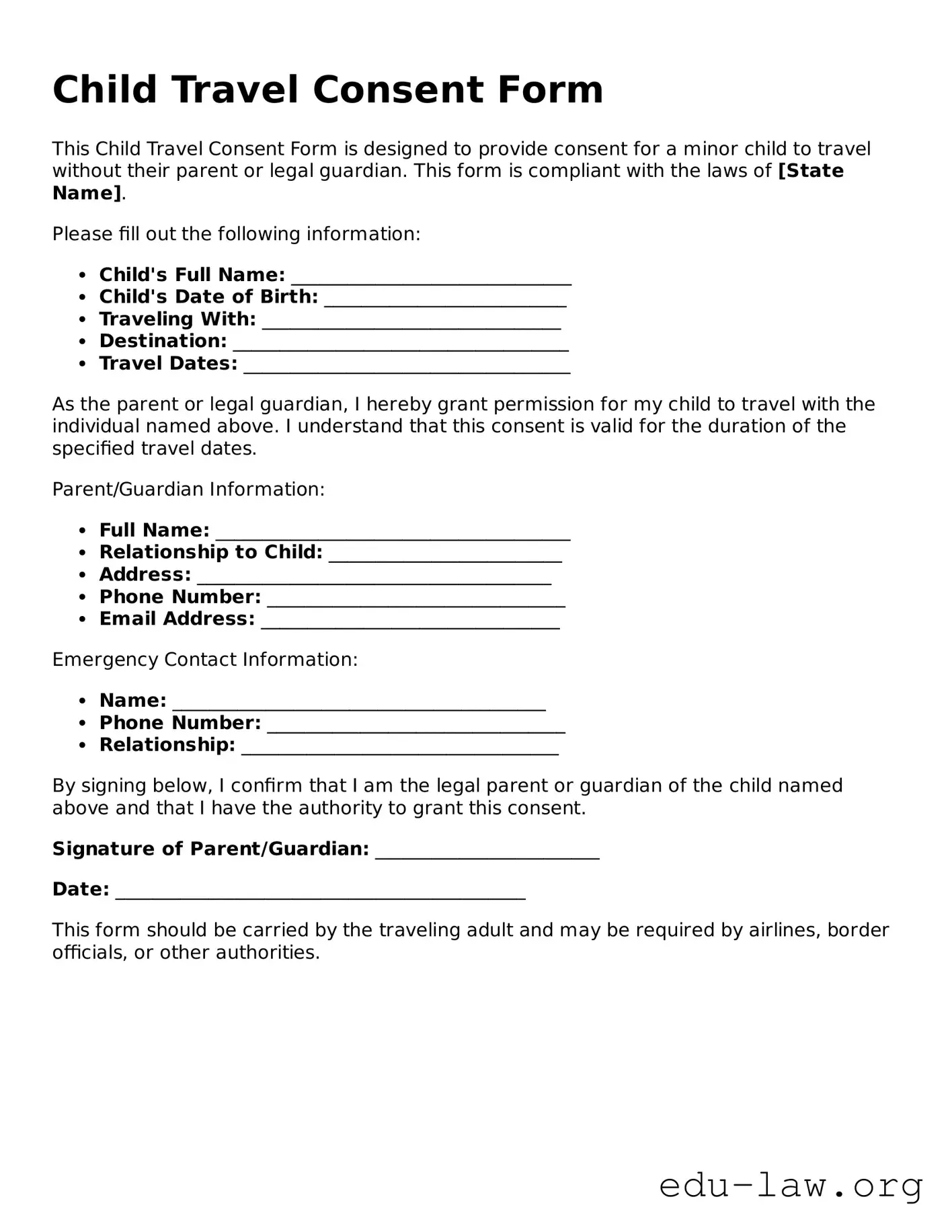
Child Travel Consent Form
This Child Travel Consent Form is designed to provide consent for a minor child to travel without their parent or legal guardian. This form is compliant with the laws of [State Name].
Please fill out the following information:
As the parent or legal guardian, I hereby grant permission for my child to travel with the individual named above. I understand that this consent is valid for the duration of the specified travel dates.
Parent/Guardian Information:
Emergency Contact Information:
By signing below, I confirm that I am the legal parent or guardian of the child named above and that I have the authority to grant this consent.
Signature of Parent/Guardian: ________________________
Date: ____________________________________________
This form should be carried by the traveling adult and may be required by airlines, border officials, or other authorities.
| Fact Name | Details |
|---|---|
| Purpose | A Child Travel Consent Form allows a child to travel with one parent or a guardian without the other parent's permission. |
| Requirement | Some states require this form when a child is traveling internationally or domestically. |
| Signatures | The form must be signed by both parents or legal guardians, unless a court order states otherwise. |
| Notarization | In many cases, notarization of the signatures is recommended to verify authenticity. |
| State-Specific Forms | Each state may have its own version of the form, governed by state family law. |
| Validity | The form is typically valid for a specific trip or duration, as indicated in the document. |
Filling out the Child Travel Consent Form is an important step for parents or guardians who wish to allow a child to travel without them. This form ensures that the necessary permissions are documented and can help avoid complications at borders or during travel. Below are the steps to complete the form effectively.
What is a Child Travel Consent Form?
A Child Travel Consent Form is a legal document that grants permission for a minor to travel without one or both parents or legal guardians. This form is often required by airlines, border control, or other authorities to ensure the safety and well-being of the child during travel. It helps prevent potential abduction or custody issues by confirming that the traveling adult has the consent of the child’s parent or guardian.
When do I need a Child Travel Consent Form?
You should use a Child Travel Consent Form when a child is traveling alone, with one parent, or with someone who is not their parent or legal guardian. This includes domestic trips, international travel, or even road trips. Airlines and border control agencies may request this form to verify that the adult accompanying the child has the necessary permissions.
What information is required on the form?
The form typically requires the following information: the child’s full name, date of birth, and passport details (if applicable). It should also include the names and contact information of the parents or guardians providing consent, as well as details about the adult accompanying the child. Additionally, it’s wise to specify the travel dates and destinations.
Do I need to have the form notarized?
While notarization is not always required, it is highly recommended. Having the form notarized adds an extra layer of authenticity and may be requested by airlines or border officials. It shows that the consent is genuine and legally binding, which can help avoid complications during travel.
Can I use a template for the Child Travel Consent Form?
Yes, you can use a template for the Child Travel Consent Form. Many templates are available online and can be customized to fit your specific situation. However, ensure that the template includes all necessary information and complies with the laws of your state or country. It’s always a good idea to review it with a legal professional if you have concerns.
Is a Child Travel Consent Form required for all travel?
No, a Child Travel Consent Form is not required for all travel. For example, if a child is traveling with both parents, this form is usually unnecessary. However, it’s important to check the specific requirements of the airline or country you are traveling to, as regulations can vary widely.
What should I do if I lose the form while traveling?
If you lose the Child Travel Consent Form while traveling, contact the child's parents or guardians immediately. They can provide a copy or issue a new consent form. It's also wise to keep a digital copy stored securely on your phone or in your email, which can be accessed easily if needed.
How can I ensure the form is accepted by authorities?
To ensure acceptance, complete the form accurately and include all required information. Having it notarized can further validate the document. Additionally, check with the airline or travel authority for any specific requirements they may have regarding the form. Always carry multiple copies while traveling.
What happens if I don’t have a Child Travel Consent Form?
If you do not have a Child Travel Consent Form when required, you may face delays or be denied boarding. Authorities may not allow the child to travel without this documentation, as it serves to protect the child’s welfare. It’s crucial to prepare this form in advance to avoid any complications.
Not providing complete information. It's crucial to fill out all required fields accurately. Missing details can delay processing or lead to complications during travel.
Using outdated forms. Always ensure you have the most current version of the Child Travel Consent Form. Regulations can change, and using an old form may not be accepted.
Failing to sign the form. A signature is often required to validate the consent. Without it, the form may be deemed invalid.
Not including contact information. Providing a way to reach the consenting parent or guardian can help resolve any issues that arise during travel.
Neglecting to specify travel details. Clearly outline the destination, dates, and any other relevant travel information. This clarity helps authorities understand the context of the consent.
Overlooking notarization requirements. Some jurisdictions require the form to be notarized. Check local regulations to ensure compliance.
Ignoring additional documentation. Depending on the situation, you may need to provide extra documents, such as identification or custody agreements. Failing to include these can cause delays.
Not keeping copies. Always make copies of the completed form for your records. This can be helpful if questions arise during travel or if you need to provide proof of consent later.
When planning to travel with a child, it's important to have the right documents in place to ensure a smooth journey. Along with the Child Travel Consent Form, several other forms and documents may be required or recommended. Here’s a list of some key documents that can help facilitate travel and protect the rights of all parties involved.
Having these documents ready can make the travel experience smoother and help avoid potential complications. Always check with airlines and local authorities for any specific requirements related to child travel, as regulations may vary.
The Child Medical Consent Form allows a parent or guardian to authorize medical treatment for a child in their absence. This document ensures that healthcare providers can act swiftly in emergencies, providing necessary care without delay. Just like the Child Travel Consent Form, it requires signatures from the parent or legal guardian, affirming their permission for specific actions regarding the child's wellbeing.
The Child Guardianship Agreement establishes who will take care of a child in the event that the parents are unable to do so. This document outlines the responsibilities and rights of the guardian. Similar to the Child Travel Consent Form, it requires clear consent from the parents, ensuring that the chosen guardian has the authority to make decisions on behalf of the child.
The Parental Consent Form for School Activities is used when parents give permission for their child to participate in school-sponsored events. This document is crucial for ensuring that children can engage in extracurricular activities safely. Like the Child Travel Consent Form, it involves parental approval, confirming that parents are aware of and agree to the activities their child will partake in.
The Travel Consent Form for Minors is specifically designed for international travel. It allows parents to grant permission for their child to travel abroad, usually with a designated adult. This form shares similarities with the Child Travel Consent Form in that it outlines travel specifics and requires parental signatures to validate the consent for travel.
The Authorization for Release of Child’s Records permits parents to allow third parties to access their child’s educational or medical records. This document ensures that information can be shared with the appropriate entities. Like the Child Travel Consent Form, it emphasizes the need for parental consent, safeguarding the child’s privacy while allowing necessary disclosures.
The Family Travel Consent Form is a broader document that allows family members to travel with a child, covering various relatives. It ensures that anyone traveling with the child has the appropriate permissions. This form is akin to the Child Travel Consent Form, as both require parental approval and are designed to prevent issues during travel.
The Child Care Consent Form is used when parents grant permission for someone to care for their child temporarily. This document is essential for ensuring that caregivers have the authority to make decisions in the parents' absence. Similar to the Child Travel Consent Form, it requires parental signatures to confirm that the caregivers can act on behalf of the child in various situations.
When filling out the Child Travel Consent Form, it is essential to ensure accuracy and completeness. Here are some important dos and don'ts to keep in mind:
By following these guidelines, you can help ensure a smooth process for your child’s travel arrangements. Always keep a copy of the completed form for your records.
When it comes to traveling with children, a Child Travel Consent Form can be an important document. However, several misconceptions surround this form that can lead to confusion. Here are nine common misunderstandings:
Understanding these misconceptions can help ensure that traveling with children is a smooth and secure experience. Always check local laws and consult with a professional if you have any questions about the Child Travel Consent Form.
When it comes to traveling with children, ensuring that you have the proper documentation is essential. The Child Travel Consent Form serves as a protective measure for minors. Here are some key takeaways to keep in mind when filling out and using this important form:
Being prepared with the Child Travel Consent Form can make your travel experience smoother and more enjoyable. Taking these steps helps ensure the safety and well-being of your child during their journey.