When it comes to sharing images of children, obtaining permission is essential. A Child Photo Release form serves as a crucial tool for parents and guardians, granting consent for the use of a child's photograph in various contexts, such as marketing materials, social media, or educational publications. This form not only protects the rights of the child but also ensures that the parent or guardian is fully informed about how the images will be used. It typically includes important details, such as the child's name, the purpose of the photo usage, and the duration of the consent. By signing this document, parents can feel secure knowing they are making an informed decision while allowing their child's likeness to be shared responsibly. Understanding the nuances of this form is vital for anyone involved in photography, education, or child-related activities, as it fosters respect for privacy and promotes ethical practices in image sharing.
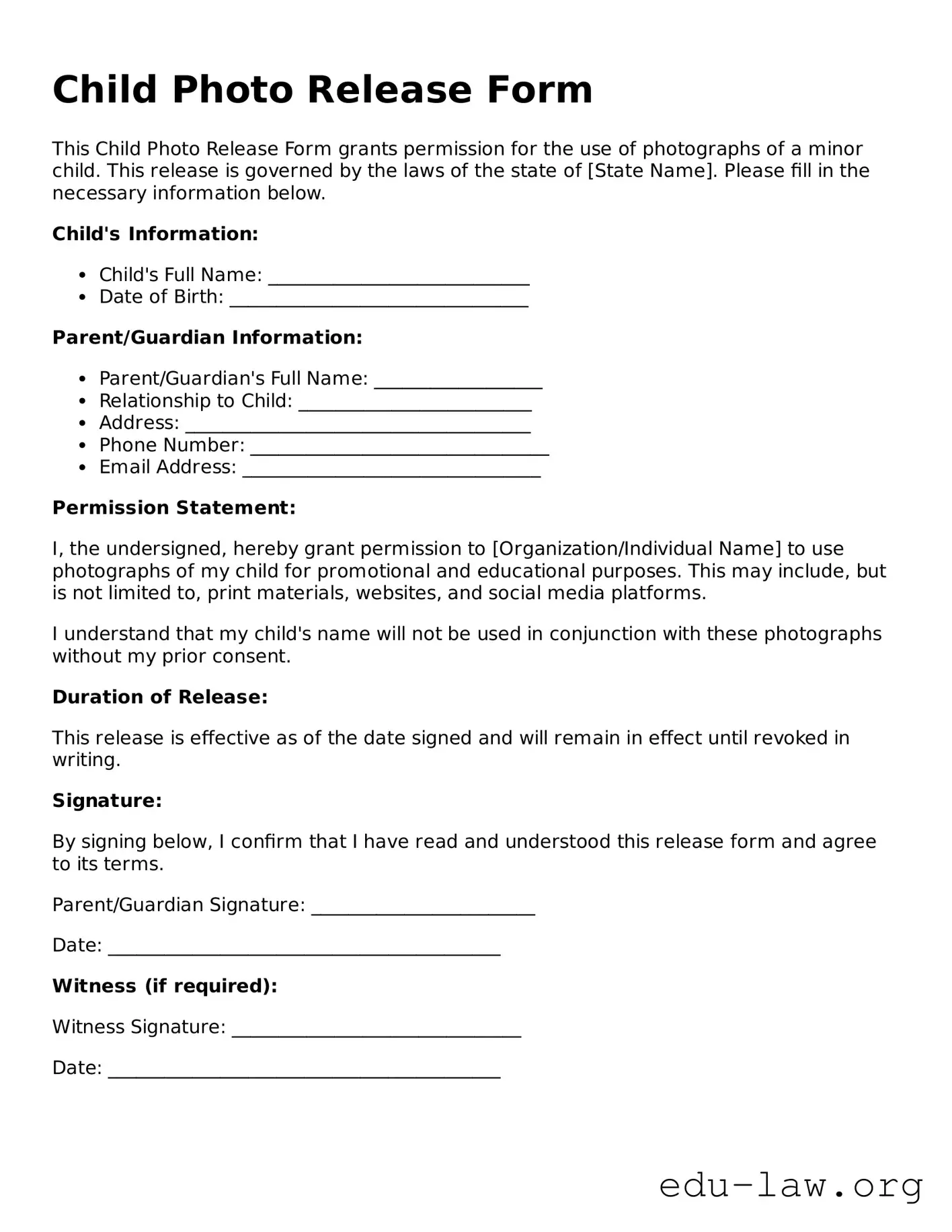
Child Photo Release Form
This Child Photo Release Form grants permission for the use of photographs of a minor child. This release is governed by the laws of the state of [State Name]. Please fill in the necessary information below.
Child's Information:
Parent/Guardian Information:
Permission Statement:
I, the undersigned, hereby grant permission to [Organization/Individual Name] to use photographs of my child for promotional and educational purposes. This may include, but is not limited to, print materials, websites, and social media platforms.
I understand that my child's name will not be used in conjunction with these photographs without my prior consent.
Duration of Release:
This release is effective as of the date signed and will remain in effect until revoked in writing.
Signature:
By signing below, I confirm that I have read and understood this release form and agree to its terms.
Parent/Guardian Signature: ________________________
Date: __________________________________________
Witness (if required):
Witness Signature: _______________________________
Date: __________________________________________
| Fact Name | Description |
|---|---|
| Purpose | The Child Photo Release form allows parents or guardians to grant permission for the use of their child's photographs for various purposes, such as marketing or promotional activities. |
| Consent Requirement | Obtaining consent from a parent or guardian is essential before using a child's image, ensuring legal protection and respect for privacy. |
| State-Specific Laws | Different states may have specific laws governing the use of children's images. For instance, California's Civil Code Section 3344 protects minors' likenesses. |
| Duration of Consent | The consent granted through the form may be limited to a specific time frame or can be indefinite, depending on how the form is drafted. |
| Revocation of Consent | Parents or guardians have the right to revoke consent at any time, which must be clearly stated in the form to ensure compliance. |
Filling out a Child Photo Release form is an important step in ensuring that you have the necessary permissions regarding the use of your child's images. Once completed, this form allows you to specify how and where the photos may be used, providing clarity and peace of mind for both you and the photographer or organization involved.
After completing these steps, you can submit the form to the appropriate party. Keep a copy for your records to ensure you have documentation of your consent.
What is a Child Photo Release form?
A Child Photo Release form is a legal document that allows a parent or guardian to grant permission for the use of their child's photographs. This form is often used by photographers, schools, or organizations to ensure they have the right to publish or share images of children in various media, including websites, brochures, and social media.
Why is a Child Photo Release form necessary?
This form is necessary to protect the rights of both the child and the parent or guardian. It helps prevent unauthorized use of the child's image and ensures that consent is documented. Without this form, individuals or organizations may face legal challenges if they use a child's photograph without permission.
Who needs to sign the Child Photo Release form?
The form must be signed by a parent or legal guardian of the child. This ensures that the person granting permission has the legal authority to do so. In cases where both parents share custody, it is advisable to have both parents sign the form.
What information is typically included in the form?
A Child Photo Release form generally includes the child's name, the parent's or guardian's name, contact information, and details about the specific use of the photographs. It may also outline the duration of the permission granted and any limitations on how the images can be used.
Can I revoke the permission granted in the Child Photo Release form?
Are there any risks associated with signing a Child Photo Release form?
Yes, there are potential risks. By signing the form, parents may be giving up certain rights regarding how the child's image is used. It is essential to read the document carefully and understand the implications before signing. Parents should ensure that they are comfortable with the terms outlined in the form.
How long is the Child Photo Release form valid?
The validity of the form can vary based on the terms outlined within it. Some forms specify a time frame, while others may be open-ended until revoked. Always check the specific conditions mentioned in the document to understand its duration.
Is a Child Photo Release form required for all photographs of children?
No, a Child Photo Release form is not required for every photograph. For instance, casual photos taken by family members or friends typically do not require a release. However, if the images will be used for commercial purposes or published publicly, obtaining a release is advisable.
Where can I obtain a Child Photo Release form?
Child Photo Release forms can be found online through various legal form websites, or they may be provided by photographers, schools, or organizations that work with children. It is important to ensure that the form you use complies with local laws and regulations.
Not including the child's full name. It’s essential to provide the complete name to avoid any confusion.
Failing to specify the purpose of the photo use. Clearly stating how the photos will be used helps ensure everyone understands the intent.
Leaving out the date. Always include the date on which the form is filled out. This helps track when permission was granted.
Not providing a parent or guardian's signature. A signature is necessary to validate the release.
Forgetting to include contact information. Providing a phone number or email ensures you can be reached if needed.
Using vague language. Be clear and specific about what rights are being granted regarding the photos.
Neglecting to inform the child about the release. It’s important for the child to understand that their photo may be used.
Not keeping a copy of the signed form. Always retain a copy for your records in case any questions arise later.
Overlooking the expiration date of the release. If applicable, specify how long the permission lasts to avoid misunderstandings.
When working with children in any capacity, especially in creative or promotional projects, it's essential to have the right documentation in place. The Child Photo Release form is just one piece of the puzzle. Below is a list of other important forms and documents that are often used in conjunction with the Child Photo Release form. Each serves a unique purpose in protecting the rights and interests of the child and the organization involved.
Having these forms and documents in place not only protects the child but also provides peace of mind for parents and organizations alike. Each document plays a vital role in ensuring a safe and enjoyable experience for everyone involved.
The Child Photo Release form is similar to a Model Release form, which is often used in the photography and entertainment industries. Both documents grant permission for the use of an individual's likeness in various media. While a Model Release typically applies to adults, the Child Photo Release specifically addresses the rights of minors. This ensures that parents or guardians can provide consent on behalf of their children, safeguarding the child's image while allowing for creative expression in photography and marketing.
Another related document is the Video Release form. Much like the Child Photo Release, this form is designed to obtain permission from individuals before their likeness is captured on video. It serves a similar purpose in protecting the rights of the subjects involved. In the case of children, parents or guardians must sign this document, ensuring that they understand how the video will be used and that they consent to its distribution. This helps prevent any misuse of the child's image in video content.
The Photography Release form also shares similarities with the Child Photo Release. This document is used by photographers to obtain permission from individuals to use their images in various forms of media, including print and online publications. When it comes to children, the Photography Release requires a parent or guardian's signature, just like the Child Photo Release. This ensures that the child's rights are protected while allowing photographers to showcase their work legally and ethically.
Lastly, the Social Media Release form is another document that aligns with the Child Photo Release. This form allows individuals to grant permission for their images or videos to be shared on social media platforms. For children, this form must be signed by a parent or guardian, similar to the Child Photo Release. This ensures that parents are aware of and agree to the potential reach and implications of sharing their child's likeness online, fostering a sense of responsibility in the digital age.
When filling out a Child Photo Release form, it’s essential to approach the process with care. Here are some guidelines to help you navigate this important task:
By following these dos and don’ts, you can ensure that the process of filling out the Child Photo Release form goes smoothly and protects everyone involved.
Understanding the Child Photo Release form is essential for parents, guardians, and anyone working with children in photography or media. However, several misconceptions can lead to confusion. Here’s a look at some common misunderstandings:
By dispelling these misconceptions, individuals can better navigate the complexities of using a Child Photo Release form, ensuring that the rights of both children and photographers are respected.
Filling out and using a Child Photo Release form is an important step for parents and guardians who want to ensure the proper handling of their child's images. Here are some key takeaways to keep in mind:
By understanding these key points, you can navigate the process of using a Child Photo Release form with confidence and clarity.