Mold issues can pose significant health risks and structural challenges in buildings, making effective remediation essential. The Checklist Mold form serves as a vital tool in guiding property owners and remediation teams through the complex process of addressing mold problems. It emphasizes the importance of investigating and evaluating moisture and mold issues, assessing the size of affected areas, and considering the potential for hidden mold. The form encourages early intervention by advising on the cleanup of small mold problems and the rectification of moisture issues before they escalate. For medium or large-scale mold problems, it recommends appointing a remediation manager and highlights the necessity of communicating with building occupants throughout the remediation process. Additionally, the checklist outlines critical steps such as identifying sources of moisture, selecting appropriate cleanup methods, and employing personal protective equipment. It also prompts users to consider various questions before beginning remediation, ensuring that all factors are taken into account. This comprehensive approach not only aids in effective mold removal but also helps in preventing future occurrences, ultimately safeguarding the health of occupants and the integrity of the building.

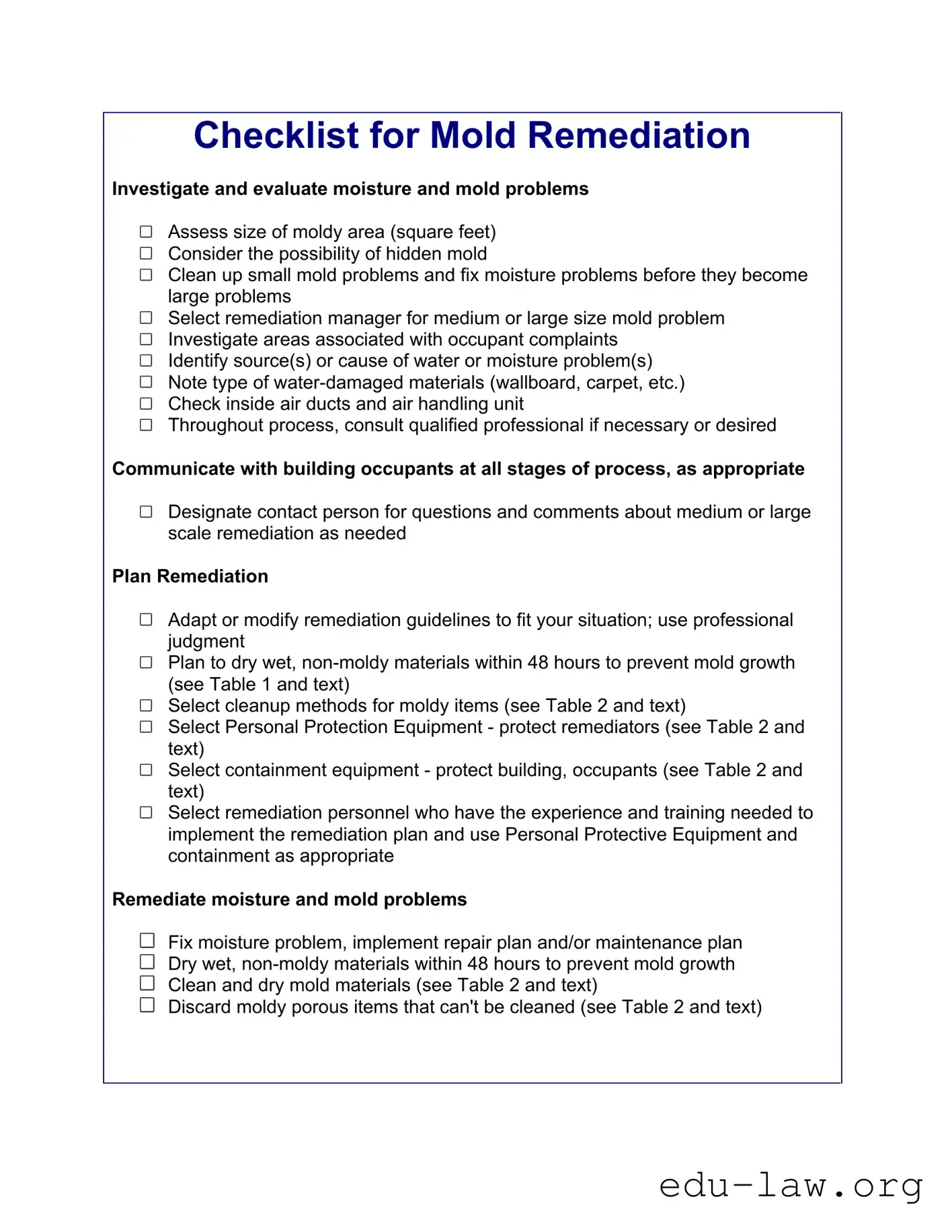
Checklist for Mold Remediation
Investigate and evaluate moisture and mold problems
Assess size of moldy area (square feet) Consider the possibility of hidden mold
Clean up small mold problems and fix moisture problems before they become large problems
Select remediation manager for medium or large size mold problem Investigate areas associated with occupant complaints
Identify source(s) or cause of water or moisture problem(s) Note type of
Throughout process, consult qualified professional if necessary or desired
Communicate with building occupants at all stages of process, as appropriate
Designate contact person for questions and comments about medium or large scale remediation as needed
Plan Remediation
Adapt or modify remediation guidelines to fit your situation; use professional judgment
Plan to dry wet,
Select cleanup methods for moldy items (see Table 2 and text)
Select Personal Protection Equipment - protect remediators (see Table 2 and text)
Select containment equipment - protect building, occupants (see Table 2 and text)
Select remediation personnel who have the experience and training needed to implement the remediation plan and use Personal Protective Equipment and containment as appropriate
Remediate moisture and mold problems
Fix moisture problem, implement repair plan and/or maintenance plan
Dry wet,
Clean and dry mold materials (see Table 2 and text)
Discard moldy porous items that can't be cleaned (see Table 2 and text)

Questions to Consider Before Remediating
•Are there existing moisture problems in the building?
•Have building materials been wet more than 48 hours? (See Table 2 and text)
•Are there hidden sources of water or is the humidity too high (high enough to cause condensation)?
•Are building occupants reporting musty or moldy odors?
•Are building occupants reporting health problems?
•Are building materials or furnishings visibly damaged?
•Has maintenance been delayed or the maintenance plan been altered?
•Has the building been recently remodeled or has building use changed?
•Is consultation with medical or health professionals indicated?
Avoid Exposure to and Contact with Mold
•Use Personal Protective Equipment (PPE)
For more information
•www.epa.gov/mold
_____________________________________________________________________
For details, see text (of Mold Remediation in Schools and Commercial Buildings). Please note that this checklist was designed to highlight key parts of a school or commercial building remediation and does not list all potential steps or problems.
| Fact Name | Description | Governing Law |
|---|---|---|
| Moisture Investigation | Evaluate moisture and mold issues to identify potential problems. | State-specific building codes |
| Size Assessment | Determine the size of the moldy area in square feet for proper remediation planning. | State-specific health regulations |
| Remediation Manager | Select a qualified remediation manager for medium or large mold problems. | State-specific environmental laws |
| Source Identification | Identify sources or causes of water or moisture problems to prevent recurrence. | State-specific water damage laws |
| Personal Protective Equipment | Use appropriate PPE to protect individuals involved in the remediation process. | Occupational Safety and Health Administration (OSHA) regulations |
| Communication with Occupants | Maintain communication with building occupants throughout the remediation process. | State-specific tenant rights laws |
After obtaining the Checklist Mold form, you will be ready to assess and plan for mold remediation effectively. This form serves as a guide to ensure that all necessary steps are taken to address mold issues in your building. Below are the steps to fill out the form correctly.
Once you have filled out the Checklist Mold form, you will have a comprehensive overview of the steps needed for effective mold remediation. This will help ensure a safe and healthy environment for all building occupants.
What is the purpose of the Checklist Mold form?
The Checklist Mold form serves as a guide for identifying and addressing mold and moisture issues in buildings, particularly in schools and commercial spaces. It outlines essential steps for assessing mold problems, planning remediation, and ensuring safety for both workers and occupants. By following this checklist, individuals can better manage mold situations and prevent them from escalating.
How do I assess the size of a mold problem?
To assess the size of a mold problem, measure the affected area in square feet. Small mold issues can often be cleaned up without extensive measures, while medium or large problems may require a remediation manager and more comprehensive planning. Consider the extent of visible mold, the materials affected, and any hidden mold that may not be immediately visible.
What steps should I take before starting remediation?
Before starting remediation, investigate the source of moisture and any existing water problems in the building. Check if materials have been wet for more than 48 hours, as this increases the likelihood of mold growth. It is also important to communicate with building occupants about the situation and designate a contact person for questions. If necessary, consult with a qualified professional to ensure all aspects are covered.
What personal protective equipment (PPE) should be used during mold remediation?
During mold remediation, it is essential to use appropriate personal protective equipment to safeguard workers. This may include gloves, masks, goggles, and protective clothing. The specific types of PPE depend on the size of the mold problem and the methods chosen for cleanup. Always refer to the guidelines provided in the checklist for detailed recommendations.
How can I prevent mold growth after remediation?
To prevent mold growth after remediation, address any moisture problems immediately. Ensure that wet, non-moldy materials are dried within 48 hours. Regular maintenance and monitoring of humidity levels can also help prevent future mold issues. Additionally, communicate with building occupants about any ongoing concerns and encourage reporting of any musty odors or health problems.
Inadequate Assessment of Mold Size: One common mistake is failing to accurately assess the size of the moldy area. It is crucial to measure the square footage affected to determine the appropriate remediation approach. Without this, the remediation plan may be insufficient.
Neglecting Hidden Mold: People often overlook the possibility of hidden mold. Investigating areas associated with occupant complaints is essential. Hidden mold can lead to larger issues if not addressed promptly.
Ignoring Moisture Problems: Many individuals do not adequately identify or address the source of water or moisture problems. This oversight can result in recurring mold issues, as the root cause remains unaddressed.
Improper Cleanup Methods: Selecting inappropriate cleanup methods for moldy items is a frequent error. It's important to refer to the guidelines provided in the checklist to choose the right methods for effective remediation.
Failure to Communicate: A lack of communication with building occupants throughout the remediation process can lead to confusion and frustration. Keeping occupants informed is vital for a smooth remediation effort.
Not Consulting Professionals: Some individuals may skip consulting qualified professionals when necessary. Engaging experts can provide valuable insights and ensure that the remediation process adheres to best practices.
When dealing with mold issues, various forms and documents can support the remediation process. Each document serves a specific purpose, ensuring a comprehensive approach to identifying and resolving mold problems. Below is a list of commonly used forms that complement the Checklist Mold form.
Utilizing these documents alongside the Checklist Mold form can enhance the effectiveness of mold remediation efforts. By ensuring all aspects are covered, you can create a safer environment for all building occupants.
The Checklist Mold form shares similarities with the Water Damage Assessment form. Both documents focus on identifying and evaluating moisture issues within a building. The Water Damage Assessment form emphasizes the importance of assessing the extent of water damage and determining the sources of moisture. Like the Checklist Mold form, it encourages the documentation of affected areas and materials. This systematic approach helps ensure that all moisture-related problems are addressed promptly, preventing further complications such as mold growth.
Another document akin to the Checklist Mold form is the Indoor Air Quality Assessment form. This form evaluates the overall air quality within a building, considering factors that may contribute to mold growth, such as humidity levels and ventilation. Both documents underscore the need for thorough investigations and assessments to identify potential health risks associated with mold and poor air quality. They guide users in recognizing the interconnectedness of moisture control and air quality management.
The Remediation Plan template also resembles the Checklist Mold form in its structured approach to addressing mold issues. This template outlines specific steps for remediation, including the selection of cleanup methods and personnel. It emphasizes the importance of tailoring the remediation process to fit the unique circumstances of each situation, just as the Checklist Mold form does. Both documents advocate for professional judgment and thorough planning to ensure effective mold remediation.
Similarly, the Mold Inspection Report serves a related purpose. This report documents the findings of a mold inspection, detailing the locations and types of mold present, as well as the conditions that led to its growth. Like the Checklist Mold form, it aims to provide a clear understanding of the mold problem to inform remediation efforts. Both documents highlight the necessity of investigating hidden mold and moisture sources, which is crucial for effective resolution.
The Moisture Control Plan is another document that aligns with the Checklist Mold form. This plan focuses on strategies for preventing moisture accumulation, which is a key factor in mold growth. Both documents emphasize proactive measures, such as maintaining proper ventilation and promptly addressing leaks. By prioritizing moisture control, they work to mitigate the risk of mold development and protect building occupants’ health.
The Health Risk Assessment form is also similar, as it evaluates potential health impacts related to mold exposure. This form takes into account the symptoms reported by building occupants and assesses the need for further investigation or intervention. Like the Checklist Mold form, it stresses the importance of communication with occupants and consulting health professionals when necessary. Both documents aim to ensure the well-being of individuals within the affected environment.
The Personal Protective Equipment (PPE) Guidelines document shares a connection with the Checklist Mold form as well. This document outlines the necessary protective gear for individuals involved in mold remediation. Both emphasize the importance of safety measures to prevent exposure during the remediation process. By highlighting the need for appropriate PPE, they aim to protect the health of those conducting the cleanup and the occupants of the building.
Additionally, the Emergency Response Plan for Water Damage is similar in its focus on immediate action in the event of water intrusion. This plan outlines steps to take when water damage occurs, including assessing the situation and initiating cleanup efforts. The Checklist Mold form also emphasizes timely intervention, particularly in preventing mold growth within 48 hours. Both documents aim to provide clear guidance for swift and effective responses to moisture-related issues.
Lastly, the Building Maintenance Checklist can be compared to the Checklist Mold form. This checklist includes routine maintenance tasks aimed at preventing moisture buildup and mold growth. Both documents advocate for regular inspections and maintenance to identify and address potential problems before they escalate. By promoting proactive measures, they contribute to the overall health and safety of building occupants.
When filling out the Checklist Mold form, it is essential to follow specific guidelines to ensure effective remediation and safety. Here are some important dos and don’ts to consider:
By adhering to these guidelines, you can help ensure a safer and more effective mold remediation process.
This form is applicable for both small and large mold issues. It emphasizes the importance of addressing small mold problems early to prevent them from escalating.
While some minor mold issues can be managed independently, the checklist encourages consulting a qualified professional, especially for medium or large-scale problems.
The form specifies that porous items that cannot be cleaned should be discarded. Understanding what can be salvaged is crucial for effective remediation.
Addressing the underlying moisture issue is essential. The checklist highlights the need to fix moisture problems to prevent future mold growth.
This checklist is designed to highlight key aspects of mold remediation but does not encompass every possible step or problem. Adaptation to specific situations is encouraged.
Here are key takeaways about filling out and using the Checklist Mold form:
These takeaways emphasize the importance of thorough investigation, effective communication, and safety during mold remediation efforts.