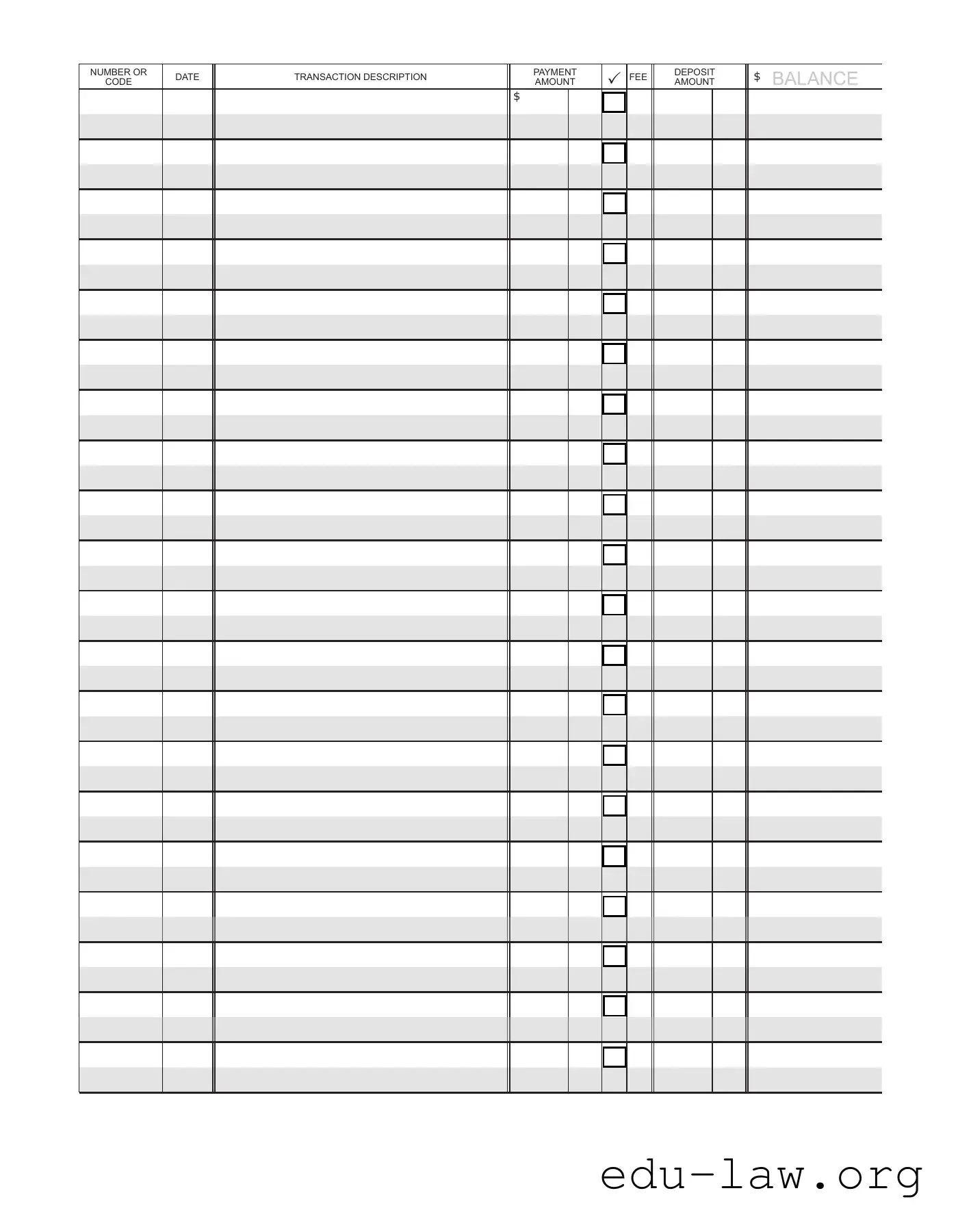
The Check Register form is an essential tool for individuals and businesses alike, serving as a detailed record of all transactions involving checks. This form helps users track their income and expenses, providing a clear overview of their financial activity. By documenting each check issued, including the date, payee, amount, and purpose, it allows for better budgeting and financial management. Additionally, the Check Register form can assist in reconciling bank statements, ensuring that every transaction is accounted for and discrepancies are quickly identified. Users can also note deposits and other withdrawals, creating a comprehensive picture of their cash flow. Overall, the Check Register form plays a crucial role in maintaining accurate financial records and promoting responsible spending habits.
NUMBER OR |
DATE |
TRANSACTION DESCRIPTION |
PAYMENT |
|
FEE |
DEPOSIT |
$ BALANCE |
||
CODE |
AMOUNT |
AMOUNT |
|||||||
|
|
|
$ |
|
|
|
|
|
|
|
|
|
|
|
|
|
|
|
|
|
|
|
|
|
|
|
|
|
|
|
|
|
|
|
|
|
|
|
|
|
|
|
|
|
|
|
|
|
|
|
|
|
|
|
|
|
|
|
|
|
|
|
|
|
|
|
|
|
|
|
|
|
|
|
|
|
|
|
|
|
|
|
|
|
|
|
|
|
|
|
|
|
|
|
|
|
|
|
|
|
|
|
|
|
|
|
|
|
|
|
|
|
|
|
|
|
|
|
|
|
|
|
|
|
|
|
|
|
|
|
|
|
|
|
|
|
|
|
|
|
|
|
|
|
|
|
|
|
|
|
|
|
|
|
|
|
|
|
|
|
|
|
|
|
|
|
|
|
|
|
|
|
|
|
|
|
|
|
|
|
|
|
|
|
|
|
|
|
|
|
|
|
|
|
|
|
|
|
|
|
|
|
|
|
|
|
|
|
|
|
|
|
|
|
|
|
|
|
|
|
|
|
|
|
|
|
|
|
|
|
|
|
|
|
|
|
|
|
|
|
|
|
|
|
|
|
|
|
|
|
|
|
|
|
|
|
|
|
|
|
|
|
|
|
|
|
|
|
|
|
|
|
|
|
|
|
|
|
|
|
|
|
|
|
|
|
|
|
|
|
|
|
|
|
|
|
|
|
|
|
|
|
|
|
|
|
|
|
|
|
|
|
|
|
|
|
|
|
|
|
|
|
|
|
|
|
|
|
|
|
|
|
|
|
|
|
|
|
|
|
|
|
|
|
|
|
|
|
|
|
|
|
|
|
|
|
|
|
|
|
|
|
|
|
|
|
|
|
|
|
|
|
|
|
|
|
|
|
|
|
|
|
|
|
|
|
|
|
|
|
|
|
|
|
|
|
|
|
|
|
|
|
|
|
|
|
|
|
|
| Fact Name | Description |
|---|---|
| Purpose | The Check Register form is used to track all checks issued by an individual or organization, ensuring accurate financial record-keeping. |
| Components | This form typically includes fields for the check number, date, payee, amount, and a brief description of the transaction. |
| State Variations | Some states may have specific requirements or additional fields for their Check Register forms, depending on local regulations. |
| Governing Laws | In California, for example, the use of check registers is governed by the California Commercial Code, which outlines proper record-keeping practices. |
| Importance | Maintaining an accurate check register is crucial for budgeting and financial planning, helping individuals and businesses avoid overdrafts and manage cash flow. |
| Record Retention | It is advisable to retain check registers for a minimum of three years for tax and audit purposes, although specific requirements may vary by state. |
Filling out the Check Register form is an essential step in managing your finances. This form helps you keep track of all your transactions, ensuring that you maintain an accurate record of your spending and deposits. Once you have completed the form, you will have a clear overview of your account activity, which is crucial for budgeting and financial planning.
What is a Check Register form?
A Check Register form is a tool used to track all transactions related to a checking account. It helps individuals and businesses monitor deposits, withdrawals, and the overall balance. Keeping an accurate check register is essential for effective financial management.
Why should I use a Check Register form?
Using a Check Register form allows you to maintain a clear record of your financial activity. It helps prevent overdrafts, ensures you know your available balance, and provides a way to track spending. By regularly updating your register, you can avoid surprises when reviewing your bank statements.
How do I fill out a Check Register form?
To fill out a Check Register form, start by entering the date of each transaction. Next, note whether it's a deposit or a withdrawal. For withdrawals, include the check number or transaction ID. Then, write the amount and provide a brief description of the transaction. Finally, update your balance after each entry to keep it current.
Can I use a Check Register form for online banking?
Yes, a Check Register form can be used for online banking. You can record transactions made through online transfers, bill payments, and electronic deposits just as you would for traditional checks. This helps you maintain an accurate account of all your financial activities.
What should I do if I make a mistake in my Check Register?
If you make a mistake in your Check Register, simply cross out the incorrect entry and write the correct information next to it. Make sure to adjust your balance accordingly. Keeping a clear and accurate record is essential, so it's important to correct errors promptly.
How often should I update my Check Register?
You should update your Check Register every time you make a transaction. This includes writing checks, making deposits, and any electronic transactions. Regular updates ensure your balance is accurate and help you stay on top of your finances.
Is it necessary to keep my Check Register after reconciling with my bank statement?
Yes, it is a good practice to keep your Check Register even after reconciling with your bank statement. This record can serve as a reference for future transactions and help you track your spending habits over time. It can also be useful for budgeting and financial planning.
Can I use a digital version of a Check Register form?
Absolutely! Many people prefer using digital versions of Check Register forms. You can find templates online or use budgeting software that includes check register features. Digital formats can make it easier to track transactions and calculate balances automatically.
What happens if I don’t use a Check Register form?
If you don’t use a Check Register form, you may lose track of your account balance and transactions. This can lead to overdrafts, missed payments, and financial confusion. Without proper tracking, it becomes difficult to manage your finances effectively.
When managing finances, filling out a Check Register form accurately is crucial. Many individuals make mistakes that can lead to confusion and financial discrepancies. Below is a list of common errors to avoid:
Failing to document every transaction can create gaps in your financial records. Each check written, deposit made, or fee incurred should be logged promptly.
Transposing numbers or miscalculating amounts can lead to significant errors. Always double-check the figures before finalizing any entry.
Leaving out the date of a transaction can cause confusion later. It’s essential to keep track of when each transaction occurred to maintain an accurate timeline.
After recording a transaction, it’s important to adjust the balance accordingly. Failing to do so can result in an inaccurate view of available funds.
Mixing formats for dates or amounts can lead to misunderstandings. Stick to a consistent format throughout the Check Register for clarity.
Overlooking bank fees or service charges can distort your financial picture. Always include these in your records to ensure accuracy.
Failing to review the Check Register frequently can lead to unnoticed errors. Regular checks help catch mistakes early and keep your finances on track.
Keeping receipts and transaction records in disarray can complicate filling out the Check Register. Organizing these documents can streamline the process and reduce errors.
By being mindful of these common mistakes, individuals can maintain a more accurate and reliable Check Register. This practice not only helps in managing finances but also fosters a sense of control and awareness over one’s financial situation.
Managing finances effectively requires the use of various forms and documents that work in tandem with the Check Register. This collection of paperwork helps individuals and businesses maintain accurate records, track expenses, and ensure financial accountability. Below is a list of common forms and documents that are often used alongside the Check Register.
Each of these documents plays a vital role in maintaining clear and organized financial records. By using them in conjunction with the Check Register, individuals and businesses can enhance their financial management practices, ensuring accuracy and accountability in their financial dealings.
The Check Register form is similar to a Bank Statement. Both documents track financial transactions over a specific period. A bank statement summarizes all deposits, withdrawals, and fees for an account, providing a clear view of the account's activity. Like the Check Register, it helps individuals reconcile their records against the bank’s records, ensuring accuracy in financial management.
Another document that resembles the Check Register is the Transaction Log. This log details each transaction made within an account, including dates, amounts, and descriptions. Much like the Check Register, it serves as a record-keeping tool. Users can refer to the Transaction Log to monitor spending habits and maintain budgetary control.
The Receipt Book is another similar document. Receipts provide proof of purchases and payments, capturing essential details like date, amount, and purpose. While the Check Register records payments made via checks, a Receipt Book captures all transactions, regardless of payment method. Both documents are essential for tracking expenses and maintaining accurate financial records.
A Budget Tracker also shares similarities with the Check Register. This tool helps individuals plan and monitor their income and expenses. While the Check Register records actual transactions, a Budget Tracker allows users to set financial goals and compare planned versus actual spending. Both documents are vital for effective financial management.
Lastly, the Invoice Record is comparable to the Check Register. Invoices detail goods or services provided and the amounts owed. They serve as a formal request for payment, while the Check Register records the actual payment once it is made. Together, these documents facilitate smooth financial transactions and accurate accounting practices.
When filling out the Check Register form, it’s important to follow certain guidelines to ensure accuracy and clarity. Here’s a list of what to do and what to avoid:
Understanding the Check Register form can help individuals manage their finances more effectively. However, several misconceptions can lead to confusion. Here are five common misconceptions:
Misconception 1: The Check Register is only for businesses.
This is not true. While businesses often use check registers, individuals can benefit from them as well. Anyone who writes checks or makes electronic payments can use a check register to track their transactions.
Misconception 2: The Check Register is outdated due to online banking.
Many believe that online banking eliminates the need for a check register. However, maintaining a check register can provide a clear overview of spending and help individuals stay organized, regardless of their banking method.
Misconception 3: The Check Register is complicated to use.
Some think that using a check register requires advanced skills. In reality, it is quite simple. Recording transactions involves noting the date, amount, and purpose, which anyone can do.
Misconception 4: A Check Register is only for tracking checks.
This is misleading. A check register can track all types of transactions, including debit card purchases, electronic transfers, and cash withdrawals. It serves as a comprehensive record of all spending.
Misconception 5: You only need to update the Check Register when you receive a bank statement.
This is incorrect. Regularly updating the check register after each transaction helps maintain an accurate balance. Waiting for a bank statement can lead to overspending or missed payments.
By addressing these misconceptions, individuals can better utilize the Check Register to manage their finances effectively.
Filling out and using a Check Register form can significantly enhance your financial management. Here are some key takeaways to keep in mind:
By following these guidelines, you can take control of your finances and ensure a clearer understanding of your financial situation.