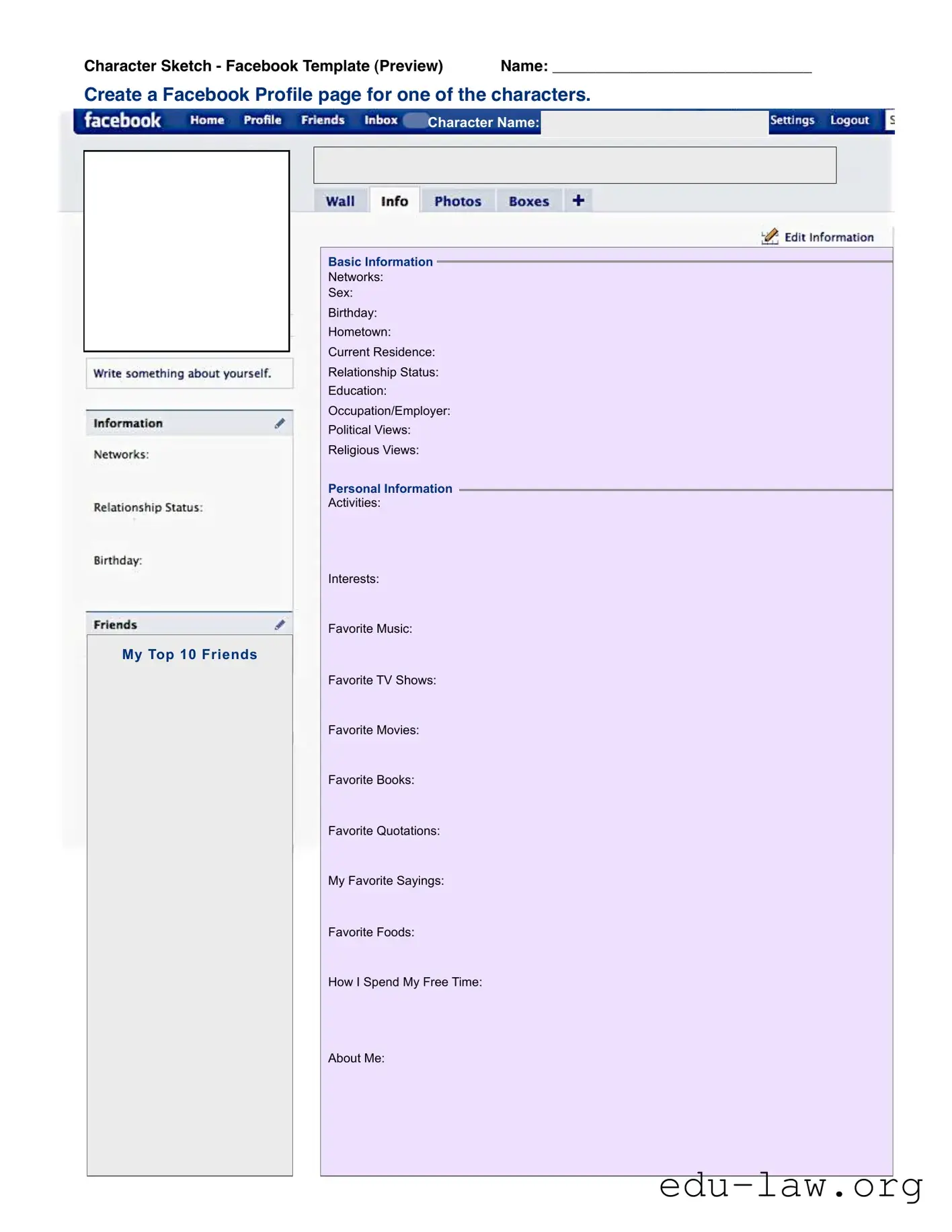
The Character Facebook form offers a creative and engaging way to explore characters from novels by simulating a Facebook profile. This interactive template encourages users to delve into various aspects of a character's life, starting with basic information such as name, birthday, and relationship status. It prompts users to think about the character's social connections by identifying their top friends and networks. Additionally, the form includes personal insights, inviting users to list activities, interests, and favorite media, which enriches the character's backstory. Users can express the character's personality through favorite quotes, sayings, and even food preferences. The template also features a unique section for creating virtual gifts or applications, allowing for a deeper connection to the narrative by linking gifts to specific chapters. This comprehensive approach not only enhances comprehension of the character but also fosters creativity, making it an invaluable tool for educators and students alike.
Character Sketch - Facebook Template (Preview)! |
Name: ______________________________ |
Create a Facebook Profile page for one of the characters.
Character Name:
My Top 10 Friends
BASIC INFORMATION
Networks:
Sex:
Birthday:
Hometown:
Current Residence:
Relationship Status:
Education:
Occupation/Employer:
Political Views:
Religious Views:
PERSONAL INFORMATION
Activities:
Interests:
Favorite Music:
Favorite TV Shows:
Favorite Movies:
Favorite Books:
Favorite Quotations:
My Favorite Sayings:
Favorite Foods:
How I Spend My Free Time:
About Me:
©2009 Tracee Orman
Character Sketch - Facebook Template (Preview)! |
Name: ______________________________ |
Character Name:
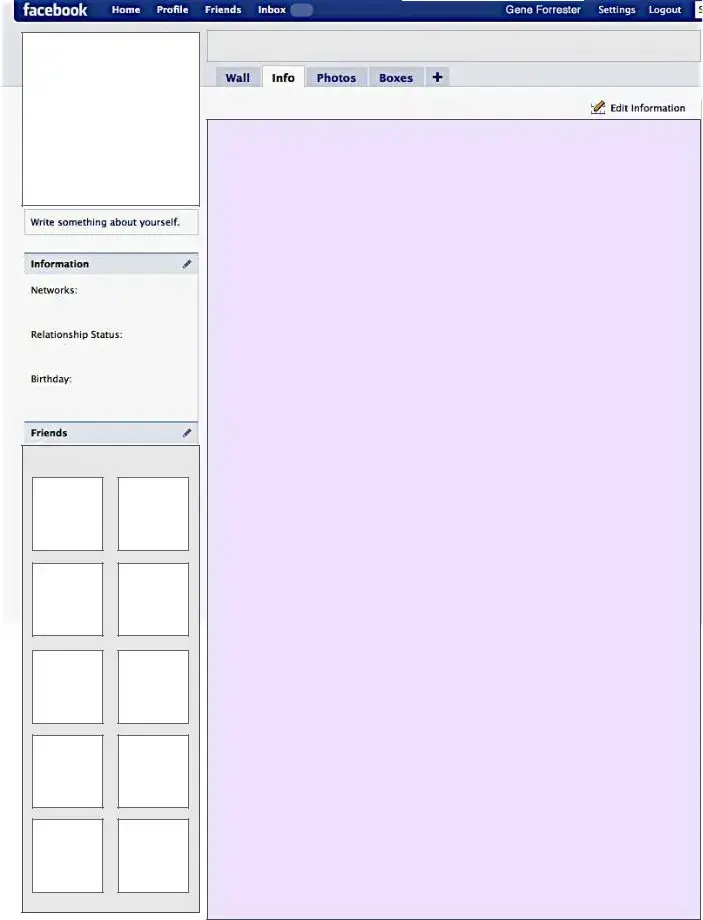
My Top 10 Friends
BASIC INFORMATION
Networks (City/School): ____________________________________________________________
Sex: _______ Birthday: ____________________________________________________________
Hometown: ______________________________________________________________________
Current Residence: ________________________________________________________________
Relationship Status: _______________________________________________________________
Education: ______________________________________________________________________
Occupation/Employer: _____________________________________________________________
Political Views: ___________________________________________________________________
Religious Views: __________________________________________________________________
PERSONAL INFORMATION
Activities: ________________________________________________________________________
________________________________________________________________________________
________________________________________________________________________________
Interests: ________________________________________________________________________
________________________________________________________________________________
Favorite Music: ___________________________________________________________________
________________________________________________________________________________
Favorite TV Shows: ________________________________________________________________
________________________________________________________________________________
Favorite Movies: __________________________________________________________________
________________________________________________________________________________
Favorite Books: ___________________________________________________________________
________________________________________________________________________________
Favorite Quotations: _______________________________________________________________
________________________________________________________________________________
My Favorite Sayings: ______________________________________________________________
________________________________________________________________________________
Favorite Foods: ___________________________________________________________________
________________________________________________________________________________
How I Spend My Free Time: _________________________________________________________
________________________________________________________________________________
About Me: _______________________________________________________________________
________________________________________________________________________________
©2009 Tracee Orman
Character Sketch - Facebook Template (Preview)! |
Name: ______________________________ |
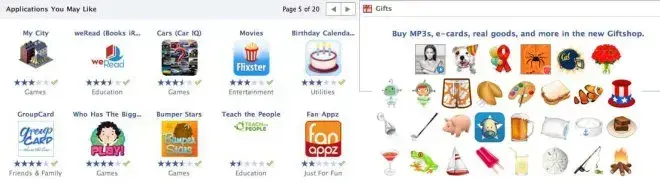
Below, or on a separate sheet of paper, create virtual “gifts” or applications related to the novel. Describe them & even draw an icon for it (see examples below). Which “gifts” would your character want for each chapter? Who would YOU send a gift to?
Examples:
Description of Application(s):! ! |
! |
! |
! |
! |
Icon/Pic(s) of Application(s): |
|
|
|
|
|
|
|
|
|
|
|
|
|
|
|
|
|
|
|
|
|
|
|
|
|
|
|
|
|
|
|
|
|
|
|
|
|
|
|
|
|
|
|
|
|
|
|
|
|
|
|
|
|
|
|
|
|
|
|
|
|
|
|
|
|
|
|
|
|
|
|
|
|
|
|
|
|
|
|
|
|
|
|
|
|
|
|
|
|
|
|
|
|
|
|
|
©2009 Tracee Orman
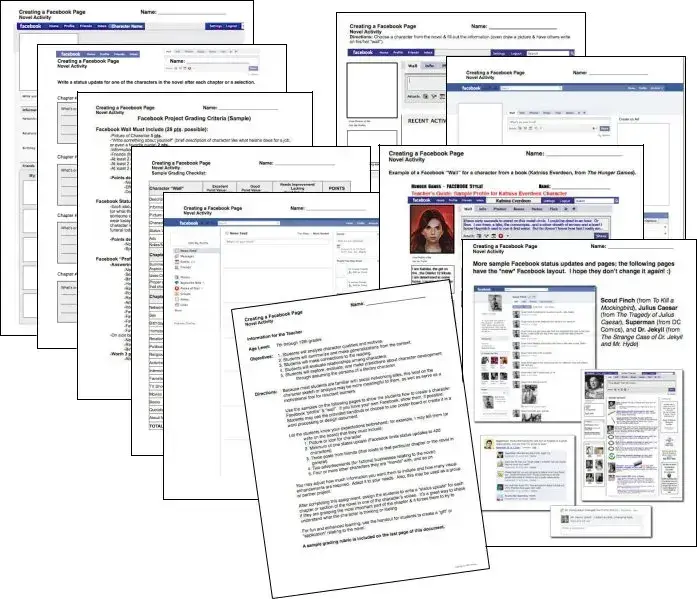
Character Sketch - Facebook Template (Preview)! |
Name: ______________________________ |
TO VIEW THE DIRECTIONS & ADDITIONAL ACTIVITIES, PLEASE PURCHASE FACEBOOK CHARACTER SKETCH FULL VERSION, FOUND HERE:
IT INCLUDES (13 PAGES):
!
!
!
!
!
!
!
!
!
©2009 Tracee Orman
Character Sketch - Facebook Template (Preview)! |
Name: ______________________________ |
FOR OTHER CREATIVE PROJECTS, CHECK OUT MY OTHER PRODUCTS:
Creative Activities for ANY Novel or Short Story:
40+ Poetry Formulas to Help ANY Student Write Poetry!
Shakespeareʼs Life and Times Powerpoint -
FREE Shakespeare Handout to Correspond with Powerpoint
Looking for a new novel to teach? Consider The Hunger Games by Suzanne Collins. Itʼs appropriate for or any student from 5th - 12th grades, and especially effective for reluctant readers. Every kid I know has loved
Visit My Online Store to See So Many More:
THANK YOU for supporting your fellow teachers!
©2009 Tracee Orman
| Fact Name | Detail |
|---|---|
| Purpose | The Character Facebook form is designed to help students create a fictional social media profile for a character from a novel, enhancing their understanding and engagement with the text. |
| Components | The form includes sections for basic information, personal interests, and a creative activity for virtual gifts, allowing for a comprehensive exploration of the character. |
| Usage | This template can be used in educational settings, particularly in literature classes, to encourage creativity and critical thinking about character development. |
| Legal Considerations | As this form is a creative educational tool, it is subject to copyright laws. The governing law is the U.S. Copyright Act, which protects original works of authorship. |
Filling out the Character Facebook form allows you to create a detailed profile for a character from a novel. This exercise can enhance your understanding of the character and their motivations. Follow these steps to complete the form accurately.
What is the Character Facebook form?
The Character Facebook form is a creative template designed for students to build a Facebook profile for a character from a novel. It includes sections for basic and personal information, allowing students to explore the character's traits, interests, and relationships in a fun and engaging way.
How do I use the Character Facebook form?
To use the form, fill in the character's name and details in the provided sections. You can include information like the character's birthday, hometown, and favorite activities. This exercise helps deepen understanding of the character and can be used as a classroom activity or a homework assignment.
What information do I need to provide for the character?
You will need to provide basic information such as the character's name, sex, birthday, and hometown. Additionally, personal interests like favorite music, books, and activities should be included. This comprehensive approach allows for a well-rounded view of the character.
Can I customize the Character Facebook form?
Yes, you can customize the form to better fit your character. Feel free to add more details or modify existing sections. The goal is to create a profile that accurately reflects the character's personality and experiences.
Is there a way to include visual elements in the form?
The form encourages creativity, so you can add drawings or icons related to the character. For instance, you might illustrate gifts or applications that the character would appreciate. This adds a visual dimension to the project and makes it more engaging.
Where can I find additional resources related to the Character Facebook form?
Additional resources, including a full version of the Character Facebook form, can be purchased online. This full version includes updated layouts, learning objectives, and various activities to enhance the experience.
What age group is the Character Facebook form suitable for?
This form is appropriate for students from 5th to 12th grades. It is particularly effective for engaging reluctant readers, as it allows them to connect with characters in a modern and relatable format.
How can this form benefit my understanding of the character?
Using the Character Facebook form can significantly enhance your understanding of the character. By filling out the profile, you will analyze their motivations, relationships, and personality traits. This deeper exploration can lead to richer discussions and insights in class.
Failing to provide a complete character name. A character's name is essential for establishing identity. Omitting this can lead to confusion.
Inaccurately filling out basic information. Information such as sex, birthday, and hometown must reflect the character's background accurately.
Neglecting to include top friends. This section helps to illustrate the character's social circle and relationships.
Using vague or generic interests and activities. Specificity adds depth to the character. General answers may not convey their personality effectively.
Overlooking the about me section. This area should encapsulate the character’s essence and motivations. A missed opportunity for depth.
Not listing favorite quotations. These can reveal a character’s values or beliefs, providing insight into their worldview.
Failing to describe gifts or applications related to the character. This creative aspect enhances engagement and understanding of the character's desires.
Ignoring the relationship status. This detail can significantly influence a character’s actions and decisions throughout the story.
Not utilizing specific examples for favorite music, shows, or books. These elements help to paint a vivid picture of the character's tastes and influences.
In addition to the Character Facebook form, several other documents and forms can enhance the character development process. These documents provide a deeper understanding of the character's background, personality, and relationships. Below is a list of commonly used forms that complement the Character Facebook form.
These documents work together to create a well-rounded understanding of the character, making it easier to write compelling narratives. Utilizing these resources can significantly enrich the writing process and improve character development.
The Character Facebook form shares similarities with a traditional character profile, often used in literature classes. Both tools encourage students to delve deeply into a character's background, motivations, and relationships. By filling out essential details such as name, age, and hometown, students gain a clearer understanding of the character's role within the story. This exercise promotes critical thinking and allows for a creative exploration of character development, enhancing overall comprehension of the narrative.
Another document that resembles the Character Facebook form is a character analysis worksheet. This type of worksheet typically prompts students to examine a character's traits, conflicts, and growth throughout a story. Much like the Facebook form, it requires students to reflect on the character's relationships and personal experiences. However, the analysis worksheet may focus more on textual evidence, while the Facebook form emphasizes creative expression through a social media lens.
A character diary or journal is yet another similar document. In this format, students write entries from the perspective of the character, allowing for a first-person exploration of thoughts and feelings. The Character Facebook form complements this by providing structured sections for personal information and interests, making it easier for students to create a well-rounded portrayal. Both formats encourage empathy and a deeper connection to the character's journey.
The character sketch is a classic tool in creative writing that bears resemblance to the Facebook form. It often includes a detailed description of the character's appearance, personality traits, and backstory. The Facebook form's structured format helps students organize their thoughts similarly, focusing on specific aspects of the character's life. Both documents serve to inspire creativity while fostering a better understanding of character dynamics in storytelling.
Character maps are also akin to the Character Facebook form. These visual representations outline relationships, traits, and significant events in a character's life. While character maps provide a more visual approach, the Facebook form offers a structured narrative format. Both tools aim to enhance comprehension of character interactions and development, making them valuable resources in literary studies.
Another document that parallels the Character Facebook form is a role-playing character sheet, often used in games and storytelling exercises. This sheet typically includes essential character stats, abilities, and backstory elements. Like the Facebook form, it encourages participants to think critically about their character's attributes and motivations. Both formats engage users in a creative process that deepens their understanding of character development.
Character timelines represent another similar document. These timelines chronologically outline key events in a character's life, helping students visualize their growth and changes over time. The Character Facebook form complements this by providing a snapshot of the character at a specific moment, including personal interests and relationships. Together, they offer a comprehensive view of character evolution within a narrative.
Character questionnaires also share similarities with the Character Facebook form. These questionnaires often consist of a series of questions designed to explore a character's background, beliefs, and motivations. The Facebook form's structured sections serve a similar purpose, guiding students to think critically about various aspects of the character's life. Both tools promote introspection and creativity in character exploration.
Lastly, a character presentation template can be compared to the Character Facebook form. This template usually requires students to create a visual or oral presentation about a character, highlighting key traits and experiences. The Facebook form provides a foundation for this presentation by organizing essential information and personal details. Both formats encourage students to engage with the character's story in a dynamic and interactive way.
When filling out the Character Facebook form, it’s important to approach the task thoughtfully. Here are ten essential do's and don'ts to guide you through the process.
By adhering to these guidelines, you can create a rich and compelling character profile that resonates with others. Take the time to reflect on your character's life and experiences, and let that shine through in your responses.
This form can be utilized by anyone interested in character development, including writers, actors, and educators. It offers a creative way to explore character traits and backgrounds.
In reality, the Character Facebook form is designed to be user-friendly. Users can fill it out by hand or digitally without needing specialized software.
While it is often used in educational settings, the insights gained can be valuable for personal projects, such as writing a novel or developing a screenplay.
In fact, the form encourages deeper exploration of characters by prompting users to think about interests, activities, and personal philosophies, thus enriching character development.
This form can be revisited and updated as characters evolve throughout a story. It serves as a dynamic tool for ongoing character exploration.
Here are key takeaways for filling out and using the Character Facebook form: