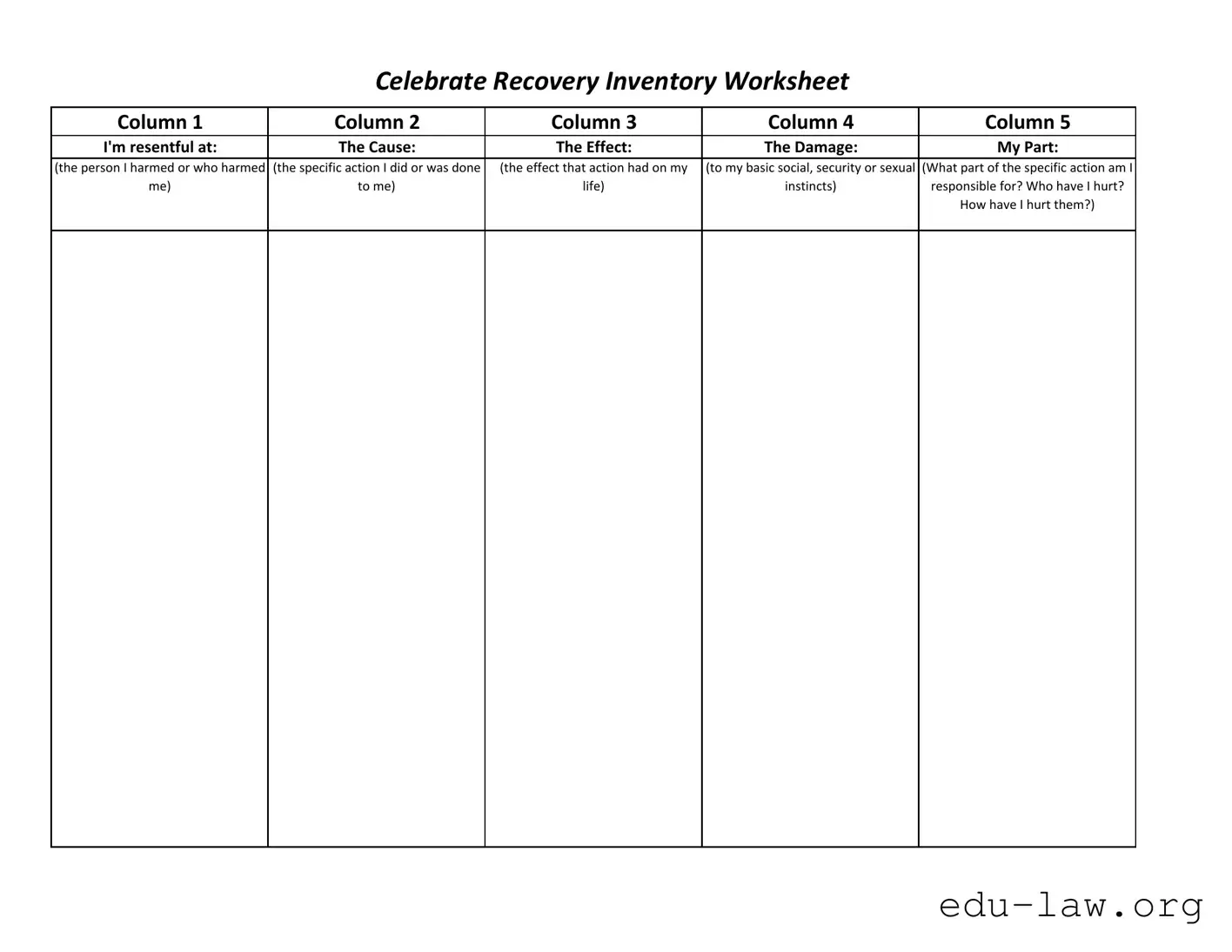
In the journey of healing and personal growth, the Celebrate Recovery Inventory Worksheet serves as a vital tool for individuals seeking to confront and understand their struggles. This structured form encourages participants to reflect on their resentments, pinpointing not only the causes of these feelings but also the effects they have on their lives and relationships. Each column of the worksheet prompts users to delve deeper into their experiences, starting with identifying the source of their resentment and moving through to explore the damage inflicted on themselves and others. By breaking down complex emotions into manageable components, the form fosters a sense of accountability. It invites users to consider their role in the situation, asking them to recognize their part in the harm caused. This introspective approach not only aids in personal accountability but also promotes healing by emphasizing the importance of acknowledging one's impact on the lives of others. Through this process, individuals can begin to rebuild their social, security, and emotional foundations, ultimately paving the way for recovery and healthier relationships.
Celebrate Recovery Inventory Worksheet
Column 1 |
Column 2 |
Column 3 |
Column 4 |
Column 5 |
|
|
|
|
|
I'm resentful at: |
The Cause: |
The Effect: |
The Damage: |
My Part: |
|
|
|
|
|
(the person I harmed or who harmed |
(the specific action I did or was done |
(the effect that action had on my |
(to my basic social, security or sexual |
(What part of the specific action am I |
me) |
to me) |
life) |
instincts) |
responsible for? Who have I hurt? |
|
|
|
|
How have I hurt them?) |
|
|
|
|
|
|
|
|
|
|
| Fact Name | Description |
|---|---|
| Form Purpose | The Celebrate Recovery Inventory Worksheet is designed to help individuals reflect on their feelings, actions, and the impact of those actions on themselves and others. |
| Column Structure | The worksheet consists of five columns, each focusing on different aspects of personal grievances and responsibilities. |
| Resentment Identification | The first column prompts users to identify their resentments, encouraging self-awareness and acknowledgment of negative feelings. |
| Cause Analysis | The second column requires users to explore the causes of their resentments, fostering a deeper understanding of the root issues. |
| Effect Reflection | In the third column, individuals reflect on the effects their resentments have had on their lives, promoting emotional processing. |
| Damage Assessment | The fourth column focuses on the damage caused by these resentments, both to oneself and to others, highlighting the importance of accountability. |
| Personal Responsibility | The final column encourages users to identify their part in the situation, emphasizing personal responsibility in the healing process. |
After completing the Celebrate Recovery form, you will have a clearer understanding of your feelings and experiences. This will help you reflect on your relationships and personal growth. Follow these steps to fill out the form accurately.
What is the purpose of the Celebrate Recovery form?
The Celebrate Recovery form is designed to help individuals reflect on their feelings and actions related to past hurts and resentments. By filling out the Inventory Worksheet, participants can identify specific areas in their lives where they may need healing or forgiveness. This process encourages self-awareness and personal growth, making it easier to address underlying issues and move toward recovery.
How do I fill out the Celebrate Recovery Inventory Worksheet?
Filling out the Inventory Worksheet involves several steps. Start by identifying someone you feel resentful toward in the first column. Next, in the second column, note the cause of that resentment. The third column prompts you to reflect on how that resentment has affected you emotionally and socially. In the fourth column, consider the damage caused by those feelings to your life. Finally, in the fifth column, take responsibility for your part in the situation. This may involve recognizing your actions or reactions that contributed to the conflict.
Who should use the Celebrate Recovery form?
The Celebrate Recovery form is intended for anyone who is seeking healing from past hurts, habits, or hang-ups. It is particularly beneficial for individuals participating in the Celebrate Recovery program, which focuses on overcoming various life challenges through a faith-based approach. Whether you are dealing with addiction, relationship issues, or emotional struggles, this form can be a valuable tool for personal reflection and growth.
Can I share my completed form with others?
While sharing your completed form is a personal choice, it is important to consider the context and your comfort level. Many people find it helpful to discuss their reflections with a trusted friend, mentor, or recovery group. Sharing can foster accountability and support, but always ensure that you feel safe and respected in those conversations. Remember, the primary goal is your own healing and growth.
What should I do with the information I gather from the form?
After completing the Inventory Worksheet, take time to reflect on what you’ve written. Use this information as a basis for further discussion in your recovery group or with a counselor. It can also serve as a guide for personal prayer or meditation. The insights gained can help you identify patterns in your behavior and relationships, allowing you to make positive changes moving forward.
Incomplete Information: Many individuals leave sections of the form blank. Each column is crucial for a comprehensive understanding of your experiences. Ensure that every part is filled out, even if it feels challenging.
Vague Descriptions: Using broad terms instead of specific details can lead to misunderstandings. For instance, instead of saying "I feel bad," clarify the emotions you experienced and the specific situations that triggered them.
Neglecting Personal Responsibility: Some people focus too much on the actions of others and overlook their own contributions to the situation. Reflecting on your part in the conflict is essential for personal growth and healing.
Failure to Review: After completing the form, it’s important to review your responses. Mistakes can easily go unnoticed, and a second look might reveal areas that need more clarity or detail.
The Celebrate Recovery form is a vital tool for individuals participating in the Celebrate Recovery program, which focuses on healing and personal growth. Alongside this form, several other documents are commonly utilized to enhance the recovery experience and provide additional support. Below is a list of these forms, each playing a unique role in the recovery process.
Each of these documents complements the Celebrate Recovery form, creating a comprehensive framework for personal growth and healing. Together, they provide structure and support, enabling individuals to navigate their recovery journeys more effectively.
The Celebrate Recovery Inventory Worksheet shares similarities with a personal reflection journal. Both documents encourage individuals to explore their thoughts and feelings in a structured manner. In a personal reflection journal, users often write about their daily experiences, emotions, and challenges. Similarly, the Celebrate Recovery form prompts users to identify specific resentments, the causes behind them, and their personal contributions to the situation. This introspective process fosters self-awareness and personal growth, making both documents valuable tools for emotional healing.
Another document that parallels the Celebrate Recovery form is a conflict resolution worksheet. Conflict resolution worksheets guide individuals through the process of identifying a conflict, understanding its root causes, and determining the impact on relationships. Like the Celebrate Recovery Inventory Worksheet, these documents encourage users to take responsibility for their actions and recognize the effects of their behavior on others. This shared focus on accountability and resolution helps individuals navigate difficult interpersonal situations and promotes healthier communication.
The Celebrate Recovery form is also akin to a grief journal. Grief journals serve as a safe space for individuals to process their feelings of loss and the associated pain. Both documents prompt users to articulate their emotions and reflect on the impact of their experiences. In the Celebrate Recovery form, users are asked to examine their resentments and the damage caused, while a grief journal allows for a similar exploration of loss and its effects on one’s life. Both tools facilitate healing by encouraging expression and understanding of complex emotions.
A self-assessment questionnaire is another document that resembles the Celebrate Recovery form. Self-assessment questionnaires often ask individuals to evaluate their behaviors, thoughts, and feelings in various areas of life. The Celebrate Recovery Inventory Worksheet similarly prompts users to assess their relationships and personal actions. Both documents aim to foster self-reflection and personal accountability, helping individuals identify areas for improvement and growth in their lives.
Finally, a values clarification exercise can be compared to the Celebrate Recovery form. Values clarification exercises encourage individuals to identify their core beliefs and the impact those beliefs have on their decisions and relationships. The Celebrate Recovery Inventory Worksheet similarly prompts users to examine their actions and the underlying motivations for those actions. By reflecting on personal values and their implications, both documents help individuals align their behavior with their beliefs, promoting a sense of integrity and purpose in their lives.
When filling out the Celebrate Recovery form, it's important to approach the task thoughtfully. Here are five key do's and don'ts to keep in mind:
By following these guidelines, you can ensure that your experience with the Celebrate Recovery process is meaningful and productive.
Celebrate Recovery is a program designed to help individuals overcome various hurts, habits, and hang-ups. However, several misconceptions exist about the Celebrate Recovery form and its purpose. Here are nine common misunderstandings:
Understanding these misconceptions can help individuals approach the Celebrate Recovery program with a clearer mindset and an openness to healing.
Filling out the Celebrate Recovery form is a vital step in the recovery process. Here are some key takeaways to keep in mind:
Using this form thoughtfully can lead to significant insights and foster a sense of accountability. Each section is designed to guide you through a reflective process, encouraging healing and transformation.