In today's digital age, protecting one’s reputation has become increasingly important, especially when false statements can spread rapidly through social media and other platforms. A Cease and Desist Slander and Libel Letter serves as a formal request to halt defamatory statements that may harm an individual’s or organization’s reputation. This letter outlines the specific statements deemed slanderous or libelous, provides evidence supporting the claims, and demands that the offending party cease making such statements immediately. Additionally, it often includes a warning about potential legal action if the behavior does not stop. By utilizing this letter, individuals can assert their rights and take a proactive stance against misinformation. Understanding the components of this form is crucial for anyone considering its use, as it can serve as a vital tool in addressing and resolving disputes related to defamation.
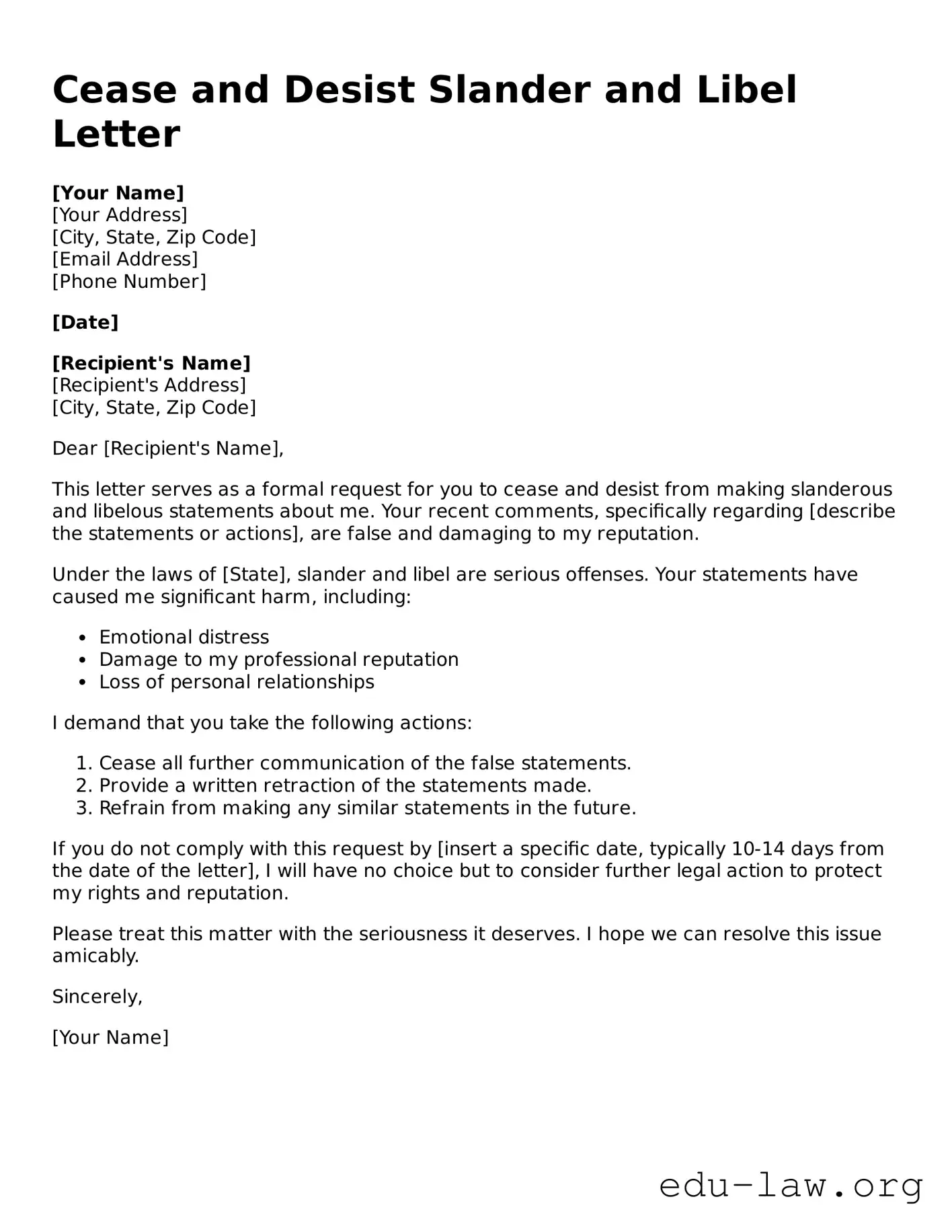
Cease and Desist Slander and Libel Letter
[Your Name]
[Your Address]
[City, State, Zip Code]
[Email Address]
[Phone Number]
[Date]
[Recipient's Name]
[Recipient's Address]
[City, State, Zip Code]
Dear [Recipient's Name],
This letter serves as a formal request for you to cease and desist from making slanderous and libelous statements about me. Your recent comments, specifically regarding [describe the statements or actions], are false and damaging to my reputation.
Under the laws of [State], slander and libel are serious offenses. Your statements have caused me significant harm, including:
I demand that you take the following actions:
If you do not comply with this request by [insert a specific date, typically 10-14 days from the date of the letter], I will have no choice but to consider further legal action to protect my rights and reputation.
Please treat this matter with the seriousness it deserves. I hope we can resolve this issue amicably.
Sincerely,
[Your Name]
| Fact Name | Description |
|---|---|
| Definition of Slander | Slander refers to spoken defamatory statements that harm an individual's reputation. |
| Definition of Libel | Libel involves written or published defamatory statements that damage a person's reputation. |
| Purpose of Cease and Desist Letter | This letter serves as a formal request to stop the defamatory statements and can be a precursor to legal action. |
| Importance of Evidence | Gathering evidence of the defamatory statements is crucial for supporting your claims in the letter. |
| State-Specific Forms | Each state may have its own requirements and forms for sending a cease and desist letter. |
| Governing Laws | In most states, slander and libel are governed by common law principles, but some states have specific statutes. |
| Recipient's Response | The recipient of the letter may choose to comply, dispute the claims, or ignore it altogether. |
| Potential Consequences | If the recipient does not cease the defamatory behavior, further legal action may be taken, including a lawsuit. |
| Legal Representation | Consulting with a legal professional before sending a cease and desist letter is often advisable to ensure effectiveness. |
Once you have the Cease and Desist Slander and Libel Letter form, you can begin the process of filling it out. This letter is a formal request to stop harmful statements about you. Completing the form accurately is essential for it to be effective.
After completing the form, consider sending it via certified mail. This provides proof of delivery and ensures that the recipient receives your request. Keep a copy for your records as well.
What is a Cease and Desist Slander and Libel Letter?
A Cease and Desist Slander and Libel Letter is a formal document sent to an individual or organization that is believed to be making false statements about someone. This letter demands that the recipient stop making these defamatory statements immediately. It serves as a warning and outlines the potential legal consequences of continuing to spread false information.
When should I consider sending a Cease and Desist Letter?
If you believe someone is making false statements about you that damage your reputation, sending a Cease and Desist Letter may be appropriate. This letter is often the first step in addressing defamation. It can help you assert your rights and may lead to a resolution without resorting to litigation.
What should be included in the letter?
The letter should clearly identify the defamatory statements, explain why they are false, and state how they have harmed your reputation. Additionally, it should demand that the recipient cease making these statements and provide a deadline for compliance. Including a statement about potential legal action if the behavior continues is also advisable.
Is it necessary to hire a lawyer to send a Cease and Desist Letter?
While it is not legally required to hire a lawyer to send a Cease and Desist Letter, doing so can be beneficial. A lawyer can help ensure that the letter is well-crafted and legally sound, which may increase its effectiveness. They can also advise you on the next steps if the recipient does not comply.
What happens if the recipient ignores the letter?
If the recipient ignores the Cease and Desist Letter, you may have several options. You can consider filing a lawsuit for defamation. Before taking legal action, it may be wise to consult with an attorney to discuss your case and evaluate the strength of your claims.
Can a Cease and Desist Letter be used in court?
Yes, a Cease and Desist Letter can be used in court as evidence. It demonstrates that you took steps to address the defamatory statements before pursuing legal action. However, the letter itself does not guarantee a successful outcome in court; the merits of your case will still need to be established.
Will sending a Cease and Desist Letter escalate the situation?
Sending a Cease and Desist Letter can sometimes escalate tensions, especially if the recipient feels threatened. However, it can also prompt a resolution. The goal is to communicate your concerns clearly and assertively while providing the other party an opportunity to correct their behavior.
What are the potential costs associated with sending a Cease and Desist Letter?
The costs can vary widely. If you choose to draft the letter yourself, you may incur minimal expenses. However, hiring a lawyer to draft the letter can be more costly. Additionally, if the situation escalates to litigation, legal fees can increase significantly. Weighing these costs against the potential harm caused by the defamatory statements is essential.
Not Clearly Identifying the Parties: One common mistake is failing to clearly identify both the sender and the recipient of the letter. It's essential to include full names and addresses to avoid any confusion about who is involved.
Vague or Incomplete Claims: Some individuals write vague statements about the alleged slander or libel. It's crucial to provide specific details, including what was said or written, when it occurred, and how it harmed the sender.
Omitting Evidence: Many people forget to include evidence supporting their claims. Attach any relevant documents, recordings, or witness statements that can help substantiate the allegations.
Using Emotional Language: While it’s natural to feel upset, using overly emotional or aggressive language can undermine the letter's effectiveness. Keep the tone professional and focused on the facts.
Failing to Specify Desired Action: It's important to clearly state what action you want the recipient to take. Whether it’s to stop the slanderous statements or retract them, make sure to specify your expectations.
Neglecting to Include a Deadline: Without a deadline for the recipient to respond or comply, the letter may lack urgency. Set a reasonable timeframe for them to take action to ensure your concerns are addressed promptly.
When dealing with issues of slander and libel, a Cease and Desist Slander and Libel Letter is often just the first step. Several other documents may accompany this letter to strengthen the case or clarify the situation. Here are six common forms and documents that individuals might use in conjunction with a cease and desist letter:
Using these documents in conjunction with a cease and desist letter can enhance the effectiveness of the response to slander and libel. Each serves a unique purpose and can contribute to a stronger case, whether in negotiations or potential litigation.
The Cease and Desist Letter is similar to a Demand Letter. Both documents are used to formally request that an individual or organization stop a specific action. A Demand Letter often outlines the grievances and may include a request for compensation or a specific action to be taken. In contrast, a Cease and Desist Letter focuses primarily on stopping the harmful behavior, such as slander or libel. Each serves as a warning, indicating that legal action may follow if the recipient does not comply.
Another document that shares similarities is the Defamation Complaint. This legal document is filed in court when someone believes they have been harmed by false statements. Like a Cease and Desist Letter, a Defamation Complaint addresses issues of slander and libel. However, the Complaint is more formal and is part of the legal process, while the Cease and Desist Letter is typically a first step to resolve the matter without litigation. Both aim to protect an individual’s reputation and seek to address the damage caused by false statements.
A Non-Disclosure Agreement (NDA) can also be compared to a Cease and Desist Letter, although the contexts differ. An NDA is used to protect confidential information from being disclosed. In a way, both documents serve to prevent harm—one through protecting information and the other through stopping defamatory statements. While an NDA is proactive, aiming to establish confidentiality from the outset, a Cease and Desist Letter is reactive, responding to an existing issue. Both emphasize the importance of maintaining integrity and protecting one’s rights.
Lastly, a Retraction Request bears resemblance to a Cease and Desist Letter. A Retraction Request is often sent to demand that false information be corrected or removed. This document can be part of the process when someone has been defamed. While a Cease and Desist Letter demands that the defamatory behavior stop, a Retraction Request focuses on correcting the record. Both documents are crucial in addressing the impact of false statements and aim to mitigate further damage to an individual’s reputation.
When filling out a Cease and Desist Slander and Libel Letter form, it is crucial to approach the task with care and precision. Here are ten essential dos and don'ts to consider:
By adhering to these guidelines, you can ensure that your Cease and Desist letter is effective and professional.
Many people have misunderstandings about the Cease and Desist Slander and Libel Letter. Here are nine common misconceptions:
Understanding these misconceptions can help you navigate issues related to slander and libel more effectively.
Understanding how to fill out and effectively use a Cease and Desist Slander and Libel Letter form is essential for anyone facing defamation issues. Here are some key takeaways to consider:
By following these guidelines, individuals can navigate the complexities of defamation with greater confidence and clarity.