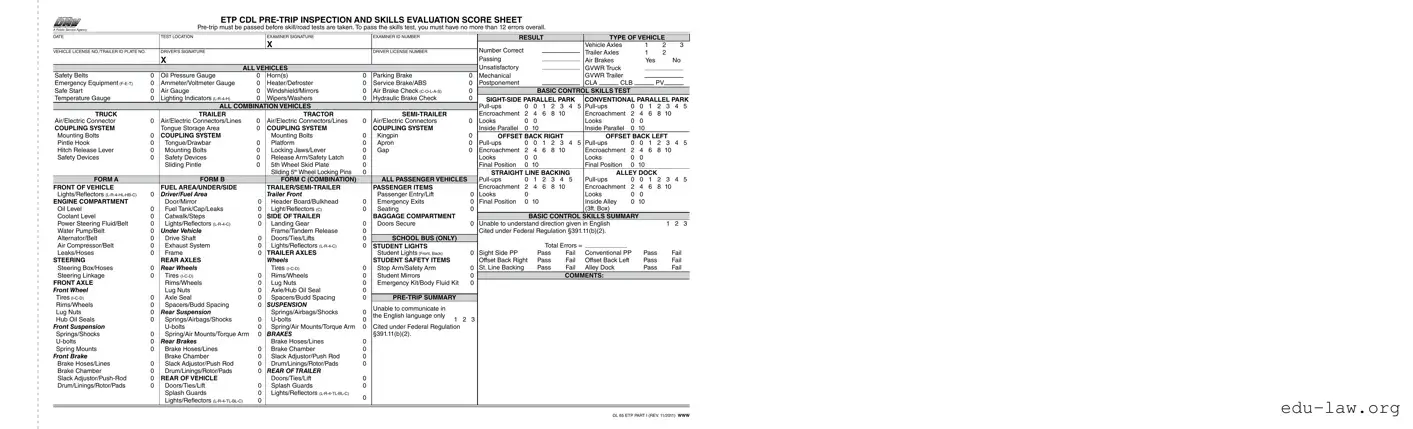
Before hitting the road, every aspiring commercial driver in California must navigate the essential Cdl Pretrip Exam form. This critical document serves as a comprehensive checklist, ensuring that drivers are thoroughly prepared for the skills and road tests that lie ahead. It covers a wide range of vehicle components, from the condition of the brakes and lights to the functionality of the steering system and emergency equipment. Each section of the form is meticulously designed to assess various aspects of vehicle safety and performance. For instance, it includes evaluations of air brakes, GVWR (Gross Vehicle Weight Rating), and the integrity of coupling systems. The form also records the number of errors made during the inspection, with a strict limit of 12 errors allowed to pass the skills test. Furthermore, it provides space for the examiner's signature and ID, adding an official touch to the assessment process. Ultimately, the Cdl Pretrip Exam form is not just a bureaucratic hurdle; it is a vital tool that reinforces the importance of safety and preparedness in commercial driving.
STATE OF CALIFORNIA
DEPARTMENT OF MOTOR VEHICLES
A Public Service Agency
ETP CDL
DaTe |
|
TesT locaTion |
|
eXaMineR siGnaTURe |
|
eXaMineR iD nUMBeR |
|
|
RESULT |
|
|
|
|
|
|
|
TYPE OF VEHICLE |
|
|
|||||||||||||||
|
|
|
|
X |
|
|
|
|
number correct |
|
|
|
|
|
|
|
|
|
Vehicle axles |
|
|
1 |
|
|
2 |
3 |
|
|||||||
VeHicle license no./TRaileR iD PlaTe no. |
|
DRiVeR’s siGnaTURe |
|
|
|
DRiVeR license nUMBeR |
|
|
|
|
|
|
|
|
|
|
|
Trailer axles |
|
|
|
|
1 |
|
|
2 |
|
|
||||||
|
|
|
|
|
|
|
|
|
|
|
|
|
|
|
|
|
|
|
|
|
|
|
||||||||||||
|
|
|
|
|
|
|
|
|
|
|
|
|
|
|
|
|
|
|
|
|
|
|
|
|
|
|
||||||||
|
|
X |
|
|
|
|
|
|
Passing |
|
|
|
|
|
|
|
|
|
air Brakes |
|
|
|
|
|
Yes |
|
|
|
no |
|
||||
|
|
|
|
|
|
|
|
|
|
|
|
|
|
|
|
|
|
|
|
|
|
|
|
|
||||||||||
|
|
ALL VEHICLES |
|
|
|
|
Unsatisfactory |
|
|
|
|
|
|
|
|
|
|
GVWR Truck |
|
|
|
|
|
|
|
|
|
|
||||||
|
|
|
|
|
|
|
|
|
|
|
|
|
|
|
|
|
|
|
|
|
|
|
|
|
||||||||||
|
|
|
|
|
|
|
|
|
|
|
|
|
|
|
|
|
|
|
|
|
|
|
|
|
|
|
|
|
|
|
|
|
|
|
safety Belts |
0 |
oil Pressure Gauge |
0 |
Horn(s) |
0 |
Parking Brake |
|
0 |
Mechanical |
|
|
|
|
|
|
|
|
|
GVWR Trailer |
|
|
|
|
|
|
|
|
|
|
|||||
|
|
|
|
|
|
|
|
|
|
|
|
|
|
|
|
|
|
|
|
|||||||||||||||
emergency equipment |
0 |
ammeter/Voltmeter Gauge |
0 |
Heater/Defroster |
0 |
service Brake/aBs |
|
0 |
Postponement |
|
|
|
|
|
|
|
|
|
cla |
|
|
clB |
|
|
|
PV |
|
|
|
|||||
|
|
|
|
|
|
|
|
|
|
|
|
|
|
|
|
|
||||||||||||||||||
safe start |
0 |
air Gauge |
0 |
Windshield/Mirrors |
0 |
air Brake check |
|
0 |
|
|
|
BASIC CONTROL SKILLS TEST |
|
|
|
|
|
|
|
|
|
|
||||||||||||
Temperature Gauge |
0 |
lighting indicators |
0 |
Wipers/Washers |
0 |
Hydraulic Brake check |
|
0 |
|
|
CONVENTIONAL PARALLEL PARK |
|||||||||||||||||||||||
|
|
ALL COMBINATION VEHICLES |
|
|
|
|
0 |
0 |
1 |
2 |
3 |
4 |
5 |
|
|
0 |
0 |
1 |
|
2 |
3 |
4 |
5 |
|||||||||||
TRUCK |
|
TRAILER |
|
TRACTOR |
|
|
|
encroachment |
2 |
4 |
6 |
8 |
10 |
|
|
|
encroachment |
2 |
4 |
6 |
|
8 |
10 |
|
|
|||||||||
air/electric connector |
0 |
air/electric connectors/lines |
0 |
air/electric connectors/lines |
0 |
air/electric connectors |
|
0 |
looks |
0 |
0 |
|
|
|
|
|
|
|
looks |
|
|
0 |
0 |
|
|
|
|
|
|
|
|
|||
COUPLING SYSTEM |
|
Tongue storage area |
0 |
COUPLING SYSTEM |
|
COUPLING SYSTEM |
|
|
inside Parallel |
0 |
10 |
|
|
|
|
|
|
inside Parallel |
0 |
10 |
|
|
|
|
|
|
||||||||
Mounting Bolts |
0 |
COUPLING SYSTEM |
|
Mounting Bolts |
0 |
Kingpin |
|
0 |
OFFSET BACK RIGHT |
|
|
|
|
|
OFFSET BACK LEFT |
|
|
|||||||||||||||||
Pintle Hook |
0 |
Tongue/Drawbar |
0 |
Platform |
0 |
apron |
|
0 |
0 |
0 |
1 |
2 |
3 |
4 |
5 |
|
|
0 |
0 1 2 3 4 5 |
|||||||||||||||
Hitch Release lever |
0 |
Mounting Bolts |
0 |
locking Jaws/lever |
0 |
Gap |
|
0 |
encroachment |
2 |
4 |
6 |
8 |
10 |
|
|
|
encroachment 2 4 6 8 10 |
|
|
||||||||||||||
safety Devices |
0 |
safety Devices |
0 |
Release arm/safety latch |
0 |
|
|
|
looks |
0 |
0 |
|
|
|
|
|
|
|
looks |
|
|
0 |
0 |
|
|
|
|
|
|
|
|
|||
|
|
sliding Pintle |
0 |
5th Wheel skid Plate |
0 |
|
|
|
Final Position |
0 |
10 |
|
|
|
|
|
|
Final Position |
0 |
10 |
|
|
|
|
|
|
||||||||
|
|
|
|
sliding 5th Wheel locking Pins |
0 |
|
|
|
STRAIGHT LINE BACKING |
|
|
|
|
ALLEY DOCK |
|
|
|
|
|
|||||||||||||||
FORM A |
|
FORM B |
|
FORM C (COMBINATION) |
|
ALL PASSENGER VEHICLES |
|
0 |
1 |
2 |
3 |
4 |
5 |
|
|
|
|
0 |
0 |
1 |
|
2 |
3 |
4 |
5 |
|||||||||
FRONT OF VEHICLE |
|
FUEL AREA/UNDER/SIDE |
|
|
PASSENGER ITEMS |
|
|
encroachment |
2 |
4 |
6 |
8 |
10 |
|
|
|
encroachment |
2 |
4 |
6 |
|
8 |
10 |
|
|
|||||||||
lights/Relectors |
0 |
Driver/Fuel Area |
|
Trailer Front |
|
Passenger entry/lift |
|
0 |
looks |
0 |
|
|
|
|
|
|
|
|
|
looks |
|
|
0 |
0 |
|
|
|
|
|
|
|
|
||
ENGINE COMPARTMENT |
|
Door/Mirror |
0 |
Header Board/Bulkhead |
0 |
emergency exits |
|
0 |
Final Position |
0 |
10 |
|
|
|
|
|
|
inside alley |
|
|
0 |
10 |
|
|
|
|
|
|
||||||
oil level |
0 |
Fuel Tank/cap/leaks |
0 |
light/Relectors (c) |
0 |
seating |
|
0 |
|
|
|
|
|
|
|
|
|
|
(3ft. Box) |
|
|
|
|
|
|
|
|
|
|
|
|
|||
coolant level |
0 |
catwalk/steps |
0 |
SIDE OF TRAILER |
|
BAGGAGE COMPARTMENT |
|
|
|
BASIC CONTROL SKILLS SUMMARY |
|
|
|
|
|
|
|
|
||||||||||||||||
Power steering Fluid/Belt |
0 |
lights/Relectors |
0 |
landing Gear |
0 |
Doors secure |
|
0 |
Unable to understand direction given in english |
|
|
|
|
|
|
|
|
1 |
2 |
3 |
||||||||||||||
Water Pump/Belt |
0 |
Under Vehicle |
|
Frame/Tandem Release |
0 |
|
|
|
cited under Federal Regulation §391.11(b)(2). |
|
|
|
|
|
|
|
|
|
|
|
|
|||||||||||||
alternator/Belt |
0 |
Drive shaft |
0 |
Doors/Ties/lifts |
0 |
SCHOOL BUS (ONLY) |
|
|
|
|
|
|
|
|
|
|
|
|
|
|
|
|
|
|
|
|
|
|
|
|
|
|
|
|
air compressor/Belt |
0 |
exhaust system |
0 |
lights/Relectors |
0 |
STUDENT LIGHTS |
|
|
|
|
|
|
Total errors = |
|
|
|
|
|
|
|
|
|
|
|
|
|
|
|
|
|||||
|
|
|
|
|
|
|
|
|
|
|
|
|
|
|
|
|
|
|
|
|
|
|||||||||||||
leaks/Hoses |
0 |
Frame |
0 |
TRAILER AXLES |
|
student lights (Front, Back) |
|
0 |
sight side PP |
|
|
Pass |
|
|
Fail |
|
|
|
conventional PP |
|
Pass |
|
|
|
Fail |
|
||||||||
STEERING |
|
REAR AXLES |
|
Wheels |
|
STUDENT SAFETY ITEMS |
|
|
offset Back Right |
|
Pass |
|
|
Fail |
|
|
|
offset Back left |
|
|
Pass |
|
|
|
Fail |
|
||||||||
steering Box/Hoses |
0 |
Rear Wheels |
|
Tires |
0 |
stop arm/safety arm |
|
0 |
st. line Backing |
|
|
Pass |
|
|
Fail |
|
|
|
alley Dock |
|
|
|
|
Pass |
|
|
|
Fail |
|
|||||
steering linkage |
0 |
Tires |
0 |
Rims/Wheels |
0 |
student Mirrors |
|
0 |
|
|
|
|
|
|
COMMENTS: |
|
|
|
|
|
|
|
|
|
|
|
|
|||||||
FRONT AXLE |
|
Rims/Wheels |
0 |
lug nuts |
0 |
emergency Kit/Body Fluid Kit |
0 |
|
|
|
|
|
|
|
|
|
|
|
|
|
|
|
|
|
|
|
|
|
|
|
|
|
|
|
Front Wheel |
|
lug nuts |
0 |
axle/Hub oil seal |
0 |
|
|
|
|
|
|
|
|
|
|
|
|
|
|
|
|
|
|
|
|
|
|
|
|
|
|
|
|
|
Tires |
0 |
axle seal |
0 |
spacers/Budd spacing |
0 |
|
|
|
|
|
|
|
|
|
|
|
|
|
|
|
|
|
|
|
|
|
|
|
|
|
|
|
||
Rims/Wheels |
0 |
spacers/Budd spacing |
0 |
SUSPENSION |
|
Unable to communicate in |
|
|
|
|
|
|
|
|
|
|
|
|
|
|
|
|
|
|
|
|
|
|
|
|
|
|
|
|
lug nuts |
0 |
Rear Suspension |
|
springs/airbags/shocks |
0 |
|
|
|
|
|
|
|
|
|
|
|
|
|
|
|
|
|
|
|
|
|
|
|
|
|
|
|
|
|
|
the english language only |
|
|
|
|
|
|
|
|
|
|
|
|
|
|
|
|
|
|
|
|
|
|
|
|
|
|
|
|
|||||
Hub oil seals |
0 |
springs/airbags/shocks |
0 |
0 |
1 2 |
3 |
|
|
|
|
|
|
|
|
|
|
|
|
|
|
|
|
|
|
|
|
|
|
|
|
|
|
||
|
|
|
|
|
|
|
|
|
|
|
|
|
|
|
|
|
|
|
|
|
|
|
|
|
|
|
||||||||
Front Suspension |
|
0 |
spring/air Mounts/Torque arm |
0 |
cited under Federal Regulation |
|
|
|
|
|
|
|
|
|
|
|
|
|
|
|
|
|
|
|
|
|
|
|
|
|
|
|
||
springs/shocks |
0 |
spring/air Mounts/Torque arm |
0 |
BRAKES |
|
§391.11(b)(2). |
|
|
|
|
|
|
|
|
|
|
|
|
|
|
|
|
|
|
|
|
|
|
|
|
|
|
|
|
0 |
Rear Brakes |
|
Brake Hoses/lines |
0 |
|
|
|
|
|
|
|
|
|
|
|
|
|
|
|
|
|
|
|
|
|
|
|
|
|
|
|
|
|
|
spring Mounts |
0 |
Brake Hoses/lines |
0 |
Brake chamber |
0 |
|
|
|
|
|
|
|
|
|
|
|
|
|
|
|
|
|
|
|
|
|
|
|
|
|
|
|
|
|
Front Brake |
|
Brake chamber |
0 |
slack adjustor/Push Rod |
0 |
|
|
|
|
|
|
|
|
|
|
|
|
|
|
|
|
|
|
|
|
|
|
|
|
|
|
|
|
|
Brake Hoses/lines |
0 |
slack adjustor/Push Rod |
0 |
Drum/linings/Rotor/Pads |
0 |
|
|
|
|
|
|
|
|
|
|
|
|
|
|
|
|
|
|
|
|
|
|
|
|
|
|
|
|
|
Brake chamber |
0 |
Drum/linings/Rotor/Pads |
0 |
REAR OF TRAILER |
|
|
|
|
|
|
|
|
|
|
|
|
|
|
|
|
|
|
|
|
|
|
|
|
|
|
|
|
|
|
slack |
0 |
REAR OF VEHICLE |
|
Doors/Ties/lift |
0 |
|
|
|
|
|
|
|
|
|
|
|
|
|
|
|
|
|
|
|
|
|
|
|
|
|
|
|
|
|
Drum/linings/Rotor/Pads |
0 |
Doors/Ties/lift |
0 |
splash Guards |
0 |
|
|
|
|
|
|
|
|
|
|
|
|
|
|
|
|
|
|
|
|
|
|
|
|
|
|
|
|
|
|
|
splash Guards |
0 |
lights/Relectors |
0 |
|
|
|
|
|
|
|
|
|
|
|
|
|
|
|
|
|
|
|
|
|
|
|
|
|
|
|
|
|
|
|
lights/Relectors |
0 |
|
|
|
|
|
|
|
|
|
|
|
|
|
|
|
|
|
|
|
|
|
|
|
|
|
|
|
|
|
|
|
|
|
|
|
|
|
|
|
|
|
|
|
|
|
|
|
|
|
|
|
|
|
|
|
|
|
|
|
|
|
|
|
|
||
|
|
|
|
|
|
|
|
|
|
|
|
|
|
|
|
|
|
|
|
|
|
|
|
|
|
|
|
|
|
|
|
|
|
|
Dl 65 eTP PaRT i (ReV. 11/2011) WWW

PASSING SCORES
COMBINATION VEHICLES & STRAIGHT TRUCKS
|
|
|
VEHICLE |
|
||
|
|
|
|
|
||
|
Class A |
Class B and C |
||||
|
|
|
|
|
|
|
|
|
Air Brakes |
No Air Brakes |
Air Brakes |
No Air Brakes |
|
|
|
|
|
|
||
Form A |
|
|
|
|
||
(Total is number of correct answers) |
|
|
|
|
||
Form B |
35 |
33 |
27 |
24 |
||
|
||||||
|
|
|
|
|
|
|
|
Form C |
|
|
|
|
|
|
|
|
|
|
|
|
|
Form Full |
67 |
61 |
43 |
39 |
|
|
|
|
|
|
|
|
BASIC SKILLS EXERCISES |
|
12 errors or less (all vehicles) |
|
|||
(Total is number of errors) |
|
|
||||
|
|
|
|
|
||
|
|
|
|
|
|
|
COACH/TRANSIT & SCHOOL BUS
|
|
|
VEHICLE |
|
|
|
|
|
|
|
|
|
Coach/Transit |
School Bus |
|||
|
|
|
|
|
|
|
Air Brakes |
No Air Brakes |
Air Brakes |
No Air Brakes |
|
|
|
|
|
|
|
(Total is number of correct answers) |
Form A |
30 |
27 |
33 |
31 |
|
|
||||
|
Form B |
||||
|
|
|
|
|
|
|
|
|
|
|
|
|
Form Full |
46 |
42 |
49 |
45 |
|
|
|
|
|
|
BASIC SKILLS EXERCISES |
|
12 errors or less (all vehicles) |
|
||
(Total is number of errors) |
|
|
|||
|
|
|
|
|
|
|
|
|
|
|
|
Dl 65 eTP PaRT i (ReV. 11/2011) WWW
| Fact Name | Description |
|---|---|
| Purpose | The CDL Pre-Trip Exam is a necessary assessment that must be passed before a driver can take the skill or road tests. |
| Error Limit | To successfully pass the skills test, a candidate must have no more than 12 errors across all evaluations. |
| Governing Law | In California, the CDL Pre-Trip Exam is governed by Federal Regulation §391.11(b)(2). |
| Vehicle Types | The exam applies to various vehicle types, including trucks, trailers, and school buses. |
| Scoring System | Passing scores differ based on vehicle classification, with specific numbers of correct answers required for each type. |
| Inspection Items | The exam includes a comprehensive checklist covering safety equipment, mechanical systems, and vehicle components. |
| Final Evaluation | Results are documented on a score sheet, which includes spaces for examiner signatures and vehicle identification. |
Completing the CDL Pretrip Exam form is an essential step in your journey to obtaining a commercial driver's license. This form assesses your knowledge and skills regarding vehicle inspection and safety. Ensure that you fill it out accurately, as it plays a crucial role in your testing process.
What is the purpose of the CDL Pre-Trip Exam form?
The CDL Pre-Trip Exam form is designed to evaluate a driver's knowledge and understanding of vehicle safety and maintenance checks before they take their skills or road tests. Successfully passing this inspection is a prerequisite for moving forward with the driving tests. It ensures that drivers are aware of the necessary checks to keep themselves and others safe on the road.
How many errors can a driver have to still pass the skills test?
A driver can have no more than 12 errors overall to pass the skills test. This limit is in place to ensure that drivers have a solid understanding of vehicle operation and safety protocols. Exceeding this number may indicate a lack of preparedness for safe driving.
What types of vehicles does the Pre-Trip Exam cover?
The Pre-Trip Exam covers a range of vehicles, including combination vehicles, straight trucks, coach and transit buses, as well as school buses. Each type of vehicle has specific safety checks tailored to its design and operation, ensuring that drivers are equipped to handle the unique challenges of each vehicle type.
What are some of the key components evaluated during the Pre-Trip Inspection?
During the Pre-Trip Inspection, several critical components are evaluated. These include the vehicle's brakes, lights, tires, steering, and emergency equipment. Additionally, the exam assesses the condition of the engine compartment, suspension system, and coupling devices. Each of these elements plays a crucial role in the safe operation of the vehicle.
What happens if a driver fails the Pre-Trip Inspection?
If a driver fails the Pre-Trip Inspection, they will not be allowed to proceed to the skills or road tests. The examiner will provide feedback on the areas that need improvement. Drivers can retake the Pre-Trip Inspection after addressing the identified issues, ensuring they are better prepared for the next attempt.
Can a driver postpone their Pre-Trip Inspection?
Yes, a driver can postpone their Pre-Trip Inspection if they feel unprepared. However, it is important to communicate this decision to the examiner promptly. Postponement allows drivers the necessary time to practice and study the vehicle's components, ultimately contributing to a safer driving experience.
What should a driver do if they do not understand the instructions given during the Pre-Trip Inspection?
If a driver is unable to understand the instructions given in English, they should inform the examiner immediately. Communication is vital for safety, and the examiner may provide assistance or arrange for a translator if necessary. Ensuring clear understanding is essential for both the driver and examiner during the evaluation process.
How can drivers prepare for the Pre-Trip Inspection?
Drivers can prepare for the Pre-Trip Inspection by studying the vehicle’s manual, familiarizing themselves with the checklist of components to be inspected, and practicing the inspection process. Hands-on practice with the vehicle will help reinforce their knowledge and improve their confidence, making it easier to pass the inspection.
Inaccurate Information: Some individuals fail to provide accurate details about the vehicle. This includes the vehicle license number and trailer ID plate number. Double-checking these details is essential.
Missing Signatures: It's common for applicants to overlook the need for signatures. Both the driver's signature and the examiner's signature must be included. Without these, the form may be considered incomplete.
Incorrect Error Count: Many people miscalculate the total number of errors. This count is crucial for determining if the applicant passes or fails the test. Carefully review the scoring section to ensure accuracy.
Neglecting Required Checks: Some applicants forget to check all required components. For instance, ensuring that all lights, brakes, and safety devices are evaluated is vital. Skipping these checks can lead to a failing score.
Failure to Review Instructions: Individuals often do not read the instructions thoroughly. Understanding what is required for each section of the form can help avoid mistakes. Taking the time to review the guidelines can make a significant difference.
When preparing for the CDL Pre-Trip Exam, several other forms and documents may be required to ensure a comprehensive evaluation of driving skills and vehicle safety. Below is a list of commonly used documents that accompany the CDL Pre-Trip Exam form.
These documents play a vital role in the overall assessment process and contribute to the safety and compliance of commercial driving. It is important to gather all necessary paperwork to facilitate a smooth examination experience.
The CDL Pretrip Exam form shares similarities with the Vehicle Inspection Report (VIR). Both documents serve as essential tools for ensuring vehicle safety and compliance before operation. The VIR typically requires drivers to inspect various vehicle components, such as brakes, lights, and tires, much like the CDL Pretrip Exam. Each section of the VIR lists specific items to check, and drivers must record their findings. This systematic approach helps identify potential issues that could lead to accidents or breakdowns, emphasizing the importance of thorough inspections in both documents.
Another comparable document is the Daily Vehicle Inspection Report (DVIR). Like the CDL Pretrip Exam, the DVIR is a record of a driver's inspection of the vehicle before use. It focuses on identifying defects that could affect safety and performance. The DVIR requires drivers to note any issues found during the inspection and report them to maintenance. Both documents aim to promote safety by ensuring that vehicles are in good working condition before they hit the road, reinforcing the necessity of regular inspections in the transportation industry.
The Driver's Vehicle Inspection Handbook (DVIH) also bears similarities to the CDL Pretrip Exam form. This handbook provides guidelines for conducting vehicle inspections and details what drivers should look for during the pre-trip process. It offers a comprehensive overview of inspection procedures and standards. The CDL Pretrip Exam builds on this by providing a structured score sheet for evaluating drivers' performance during their inspections. Together, these documents ensure that drivers are equipped with the knowledge and tools necessary for safe vehicle operation.
Lastly, the Commercial Driver's License Skills Test Checklist is another document that aligns closely with the CDL Pretrip Exam. This checklist outlines the specific skills and maneuvers that drivers must demonstrate during their skills test. Just as the CDL Pretrip Exam assesses a driver's ability to inspect a vehicle, the Skills Test Checklist evaluates their driving capabilities. Both documents are critical in the licensing process, ensuring that drivers not only know how to inspect their vehicles but can also operate them safely and effectively on the road.
When filling out the CDL Pretrip Exam form, there are several important considerations to keep in mind. Here are four key dos and don'ts to ensure a smooth and successful process.
By following these guidelines, you can enhance your chances of successfully completing the CDL Pretrip Exam form and moving forward in the testing process.
Here are six common misconceptions about the CDL Pre-Trip Exam form:
When preparing for the Commercial Driver's License (CDL) Pre-Trip Exam, it's essential to understand the process and requirements. Here are some key takeaways to keep in mind:
By keeping these takeaways in mind, you can approach the CDL Pre-Trip Exam with greater confidence and increase your chances of success.