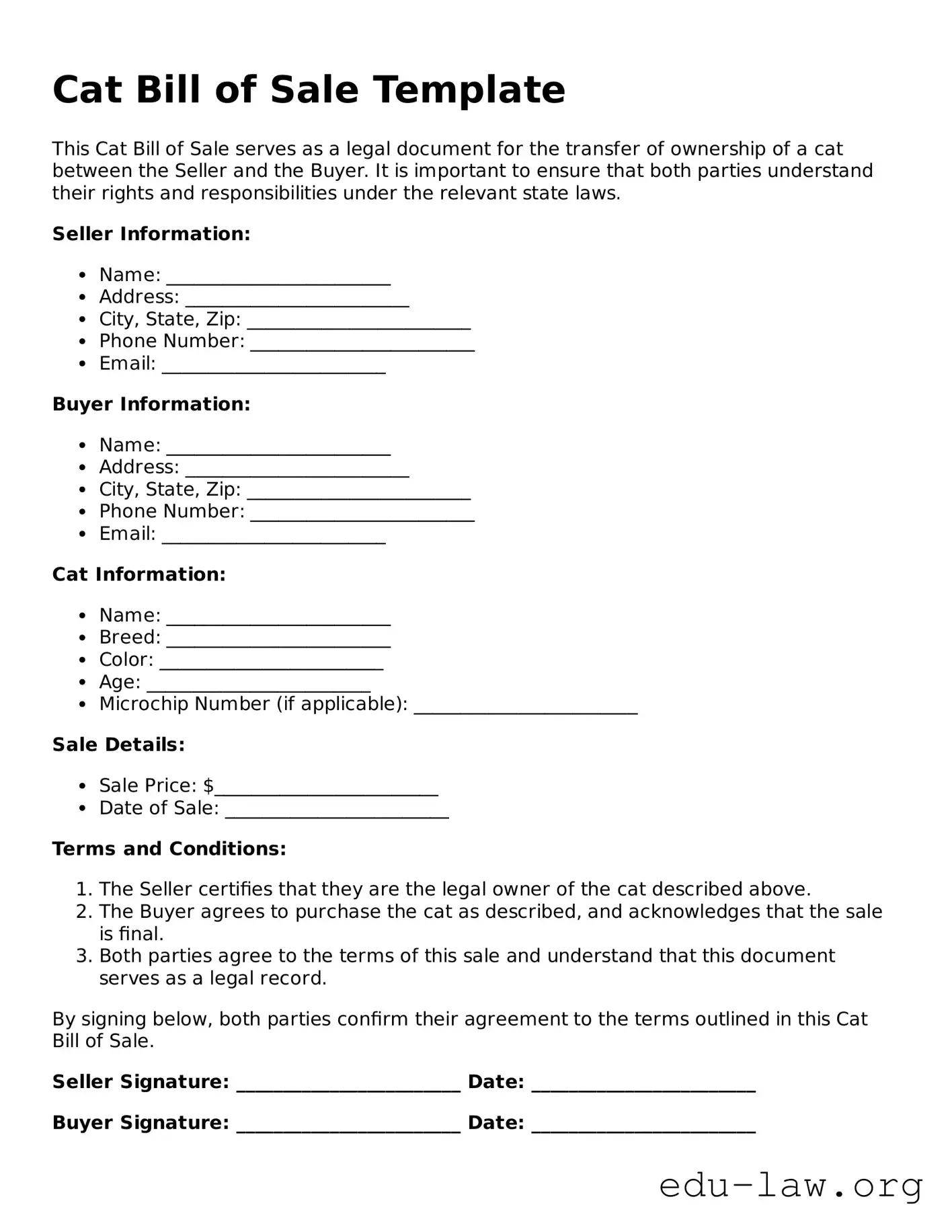
When purchasing or selling a cat, having a Cat Bill of Sale form is an essential step in ensuring a smooth transaction. This document serves as a legal record that outlines the details of the sale, protecting both the buyer and the seller. Key elements typically included in the form are the names and addresses of both parties, a description of the cat, including breed, age, and any identifying features, and the sale price. Additionally, the form may specify any warranties or guarantees regarding the cat's health, as well as any agreements related to vaccinations or spaying/neutering. By providing clear terms and conditions, the Cat Bill of Sale form helps to prevent misunderstandings and establishes a sense of accountability. Whether you are a breeder, a rescue organization, or an individual looking to adopt, using this form can contribute to a responsible and ethical approach to cat ownership.
Cat Bill of Sale Template
This Cat Bill of Sale serves as a legal document for the transfer of ownership of a cat between the Seller and the Buyer. It is important to ensure that both parties understand their rights and responsibilities under the relevant state laws.
Seller Information:
Buyer Information:
Cat Information:
Sale Details:
Terms and Conditions:
By signing below, both parties confirm their agreement to the terms outlined in this Cat Bill of Sale.
Seller Signature: ________________________ Date: ________________________
Buyer Signature: ________________________ Date: ________________________
| Fact Name | Description |
|---|---|
| Purpose | A Cat Bill of Sale form serves as a legal document that records the transfer of ownership of a cat from one party to another. |
| Governing Law | The laws governing the sale of pets, including cats, vary by state. For example, in California, the sale is governed by the California Civil Code Section 1834.4. |
| Essential Information | The form typically includes details such as the seller's and buyer's names, the cat's description, and the sale price. |
| Signatures | Both the seller and buyer should sign the form to validate the transaction, ensuring that both parties agree to the terms outlined. |
After you have gathered all necessary information about the cat you are selling, you can begin filling out the Cat Bill of Sale form. Ensure you have all the required details at hand. Completing this form accurately is important for both the seller and the buyer.
Once you have filled out the form, review it to ensure all information is correct. Both parties should keep a copy for their records. This will help avoid any misunderstandings in the future.
What is a Cat Bill of Sale?
A Cat Bill of Sale is a legal document that records the transfer of ownership of a cat from one person to another. It includes important details about the cat, such as its breed, age, and any identifying features, as well as information about the seller and buyer. This document serves as proof of the transaction and can help prevent disputes in the future.
Why do I need a Cat Bill of Sale?
Having a Cat Bill of Sale is important for several reasons. It provides a clear record of the sale, which can be useful for both the buyer and seller. For buyers, it confirms ownership and may be needed for registration or veterinary care. For sellers, it protects against claims of ownership after the sale has been completed.
What information should be included in the Cat Bill of Sale?
The Cat Bill of Sale should include the following information: the names and addresses of both the seller and buyer, a description of the cat (including breed, color, age, and any unique identifiers), the sale price, and the date of the transaction. It may also include any warranties or guarantees regarding the cat's health.
Is a Cat Bill of Sale required by law?
While a Cat Bill of Sale is not always legally required, it is highly recommended. Some states may have specific regulations regarding pet sales, so it’s a good idea to check local laws. Having a bill of sale can help avoid misunderstandings and provide legal protection for both parties.
Can I create my own Cat Bill of Sale?
Yes, you can create your own Cat Bill of Sale. There are many templates available online that you can customize to fit your needs. Make sure to include all the necessary information to ensure the document is complete and valid. Alternatively, you can also use a professional service to prepare the document for you.
What if the cat has health issues?
If the cat has health issues, it’s important to disclose this information in the Cat Bill of Sale. You may want to include any warranties or statements about the cat’s health. Transparency helps protect both parties and ensures the buyer is fully informed before completing the purchase.
How should the Cat Bill of Sale be signed?
Both the seller and buyer should sign the Cat Bill of Sale to make it valid. It’s best to have the document signed in front of a witness or a notary public, although this is not always necessary. A signed document helps confirm that both parties agree to the terms of the sale.
Can I use a Cat Bill of Sale for other pets?
Yes, a Cat Bill of Sale can often be adapted for other pets, such as dogs or small animals. The key is to modify the document to reflect the specifics of the pet being sold. Ensure that all relevant details about the animal are included to maintain clarity and legality.
Incomplete Information: One of the most common mistakes is failing to fill out all required fields. Make sure every section is completed, including the seller's and buyer's names, addresses, and contact information.
Incorrect Cat Details: Providing inaccurate information about the cat can lead to issues later. Double-check details like the breed, age, color, and any identifying marks or registration numbers.
Missing Signatures: Both the seller and buyer must sign the form. Forgetting to sign can render the document invalid, so be sure to check for signatures before finalizing the sale.
Not Including Payment Details: Clearly stating the sale price and payment method is crucial. Leaving this information out can create confusion and disputes down the line.
Ignoring Local Laws: Each state may have specific regulations regarding pet sales. Not considering these laws can lead to complications. Research your local requirements to ensure compliance.
Not Keeping Copies: After filling out the form, both parties should retain a copy. This can serve as proof of the transaction and protect both the seller and buyer in case of future disputes.
The Cat Bill of Sale form is an essential document for transferring ownership of a cat from one party to another. However, several other forms and documents are often used in conjunction with it to ensure a smooth transaction and provide necessary information for both parties involved. Below is a list of these documents, along with brief descriptions of each.
Having these additional documents can significantly enhance the process of adopting or selling a cat. They provide clarity, protect the interests of both parties, and ensure that the cat's well-being is prioritized throughout the transaction.
The Cat Bill of Sale form is similar to a Dog Bill of Sale form. Both documents serve the purpose of transferring ownership of a pet from one party to another. They typically include details such as the seller's and buyer's information, a description of the animal, and the sale price. Both forms aim to protect the interests of both parties and ensure that the transaction is documented clearly.
Another comparable document is the Vehicle Bill of Sale. This form is used when transferring ownership of a motor vehicle. Like the Cat Bill of Sale, it requires information about the buyer and seller, a description of the vehicle, and the purchase price. Both documents serve as legal proof of the transaction and may be required for registration or licensing purposes.
The Horse Bill of Sale is also similar in function and structure. This document facilitates the transfer of ownership of a horse, providing essential details such as the horse's breed, age, and registration number. Both the Horse Bill of Sale and the Cat Bill of Sale protect the rights of the buyer and seller, ensuring that all relevant information is clearly stated and agreed upon.
A Pet Adoption Agreement shares similarities with the Cat Bill of Sale. This document is often used by animal shelters and rescue organizations when placing pets in new homes. It outlines the responsibilities of the adopter and includes information about the pet, including its health status. While the Cat Bill of Sale typically involves a monetary exchange, the Pet Adoption Agreement may focus more on the welfare and care of the animal.
Lastly, the Livestock Bill of Sale is relevant for agricultural transactions involving farm animals. This document details the sale of livestock, including cattle, sheep, and goats, and includes information about the seller, buyer, and the animals involved. Similar to the Cat Bill of Sale, it serves as a legal record of the transaction and ensures that both parties have a clear understanding of the terms of sale.
When filling out a Cat Bill of Sale form, it is important to approach the task with care and attention to detail. Below is a list of things to do and things to avoid, ensuring a smooth transaction for both the seller and the buyer.
By following these guidelines, both parties can feel confident in their transaction, fostering a positive experience in the sale of a beloved pet.
The Cat Bill of Sale form is a document used in the sale or transfer of ownership of a cat. However, there are several misconceptions surrounding it. Here are eight common misunderstandings:
This is not true. A Bill of Sale can be used for any cat, regardless of breed, to formalize the sale and transfer of ownership.
While it may not hold the same weight as a contract, a Bill of Sale can serve as evidence of the transaction and may be enforceable in court.
Notarization is not a requirement for a Cat Bill of Sale. However, having it notarized can add an extra layer of legitimacy.
The form protects both parties by documenting the sale terms, including any warranties or guarantees regarding the cat's health.
Regardless of the sale price, a Bill of Sale is a good practice for any transaction involving a cat.
The form can include specific terms, such as payment methods, health guarantees, or any other agreements made between the buyer and seller.
While not legally mandated in all states, having a Bill of Sale is advisable to provide clarity and protect both parties.
A receipt merely shows proof of payment, while a Bill of Sale outlines the terms of the sale and the transfer of ownership.
Understanding these misconceptions can help ensure a smooth transaction when buying or selling a cat.
When completing the Cat Bill of Sale form, it is important to understand the following key points:
By following these guidelines, you can ensure a smooth and clear transfer of ownership for your cat.