Embarking on a journey of career counseling can be a transformative experience, and the Career Counseling Intake Form serves as a vital first step in this process. This form collects essential information that helps career counselors understand the unique backgrounds and aspirations of each individual. It begins with basic personal details, such as name, date, and student identification number, ensuring that counselors can easily track and reference clients. The form also gathers academic information, including the number of years spent in school and the chosen major or program. Importantly, it addresses demographic factors like age, gender, and ethnicity, as well as whether the student is a first-generation college attendee. Understanding the reasons for seeking counseling is another key aspect; clients can check multiple boxes to indicate their specific needs, from assessing interests and skills to clarifying values and setting career goals. Additionally, the form inquires about any collaboration with Disability Services and registration status for classes, providing a comprehensive view of the client’s current situation. Finally, it invites individuals to articulate their goals for the counseling experience, laying the groundwork for a personalized approach. By completing this form, clients take an important step toward gaining clarity and direction in their career paths.
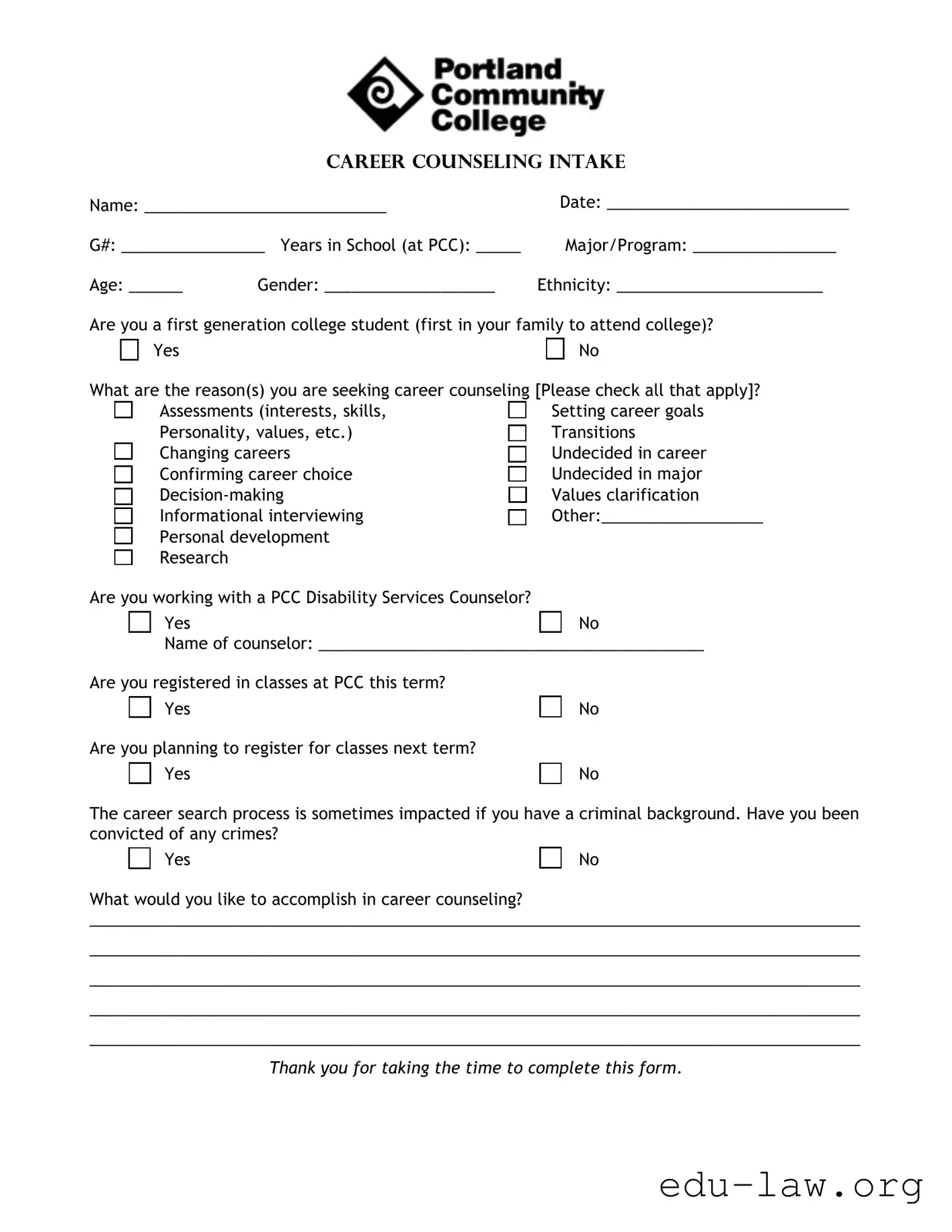
CAREER counseling intake
Name: ___________________________ |
Date: ___________________________ |
|
G#: ________________ Years in School (at PCC): _____ |
Major/Program: ________________ |
|
Age: ______ |
Gender: ___________________ |
Ethnicity: _______________________ |
Are you a first generation college student (first in your family to attend college)?
Yes
No
What are the reason(s) you are seeking career counseling [Please check all that apply]?
|
Assessments (interests, skills, |
|
Setting career goals |
|
Personality, values, etc.) |
|
Transitions |
|
Changing careers |
|
Undecided in career |
|
Confirming career choice |
|
Undecided in major |
|
|
Values clarification |
|
|
Informational interviewing |
|
Other:__________________ |
Personal development
Research
Are you working with a PCC Disability Services Counselor?
Yes |
No |
Name of counselor: ___________________________________________
Are you registered in classes at PCC this term?
Yes
Are you planning to register for classes next term?
Yes
No
No
The career search process is sometimes impacted if you have a criminal background. Have you been convicted of any crimes?
Yes
No
What would you like to accomplish in career counseling?
______________________________________________________________________________________
______________________________________________________________________________________
______________________________________________________________________________________
______________________________________________________________________________________
______________________________________________________________________________________
Thank you for taking the time to complete this form.
| Fact Name | Description |
|---|---|
| Purpose of the Form | The Career Counseling Intake Form helps identify the needs and goals of individuals seeking career guidance. |
| Demographic Information | It collects essential demographic details such as name, age, gender, and ethnicity to better understand the client. |
| Career Counseling Goals | Clients indicate their reasons for seeking counseling, which may include career assessments, goal setting, and transitions. |
| Disability Services | The form inquires about collaboration with a PCC Disability Services Counselor to ensure comprehensive support. |
| Criminal Background Disclosure | It addresses potential impacts of a criminal background on the career search process, asking clients to disclose any convictions. |
After completing the Career Counseling Intake form, you will be better prepared for your counseling session. This information will help the counselor understand your background, goals, and any challenges you may face. Please follow the steps below to fill out the form accurately.
Once you have completed the form, review your answers for accuracy before submitting it. This will ensure that the counselor has the most relevant information to assist you effectively.
What is the purpose of the Career Counseling Intake form?
The Career Counseling Intake form is designed to gather essential information about you. It helps career counselors understand your background, interests, and goals. By filling out this form, you provide the necessary context for personalized guidance in your career journey.
Who should fill out the Career Counseling Intake form?
This form is intended for students seeking career counseling services at PCC. Whether you are undecided about your major, looking to change careers, or need assistance with career goals, completing this form is an important step in receiving tailored support.
What information is required on the form?
The form requests basic information such as your name, date, student ID number, major, age, gender, and ethnicity. Additionally, it asks about your reasons for seeking counseling, whether you are working with a Disability Services Counselor, and your current enrollment status. This information allows counselors to better understand your unique situation.
How will my information be used?
Your information will be used solely for the purpose of providing career counseling. Counselors will review your responses to tailor their advice and support to your specific needs. Confidentiality is a priority, and your personal details will be handled with care and respect.
What should I do after completing the form?
After completing the Career Counseling Intake form, submit it to the appropriate office at PCC. You will then be contacted to schedule an appointment with a career counselor. During your meeting, you can discuss your responses and explore the next steps in your career development.
Inaccurate Personal Information: Filling in incorrect details like name, date, or G# can lead to confusion. Always double-check this information before submitting the form.
Neglecting to Specify Reasons for Counseling: Failing to check the appropriate boxes for reasons seeking career counseling can hinder the counselor's ability to assist effectively. Make sure to select all that apply.
Omitting Important Background Information: Not mentioning if you are working with a Disability Services Counselor or your criminal background may affect the counseling process. Be open about your situation.
Leaving Sections Blank: Leaving sections, such as your goals for counseling, empty can limit the effectiveness of your sessions. Take time to reflect on what you want to achieve.
Forgetting to Update Educational Status: Not indicating whether you are registered for classes this term or planning to register next term can lead to misunderstandings. Always provide current information.
Ignoring Confidentiality: Some individuals might hesitate to disclose sensitive information. Remember that counselors are trained to handle your information confidentially, which is crucial for effective counseling.
The Career Counseling Intake form is an essential document that helps gather important information from clients seeking guidance in their career paths. Along with this form, several other documents may be used to enhance the counseling process. Below are five common forms that complement the intake form.
Utilizing these documents alongside the Career Counseling Intake form can lead to a more thorough and supportive counseling experience. Each form plays a vital role in helping clients navigate their career journeys effectively.
The Career Counseling Intake form shares similarities with the Educational History form, which collects information about a student’s academic background. Both documents aim to gather essential data that can guide counseling sessions. The Educational History form typically includes details such as previous schools attended, degrees earned, and academic performance. This information helps counselors understand a student’s educational journey and tailor their guidance accordingly. By comparing academic history with career aspirations, counselors can better assist students in making informed decisions about their future.
Another document that resembles the Career Counseling Intake form is the Personal Goals Worksheet. This worksheet encourages individuals to reflect on their personal and professional aspirations. Like the intake form, it prompts users to identify their motivations and challenges. While the Career Counseling Intake form focuses on career-related concerns, the Personal Goals Worksheet encompasses a broader range of life objectives. Together, these documents facilitate a deeper understanding of how personal goals intersect with career ambitions, allowing for more holistic counseling sessions.
The Skills Assessment form is also comparable to the Career Counseling Intake form, as it evaluates an individual’s competencies and abilities. Both documents aim to identify strengths and areas for improvement. The Skills Assessment form typically includes specific skill sets relevant to various careers, enabling counselors to match students with appropriate opportunities. By integrating the results from the Skills Assessment with the information gathered in the intake form, counselors can provide tailored advice that aligns with a student’s unique skill profile and career goals.
Lastly, the Interests Inventory shares common ground with the Career Counseling Intake form by focusing on a person’s interests and passions. This inventory often features a series of questions or statements that help individuals pinpoint what they enjoy doing. Similar to the intake form, it seeks to understand the individual’s preferences to guide career choices. By aligning a student’s interests with potential career paths, counselors can enhance the effectiveness of their guidance and support, ensuring that students pursue fulfilling and satisfying careers.
When filling out the Career Counseling Intake form, it is important to approach the process thoughtfully. Here are some guidelines to help you:
Completing the form with care will help facilitate a productive counseling experience. Thank you for your attention to these details.
This is not true. The form serves a wide range of purposes, including helping those who are changing careers, confirming their choices, or seeking personal development.
In reality, the form is designed to be straightforward and quick to fill out. Most sections require only brief responses.
All information submitted on the intake form is kept confidential and is used solely for the purpose of providing effective career counseling.
The intake form takes into account various factors such as personal interests, values, and experiences, not just academic achievements.
Seeking guidance is often the first step in defining career goals. Many students use counseling to explore different options.
The intake form is inclusive and welcomes individuals from diverse backgrounds, including non-traditional students and first-generation college attendees.
Completing the form does not obligate you to any career choice. It simply helps counselors understand your needs and preferences.
Filling out and using the Career Counseling Intake form is an important step in the career development process. Here are some key takeaways to consider:
By keeping these takeaways in mind, you can maximize the benefits of the career counseling services available to you.