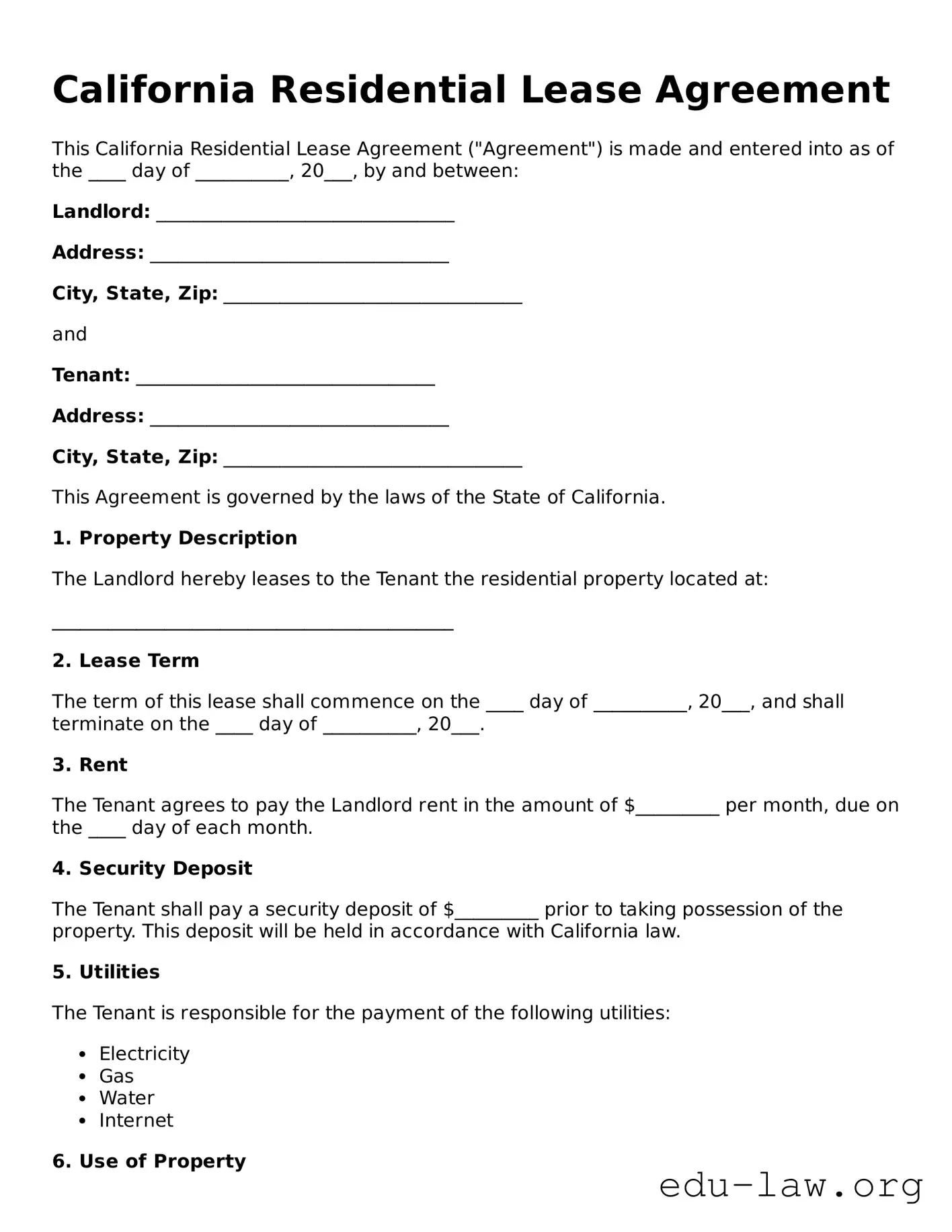
The California Residential Lease Agreement form serves as a crucial document for both landlords and tenants entering into a rental arrangement. This form outlines the specific terms and conditions that govern the rental of a residential property, ensuring that both parties have a clear understanding of their rights and responsibilities. Key elements of the agreement include the rental amount, the duration of the lease, and the security deposit requirements. Additionally, it addresses maintenance responsibilities, rules regarding pets, and procedures for terminating the lease. By providing a structured framework, the form helps to prevent misunderstandings and disputes, fostering a more harmonious landlord-tenant relationship. Understanding these components is essential for anyone involved in renting or leasing residential property in California.
California Residential Lease Agreement
This California Residential Lease Agreement ("Agreement") is made and entered into as of the ____ day of __________, 20___, by and between:
Landlord: ________________________________
Address: ________________________________
City, State, Zip: ________________________________
and
Tenant: ________________________________
Address: ________________________________
City, State, Zip: ________________________________
This Agreement is governed by the laws of the State of California.
1. Property Description
The Landlord hereby leases to the Tenant the residential property located at:
___________________________________________
2. Lease Term
The term of this lease shall commence on the ____ day of __________, 20___, and shall terminate on the ____ day of __________, 20___.
3. Rent
The Tenant agrees to pay the Landlord rent in the amount of $_________ per month, due on the ____ day of each month.
4. Security Deposit
The Tenant shall pay a security deposit of $_________ prior to taking possession of the property. This deposit will be held in accordance with California law.
5. Utilities
The Tenant is responsible for the payment of the following utilities:
6. Use of Property
The Tenant agrees to use the property solely for residential purposes and shall not engage in any illegal activities on the premises.
7. Maintenance and Repairs
The Tenant shall maintain the property in good condition and shall promptly notify the Landlord of any needed repairs.
8. Governing Law
This Agreement shall be governed by the laws of the State of California.
9. Signatures
Landlord Signature: ________________________________ Date: ____________
Tenant Signature: ________________________________ Date: ____________
| Fact Name | Details |
|---|---|
| Governing Law | The California Residential Lease Agreement is governed by California Civil Code Sections 1940-1954. |
| Parties Involved | The agreement typically includes the landlord (lessor) and the tenant (lessee). |
| Property Description | The form requires a detailed description of the rental property, including the address. |
| Lease Term | The lease can be for a fixed term (e.g., one year) or month-to-month. |
| Rent Amount | The agreement specifies the monthly rent amount and the due date. |
| Security Deposit | California law limits the security deposit to two months' rent for unfurnished units and three months for furnished units. |
| Utilities | The lease should outline which utilities are included in the rent and which are the tenant's responsibility. |
| Maintenance Responsibilities | The responsibilities for property maintenance and repairs are typically defined in the lease. |
| Termination Clause | The agreement must include terms for terminating the lease, including notice periods. |
| Legal Compliance | The lease must comply with local, state, and federal housing laws, including anti-discrimination laws. |
Filling out the California Residential Lease Agreement form is a crucial step in establishing a rental relationship. This document outlines the terms and conditions agreed upon by both the landlord and tenant, ensuring clarity and mutual understanding. Following the steps below will help you complete the form accurately.
Once the form is completed, it’s important to keep a copy for your records. Both parties should retain their signed versions to ensure that everyone is on the same page regarding the rental agreement.
What is a California Residential Lease Agreement?
A California Residential Lease Agreement is a legal document that outlines the terms and conditions under which a landlord rents out a residential property to a tenant. This agreement includes important details such as the rental amount, duration of the lease, security deposit requirements, and the responsibilities of both parties. It serves to protect the rights of both landlords and tenants throughout the rental period.
What are the key components of a California Residential Lease Agreement?
Key components typically include the names of the landlord and tenant, property address, lease term (fixed-term or month-to-month), rental amount, payment due date, security deposit amount, maintenance responsibilities, and any rules regarding pets or smoking. These elements are crucial for ensuring clarity and preventing disputes.
How long is a typical lease term?
A typical lease term can vary but usually lasts for one year. However, landlords and tenants can agree to shorter or longer terms, such as six months or two years. Month-to-month agreements are also common, allowing more flexibility for both parties.
Can a landlord increase the rent during the lease term?
Generally, a landlord cannot increase the rent during a fixed-term lease unless the lease specifically allows for such increases. For month-to-month agreements, California law requires landlords to provide proper notice—usually 30 days—before raising the rent. It's essential for both parties to understand these terms clearly.
What is a security deposit, and how much can a landlord charge?
A security deposit is an amount paid by the tenant to the landlord at the beginning of the lease, intended to cover potential damages or unpaid rent. In California, the maximum security deposit is typically equal to one month's rent for unfurnished properties and two months' rent for furnished ones. This deposit must be returned to the tenant within 21 days after moving out, minus any deductions for damages.
What happens if a tenant wants to break the lease early?
If a tenant needs to break the lease early, they should review the lease agreement for any early termination clauses. Often, tenants may be required to give notice, pay a penalty, or find a replacement tenant. Open communication with the landlord can sometimes lead to a mutually agreeable solution.
Are there any restrictions on pets in the lease agreement?
Landlords have the right to establish pet policies in the lease agreement. Some may allow pets with an additional deposit, while others may prohibit them altogether. Tenants should carefully read this section of the lease and discuss any concerns with the landlord before signing.
What are the tenant's responsibilities in a lease agreement?
Tenants are typically responsible for paying rent on time, keeping the property clean, and reporting maintenance issues to the landlord. They must also adhere to the rules outlined in the lease, such as noise restrictions or pet policies. Understanding these responsibilities is essential for maintaining a good landlord-tenant relationship.
What should a tenant do if there are maintenance issues?
Tenants should promptly report any maintenance issues to the landlord, preferably in writing. This documentation helps ensure that the problem is addressed in a timely manner. If the landlord fails to respond, tenants may have additional rights under California law, including the right to withhold rent in some cases, but this should be approached with caution and legal advice.
Can a landlord evict a tenant without cause?
In California, landlords cannot evict tenants without cause during the term of a lease. For month-to-month agreements, landlords must provide a valid reason for eviction, such as non-payment of rent or violation of lease terms, along with proper notice. Understanding these rights is crucial for both landlords and tenants.
Not Reading the Entire Agreement: Many people skim through the lease without fully understanding the terms. This can lead to confusion and potential disputes later on.
Incorrect Dates: Filling in the wrong start or end dates for the lease is a common mistake. Double-checking these details is essential to avoid misunderstandings.
Missing Tenant Information: Forgetting to include all tenants' names can create issues. Each tenant should be clearly listed to ensure everyone is legally protected.
Neglecting to Specify Rent Amount: Leaving out the rent amount or payment schedule can lead to confusion. Clearly stating the rent amount and when it’s due is crucial.
Not Including Security Deposit Details: Failing to specify the amount of the security deposit and the conditions for its return can cause disputes at the end of the lease.
Ignoring Maintenance Responsibilities: Not outlining who is responsible for maintenance and repairs can lead to disagreements. Clearly defining these responsibilities helps prevent issues.
Overlooking Pet Policies: If pets are allowed or not, this should be clearly stated. Not addressing this can create problems for both landlords and tenants.
Failing to Include Utilities: It’s important to specify which utilities are included in the rent. This avoids confusion about who pays for what.
Not Understanding Lease Terms: Many people sign without fully grasping the terms. Taking the time to ask questions or seek clarification can prevent future issues.
Forgetting Signatures: A lease is not valid without the necessary signatures. Ensure that all parties sign and date the document to make it legally binding.
When entering into a rental agreement in California, various forms and documents can complement the California Residential Lease Agreement. Each of these documents serves a specific purpose, helping to clarify responsibilities, protect rights, and ensure a smooth rental experience for both landlords and tenants. Here’s a list of commonly used forms:
Having these documents on hand can make the leasing process more transparent and organized. They help both landlords and tenants understand their rights and responsibilities, fostering a positive rental relationship. It’s always advisable to keep everything documented to avoid misunderstandings down the line.
The California Rental Agreement is quite similar to a Commercial Lease Agreement. Both documents outline the terms under which a property is leased, including the duration of the lease, rent amount, and responsibilities of both parties. However, while a Residential Lease typically pertains to living spaces, a Commercial Lease is used for business properties. Both agreements protect the interests of landlords and tenants, ensuring that all parties are aware of their rights and obligations. The legal framework governing each type of lease can differ significantly, reflecting the distinct needs of residential versus commercial tenants.
Another document that shares similarities is the Month-to-Month Rental Agreement. This type of lease allows tenants to occupy a property on a monthly basis without a long-term commitment. Like the Residential Lease Agreement, it includes terms such as rent amount and maintenance responsibilities. However, the Month-to-Month Agreement offers flexibility, allowing either party to terminate the lease with proper notice. This can be particularly appealing for tenants who may need to relocate quickly or landlords who want to maintain the ability to adjust rental terms more frequently.
A Lease Option Agreement is also comparable to the Residential Lease Agreement. This document not only outlines the terms of renting a property but also gives the tenant the option to purchase the property after a specified period. Similar to a Residential Lease, it details rent payments and maintenance duties. However, the Lease Option Agreement introduces an additional layer of complexity by including purchase terms, such as the purchase price and the duration of the option period. This can be beneficial for tenants who are considering homeownership but need time to secure financing.
The Sublease Agreement is another document that resembles the Residential Lease Agreement. It allows a tenant to rent out their leased property to another individual, known as the subtenant. While the original lease governs the relationship between the landlord and the primary tenant, the Sublease Agreement details the terms between the primary tenant and the subtenant. Both agreements cover similar elements, such as rent, duration, and maintenance responsibilities. However, the original tenant remains responsible to the landlord for the lease terms, which adds a layer of responsibility not found in a standard lease.
A Lease-Purchase Agreement is akin to a Residential Lease but focuses on the eventual sale of the property. This document allows tenants to rent a home with the intention of buying it later. It includes terms for both renting and purchasing, similar to a Lease Option Agreement, but typically requires the tenant to commit to buying the property at the end of the lease term. This agreement is beneficial for tenants who want to secure a home while preparing for ownership, providing a clear path from renting to buying.
Finally, the Roommate Agreement is similar in nature to the Residential Lease Agreement as it outlines the responsibilities and expectations of individuals sharing a rental property. This document typically covers rent payments, utilities, and shared responsibilities, akin to the terms found in a standard lease. However, the Roommate Agreement is usually informal and may not involve the landlord directly. It serves to clarify the relationship between roommates, ensuring that everyone is on the same page regarding their obligations and rights within the shared living space.
When filling out the California Residential Lease Agreement form, it is crucial to follow certain guidelines to ensure accuracy and compliance. Here are nine things to do and avoid:
When it comes to the California Residential Lease Agreement form, several misconceptions can lead to confusion for both landlords and tenants. Understanding these myths can help clarify the responsibilities and rights of each party involved.
Understanding these misconceptions can foster better communication and expectations between landlords and tenants in California.
When engaging with the California Residential Lease Agreement form, several important considerations come into play. Understanding these can help both landlords and tenants navigate the leasing process effectively.