When couples decide to marry, they often face not only the excitement of their future together but also the realities of their financial situations. One important tool that can help manage these complexities is a prenuptial agreement. In California, this legal document serves several crucial purposes. It outlines how a couple's assets will be divided in the event of divorce or separation, ensuring clarity and protection for both parties. The agreement can address spousal support, define separate and community property, and even clarify debt responsibilities. Crafting a prenuptial agreement involves careful consideration and mutual agreement. By using the California Prenuptial Agreement form, couples can work together to safeguard their individual interests while fostering open communication about finances. Taking this step not only helps prevent future misunderstandings but also provides peace of mind as they embark on their journey together.
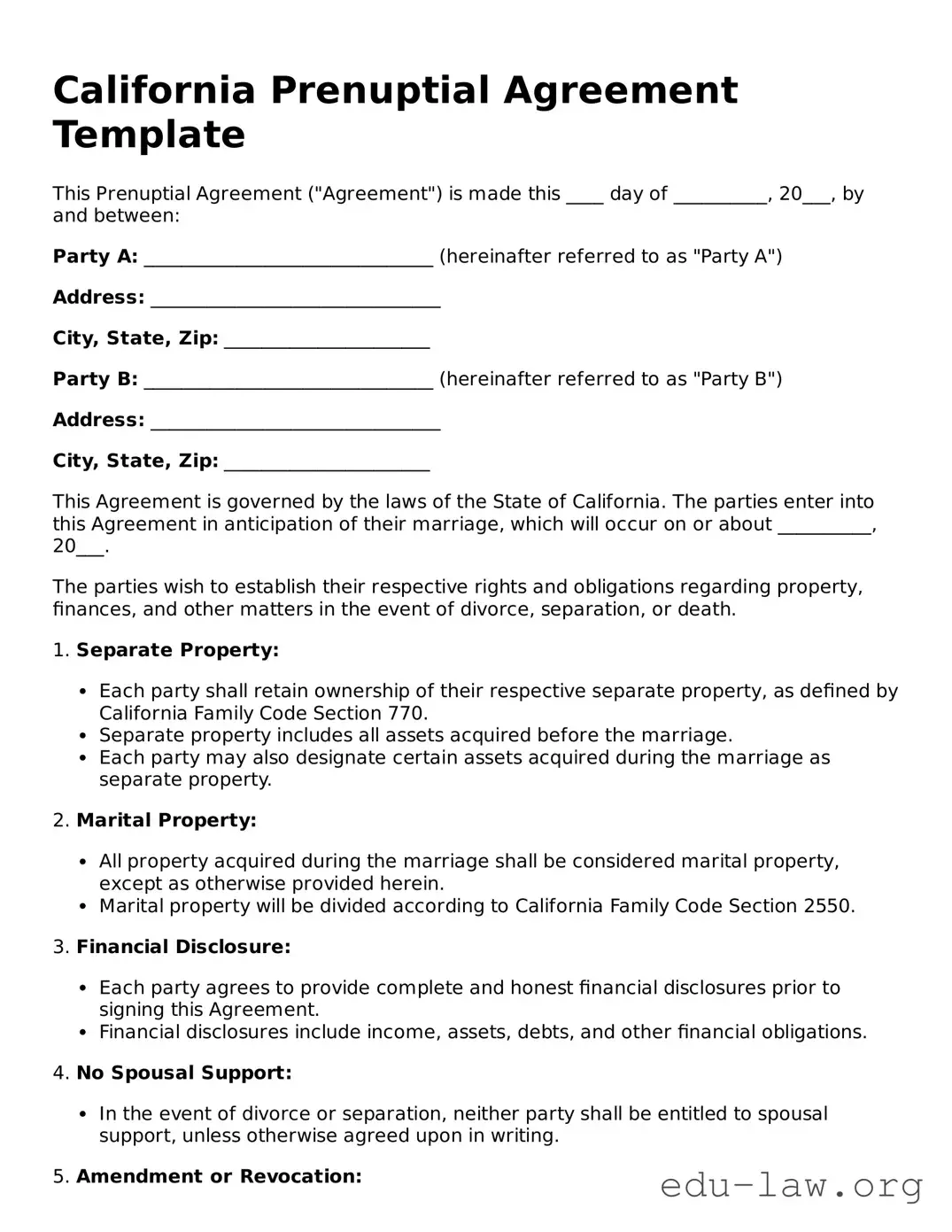
California Prenuptial Agreement Template
This Prenuptial Agreement ("Agreement") is made this ____ day of __________, 20___, by and between:
Party A: _______________________________ (hereinafter referred to as "Party A")
Address: _______________________________
City, State, Zip: ______________________
Party B: _______________________________ (hereinafter referred to as "Party B")
Address: _______________________________
City, State, Zip: ______________________
This Agreement is governed by the laws of the State of California. The parties enter into this Agreement in anticipation of their marriage, which will occur on or about __________, 20___.
The parties wish to establish their respective rights and obligations regarding property, finances, and other matters in the event of divorce, separation, or death.
1. Separate Property:
2. Marital Property:
3. Financial Disclosure:
4. No Spousal Support:
5. Amendment or Revocation:
6. Governing Law:
This Agreement shall be governed by the laws of the State of California.
IN WITNESS WHEREOF, the parties hereto have executed this Prenuptial Agreement as of the day and year first above written.
Party A Signature: _______________________________
Date: ____________________
Party B Signature: _______________________________
Date: ____________________
Witnessed by:
Witness Name: _______________________________
Address: _______________________________
Date: ____________________
| Fact Name | Description |
|---|---|
| Definition | A prenuptial agreement, or prenup, is a contract between two individuals before marriage outlining the division of assets in case of divorce. |
| Governing Law | The California Family Code, specifically Sections 1600-1617, governs prenuptial agreements in California. |
| Enforceability | To be enforceable, the agreement must be in writing and signed by both parties. |
| Legal Representation | Each party should have independent legal counsel to ensure fairness and understanding of the terms. |
| Full Disclosure | Both parties must fully disclose their assets and debts for the agreement to be valid. |
| Child Issues Uncovered | California courts generally do not enforce prenuptial terms regarding child support and custody; these matters are decided based on the child’s best interests. |
| Modification | Prenuptial agreements can be amended or revoked after marriage, but changes must be in writing and signed by both parties. |
| Judicial Review | A court may refuse to enforce a prenuptial agreement if it finds it was unconscionable or resulted from fraud or coercion. |
Filling out a prenuptial agreement form in California can seem like a daunting task, but by following the steps outlined below, the process can be streamlined. This form is essential for individuals looking to establish their rights and responsibilities before entering into marriage or a domestic partnership. Properly completing this form can help ensure that both parties have a clear understanding of their financial agreements.
By following these steps, both parties will have a better understanding of how to complete their prenuptial agreement. It is a proactive measure that helps foster clarity and communication regarding finances in the marriage.
What is a California Prenuptial Agreement?
A California prenuptial agreement, also known as a prenup, is a legally binding contract entered into by two individuals before marriage. This agreement typically outlines the distribution of assets and debts in the event of a divorce or separation. It can also address other matters, such as spousal support and financial responsibilities during the marriage.
What are the benefits of having a prenuptial agreement?
The primary benefits of a prenuptial agreement include clarity and peace of mind. It allows couples to define their financial rights and responsibilities, protecting individual and joint assets. Additionally, it can simplify the divorce process by establishing terms in advance, potentially saving time and legal costs.
Who should consider a prenuptial agreement?
Any couple contemplating marriage may consider a prenuptial agreement, especially those with significant assets, business ownership, or children from previous relationships. Individuals concerned about potential financial disparities or those entering a second or third marriage may also benefit from creating a prenup.
What should be included in a prenup?
A prenuptial agreement may cover various topics, including asset and debt division, spousal support, management of joint finances, and provisions for future children. Couples can customize the agreement to address their unique situations and needs, ensuring an equitable arrangement.
How do we create a California Prenuptial Agreement?
To create a prenuptial agreement in California, both parties should openly discuss their financial situations and priorities. It is advisable for each party to consult with their own attorney to ensure their interests are represented. Once drafts are prepared, both partners must review and agree upon the terms, sign the document, and have it notarized for legal validity.
Is a prenuptial agreement enforceable in California?
Yes, prenuptial agreements can be enforceable in California if they are written, signed by both parties, and made voluntarily with full disclosure of assets. Additionally, the agreement should not contain any provisions that contradict public policy or are unconscionable at the time of enforcement.
Can we modify a prenuptial agreement after marriage?
Yes, couples can modify a prenuptial agreement after marriage. However, any changes must be made in writing, signed by both parties, and follow the same procedures required for the original agreement. It is important to maintain transparency and seek legal counsel when making modifications.
What happens if we do not have a prenup?
If a couple does not have a prenuptial agreement and later divorces, California's community property laws will apply. This means that assets and debts acquired during the marriage will typically be divided equally. Without a prenup, individuals may lose the opportunity to have specific preferences concerning asset distribution.
When should we create a prenuptial agreement?
It is best to create a prenuptial agreement well in advance of the wedding date. This allows for open discussions and careful consideration of the terms without the pressure of an upcoming marriage. Couples are encouraged to start the process several months before the wedding to ensure ample time for negotiation and legal review.
Neglecting Full Disclosure: One common mistake is failing to provide complete and accurate disclosure of all assets and debts. Transparency is crucial, as both parties must understand each other's financial situations for the agreement to be valid.
Inadequate Legal Advice: Relying solely on one’s own understanding of legal terms can lead to significant errors. It's wise to consult with an attorney who specializes in family law to ensure that the agreement meets legal standards.
Using Generic Templates: Many people opt for generic templates found online. These templates often do not address individual circumstances or state-specific laws, which can lead to unenforceability.
Missing Signatures: Forgetting to include the necessary signatures from both parties can invalidate the document. Each party must sign the agreement willingly for it to hold up in court.
Improper Timing: Signing a prenuptial agreement too close to the wedding date can raise questions about coercion. It’s advisable to complete this process well in advance of the ceremony.
Lack of Independent Counsel: Both parties should have their own attorneys. If one party does not have legal representation while the other does, this imbalance can lead to claims of unfairness later on.
Not Reviewing Periodically: The financial situation of individuals can change over time. Failing to revisit and amend the prenuptial agreement as needed can leave it outdated and irrelevant to current realities.
Overlooking State Requirements: Each state has its own laws regarding prenuptial agreements. Ignoring specific requirements in California, such as the necessity for spousal support provisions, can jeopardize the agreement's validity.
When couples are preparing for marriage, a California Prenuptial Agreement is often an important step to ensure both parties are on the same page regarding their financial rights and obligations. Along with the Prenuptial Agreement itself, various other documents can aid in the preparation and maintenance of a clear and organized financial framework. Below is a list of commonly used forms that complement a prenuptial agreement.
Utilizing these documents in conjunction can create a solid foundation for a relationship, ensuring both individuals feel secure as they move into the next stage of their lives together. Taking the time to prepare thoroughly can lead to a stronger partnership built on trust and clarity.
A cohabitation agreement shares similarities with a prenuptial agreement in that both documents outline the financial and personal rights of partners entering a relationship. However, cohabitation agreements are typically used by couples living together without formalizing their relationship through marriage. These agreements can specify how assets and debts will be managed, ensuring both parties understand their rights and responsibilities during the cohabitation period. Just like a prenuptial agreement, it aims to protect individual and shared interests, thus providing clarity and security for both parties.
A postnuptial agreement is another document that resembles a prenuptial agreement. Like prenups, postnuptial agreements are created to define asset distribution in the event of divorce or separation. The key difference is that postnuptial agreements are formed after the couple is married. They can serve various purposes, such as addressing newly acquired assets or circumstances that change over the course of the marriage. Both documents require full disclosure of assets and debts, ensuring fairness and transparency between spouses.
A property settlement agreement can be compared to a prenuptial agreement as both deal with the distribution of assets. This document often comes into play during divorce proceedings. It outlines how the couple’s property and financial responsibilities will be divided, avoiding the stress of litigation. Similar to a prenuptial agreement, a property settlement agreement requires both parties to agree on the terms to ensure an amicable settlement and minimize the potential for conflict.
When completing a California Prenuptial Agreement form, it is important to proceed carefully. Here’s a list of things you should and shouldn’t do:
Many individuals considering a prenuptial agreement in California often have misunderstandings about its purpose and execution. Here are nine common misconceptions:
Understanding these misconceptions can help couples make informed decisions regarding prenuptial agreements and promote transparency in financial matters before marriage.
When considering a California Prenuptial Agreement, understanding the key elements can help you navigate the process smoothly. Here are some important takeaways:
Georgia Prenup Contract - Couples can use a prenuptial agreement to establish their individual versus joint financial goals.
Florida Prenup Contract - A prenuptial agreement addresses potential spousal support after divorce.
Michigan Prenup Contract - This agreement provides reassurance about financial security during marriage.