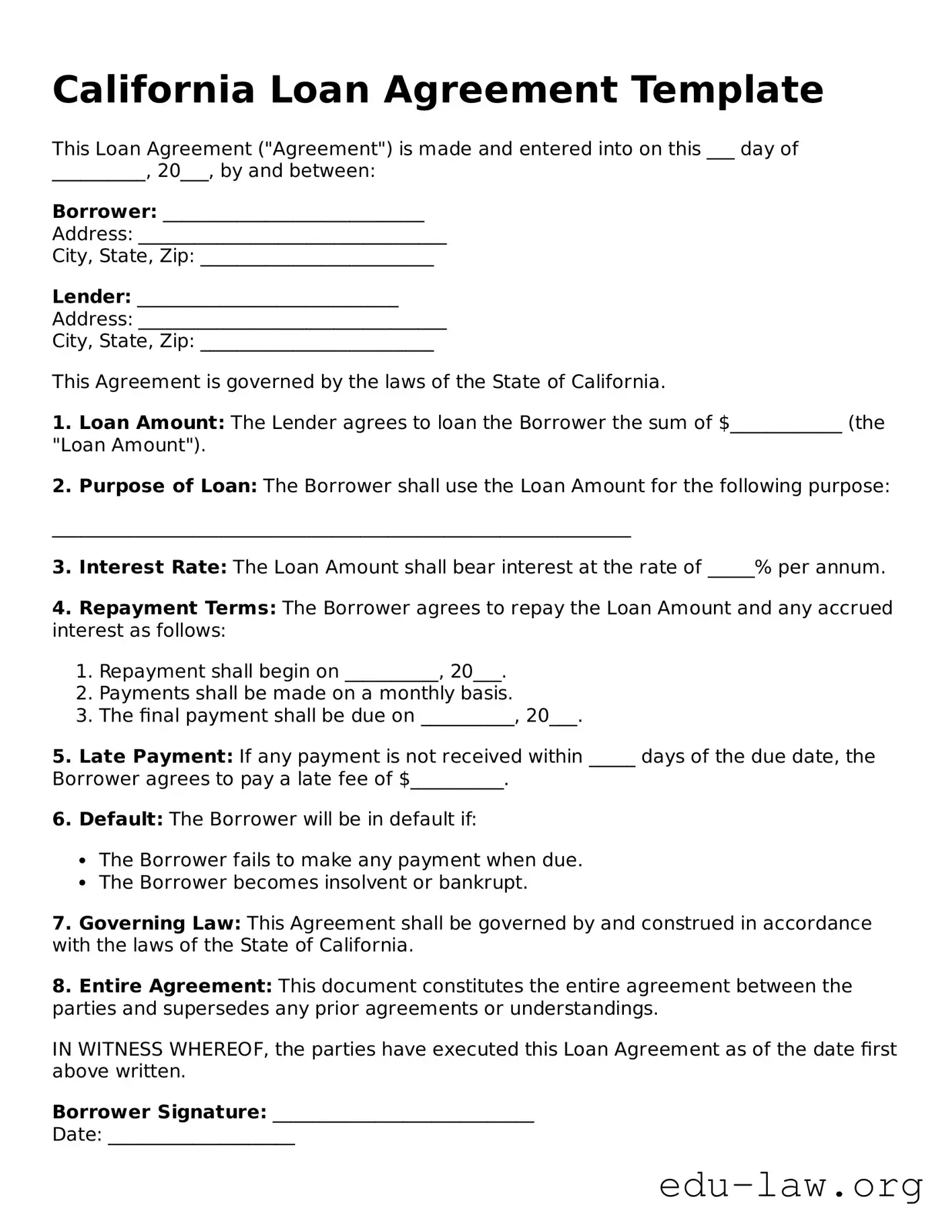
The California Loan Agreement form serves as a vital document in the lending process, establishing the terms and conditions under which a borrower receives funds from a lender. It outlines critical elements such as the loan amount, interest rate, repayment schedule, and any applicable fees. Additionally, the form specifies the rights and responsibilities of both parties, ensuring clarity and mutual understanding throughout the loan term. Essential details like collateral requirements, default conditions, and dispute resolution procedures are also included, providing a comprehensive framework for the transaction. By addressing these aspects, the California Loan Agreement form helps to protect the interests of both lenders and borrowers, fostering a transparent and organized lending environment.
California Loan Agreement Template
This Loan Agreement ("Agreement") is made and entered into on this ___ day of __________, 20___, by and between:
Borrower: ____________________________
Address: _________________________________
City, State, Zip: _________________________
Lender: ____________________________
Address: _________________________________
City, State, Zip: _________________________
This Agreement is governed by the laws of the State of California.
1. Loan Amount: The Lender agrees to loan the Borrower the sum of $____________ (the "Loan Amount").
2. Purpose of Loan: The Borrower shall use the Loan Amount for the following purpose:
______________________________________________________________
3. Interest Rate: The Loan Amount shall bear interest at the rate of _____% per annum.
4. Repayment Terms: The Borrower agrees to repay the Loan Amount and any accrued interest as follows:
5. Late Payment: If any payment is not received within _____ days of the due date, the Borrower agrees to pay a late fee of $__________.
6. Default: The Borrower will be in default if:
7. Governing Law: This Agreement shall be governed by and construed in accordance with the laws of the State of California.
8. Entire Agreement: This document constitutes the entire agreement between the parties and supersedes any prior agreements or understandings.
IN WITNESS WHEREOF, the parties have executed this Loan Agreement as of the date first above written.
Borrower Signature: ____________________________
Date: ____________________
Lender Signature: ____________________________
Date: ____________________
| Fact Name | Details |
|---|---|
| Purpose | The California Loan Agreement form is used to outline the terms and conditions of a loan between a lender and a borrower. |
| Governing Law | This agreement is governed by the laws of the State of California. |
| Loan Amount | The form specifies the exact amount being loaned, ensuring clarity for both parties. |
| Interest Rate | The agreement includes the interest rate applicable to the loan, which must comply with California usury laws. |
| Repayment Terms | It details the repayment schedule, including due dates and any penalties for late payments. |
After obtaining the California Loan Agreement form, you will need to complete it carefully to ensure all necessary details are accurately captured. This form will require specific information about the loan, the parties involved, and the terms of repayment.
What is a California Loan Agreement form?
A California Loan Agreement form is a legal document that outlines the terms and conditions of a loan between a lender and a borrower in California. It specifies the amount borrowed, interest rates, repayment schedule, and any collateral involved. This document serves to protect both parties by clearly defining their rights and obligations.
Who can use a California Loan Agreement form?
Any individual or business in California seeking to borrow or lend money can use this form. It is commonly used by private lenders, family members, or friends who wish to formalize a loan arrangement. However, both parties should understand the terms before signing.
What are the key components of the form?
The key components of a California Loan Agreement include the loan amount, interest rate, repayment terms, due dates, and any penalties for late payments. Additionally, it may include provisions for default and the rights of the lender in such an event. Clear definitions help prevent misunderstandings.
Is the California Loan Agreement form legally binding?
Yes, once signed by both parties, the California Loan Agreement is legally binding. This means that both the lender and borrower are obligated to adhere to the terms outlined in the document. If one party fails to comply, the other party may seek legal recourse.
Do I need a lawyer to create a California Loan Agreement?
While it is not mandatory to have a lawyer draft the agreement, it is highly advisable. A legal professional can ensure that the document complies with California law and adequately protects your interests. If the loan amount is significant or the terms are complex, legal assistance is even more important.
Can I modify the California Loan Agreement after it is signed?
Yes, modifications can be made, but both parties must agree to any changes. It is best to document these changes in writing and have both parties sign the amended agreement. This helps maintain clarity and prevents disputes in the future.
What happens if the borrower defaults on the loan?
If the borrower defaults, the lender has several options. The lender may seek repayment through negotiation, or they may pursue legal action to recover the owed amount. The agreement should outline the steps the lender can take in the event of default, including any collateral that may be seized.
Are there any restrictions on interest rates in California?
Yes, California law imposes restrictions on interest rates for certain types of loans. For example, consumer loans are subject to a maximum interest rate, while private loans between individuals may have more flexibility. It is essential to understand these laws to avoid potential legal issues.
How can I obtain a California Loan Agreement form?
California Loan Agreement forms can be obtained from various sources. Many legal websites offer templates that can be customized. Alternatively, consulting with a lawyer can provide a tailored agreement that meets your specific needs. Ensure the form complies with state laws to avoid complications.
Incomplete Information: Many individuals fail to provide all required details. Missing names, addresses, or loan amounts can lead to delays or even rejection of the agreement.
Incorrect Dates: Entering the wrong dates can create confusion. Ensure that the loan start date and repayment schedule are accurate to avoid potential disputes.
Ignoring Terms and Conditions: Some people skip reading the fine print. Understanding the terms of the loan, including interest rates and repayment penalties, is crucial.
Signature Issues: Not signing the document or using an incorrect signature can invalidate the agreement. Always double-check that all parties have signed where necessary.
When entering into a loan agreement in California, several other forms and documents may accompany the main contract. These documents serve to clarify terms, protect parties involved, and ensure compliance with state laws. Below is a list of commonly used forms that complement the California Loan Agreement.
Understanding these documents can enhance your experience with the loan process. Each plays a vital role in ensuring clarity and legal compliance, ultimately contributing to a smoother transaction for all parties involved.
The California Promissory Note is a document that outlines a borrower's promise to repay a specific amount of money to a lender under agreed-upon terms. Like the Loan Agreement, it details the loan amount, interest rate, and repayment schedule. However, the Promissory Note is typically more straightforward, focusing primarily on the borrower's commitment rather than the broader terms of the loan arrangement.
The California Mortgage Agreement is another document similar to the Loan Agreement. This agreement secures the loan with real property as collateral. Both documents establish the terms of the loan, including the amount borrowed and the repayment schedule. However, the Mortgage Agreement also includes provisions related to the property, such as the rights and responsibilities of both the borrower and the lender regarding the property.
The California Deed of Trust serves a similar purpose to the Mortgage Agreement but involves three parties: the borrower, the lender, and a trustee. This document secures the loan with real property and outlines the terms of the loan, including repayment obligations. Like the Loan Agreement, it provides a legal framework for the transaction, but the Deed of Trust also specifies the process for foreclosure in the event of default.
The California Security Agreement is relevant for loans secured by personal property rather than real estate. This document outlines the terms of the loan and the collateral involved. Similar to the Loan Agreement, it specifies the obligations of the borrower. However, the Security Agreement focuses on the personal property being pledged as security for the loan.
The California Loan Modification Agreement allows for changes to the original loan terms. This document can be used when a borrower needs to adjust their repayment schedule or interest rate. Like the Loan Agreement, it requires the consent of both parties. However, the Loan Modification Agreement specifically addresses alterations rather than the initial terms of the loan.
The California Lease Agreement can be compared to the Loan Agreement when a borrower leases property with an option to purchase. Both documents outline the terms of payment and responsibilities of the parties involved. However, the Lease Agreement focuses on the rental terms and conditions, while the Loan Agreement pertains to the financing of the property purchase.
The California Business Loan Agreement is similar in structure and purpose to the standard Loan Agreement but is tailored for business purposes. This document outlines the terms of the loan specifically for business use, including repayment terms and interest rates. Both agreements share similar components, but the Business Loan Agreement may include additional clauses related to business operations and use of funds.
The California Line of Credit Agreement is another document that shares similarities with the Loan Agreement. It establishes the terms under which a borrower can draw funds up to a specified limit. Like the Loan Agreement, it includes details about interest rates and repayment. However, the Line of Credit Agreement allows for more flexibility, enabling borrowers to withdraw and repay funds as needed within the agreed-upon limit.
Finally, the California Personal Loan Agreement is similar to the Loan Agreement in that it outlines the terms of a loan between individuals. This document specifies the loan amount, interest rate, and repayment schedule. While both agreements serve the same purpose, the Personal Loan Agreement is often less formal and may not require the same level of documentation or legal scrutiny as a standard Loan Agreement.
When filling out the California Loan Agreement form, attention to detail is crucial. Here are five things to keep in mind:
When it comes to the California Loan Agreement form, many people hold misconceptions that can lead to confusion or misunderstandings. Here are five common myths and the truths behind them.
Many believe the California Loan Agreement form is only necessary for substantial amounts of money. In reality, it can be used for loans of any size. Whether it's a small personal loan or a larger business loan, having a written agreement is beneficial.
Some think that verbal agreements hold the same weight as written ones. While oral agreements can be legally binding, they are much harder to enforce. A written agreement provides clear terms and protects both parties.
There is a misconception that all loan agreements are interchangeable. Each agreement is tailored to the specific terms and conditions of the loan. The California Loan Agreement form includes specific provisions that may not be found in other states' agreements.
Many assume that the loan agreement is designed solely to benefit the lender. In fact, it protects both parties. It outlines the rights and responsibilities of both the borrower and the lender, ensuring fairness in the transaction.
Some people believe that once the California Loan Agreement is signed, the terms are set in stone. However, modifications can be made if both parties agree. Any changes should be documented in writing to avoid future disputes.
Understanding these misconceptions can help individuals navigate the loan process more effectively. Always consult with a legal professional if you have questions about your specific situation.
When filling out and using the California Loan Agreement form, there are several important points to consider. Understanding these key takeaways can help ensure that the agreement is clear, enforceable, and protects the interests of all parties involved.
By paying attention to these key elements, you can create a solid foundation for your loan agreement. This not only protects your interests but also fosters trust between the lender and borrower.