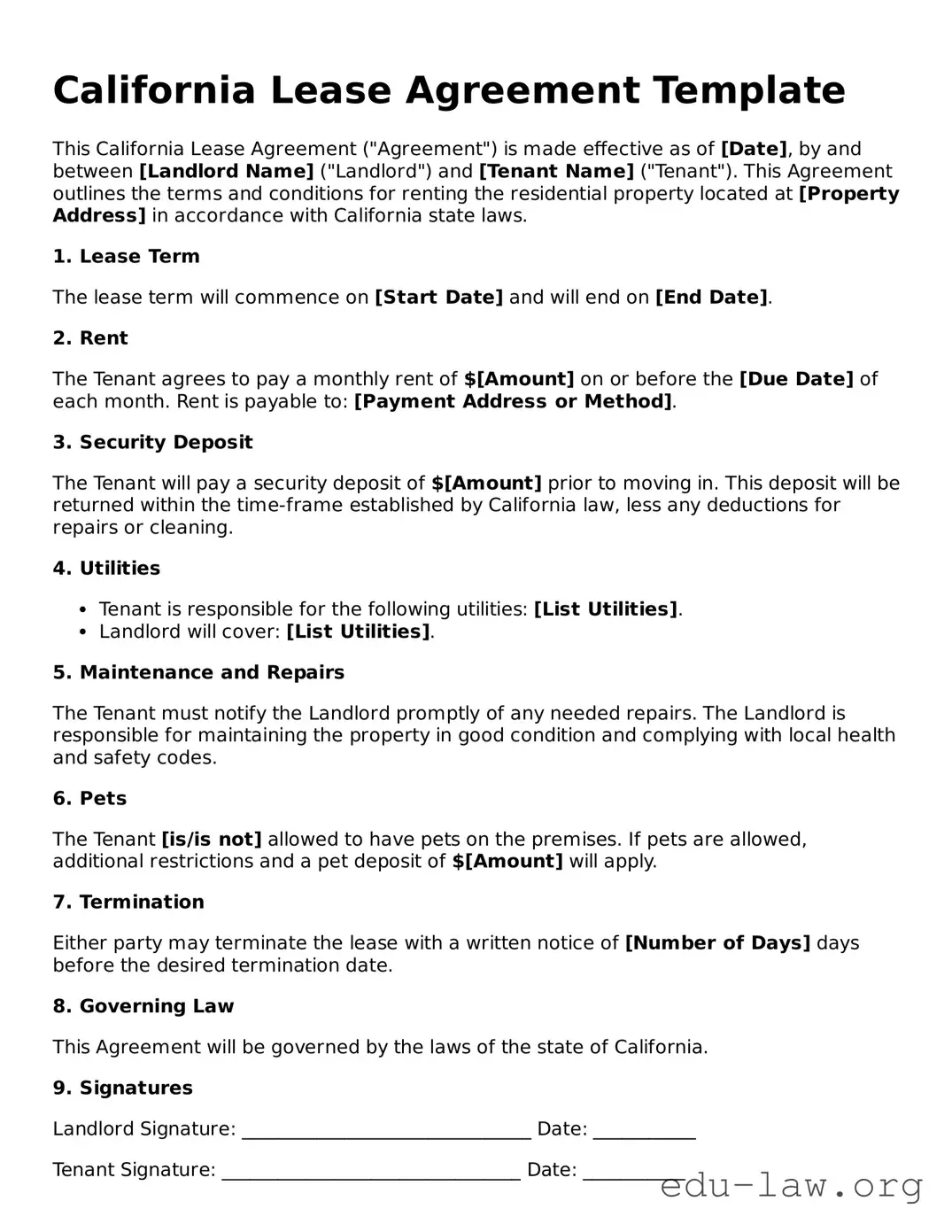
The California Lease Agreement form serves as a crucial document for landlords and tenants entering into a rental arrangement within the state. This standard form outlines the essential terms of the lease, such as the length of the lease, monthly rental amount, and security deposit requirements. Additionally, it specifies the responsibilities of both parties, including maintenance obligations and rules regarding property usage. Key details, like how much notice is required for lease termination or eviction, are also thoroughly addressed. Tenants will find information on permissible activities within the property, along with any restrictions that may apply. Furthermore, the agreement ensures that disclosures mandated by California law are included, such as lead-based paint disclosure for properties built before 1978. Understanding these components is vital for both landlords and tenants to protect their rights and prevent potential disputes. The form may be customized to suit the specific needs of each rental situation while still adhering to local regulations, making it an essential tool in the rental process.
California Lease Agreement Template
This California Lease Agreement ("Agreement") is made effective as of [Date], by and between [Landlord Name] ("Landlord") and [Tenant Name] ("Tenant"). This Agreement outlines the terms and conditions for renting the residential property located at [Property Address] in accordance with California state laws.
1. Lease Term
The lease term will commence on [Start Date] and will end on [End Date].
2. Rent
The Tenant agrees to pay a monthly rent of $[Amount] on or before the [Due Date] of each month. Rent is payable to: [Payment Address or Method].
3. Security Deposit
The Tenant will pay a security deposit of $[Amount] prior to moving in. This deposit will be returned within the time-frame established by California law, less any deductions for repairs or cleaning.
4. Utilities
5. Maintenance and Repairs
The Tenant must notify the Landlord promptly of any needed repairs. The Landlord is responsible for maintaining the property in good condition and complying with local health and safety codes.
6. Pets
The Tenant [is/is not] allowed to have pets on the premises. If pets are allowed, additional restrictions and a pet deposit of $[Amount] will apply.
7. Termination
Either party may terminate the lease with a written notice of [Number of Days] days before the desired termination date.
8. Governing Law
This Agreement will be governed by the laws of the state of California.
9. Signatures
Landlord Signature: _______________________________ Date: ___________
Tenant Signature: ________________________________ Date: ___________
This Agreement is a binding document. Both parties should retain a copy for their records.
| Fact Name | Description |
|---|---|
| Definition | The California Lease Agreement is a legally binding contract between a landlord and tenant outlining the terms of renting a property. |
| Governing Law | California Civil Code, Sections 1940 to 1954 governs lease agreements within the state. |
| Written Requirement | In California, leases longer than one year must be in writing to be enforceable. |
| Security Deposits | The law limits security deposits to two months' rent for unfurnished properties and three months for furnished ones. |
| Disclosure Obligations | Landlords must provide tenants with certain disclosures, such as lead-based paint risks for properties built before 1978. |
| Rent Control | Some cities in California have rent control laws that may affect the terms outlined in a lease agreement. |
| Resident Rights | Tenants have the right to quiet enjoyment of their rental unit, free from harassment or interference by the landlord. |
| Termination Notice | California law requires landlords to give proper notice to terminate a lease, depending on the lease duration. |
| Subleasing | Most lease agreements in California require landlord approval for subleasing, though it may vary by individual contract. |
Filling out a California Lease Agreement can feel overwhelming, but with a clear understanding of what each section requires, it becomes much more manageable. Once completed, this form helps establish the terms of the rental between the landlord and tenant, providing clarity for both parties.
After completing these steps, both parties should keep copies of the signed agreement. This helps ensure everyone is on the same page and provides a reference point throughout the lease term.
What is a California Lease Agreement form?
A California Lease Agreement form is a legal document that outlines the terms and conditions under which a rental property is leased to a tenant. This agreement serves as a binding contract between the landlord and tenant, clarifying responsibilities such as rent payment, maintenance duties, and the length of the lease. It protects the rights of both parties and helps prevent misunderstandings during the rental period.
What essential terms should be included in a lease agreement?
Every lease agreement should specify crucial terms to ensure clarity. Key elements include the rental property's address, the duration of the lease (typically month-to-month or for a fixed term), the monthly rent amount, the security deposit details, maintenance responsibilities, and provisions for terminating the lease. It's also vital to include any specific rules regarding pets, smoking, or property use to avoid future disputes.
How does a tenant protect their rights within the lease agreement?
Tenants can protect their rights by carefully reviewing the lease agreement before signing. It is advisable to ensure that all verbal agreements are documented in writing. Additionally, tenants should take note of their legal rights in California, such as the right to a habitable living space and protection against unfair eviction. Keeping copies of all correspondence with the landlord can be useful should any disputes arise.
What should a tenant do if they need to break the lease early?
If a tenant finds themselves in a situation where they need to break the lease early, they should first consult the lease agreement to understand the penalties or terms associated with early termination. Open communication with the landlord may provide solutions, such as subletting the property or paying a lease break fee. It's essential to follow the correct procedures outlined in the lease to avoid legal issues.
Can a landlord make changes to the lease agreement after it has been signed?
Landlords cannot unilaterally change the terms of a signed lease agreement. Any modifications must be agreed upon by both parties and documented in writing. This ensures that tenants are not subjected to unexpected changes that could affect their rights or responsibilities. Both landlord and tenant need to preserve a sense of trust by maintaining clear and open communication.
What happens if a tenant pays rent late?
When a tenant pays rent late, the lease agreement typically outlines any penalties that may apply, such as late fees or consequences for repeated late payments. California law allows landlords to charge a reasonable late fee only if it is specified in the lease. Tenants should keep open lines of communication with their landlord if they anticipate payment delays, as many landlords may be willing to accommodate short-term issues.
Not Reading the Entire Form: Many people rush through the lease agreement without understanding all the terms. This can lead to confusion about responsibilities and rights.
Failing to Include All Necessary Information: Important details like the names of all tenants and the property address may be omitted, which can create issues later on.
Ignoring the Duration of the Lease: Individuals sometimes overlook specifying the lease term. It's crucial to clearly state whether it's a month-to-month agreement or for a fixed period.
Overlooking Payment Details: Forgetting to include the exact rent amount and due dates can lead to late fees or misunderstandings.
Not Specifying Security Deposit Terms: Many lease agreements fail to outline the conditions for the security deposit. It’s important to clarify how much is required and under what conditions it will be returned.
Neglecting Maintenance Responsibilities: People often miss detailing who is responsible for maintenance issues. Clear obligations help prevent disputes later on.
Missing Signatures: A lease is not valid unless everyone who is part of the agreement signs it. Forgetting to collect all signatures can result in an unenforceable contract.
Ignoring State and Local Laws: Regulations can vary by area. It's essential to check that the lease complies with California's specific rental laws.
When entering into a leasing arrangement in California, several additional documents often accompany the lease agreement to provide clarity and protection for both parties. Each of these documents serves a specific purpose and is integral to the overall understanding of the rental relationship. Below are common forms and documents you may encounter.
These forms and documents play a crucial role in establishing a clear understanding between landlords and tenants. Ensuring that all parties have a comprehensive grasp of their rights and responsibilities is essential for a successful rental experience.
A Rental Agreement is similar to a California Lease Agreement in that both documents establish the terms under which a tenant can occupy a property. The main difference often lies in the duration of the agreement. A Rental Agreement typically covers a short-term period, such as month-to-month, while a Lease Agreement usually spans a longer term, often one year. Both agreements address rental rates, payment schedules, and the responsibilities of both the landlord and tenant. They are legally binding contracts that aim to protect the rights of both parties involved in the rental relationship.
A Commercial Lease Agreement shares similarities with a California Lease Agreement in the way it outlines the obligations and rights of landlords and tenants. The primary focus of a Commercial Lease Agreement is on properties used for business purposes. Just like a residential lease, it includes provisions regarding the rental amount, duration of tenancy, maintenance responsibilities, and the consequences of breach of contract. Understanding the terms of a Commercial Lease is crucial for any business owner entering into a rental agreement.
A Sublease Agreement also resembles the California Lease Agreement but is specifically used when a tenant (the original tenant) allows another person (the subtenant) to rent the property. While it is based on the terms of the original lease, a Sublease Agreement must comply with the regulations and obligations of the primary Lease Agreement. It generally details the rental amount, the period of subtenancy, and specific responsibilities for both the original tenant and the subtenant, ensuring clarity in the rental arrangement.
A Roommate Agreement can be likened to a California Lease Agreement in that it typically governs the relationship and shared living arrangements between individuals sharing a rental property. This document defines each person's responsibilities, such as payment of rent and utilities, household chores, and rules regarding common areas. While not always legally binding, a Roommate Agreement provides structure and helps prevent potential disputes among roommates, similar to how a Lease Agreement outlines expectations between landlords and tenants.
A Month-to-Month Lease Agreement offers flexibility that is similar to what is found in a California Lease Agreement but typically allows for a more casual arrangement. Instead of committing to a long-term lease, tenants can stay in the property on a monthly basis, with the lease automatically renewing each month until one party gives notice to terminate. This type of agreement still includes essential terms regarding rent, maintenance, and other landlord-tenant responsibilities, but with a focus on adaptable living conditions, it meets the needs of those who may require temporary housing solutions.
Misconceptions about the California Lease Agreement form can lead to confusion for both landlords and tenants. Here are eight common myths and the truths behind them.
Every lease is unique. While many follow a standard format, details can vary greatly based on the property, the landlord's requirements, and local laws.
While you might have a verbal understanding, it’s always best to have a written lease. Written agreements protect both parties better.
Negotiation can occur before signing. After signing, changes can still happen, but both parties need to agree on any amendments.
Most leases state that tenants need permission to make alterations. It's important to check the lease terms before starting any projects.
Landlords usually must give proper notice before entering, typically 24 hours, except in emergencies. Respecting privacy is essential.
Both parties have rights. Tenants can terminate under specific conditions, like unsafe living conditions, but must follow proper procedures.
Security deposits can be refunded if the property is returned in good condition. Landlords, however, can withhold some funds for repairs or unpaid rent.
While many terms can be negotiated, some must comply with local laws. It's best to know what’s flexible and what isn’t.
Understanding these misconceptions helps both landlords and tenants have a smoother leasing experience.
The California Lease Agreement form is an essential document for landlords and tenants in the state. Understanding its key components is crucial for effective use.
Careful attention to these elements can help prevent disputes and ensure compliance with California's rental laws.
Lease Agreement Georgia - The Lease Agreement specifies the start and end dates of the rental period.
Residential Lease Agreement Michigan - It provides a framework for potential transfer of the lease to a new tenant.
Rental Agreement Form Florida - Key elements typically include duration, rental payments, and property conditions.
Printable Rental Agreement Contract - This document is essential for legally binding rental agreements in residential properties.