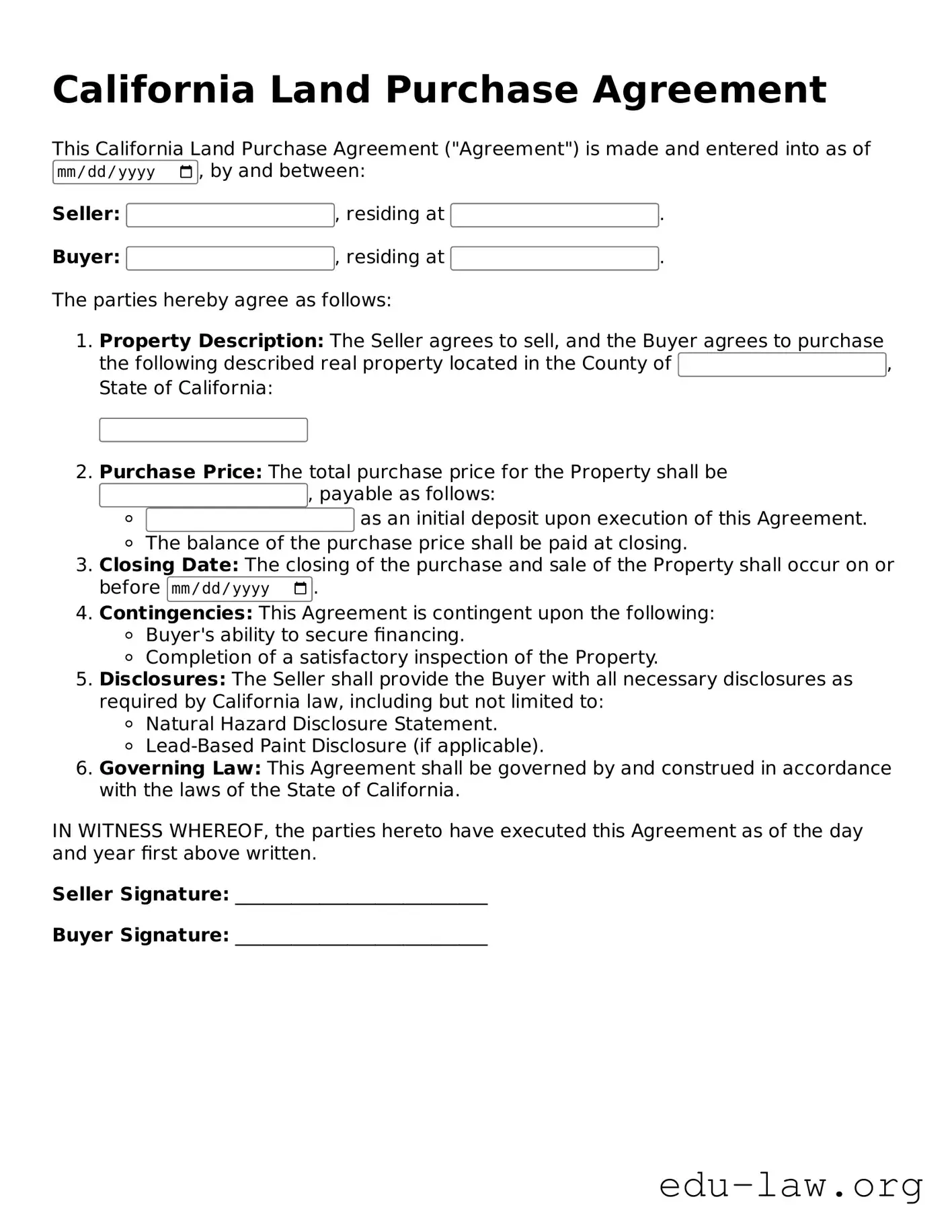
The California Land Purchase Agreement form serves as a crucial document in real estate transactions, establishing the terms and conditions under which a buyer agrees to purchase land from a seller. This form outlines essential details such as the purchase price, property description, and the timeline for closing the sale. It also addresses contingencies that may affect the transaction, including financing arrangements and inspections. Both parties must carefully review the agreement to ensure their rights and obligations are clearly defined. By providing a structured framework for the sale, this form helps facilitate a smooth transfer of ownership, protecting the interests of both the buyer and the seller. Understanding the components of the California Land Purchase Agreement is vital for anyone involved in a land transaction, as it lays the groundwork for a successful deal.
California Land Purchase Agreement
This California Land Purchase Agreement ("Agreement") is made and entered into as of , by and between:
Seller: , residing at .
Buyer: , residing at .
The parties hereby agree as follows:
IN WITNESS WHEREOF, the parties hereto have executed this Agreement as of the day and year first above written.
Seller Signature: ___________________________
Buyer Signature: ___________________________
| Fact Name | Details |
|---|---|
| Purpose | The California Land Purchase Agreement form is used to outline the terms and conditions of a real estate transaction in California. |
| Governing Law | This agreement is governed by the laws of the State of California. |
| Key Components | It typically includes details such as purchase price, property description, and closing date. |
| Signatures Required | Both the buyer and seller must sign the agreement for it to be legally binding. |
After obtaining the California Land Purchase Agreement form, you will need to provide specific information related to the transaction. This will involve detailing the parties involved, the property description, and the terms of the sale. Follow the steps below to complete the form accurately.
What is a California Land Purchase Agreement?
A California Land Purchase Agreement is a legal document that outlines the terms and conditions under which a buyer agrees to purchase land from a seller in California. This agreement serves as a binding contract that specifies the rights and obligations of both parties involved in the transaction. It typically includes details such as the purchase price, payment terms, and any contingencies that must be met before the sale is finalized.
What are the key components of a Land Purchase Agreement?
Key components of a Land Purchase Agreement include the identification of the parties involved, a detailed description of the property being sold, the purchase price, payment terms, and any contingencies such as financing or inspections. Additionally, the agreement may outline the closing process, responsibilities for property taxes, and any disclosures required by law.
Do I need a lawyer to create a Land Purchase Agreement?
While it is not legally required to have a lawyer draft a Land Purchase Agreement, it is highly advisable. A qualified attorney can ensure that the agreement complies with California law, protects your interests, and addresses any specific concerns you may have. Additionally, a lawyer can help you navigate complex issues that may arise during the transaction.
What happens if one party breaches the agreement?
If one party fails to fulfill their obligations under the Land Purchase Agreement, it is considered a breach of contract. The non-breaching party may have several options, including seeking damages, requesting specific performance (forcing the other party to fulfill their obligations), or terminating the agreement. The specific remedies available will depend on the terms of the agreement and the nature of the breach.
Can a Land Purchase Agreement be modified after it is signed?
Yes, a Land Purchase Agreement can be modified after it is signed, but both parties must agree to the changes. Any modifications should be documented in writing and signed by both parties to ensure that they are enforceable. Verbal agreements or informal changes may not hold up in court, so it is essential to keep a clear record of any amendments.
What contingencies are commonly included in a Land Purchase Agreement?
Common contingencies in a Land Purchase Agreement may include financing contingencies, which allow the buyer to secure a loan; inspection contingencies, which permit the buyer to conduct inspections of the property; and appraisal contingencies, ensuring the property is valued at or above the agreed purchase price. These contingencies protect the buyer's interests and allow them to back out of the deal if certain conditions are not met.
Is a Land Purchase Agreement the same as a title deed?
No, a Land Purchase Agreement and a title deed are not the same. The Land Purchase Agreement is the contract that outlines the terms of the sale, while the title deed is the legal document that transfers ownership of the property from the seller to the buyer. Once the purchase agreement is fulfilled, the title deed is executed to formalize the transfer of ownership.
How can I ensure my Land Purchase Agreement is legally binding?
To ensure that your Land Purchase Agreement is legally binding, it should be in writing and signed by both parties. The agreement must clearly outline the terms of the sale, including the purchase price and any contingencies. Additionally, both parties should have the legal capacity to enter into the agreement, and it should be executed in accordance with California law. Consulting with a legal professional can further enhance the enforceability of the agreement.
What should I do if I have more questions about the Land Purchase Agreement?
If you have more questions about the Land Purchase Agreement, consider consulting a real estate attorney or a qualified real estate professional. They can provide personalized guidance based on your specific situation and help clarify any uncertainties you may have regarding the agreement or the property transaction process.
Failing to provide accurate property descriptions. This includes not specifying the correct parcel number or legal description, which can lead to disputes or issues with title transfer.
Not including all parties involved in the transaction. It's essential to list all buyers and sellers to ensure everyone is legally recognized in the agreement.
Overlooking contingencies. Buyers often forget to include necessary contingencies, such as financing or inspections, which can protect their interests.
Missing signatures. All parties must sign the agreement. An unsigned document may not be legally binding, leading to complications later.
Incorrectly stating the purchase price. It's crucial to double-check the purchase price to avoid misunderstandings or legal issues.
Neglecting to include important dates. Key dates, such as the closing date or deadlines for contingencies, should be clearly stated to avoid confusion.
Using outdated forms. Always ensure that the latest version of the California Land Purchase Agreement form is being used, as laws and requirements can change.
When engaging in a land purchase in California, several important documents often accompany the California Land Purchase Agreement. Each of these forms serves a specific purpose and helps facilitate a smooth transaction. Understanding these documents can aid buyers and sellers in navigating the complexities of real estate transactions.
Having a clear understanding of these documents can significantly ease the process of purchasing land in California. Each form plays a vital role in ensuring that the transaction is legally sound and that both parties are protected throughout the process.
The California Land Purchase Agreement form shares similarities with the Purchase and Sale Agreement. Both documents outline the terms and conditions under which real property is bought and sold. They detail the responsibilities of the buyer and seller, including the purchase price, payment methods, and timelines for closing. This agreement serves as a legally binding contract that protects the interests of both parties involved in the transaction.
Another document that resembles the California Land Purchase Agreement is the Real Estate Purchase Agreement. This document is commonly used in residential real estate transactions. Like the Land Purchase Agreement, it specifies the property details, purchase price, and contingencies, ensuring that both parties have a clear understanding of their obligations. It also includes provisions for inspections and financing, making it a comprehensive tool for property transactions.
The Option to Purchase Agreement is also similar. This document grants a buyer the right, but not the obligation, to purchase property within a specified timeframe. While the California Land Purchase Agreement requires a commitment to buy, the Option to Purchase Agreement allows for flexibility. Both documents outline the terms of the transaction, but the option agreement includes conditions under which the buyer can decide whether to proceed with the purchase.
The Lease Purchase Agreement is another related document. It combines elements of a lease and a purchase agreement, allowing a tenant to rent a property with the option to buy it later. This document provides a pathway for individuals who may not be ready to purchase immediately but wish to secure the property. Similar to the Land Purchase Agreement, it details the terms of the sale, including the purchase price and the timeline for the purchase.
The Joint Venture Agreement can also be compared to the California Land Purchase Agreement. In this scenario, two or more parties collaborate to buy property together. This document outlines each party's contributions, responsibilities, and profit-sharing arrangements. While the Land Purchase Agreement focuses on a single transaction, the Joint Venture Agreement addresses the partnership dynamics involved in purchasing property collaboratively.
Finally, the Escrow Agreement shares similarities with the California Land Purchase Agreement. This document is used to hold funds and documents until the terms of a real estate transaction are met. It provides a neutral third party to manage the transaction process. Both agreements include details about the property and the conditions for closing, ensuring that all parties fulfill their obligations before the transfer of ownership occurs.
When filling out the California Land Purchase Agreement form, it's crucial to approach the task with care. Below are seven important do's and don'ts to keep in mind.
By following these guidelines, you can navigate the California Land Purchase Agreement form with greater confidence and clarity.
When dealing with a California Land Purchase Agreement form, misunderstandings can arise. Here are five common misconceptions that people often have:
Many believe this agreement is limited to homes. In reality, it can be used for various types of properties, including commercial and vacant land.
Some think that one land purchase agreement is just like another. However, each agreement can be tailored to fit specific terms and conditions unique to the transaction.
Many assume that since it's a standard form, it doesn't need a lawyer's input. Getting legal advice is always a good idea to ensure that your interests are protected.
People often believe that the agreement is set in stone after signing. In fact, amendments can be made if both parties agree to the changes.
Some think that signing the agreement means the sale is guaranteed. While it is an important step, successful transactions also depend on other factors, such as financing and inspections.
Understanding these misconceptions can help you navigate the process more effectively and ensure a smoother transaction.
When engaging in real estate transactions in California, understanding the Land Purchase Agreement form is essential. This document serves as a foundational tool for buyers and sellers alike. Here are nine key takeaways to consider:
By keeping these takeaways in mind, individuals can navigate the complexities of the California Land Purchase Agreement form with greater confidence and clarity.