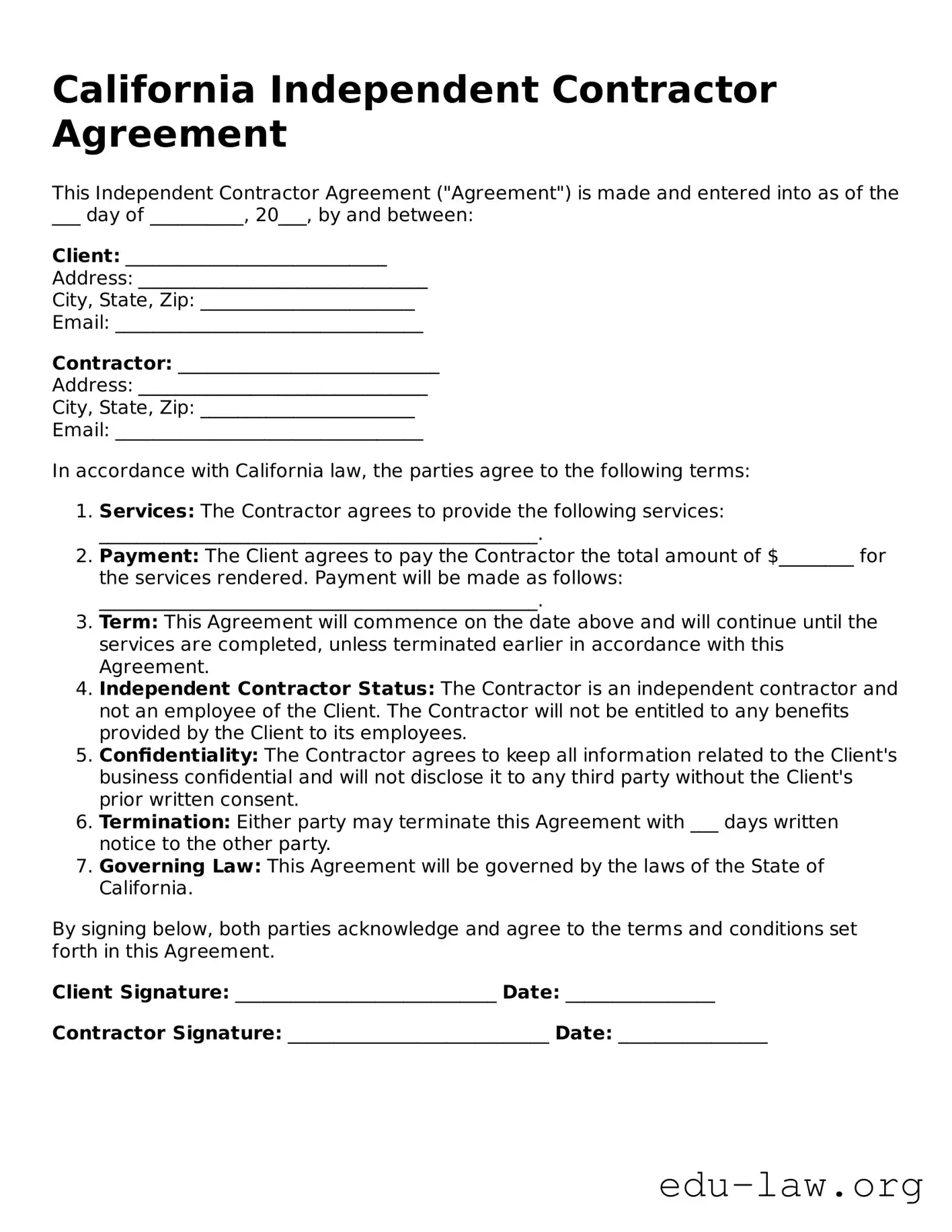
The California Independent Contractor Agreement form is an essential document for anyone looking to establish a clear working relationship with independent contractors. This form outlines the terms and conditions of the engagement, ensuring both parties understand their rights and responsibilities. Key elements of the agreement include the scope of work, payment terms, and deadlines, which help set expectations from the start. Additionally, the form addresses confidentiality and ownership of work products, protecting sensitive information and intellectual property. By using this agreement, businesses can avoid misunderstandings and potential disputes, fostering a professional atmosphere that benefits everyone involved. Whether you are hiring a freelancer for a short project or engaging a contractor for ongoing services, this form serves as a vital tool for clarity and accountability.
California Independent Contractor Agreement
This Independent Contractor Agreement ("Agreement") is made and entered into as of the ___ day of __________, 20___, by and between:
Client: ____________________________
Address: _______________________________
City, State, Zip: _______________________
Email: _________________________________
Contractor: ____________________________
Address: _______________________________
City, State, Zip: _______________________
Email: _________________________________
In accordance with California law, the parties agree to the following terms:
By signing below, both parties acknowledge and agree to the terms and conditions set forth in this Agreement.
Client Signature: ____________________________ Date: ________________
Contractor Signature: ____________________________ Date: ________________
| Fact Name | Details |
|---|---|
| Definition | The California Independent Contractor Agreement outlines the terms and conditions between a business and an independent contractor. |
| Governing Law | This agreement is governed by California state law, specifically under the California Labor Code. |
| Purpose | It serves to clarify the relationship, responsibilities, and rights of both parties involved. |
| Importance of Clarity | A well-drafted agreement helps prevent misunderstandings and potential legal disputes. |
Filling out the California Independent Contractor Agreement form is a crucial step in establishing a clear understanding between you and the contractor. This agreement outlines the terms of the working relationship, ensuring that both parties are on the same page. Follow these steps carefully to complete the form accurately.
After completing the form, ensure that both parties retain a signed copy for their records. This agreement serves as a reference point for the working relationship and can help prevent disputes down the line.
What is a California Independent Contractor Agreement?
A California Independent Contractor Agreement is a legal document that outlines the relationship between a business and an independent contractor. This agreement specifies the terms under which the contractor will provide services, including payment details, the scope of work, and the duration of the contract. It helps clarify expectations for both parties and can protect their rights in case of disputes.
Why is it important to have an Independent Contractor Agreement?
Having an Independent Contractor Agreement is crucial for several reasons. First, it establishes clear expectations regarding the work to be performed, which can prevent misunderstandings. Second, it helps define the payment structure, ensuring that both parties agree on compensation. Lastly, the agreement can provide legal protection for both the contractor and the business, outlining rights and responsibilities in case of disagreements or legal issues.
What key elements should be included in the agreement?
Key elements of a California Independent Contractor Agreement typically include the names of the parties involved, a detailed description of the services to be provided, payment terms, deadlines, and confidentiality clauses. Additionally, it may outline the duration of the agreement and any conditions for termination. Including these elements helps ensure that both parties are on the same page and can refer back to the agreement if needed.
Can an Independent Contractor Agreement be modified after it is signed?
Yes, an Independent Contractor Agreement can be modified after it is signed, but both parties must agree to the changes. It’s advisable to document any modifications in writing, ideally by creating an amendment to the original agreement. This ensures that all parties have a clear understanding of the new terms and helps maintain a professional relationship.
What happens if there is a dispute regarding the agreement?
If a dispute arises regarding the Independent Contractor Agreement, the first step is often to refer back to the terms outlined in the document. Both parties should attempt to resolve the issue through open communication. If a resolution cannot be reached, the agreement may specify a method for dispute resolution, such as mediation or arbitration. In some cases, legal action may be necessary, but it’s usually best to seek resolution outside of court whenever possible.
Not Clearly Defining the Scope of Work: One common mistake is failing to specify the exact services to be provided. A vague description can lead to misunderstandings later on. Clearly outline the tasks and responsibilities to avoid confusion.
Ignoring Payment Terms: Some individuals overlook the importance of detailing payment terms. Specify the payment amount, schedule, and method. This clarity helps ensure that both parties are on the same page regarding compensation.
Neglecting to Include Deadlines: Another frequent error is not setting deadlines for the completion of tasks. Including specific timelines helps manage expectations and keeps the project on track.
Failing to Address Termination Conditions: Many people forget to outline the conditions under which the agreement can be terminated. Clearly stating these conditions protects both parties and provides a clear exit strategy if needed.
Not Reviewing for Compliance: Lastly, individuals often skip the step of ensuring the agreement complies with California laws. It’s essential to review the document to confirm that it meets all legal requirements to avoid potential disputes.
When engaging an independent contractor in California, several additional forms and documents may be necessary to ensure clarity and compliance with legal standards. These documents help outline the terms of the relationship, protect both parties, and provide necessary information for tax and legal purposes. Below is a list of commonly used forms alongside the California Independent Contractor Agreement.
Utilizing these documents in conjunction with the California Independent Contractor Agreement can help establish a solid foundation for the working relationship. Each form serves a unique purpose, contributing to a clear and respectful collaboration between the contractor and the hiring entity.
The California Employment Agreement is similar to the Independent Contractor Agreement in that both documents outline the terms and conditions of a working relationship. However, while the Employment Agreement is used for employees, who receive benefits and protections under labor laws, the Independent Contractor Agreement is designed for freelancers or self-employed individuals. The Employment Agreement typically includes details about salary, benefits, and job duties, whereas the Independent Contractor Agreement focuses on the scope of work, payment terms, and project deadlines. Both documents serve to clarify expectations and responsibilities but cater to different types of work relationships.
The Non-Disclosure Agreement (NDA) shares similarities with the Independent Contractor Agreement, particularly in its purpose to protect sensitive information. When independent contractors work with businesses, they may have access to proprietary data or trade secrets. An NDA ensures that the contractor agrees to keep this information confidential. While the Independent Contractor Agreement establishes the working relationship and payment terms, the NDA specifically addresses confidentiality and the consequences of disclosing private information. Both documents are essential for maintaining trust and security in business transactions.
The Service Agreement is another document that resembles the Independent Contractor Agreement. Like the Independent Contractor Agreement, a Service Agreement outlines the terms under which services will be provided. It specifies the nature of the services, the payment structure, and the timeline for completion. However, a Service Agreement may be used for both independent contractors and businesses providing services, making it slightly broader in scope. Both documents aim to define the working relationship and set clear expectations, ensuring that all parties understand their obligations.
The Consulting Agreement is closely related to the Independent Contractor Agreement, particularly for individuals hired to provide expert advice or services. This document outlines the specific consulting services to be rendered, payment terms, and the duration of the engagement. While the Independent Contractor Agreement can apply to a wide range of freelance work, the Consulting Agreement is tailored for professionals offering specialized knowledge. Both agreements emphasize the importance of clarity in the working relationship and help to avoid misunderstandings regarding deliverables and compensation.
The Work for Hire Agreement also bears similarities to the Independent Contractor Agreement, especially in creative industries. This document is used when a contractor creates original work, such as artwork, writing, or software, for a client. It stipulates that the client retains ownership of the work produced, similar to how the Independent Contractor Agreement outlines the terms of the contractor's work. Both agreements serve to define the relationship and protect the interests of the parties involved, ensuring that the expectations regarding ownership and compensation are clearly articulated.
When filling out the California Independent Contractor Agreement form, it’s important to approach the task carefully. Here are some dos and don’ts to keep in mind:
Understanding the California Independent Contractor Agreement form is crucial for both workers and employers. However, several misconceptions can lead to confusion. Here are ten common misconceptions explained:
This is not true. The classification depends on specific criteria set by California law, such as the degree of control the employer has over the worker.
While verbal agreements can exist, having a written contract is essential for clarity and legal protection for both parties.
While they typically do not receive traditional employee benefits, some may negotiate for certain benefits within their contracts.
This is a misconception. Independent contractors often work for multiple clients simultaneously, which is part of their flexibility.
Independent contractors are responsible for their own taxes, including self-employment tax, which differs from employee tax obligations.
In reality, a worker's status can change based on the nature of the work and the relationship with the employer.
While it is true that traditional unemployment benefits do not apply, some independent contractors may qualify for specific programs under certain conditions.
Each agreement can vary significantly based on the nature of the work, the parties involved, and specific terms negotiated.
This is misleading. Independent contractors are entitled to certain legal protections, including those related to discrimination and safety.
While they may not be paid hourly, tracking hours can be important for billing and ensuring fair compensation for services rendered.
Clarifying these misconceptions can help both independent contractors and employers navigate their working relationships more effectively.
When filling out and using the California Independent Contractor Agreement form, it's important to keep a few key points in mind to ensure clarity and compliance. Here are five essential takeaways:
By keeping these takeaways in mind, you can create a solid foundation for your working relationship with independent contractors in California.