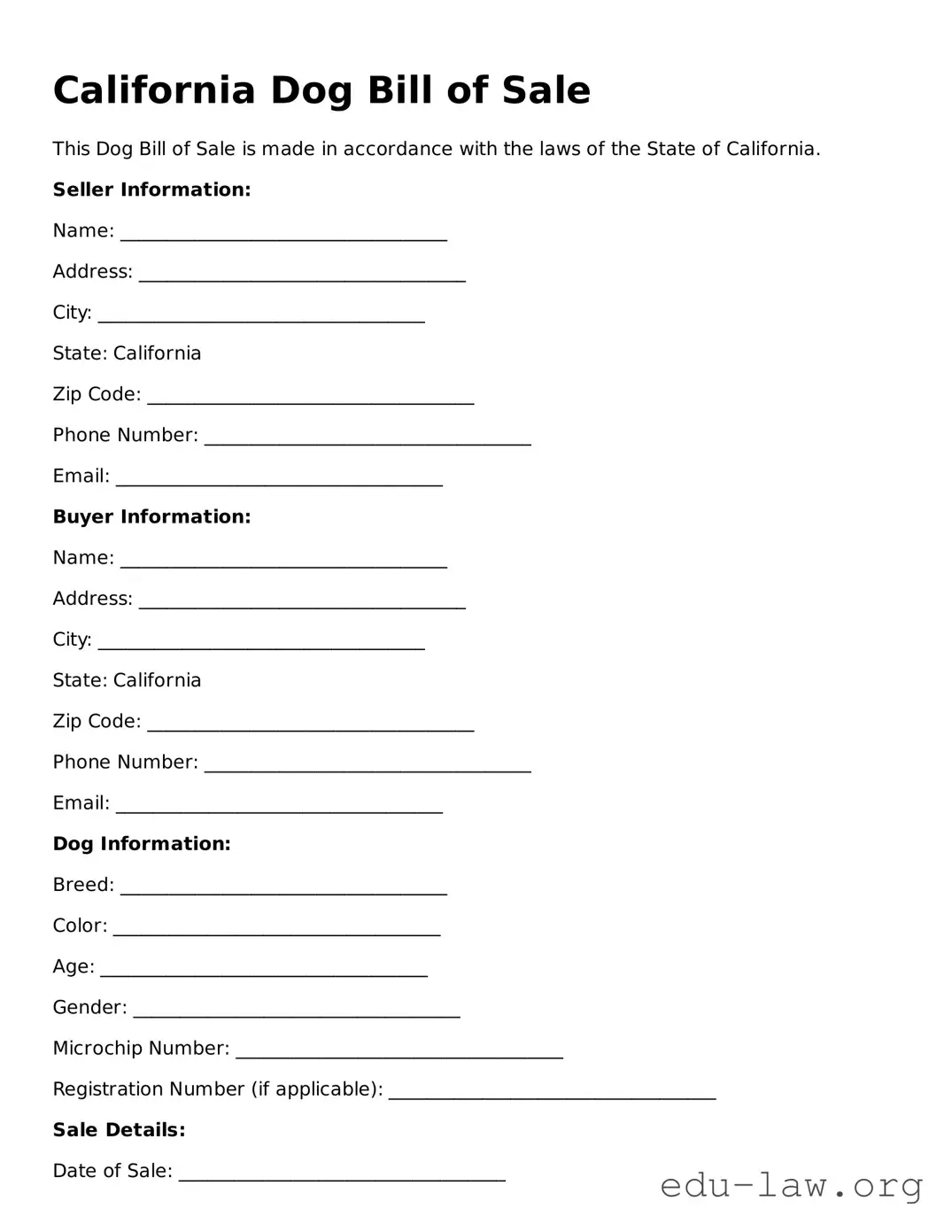
In California, purchasing or selling a dog requires careful attention to the legal details, making the Dog Bill of Sale form a vital document in the process. This form serves as a written record of the transaction, capturing essential information about the buyer, seller, and the canine being transferred. It typically includes details such as the dog's breed, age, color, and identification number, ensuring buyers can confirm the animal's identity. Moreover, the bill may stipulate whether the dog is vaccinated or has undergone any health checks, offering transparency and peace of mind to the new owner. Signatures from both parties validate the document, signifying the transfer of ownership officially and providing legal protection should disputes arise in the future. By understanding the significance and components of the California Dog Bill of Sale form, buyers and sellers can navigate the transaction confidently, safeguarding their interests and setting the foundation for a loving relationship with their new furry companion.
California Dog Bill of Sale
This Dog Bill of Sale is made in accordance with the laws of the State of California.
Seller Information:
Name: ___________________________________
Address: ___________________________________
City: ___________________________________
State: California
Zip Code: ___________________________________
Phone Number: ___________________________________
Email: ___________________________________
Buyer Information:
Name: ___________________________________
Address: ___________________________________
City: ___________________________________
State: California
Zip Code: ___________________________________
Phone Number: ___________________________________
Email: ___________________________________
Dog Information:
Breed: ___________________________________
Color: ___________________________________
Age: ___________________________________
Gender: ___________________________________
Microchip Number: ___________________________________
Registration Number (if applicable): ___________________________________
Sale Details:
Date of Sale: ___________________________________
Purchase Price: $_____________________
Terms of Sale:
The parties acknowledge that this Bill of Sale constitutes the entire agreement relating to the sale of the dog and supersedes all prior discussions or agreements.
Signatures:
Seller Signature: _________________________ Date: ___________
Buyer Signature: _________________________ Date: ___________
| Fact Name | Detail |
|---|---|
| Purpose | The California Dog Bill of Sale form serves as a legal document transferring ownership of a dog from the seller to the buyer. |
| Governing Law | The form is governed by California Civil Code Section 1738, which outlines the legal requirements for the sale of pets. |
| Seller Disclosure | The seller is required to provide specific information about the dog, such as health history and vaccination records, to ensure transparency in the sale. |
| Consideration | In most cases, the transaction must involve consideration, meaning the seller receives payment or something of value in return for the dog. |
| Importance of Documentation | Having a signed Dog Bill of Sale is crucial for both parties. It not only verifies the sale but can also help resolve potential disputes in the future. |
Once you have the California Dog Bill of Sale form in front of you, it's time to complete it to ensure a smooth transfer of ownership. This document will guide you through the necessary details to finalize the sale of a dog. Follow these steps carefully to provide all required information accurately.
After completing the form, both parties should keep a copy for their records. This ensures that each has proof of the transaction and the details of the sale. Make sure to review the form together before finalizing everything for added clarity.
What is a California Dog Bill of Sale form?
The California Dog Bill of Sale is a document used to officially transfer ownership of a dog from one person to another. This form serves as proof of the transaction and helps establish the new owner’s rights over the dog. It includes pertinent information about the dog, such as breed, age, and any identification details, as well as the seller’s and buyer’s information.
Is a Dog Bill of Sale legally required in California?
In California, a Dog Bill of Sale is not legally mandated for all dog sales. However, it is strongly recommended. Having this form can help protect both the seller and the buyer by providing a clear record of the transaction. It may also be useful if there are disputes regarding ownership or if there are questions about the dog's health or history.
What information should be included in the Dog Bill of Sale?
A comprehensive Dog Bill of Sale should include the following details: the names and addresses of both the buyer and seller, the dog's name, breed, age, color, any identifying marks or tags, and microchip information if applicable. The sale price and the date of the transaction should also be included. Both parties should sign the document to confirm the agreement.
What are the benefits of using a Dog Bill of Sale?
Using a Dog Bill of Sale provides clarity and security for both parties involved in the transaction. It prevents misunderstandings by formally documenting the sale and details of the dog. This form serves as proof of ownership, which can be essential for registration, veterinary care, or in legal disputes.
Can the Dog Bill of Sale be used for adoption purposes?
Yes, the Dog Bill of Sale can also be used when adopting a dog. Animal shelters or rescue organizations may utilize a similar form to document the transfer of a dog to a new home. In this case, it may include an adoption fee and any conditions set by the adopting organization regarding care and responsibility.
Is it necessary to have the form notarized?
Notarization is not required for a Dog Bill of Sale in California. However, having the document notarized can lend an additional layer of authenticity and may help in resolving any potential disputes in the future. It ensures that both parties' signatures are verified and that the document is executed properly.
What should I do if the seller provided inaccurate information?
If inaccuracies are discovered in the Dog Bill of Sale, it is important to address the issue as soon as possible. Communication with the seller can help resolve discrepancies. In instances where misrepresentation is suspected, legal advice may be necessary to understand the options available and any potential recourse.
Where can I obtain a Dog Bill of Sale form?
A Dog Bill of Sale form can be easily found online through various legal document websites. Some organizations, including animal welfare groups, may also provide templates for download. When selecting a form, ensure it meets California’s requirements and includes all necessary information to avoid issues in future ownership transactions.
Incomplete Information: Not providing all required details can lead to complications. Make sure you fill in every necessary field accurately.
Incorrect Seller Information: Errors in the seller’s name or address can cause issues. Double-check all names and addresses for accuracy.
Neglecting Buyer Information: Failing to include the buyer's complete information is a common mistake. Ensure that the buyer’s details are filled out completely.
Missing Date: Forgetting to include the sale date may create confusion. Always write down the date of the transaction.
Incorrect Dog Information: Providing inaccurate details about the dog, such as breed or age, can lead to future problems. Confirm all details about the dog before submitting.
Forgetting Signatures: Not signing the document is a frequent oversight. Ensure that both the seller and buyer sign the form.
Not Including Sales Price: Omitting the sale price can lead to disputes later. Clearly state the amount agreed upon for the sale.
Failure to Retain Copies: Not keeping a copy of the signed bill of sale can be a problem in the future. Make sure to retain a copy for your records.
Overlooking State Regulations: Ignoring any specific state requirements can invalidate the sale. Familiarize yourself with California laws regarding dog sales.
Rushing the Process: Speeding through the form can lead to mistakes. Take your time to carefully review everything before submission.
The California Dog Bill of Sale form is often used in conjunction with several other forms and documents related to the sale or transfer of dog ownership. Each of these documents serves a specific purpose, providing additional clarity and protecting the rights of both the buyer and the seller. Below is a list of commonly used forms.
Utilizing these forms alongside the California Dog Bill of Sale can enhance the exchange experience, fostering clear communication and legal protection for involved parties. Each document, tailored to specific needs, contributes to a smooth transaction and ensures that both buyer and seller are on the same page.
The Animal Bill of Sale is quite similar to the California Dog Bill of Sale. Both documents serve as a record of the transfer of ownership for an animal. They outline details such as the description of the animal and the agreed purchase price. This form typically includes both the seller's and buyer's contact information, ensuring proper identification of the parties involved in the transaction.
The Pet Adoption Agreement is another document that shares similarities with the California Dog Bill of Sale. While the Dog Bill of Sale indicates a sale, the Pet Adoption Agreement pertains to adopting an animal from a shelter or rescue organization. Both documents generally require similar details about the pet and the adopting individual, including health disclosures and responsibilities after the purchase or adoption.
A Horse Bill of Sale also resembles the California Dog Bill of Sale. Like the dog bill, it serves as proof of ownership transfer for a horse. The document includes important information such as the identification of the horse (breed, color, markings) and any health-related disclosures. In both cases, the bill offers legal protection to both parties in the event of disputes regarding the sale.
The Vehicle Bill of Sale is another comparable document. This form is used for transferring ownership of a motor vehicle, and it provides essential information such as the vehicle identification number (VIN) and odometer reading. Similar to the Dog Bill of Sale, this document includes the seller's and buyer's information to ensure clarity in ownership transfer and may also include terms of the sale.
An Equine Liability Release form bears resemblance to the California Dog Bill of Sale in that both documents address ownership and liability issues. While the Dog Bill of Sale transfers ownership, the Equine Liability Release form focuses on protecting the owner from potential claims resulting from accidents or injuries incurred during the use of the horse. Both highlight the responsibilities of the new owners following the transfer.
The Sale of Goods Agreement is also akin to the California Dog Bill of Sale. This agreement outlines the sale of various goods, including pets. Both documents need to specify the item being sold, the sale price, and the terms of sale. While the Sale of Goods Agreement is broader, the principles of documenting the transaction apply in both cases.
The Lease Agreement for Pets is similar to the Dog Bill of Sale in that it can involve an outline of terms for keeping an animal. While not a transfer of ownership, it defines the responsibilities shared between the landlord and tenant regarding pet care. Details such as the pet’s description and lease duration are common elements, providing clarity and mutual understanding.
The Transfer of Ownership Agreement, often used in various contexts beyond pets, holds similarities to the Dog Bill of Sale as it identifies the specifics of the transaction. This document specifies the item or property being transferred and confirms that both parties agree to the terms. Each document requires accurate details to uphold the legality of the transfer.
Finally, the Foster Care Agreement for Animals can be compared to the California Dog Bill of Sale, as both documents are utilized under the realm of pet care. The Foster Care Agreement outlines the responsibilities of a foster parent for a pet, providing basic care instructions while allowing for eventual adoption or return. Each aims to clarify responsibilities, although one focuses on temporary care rather than ownership transfer.
When filling out the California Dog Bill of Sale form, it’s essential to ensure all information is accurate and complete. Below are important dos and don'ts to guide you through the process.
When it comes to the California Dog Bill of Sale form, there are several common misconceptions that can lead to confusion among dog sellers and buyers. Understanding these misconceptions can help ensure a smoother transaction and foster better communication. Here are ten misconceptions along with explanations to clarify these misunderstandings.
By understanding these misconceptions, both sellers and buyers can navigate the pet purchasing process more effectively. Educating oneself about the California Dog Bill of Sale will help ensure that all parties involved are clear on their rights, obligations, and the specifics of their agreement.
The California Dog Bill of Sale form serves as a crucial document for transferring the ownership of a dog from one individual to another. Below are key takeaways regarding its use and importance.
Bill of Sale for Dog - It can specify any additional items sold with the dog, like crates or leashes.
Dog Bill of Sale Pdf - This document can help establish the purchased dog's history, which may be crucial for future medical care.