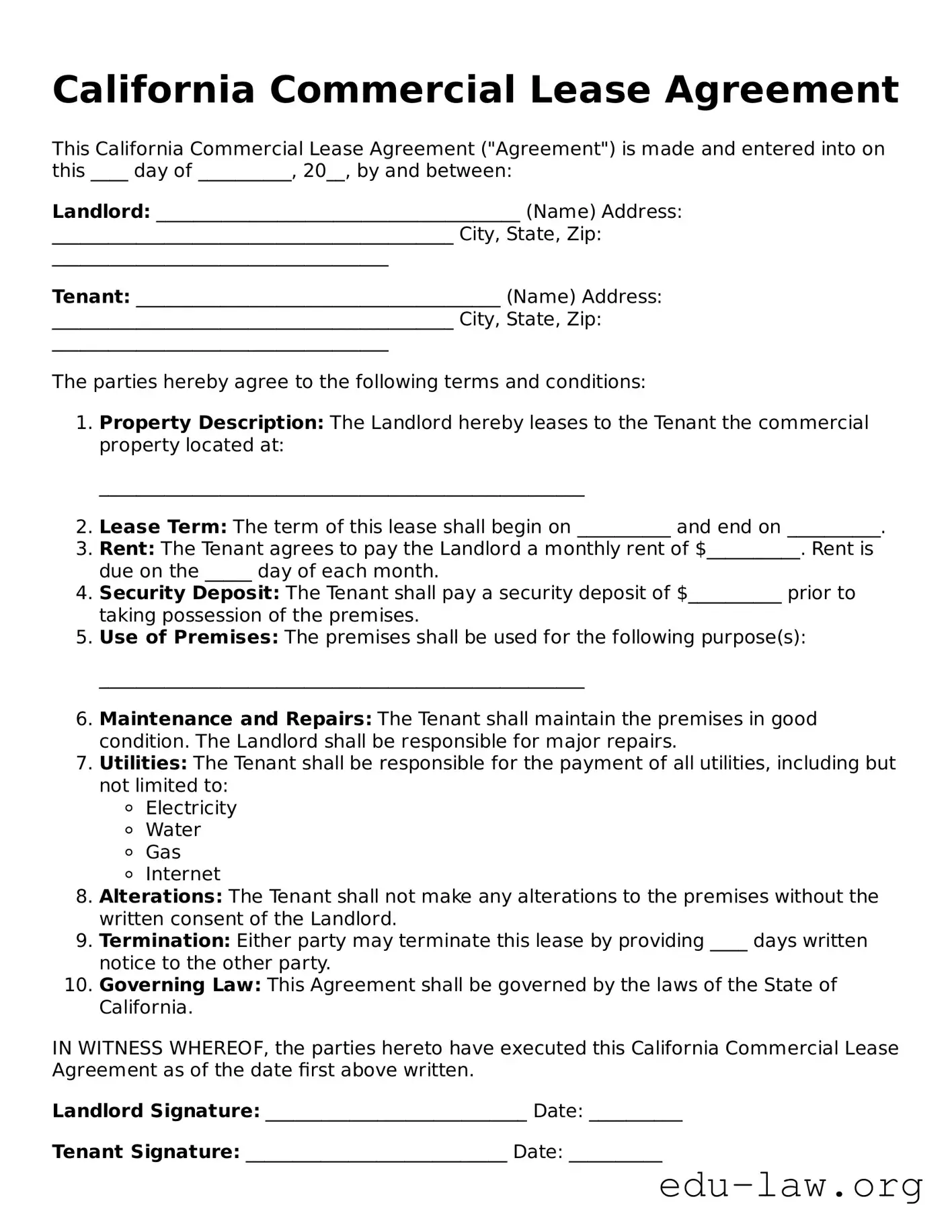
The California Commercial Lease Agreement form serves as a vital document in the realm of business property rental. It outlines the terms and conditions under which a landlord leases commercial space to a tenant. Key elements of this form include the lease duration, rental payment details, and specific responsibilities of both parties. Additionally, it addresses important aspects such as security deposits, maintenance obligations, and permitted use of the premises. By clearly defining the rights and obligations of both landlords and tenants, this agreement helps to minimize disputes and provides a framework for a successful business relationship. Understanding the nuances of this form is essential for anyone involved in commercial real estate transactions in California.
California Commercial Lease Agreement
This California Commercial Lease Agreement ("Agreement") is made and entered into on this ____ day of __________, 20__, by and between:
Landlord: _______________________________________ (Name) Address: ___________________________________________ City, State, Zip: ____________________________________
Tenant: _______________________________________ (Name) Address: ___________________________________________ City, State, Zip: ____________________________________
The parties hereby agree to the following terms and conditions:
____________________________________________________
____________________________________________________
IN WITNESS WHEREOF, the parties hereto have executed this California Commercial Lease Agreement as of the date first above written.
Landlord Signature: ____________________________ Date: __________
Tenant Signature: ____________________________ Date: __________
| Fact Name | Details |
|---|---|
| Governing Law | The California Commercial Lease Agreement is governed by California state law. |
| Purpose | This form is used to outline the terms and conditions for leasing commercial property in California. |
| Parties Involved | The agreement typically involves a landlord (lessor) and a tenant (lessee). |
| Duration | The lease term can vary, often ranging from one year to several years, depending on the agreement. |
| Key Provisions | Common provisions include rent amount, payment terms, maintenance responsibilities, and termination conditions. |
Filling out the California Commercial Lease Agreement form is a straightforward process. Each section requires specific information about the parties involved, the property, and the terms of the lease. Once completed, the form will serve as a binding agreement between the landlord and tenant.
What is a California Commercial Lease Agreement?
A California Commercial Lease Agreement is a legal document that outlines the terms and conditions under which a landlord rents commercial property to a tenant. It details the rights and responsibilities of both parties, including rent amount, lease duration, and use of the property.
What are the key components of a Commercial Lease Agreement?
Key components typically include the names of the parties involved, property description, lease term, rent amount, payment due dates, security deposit details, maintenance responsibilities, and any restrictions on property use. Each of these elements is crucial for ensuring clarity and preventing disputes.
How long does a typical commercial lease last?
The duration of a commercial lease can vary significantly. Some leases may last for a year, while others can extend for five years or more. The lease term is negotiable and should be clearly stated in the agreement.
What happens if I need to terminate the lease early?
If a tenant needs to terminate the lease early, they should review the lease agreement for any early termination clauses. These clauses may outline penalties or conditions for breaking the lease. It is advisable to communicate with the landlord to discuss possible options.
Can the rent amount be increased during the lease term?
Typically, the rent amount is fixed for the duration of the lease term unless the agreement includes provisions for increases. Some leases may allow for periodic rent increases, often tied to inflation or market rates. Always check the lease for specific terms related to rent adjustments.
What is a security deposit, and how is it handled?
A security deposit is a sum of money paid by the tenant to the landlord as a safeguard against potential damages or unpaid rent. California law regulates how much a landlord can charge and outlines the conditions under which the deposit can be withheld or returned after the lease ends.
Are there any restrictions on how I can use the commercial property?
Yes, the lease agreement may specify permitted uses for the property. This can include limitations on types of businesses, hours of operation, or alterations to the property. It is important to understand these restrictions to ensure compliance throughout the lease term.
What should I do if there is a dispute with my landlord?
If a dispute arises, the first step is to review the lease agreement for any dispute resolution procedures. Open communication with the landlord can often resolve issues. If necessary, mediation or legal action may be considered, depending on the situation.
Can I sublease the commercial property?
Subleasing is often subject to the terms of the lease agreement. Many leases require landlord approval before a tenant can sublease the property. It is essential to check the lease for any specific provisions regarding subleasing and obtain necessary permissions if allowed.
Failing to include the correct property address. It is crucial to ensure that the address is accurate to avoid any confusion or legal issues later.
Not specifying the lease term. Clearly stating the duration of the lease is essential. This includes the start and end dates.
Overlooking the rent amount. Make sure to write down the exact monthly rent and any additional fees to prevent disputes.
Neglecting to detail maintenance responsibilities. Both parties should understand who is responsible for repairs and upkeep of the property.
Ignoring the security deposit terms. Specify the amount and conditions for its return to avoid misunderstandings at the end of the lease.
Not including termination clauses. Outline the conditions under which either party can terminate the lease to protect everyone's interests.
Failing to review zoning regulations. Ensure that the intended use of the property complies with local zoning laws to avoid potential legal issues.
Leaving out insurance requirements. Specify what types of insurance are necessary to safeguard both the landlord and tenant.
Not having the lease reviewed by a professional. Consulting with a legal advisor can help catch mistakes and ensure that the lease complies with state laws.
When entering into a commercial lease in California, several additional forms and documents may be necessary to ensure clarity and protect the interests of all parties involved. These documents help outline the responsibilities, rights, and expectations of both landlords and tenants. Below is a list of commonly used forms that accompany a California Commercial Lease Agreement.
Understanding these documents is crucial for both landlords and tenants. Each serves a specific purpose and contributes to a smoother leasing process. By being informed about these forms, parties can better navigate their commercial leasing experience in California.
The California Residential Lease Agreement is similar to the Commercial Lease Agreement in that both documents outline the terms and conditions under which a property is leased. While the Residential Lease focuses on residential properties, the Commercial Lease pertains to business spaces. Both agreements typically include details such as rent amount, duration of the lease, and responsibilities for maintenance and repairs. They also establish the rights and obligations of both the landlord and tenant, ensuring clarity in the rental relationship.
The Sublease Agreement is another document that shares similarities with the Commercial Lease Agreement. In a sublease, the original tenant rents out the leased property to another party, effectively creating a new lease agreement under the terms of the original. Both agreements require consent from the landlord and specify the rights and responsibilities of all parties involved. This helps prevent misunderstandings and ensures that the original lease terms are upheld.
A Lease Option Agreement is comparable to a Commercial Lease Agreement in that it provides the tenant with the option to purchase the property at a later date. Both documents outline the terms of the lease, including payment amounts and duration. The key difference lies in the additional option for the tenant to buy the property, which adds an element of flexibility and potential investment for the tenant.
The Letter of Intent (LOI) is a preliminary document that often precedes a Commercial Lease Agreement. It outlines the basic terms and conditions that both parties agree upon before drafting the formal lease. Similar to a lease agreement, the LOI includes essential details such as rental price, lease duration, and property use. However, it is generally less formal and serves as a starting point for negotiations.
The Commercial Real Estate Purchase Agreement is similar to the Commercial Lease Agreement in that both documents deal with real estate transactions. However, while the lease agreement allows for temporary occupancy, the purchase agreement involves the transfer of ownership. Both documents detail terms such as price, contingencies, and responsibilities, ensuring that all parties understand their obligations in the transaction.
The Assignment of Lease is another document related to the Commercial Lease Agreement. It allows a tenant to transfer their rights and obligations under the lease to another party. Both documents require the landlord's consent and outline the terms of the transfer. This ensures that the new tenant is aware of the existing lease conditions and that the landlord maintains control over who occupies their property.
The Commercial Rental Application is similar to the Commercial Lease Agreement in that it is part of the leasing process. Before signing a lease, potential tenants typically submit a rental application to provide information about their business and financial standing. This document helps landlords assess the suitability of a tenant, similar to how a lease agreement outlines the terms of the rental relationship.
The Property Management Agreement often accompanies a Commercial Lease Agreement, particularly when a property owner hires a management company to oversee their property. Both documents define the responsibilities of the parties involved. While the lease agreement focuses on tenant-landlord relations, the property management agreement details the management company's duties, ensuring that the property is maintained and leased effectively.
The Eviction Notice is related to the Commercial Lease Agreement as it outlines the process for terminating a lease due to non-compliance with its terms. If a tenant fails to pay rent or violates lease conditions, the landlord may issue an eviction notice. Both documents serve to protect the rights of the landlord while providing a clear process for addressing issues that may arise during the lease term.
Finally, the Lease Renewal Agreement is similar to the Commercial Lease Agreement in that it extends the terms of the original lease for an additional period. This document outlines any changes to the terms, such as rent adjustments or updated responsibilities. Both agreements ensure that both parties remain informed and in agreement regarding the continued use of the property.
When filling out the California Commercial Lease Agreement form, it is important to approach the process with care. Here are some essential do's and don'ts to consider:
Following these guidelines can help ensure a smooth leasing process. Attention to detail is crucial when entering into a commercial lease agreement.
When dealing with the California Commercial Lease Agreement form, several misconceptions can arise. Understanding these misconceptions can help both landlords and tenants navigate the leasing process more effectively. Here are eight common misconceptions:
Understanding these misconceptions can lead to more informed decisions and smoother transactions in the commercial leasing process in California.
When engaging in a commercial lease agreement in California, it is essential to understand the nuances of the process. Here are some key takeaways to keep in mind:
By keeping these points in mind, you can navigate the California Commercial Lease Agreement form more effectively and ensure a smoother leasing experience.