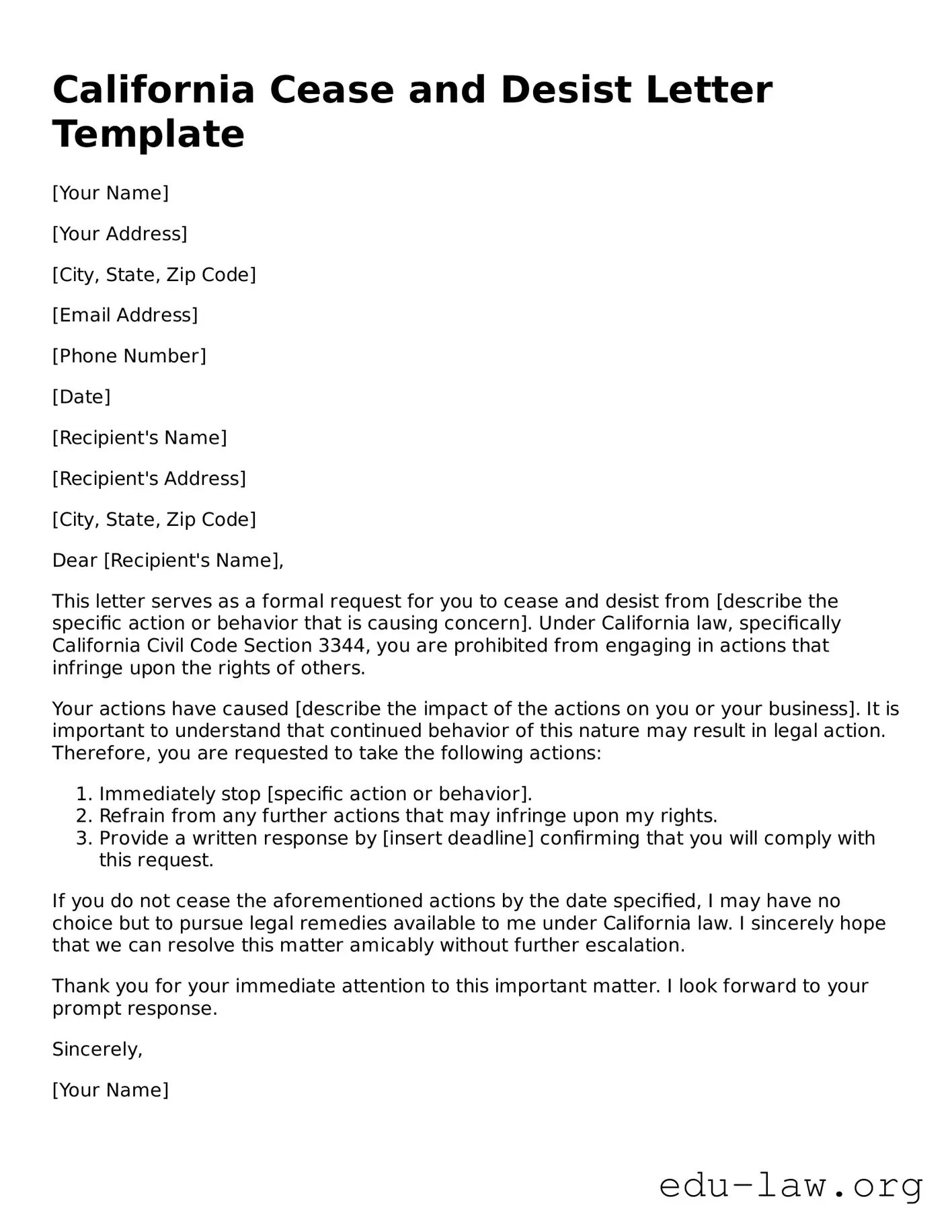
In the landscape of legal communication, the California Cease and Desist Letter stands out as a vital tool for individuals and businesses seeking to address potential disputes or unlawful activities. This letter serves as a formal request, urging the recipient to halt specific actions that are deemed harmful or infringing. It can cover a range of issues, from intellectual property violations to harassment or defamation. The letter typically outlines the nature of the complaint, details the legal basis for the request, and specifies the actions that must be stopped. By providing a clear and concise statement of the grievances, the letter not only communicates the sender's intentions but also establishes a record of the issue at hand. Importantly, it often includes a deadline for compliance, creating a sense of urgency for the recipient. Understanding the nuances of this form can empower individuals and businesses to effectively protect their rights while potentially avoiding more costly legal proceedings.
California Cease and Desist Letter Template
[Your Name]
[Your Address]
[City, State, Zip Code]
[Email Address]
[Phone Number]
[Date]
[Recipient's Name]
[Recipient's Address]
[City, State, Zip Code]
Dear [Recipient's Name],
This letter serves as a formal request for you to cease and desist from [describe the specific action or behavior that is causing concern]. Under California law, specifically California Civil Code Section 3344, you are prohibited from engaging in actions that infringe upon the rights of others.
Your actions have caused [describe the impact of the actions on you or your business]. It is important to understand that continued behavior of this nature may result in legal action. Therefore, you are requested to take the following actions:
If you do not cease the aforementioned actions by the date specified, I may have no choice but to pursue legal remedies available to me under California law. I sincerely hope that we can resolve this matter amicably without further escalation.
Thank you for your immediate attention to this important matter. I look forward to your prompt response.
Sincerely,
[Your Name]
| Fact Name | Details |
|---|---|
| Purpose | A California Cease and Desist Letter serves as a formal request to stop an action that is deemed unlawful or harmful. |
| Governing Law | The letter is governed by California Civil Code Section 3369, which addresses injunctions and equitable relief. |
| Format | The letter typically includes the sender's information, a clear statement of the objectionable conduct, and a demand for cessation. |
| Delivery Method | It is advisable to send the letter via certified mail to ensure that the recipient receives it and to maintain a record of communication. |
| Legal Implications | Failure to comply with a Cease and Desist Letter may lead to further legal action, including lawsuits for damages or injunctions. |
Once you have your California Cease and Desist Letter form ready, it’s time to fill it out with the necessary information. This form is essential for addressing issues that require immediate attention, ensuring that your concerns are formally communicated. Follow these steps to complete the form accurately.
What is a Cease and Desist Letter in California?
A Cease and Desist Letter is a formal document sent to an individual or organization, requesting that they stop a specific action that is believed to be unlawful or harmful. In California, these letters are often used to address issues like copyright infringement, harassment, or defamation. The goal is to resolve the matter without resorting to legal action, allowing the recipient a chance to comply voluntarily.
Who can send a Cease and Desist Letter?
Any individual or business can send a Cease and Desist Letter. There are no specific qualifications required. However, it is advisable to have a clear understanding of the situation and the law surrounding it. This ensures that the letter is well-founded and increases the chances of a positive response.
What should be included in a Cease and Desist Letter?
A well-crafted Cease and Desist Letter should include several key elements. First, clearly identify yourself and your relationship to the issue. Next, describe the specific actions you want the recipient to stop. It is also important to explain why these actions are problematic, referencing any relevant laws if possible. Finally, include a deadline for compliance and mention potential consequences if the recipient fails to act.
Is a Cease and Desist Letter legally binding?
While a Cease and Desist Letter itself is not a legally binding document, it serves as a formal request for the recipient to stop certain behaviors. If the recipient ignores the letter, the sender may choose to pursue legal action. The letter can be used as evidence in court to demonstrate that the sender attempted to resolve the issue amicably.
How should I deliver a Cease and Desist Letter?
Delivery methods can vary, but it is crucial to ensure that the recipient receives the letter. Common methods include sending it via certified mail with a return receipt or delivering it in person. Email can also be an option, but it may be less formal and harder to prove in court. Documenting the delivery method is important for future reference.
What happens if the recipient does not comply with the Cease and Desist Letter?
If the recipient fails to comply, the sender has several options. They may choose to negotiate further or seek mediation. Alternatively, legal action can be taken. This could involve filing a lawsuit to enforce their rights. It’s important to consult with a legal professional before proceeding, as they can provide guidance on the best course of action.
Can a Cease and Desist Letter be used in disputes other than copyright issues?
Yes, Cease and Desist Letters can be utilized in a variety of disputes beyond copyright issues. They are commonly used in cases involving trademark infringement, harassment, defamation, and breach of contract. Essentially, any situation where one party feels that another's actions are causing harm or violating rights can potentially warrant a Cease and Desist Letter.
Failing to clearly identify the parties involved. It is essential to include the names and addresses of both the sender and the recipient. This ensures that the letter reaches the correct individual or entity.
Not specifying the exact behavior that needs to stop. A vague description of the issue can lead to confusion. Clearly outline the actions that are being challenged.
Omitting relevant dates. Providing dates related to the incidents can help establish a timeline. This information is crucial for context.
Using overly aggressive language. While the intent is to convey seriousness, using hostile or threatening language may undermine the letter's effectiveness. A professional tone is recommended.
Neglecting to provide evidence or examples. Supporting claims with evidence can strengthen the letter. Include specific instances that illustrate the behavior in question.
Not including a deadline for compliance. Clearly state a reasonable timeframe for the recipient to cease the specified actions. This creates urgency and clarity.
Forgetting to keep a copy of the letter. It is important to retain a copy for personal records. This can be useful for any future legal actions or follow-ups.
Failing to seek legal advice when necessary. If the situation is complex, consulting with a legal professional can provide guidance. They can help ensure the letter is properly drafted.
When preparing a California Cease and Desist Letter, you may need additional forms and documents to support your case. Here’s a list of common documents that can be used alongside the letter. Each document serves a specific purpose and can help strengthen your position.
Having these documents ready can help you navigate the process more effectively. Each plays a role in ensuring your concerns are addressed promptly and appropriately.
A demand letter is similar to a cease and desist letter in that both documents aim to address a specific issue directly with the recipient. A demand letter typically requests that the recipient take certain actions, such as paying a debt or fulfilling a contract, while a cease and desist letter specifically instructs the recipient to stop a particular behavior. Both documents can serve as a precursor to legal action if the recipient does not comply.
An injunction is another legal document that shares similarities with a cease and desist letter. An injunction is a court order that requires a party to stop engaging in certain conduct. While a cease and desist letter is a more informal request, an injunction is a formal legal remedy. Both aim to prevent harmful actions, but an injunction carries the weight of the court’s authority.
A settlement agreement can also be compared to a cease and desist letter. In a settlement agreement, parties resolve a dispute outside of court, often including terms that require one party to cease certain activities. Like a cease and desist letter, a settlement agreement seeks to prevent further issues, but it typically involves negotiations and compromises between the parties involved.
A notice of violation is another document that resembles a cease and desist letter. This notice is often issued by a regulatory body to inform an individual or organization that they are violating specific laws or regulations. Similar to a cease and desist letter, a notice of violation demands that the recipient stop the offending behavior, but it usually has a more formal tone and can lead to fines or penalties if not addressed.
A warning letter is akin to a cease and desist letter in its purpose of alerting someone to problematic behavior. It serves as a preliminary notice that gives the recipient a chance to rectify the situation before further action is taken. While a cease and desist letter is more direct in demanding cessation of specific actions, a warning letter may be less formal and more focused on encouraging compliance.
A letter of intent can also bear similarities to a cease and desist letter. While primarily used to outline the intentions of parties in a potential agreement, a letter of intent may include clauses that require parties to refrain from certain actions during negotiations. Both documents can set the stage for future legal agreements, emphasizing the importance of compliance.
A letter of complaint shares a purpose with a cease and desist letter by expressing dissatisfaction with another party's actions. While a cease and desist letter demands that the recipient stop a specific behavior, a letter of complaint may simply raise concerns without a direct demand for cessation. Both documents aim to resolve issues, but the tone and intent can differ significantly.
Lastly, a demand for arbitration can be likened to a cease and desist letter in that both can initiate a process to resolve disputes. A demand for arbitration requests that a neutral third party intervene to resolve a disagreement, while a cease and desist letter seeks immediate action to stop specific behaviors. Both documents aim to address conflicts, albeit through different mechanisms.
When filling out the California Cease and Desist Letter form, it's important to be careful and precise. Here’s a list of what to do and what to avoid:
Understanding the California Cease and Desist Letter can be tricky, especially with the many misconceptions surrounding it. Here are ten common misunderstandings:
A cease and desist letter is not a court order. It serves as a formal request to stop certain actions but does not have the force of law unless enforced by a court.
While technically anyone can draft and send one, it is advisable to consult with a legal professional to ensure the letter is effective and appropriately worded.
Receiving a cease and desist letter does not imply guilt. It is merely an assertion by the sender that they believe their rights are being violated.
These letters can address a variety of issues, including trademark violations, harassment, and other legal disputes, not just copyright issues.
Ignoring a cease and desist letter can lead to legal action. The sender may pursue further legal remedies if their concerns are not addressed.
Each letter is unique and tailored to the specific situation. Different circumstances require different language and approaches.
You can and should respond, especially if you believe the claims are unfounded. A thoughtful response can help clarify misunderstandings.
Cease and desist letters can be used in personal disputes as well, such as harassment cases or disputes between neighbors.
While a cease and desist letter may prompt the recipient to stop their actions, it does not guarantee compliance. Legal action may still be necessary.
A cease and desist letter is often just the beginning of a legal process. Further negotiation or litigation may be required to fully resolve the issue.
Understanding these misconceptions can help individuals navigate the complexities of legal disputes more effectively.
When filling out and using the California Cease and Desist Letter form, consider the following key takeaways: