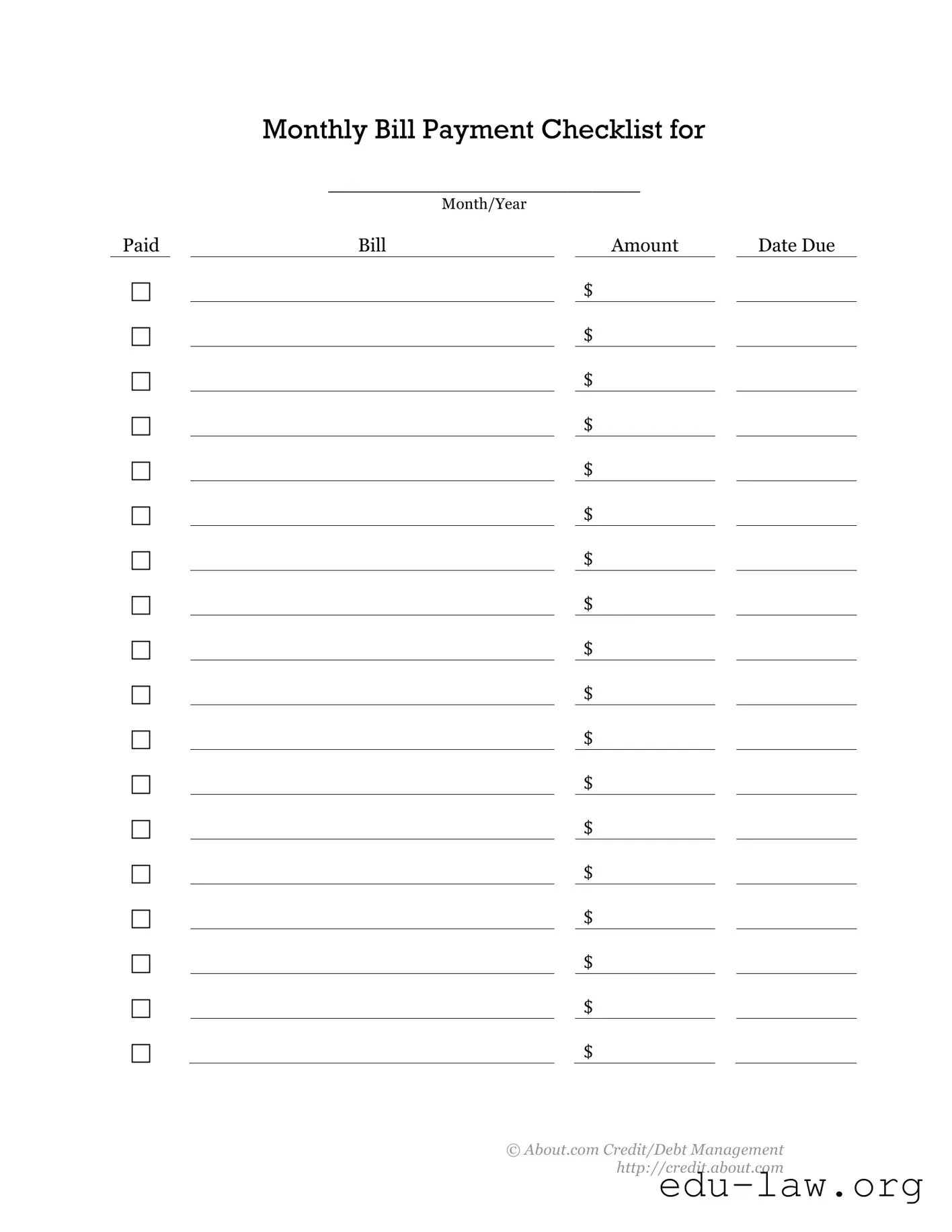
Managing monthly bills can often feel overwhelming, but a well-structured Bill Payment Checklist can simplify the process significantly. This handy tool helps individuals keep track of their financial obligations, ensuring that no payment slips through the cracks. The checklist is designed to include essential details such as the name of the bill, the amount due, and the date each payment is due. By filling out this form, you can visually organize your bills for a specific month and year, making it easier to monitor your spending and avoid late fees. Each line allows space for a new bill, providing a clear overview of your financial responsibilities. As you check off each item after payment, a sense of accomplishment builds, reinforcing good financial habits. Whether you’re managing household expenses or personal finances, utilizing this checklist can lead to better budgeting and less stress.

PAID
Monthly Bill Payment Checklist for
__________________________
MONTH/YEAR
|
BILL |
|
AMOUNT |
|
DATE DUE |
|
|
|
|
||
|
|
|
$ |
|
|
|
|
|
|
|
|
|
|
|
|
||
|
|
|
$ |
|
|
|
|
|
|
|
|
|
|
|
|
||
|
|
|
$ |
|
|
|
|
|
|
|
|
|
|
|
|
||
|
|
|
$ |
|
|
|
|
|
|
|
|
|
|
|
|
||
|
|
|
$ |
|
|
|
|
|
|
|
|
|
|
|
|
||
|
|
|
$ |
|
|
|
|
|
|
|
|
|
|
|
|
||
|
|
|
$ |
|
|
|
|
|
|
|
|
|
|
|
|
||
|
|
|
$ |
|
|
|
|
|
|
|
|
|
|
|
|
||
|
|
|
$ |
|
|
|
|
|
|
|
|
|
|
|
|
||
|
|
|
$ |
|
|
|
|
|
|
|
|
|
|
|
|
||
|
|
|
$ |
|
|
|
|
|
|
|
|
|
|
|
|
||
|
|
|
$ |
|
|
|
|
|
|
|
|
|
|
|
|
||
|
|
|
$ |
|
|
|
|
|
|
|
|
|
|
|
|
||
|
|
|
$ |
|
|
|
|
|
|
|
|
|
|
|
|
||
|
|
|
$ |
|
|
|
|
|
|
|
|
|
|
|
|
||
|
|
|
$ |
|
|
|
|
|
|
|
|
|
|
|
|
||
|
|
|
$ |
|
|
|
|
|
|
|
|
|
|
|
|
||
|
|
|
$ |
|
|
|
|
|
|
|
|
©About.com Credit/Debt Management http://credit.about.com
| Fact Name | Description |
|---|---|
| Purpose | The Bill Payment Checklist form helps individuals track and manage their monthly bills effectively. |
| Format | This form includes spaces for bill amounts, due dates, and a checkbox to indicate payment status. |
| Customization | Users can personalize the form by filling in their name, month, and year for clarity. |
| State-Specific Forms | Some states may have specific requirements for bill payment tracking. Check local laws for any governing regulations. |
| Accessibility | The form is designed to be simple and user-friendly, making it accessible for all individuals managing their finances. |
Filling out the Bill Payment Checklist form can help you stay organized and ensure that all your monthly bills are accounted for. By following these steps, you can easily track your payments and avoid any late fees.
After completing the form, you can use it as a reference throughout the month to keep track of your payments. This simple checklist can help you manage your finances more effectively.
What is the purpose of the Bill Payment Checklist form?
The Bill Payment Checklist form is designed to help individuals keep track of their monthly bills. By using this checklist, you can ensure that you are aware of all your financial obligations for a specific month. It assists in organizing due dates, amounts, and payment statuses, which can reduce the risk of late payments and associated fees.
How do I fill out the Bill Payment Checklist form?
To complete the form, start by writing the month and year at the top. Next, list each bill you need to pay along with the corresponding amount and due date. As you pay each bill, mark the checkbox next to it to indicate that it has been paid. This visual confirmation helps you stay organized and aware of your financial commitments.
Can I customize the Bill Payment Checklist for my needs?
Yes, the Bill Payment Checklist can be customized to fit your specific needs. You can add additional rows for more bills, or even modify the categories based on your unique financial situation. The goal is to create a tool that works best for you, so feel free to adapt it as necessary.
What should I do if I miss a payment?
If you miss a payment, it’s important to address it as soon as possible. Check if there are any late fees associated with the missed payment and determine if you can pay the bill immediately. If you cannot pay it right away, contact the service provider to discuss your options. They may offer a grace period or a payment plan to help you manage the situation.
Is there a way to keep track of my bills electronically?
Absolutely. While the Bill Payment Checklist form is a great paper tool, you can also create a digital version using spreadsheets or budgeting apps. Many apps allow you to set reminders for due dates, track payments, and even categorize your expenses, making it easier to manage your finances on the go.
How often should I update my Bill Payment Checklist?
It’s best to update your Bill Payment Checklist at the beginning of each month. This allows you to review any new bills that may have arisen and ensure that all previous bills are accounted for. Regular updates will help you maintain a clear understanding of your financial obligations and avoid any surprises.
Neglecting to fill in the month and year: Individuals often forget to specify the month and year at the top of the form. This can lead to confusion regarding which bills are being tracked.
Inaccurate bill amounts: Some people make errors when entering the amounts due. Double-checking the figures against the actual bills can prevent overpayment or missed payments.
Forgetting to note the due dates: Failing to include the due dates for each bill is a common mistake. This oversight can result in late payments and potential fees.
Not checking off paid bills: After making payments, individuals may forget to check off the corresponding boxes. This can lead to uncertainty about which bills have been settled.
Leaving the form incomplete: Some users submit the form without filling in all the necessary fields. Incomplete forms can hinder effective tracking of financial obligations.
Ignoring additional notes: Individuals often overlook the importance of adding notes for specific bills. This can include payment methods or any special instructions that may be relevant.
When managing your monthly finances, the Bill Payment Checklist form is an essential tool. However, it often works best in conjunction with several other documents that help streamline the payment process and ensure everything is in order. Here’s a brief overview of some common forms and documents that complement the checklist.
Utilizing these documents alongside the Bill Payment Checklist form can significantly enhance your financial management. By staying organized and informed, you can navigate your monthly bills with confidence and ease.
The first document similar to the Bill Payment Checklist is a Budget Planner. Both documents serve as essential tools for managing finances. A Budget Planner outlines expected income and expenses, helping individuals allocate their funds effectively. Like the checklist, it emphasizes organization and tracking, ensuring that all financial obligations are met in a timely manner. This proactive approach to budgeting fosters financial discipline and awareness.
Another comparable document is a Payment Schedule. This schedule details when specific payments are due, similar to the checklist's focus on due dates. It provides a timeline for payments, which helps individuals avoid late fees and maintain a good credit score. By clearly outlining payment dates, both documents promote accountability and timely financial management.
A third document is the Expense Tracker. This tool records all expenditures, allowing users to monitor their spending habits. Much like the Bill Payment Checklist, it encourages individuals to stay on top of their financial commitments. Tracking expenses helps identify patterns and areas where savings can be made, ultimately leading to better financial health.
The fourth document is a Financial Calendar. This calendar highlights important financial dates, including bill due dates and payment deadlines. Similar to the checklist, it serves as a visual reminder of upcoming obligations. By integrating these dates into a calendar format, users can better plan their monthly finances and avoid missing crucial payments.
Next is the Debt Repayment Plan. This plan outlines how individuals will pay off their debts over time. Like the Bill Payment Checklist, it emphasizes the importance of regular payments and tracking progress. By creating a structured repayment strategy, individuals can systematically reduce their debt burden, fostering a sense of accomplishment and financial stability.
Finally, a Savings Goal Tracker is another document that shares similarities with the Bill Payment Checklist. While the checklist focuses on outgoing payments, the tracker emphasizes saving for specific goals. Both documents encourage accountability and organization in financial management. By tracking savings progress, individuals can stay motivated and committed to their financial objectives, just as they do with bill payments.
When filling out the Bill Payment Checklist form, it is important to follow specific guidelines to ensure accuracy and completeness. Here are some things you should and shouldn't do:
When it comes to the Bill Payment Checklist form, several misconceptions can lead to confusion. Understanding these misconceptions can help individuals manage their finances more effectively. Here are four common misunderstandings:
By addressing these misconceptions, individuals can better utilize the Bill Payment Checklist form to enhance their financial management skills.
Using the Bill Payment Checklist form can streamline your monthly budgeting process. Here are some key takeaways to keep in mind:
By following these tips, you can manage your bills more effectively and reduce financial stress.