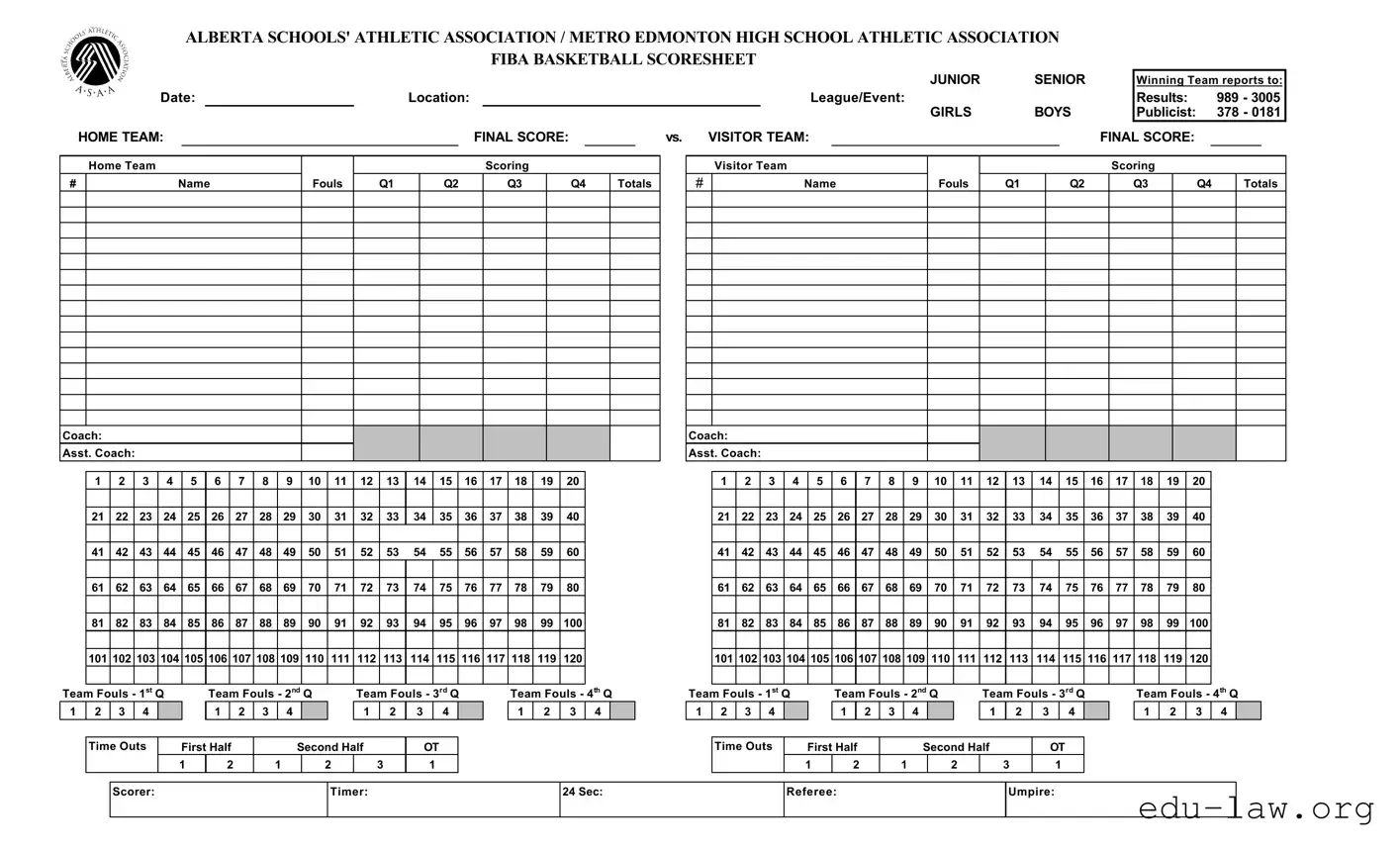
The Basketball Scoresheet form is an essential tool for accurately recording the events of a basketball game. It serves multiple purposes, including tracking team performance, individual player statistics, and game progression. The form is structured to capture critical information such as the names of the teams, the final score, and the date and location of the event. Each team’s scoring is meticulously detailed, with spaces allocated for player names, fouls, and points scored in each quarter. Additionally, the form includes sections for tracking team fouls across all four quarters, ensuring that officials can monitor the game's flow and maintain compliance with league rules. Coaches and team staff can also note timeouts taken during the game, providing a comprehensive overview of the match's strategic decisions. The scoresheet is designed for both junior and senior levels, accommodating the needs of various leagues and events. By utilizing this form, teams can effectively analyze their performance and make informed adjustments for future games.
ALBERTA SCHOOLS' ATHLETIC ASSOCIATION / METRO EDMONTON HIGH SCHOOL ATHLETIC ASSOCIATION
FIBA BASKETBALL SCORESHEET
|
|
|
|
|
|
|
|
|
|
JUNIOR |
SENIOR |
|
Winning Team reports to: |
|||
Date: |
|
Location: |
|
|
|
League/Event: |
|
|
|
Results: |
989 - 3005 |
|||||
|
|
|
|
|
|
|
|
|
|
GIRLS |
BOYS |
|
Publicist: |
378 - 0181 |
||
HOME TEAM: |
|
|
|
FINAL SCORE: |
|
vs. |
VISITOR TEAM: |
|
|
|
FINAL SCORE: |
|
|
|||
|
Home Team |
|
|
|
Scoring |
|
|
# |
Name |
Fouls |
Q1 |
Q2 |
Q3 |
Q4 |
Totals |
|
|
|
|
|
|
|
|
|
|
|
|
|
|
|
|
|
|
|
|
|
|
|
|
|
|
|
|
|
|
|
|
|
|
|
|
|
|
|
|
|
|
|
|
|
|
|
|
|
|
|
|
|
|
|
|
|
|
|
|
|
|
|
|
|
|
|
|
|
|
|
|
|
|
|
|
|
|
|
|
|
|
|
|
|
|
|
|
|
|
|
|
|
|
|
|
|
|
|
|
|
|
|
|
|
|
|
|
|
|
|
|
|
|
|
|
|
|
|
|
Coach:
Asst. Coach:
|
1 |
2 |
3 |
4 |
5 |
6 |
7 |
8 |
9 |
10 |
11 |
12 |
13 |
14 |
15 |
16 |
17 |
18 |
19 |
20 |
|
|
|
|
|
|
|
|
|
|
|
|
|
|
|
|
|
|
|
|
|
|
|
|
|
|
21 |
22 |
23 |
24 |
25 |
26 |
27 |
28 |
29 |
30 |
31 |
32 |
33 |
34 |
35 |
36 |
37 |
38 |
39 |
40 |
|
|
|
|
|
|
|
|
|
|
|
|
|
|
|
|
|
|
|
|
|
|
|
|
|
|
41 |
42 |
43 |
44 |
45 |
46 |
47 |
48 |
49 |
50 |
51 |
52 |
53 |
54 |
55 |
56 |
57 |
58 |
59 |
60 |
|
|
|
|
|
|
|
|
|
|
|
|
|
|
|
|
|
|
|
|
|
|
|
|
|
|
61 |
62 |
63 |
64 |
65 |
66 |
67 |
68 |
69 |
70 |
71 |
72 |
73 |
74 |
75 |
76 |
77 |
78 |
79 |
80 |
|
|
|
|
|
|
|
|
|
|
|
|
|
|
|
|
|
|
|
|
|
|
|
|
|
|
81 |
82 |
83 |
84 |
85 |
86 |
87 |
88 |
89 |
90 |
91 |
92 |
93 |
94 |
95 |
96 |
97 |
98 |
99 |
100 |
|
|
|
|
|
|
|
|
|
|
|
|
|
|
|
|
|
|
|
|
|
|
|
|
|
|
101 |
102 |
103 |
104 |
105 |
106 |
107 |
108 |
109 |
110 |
111 |
112 |
113 |
114 |
115 |
116 |
117 |
118 |
119 |
120 |
|
|
|
|
|
|
|
|
|
|
|
|
|
|
|
|
|
|
|
|
|
|
|
|
|
Team Fouls - 1st Q |
|
Team Fouls - 2nd Q |
|
Team Fouls - 3rd Q |
|
|
Team Fouls - 4th Q |
|||||||||||||||
1 |
2 |
3 |
4 |
|
|
1 |
2 |
3 |
4 |
|
|
1 |
2 |
3 |
4 |
|
|
1 |
2 |
3 |
4 |
|
|
Visitor Team |
|
|
|
Scoring |
|
|
# |
Name |
Fouls |
Q1 |
Q2 |
Q3 |
Q4 |
Totals |
|
|
|
|
|
|
|
|
|
|
|
|
|
|
|
|
|
|
|
|
|
|
|
|
|
|
|
|
|
|
|
|
|
|
|
|
|
|
|
|
|
|
|
|
|
|
|
|
|
|
|
|
|
|
|
|
|
|
|
|
|
|
|
|
|
|
|
|
|
|
|
|
|
|
|
|
|
|
|
|
|
|
|
|
|
|
|
|
|
|
|
|
|
|
|
|
|
|
|
|
|
|
|
|
|
|
|
|
|
|
|
|
|
|
|
|
|
|
|
|
Coach:
Asst. Coach:
|
1 |
2 |
3 |
4 |
5 |
6 |
7 |
8 |
9 |
10 |
11 |
12 |
13 |
14 |
15 |
16 |
17 |
18 |
19 |
20 |
|
|
|
|
|
|
|
|
|
|
|
|
|
|
|
|
|
|
|
|
|
|
|
|
|
|
21 |
22 |
23 |
24 |
25 |
26 |
27 |
28 |
29 |
30 |
31 |
32 |
33 |
34 |
35 |
36 |
37 |
38 |
39 |
40 |
|
|
|
|
|
|
|
|
|
|
|
|
|
|
|
|
|
|
|
|
|
|
|
|
|
|
41 |
42 |
43 |
44 |
45 |
46 |
47 |
48 |
49 |
50 |
51 |
52 |
53 |
54 |
55 |
56 |
57 |
58 |
59 |
60 |
|
|
|
|
|
|
|
|
|
|
|
|
|
|
|
|
|
|
|
|
|
|
|
|
|
|
61 |
62 |
63 |
64 |
65 |
66 |
67 |
68 |
69 |
70 |
71 |
72 |
73 |
74 |
75 |
76 |
77 |
78 |
79 |
80 |
|
|
|
|
|
|
|
|
|
|
|
|
|
|
|
|
|
|
|
|
|
|
|
|
|
|
81 |
82 |
83 |
84 |
85 |
86 |
87 |
88 |
89 |
90 |
91 |
92 |
93 |
94 |
95 |
96 |
97 |
98 |
99 |
100 |
|
|
|
|
|
|
|
|
|
|
|
|
|
|
|
|
|
|
|
|
|
|
|
|
|
|
101 |
102 |
103 |
104 |
105 |
106 |
107 |
108 |
109 |
110 |
111 |
112 |
113 |
114 |
115 |
116 |
117 |
118 |
119 |
120 |
|
|
|
|
|
|
|
|
|
|
|
|
|
|
|
|
|
|
|
|
|
|
|
|
|
Team Fouls - 1st Q |
|
Team Fouls - 2nd Q |
|
Team Fouls - 3rd Q |
|
|
Team Fouls - 4th Q |
|||||||||||||||
1 |
2 |
3 |
4 |
|
|
1 |
2 |
3 |
4 |
|
|
1 |
2 |
3 |
4 |
|
|
1 |
2 |
3 |
4 |
|
Time Outs |
First Half |
|
Second Half |
|
OT |
|
|
Time Outs |
First Half |
|
Second Half |
|
|
OT |
|
|||||||||
|
|
1 |
2 |
1 |
|
2 |
|
3 |
1 |
|
|
|
1 |
|
2 |
1 |
|
2 |
|
3 |
1 |
|
||
|
|
|
|
|
|
|
|
|
|
|
|
|
|
|
|
|
|
|
|
|
|
|
||
|
Scorer: |
|
|
|
|
|
Timer: |
|
|
|
24 Sec: |
Referee: |
|
|
|
|
|
|
Umpire: |
|
||||
|
|
|
|
|
|
|
|
|
|
|
|
|
|
|
|
|
|
|
|
|
|
|
|
|
| Fact Name | Description |
|---|---|
| Governing Associations | The scoresheet is used by the Alberta Schools' Athletic Association and the Metro Edmonton High School Athletic Association. |
| Event Type | This form is applicable for both junior and senior basketball games. |
| Winning Team Reporting | The winning team is responsible for reporting the results after the game. |
| Scoring Sections | It includes sections for scoring by both the home and visitor teams, detailing player fouls and quarter totals. |
| Time Outs | The scoresheet tracks timeouts for both the first and second halves, as well as overtime. |
| Officials Information | It provides spaces to record the names of the scorer, timer, referee, and umpire. |
| Team Fouls | The form includes sections to record team fouls for each quarter of the game. |
| Contact Information | It lists contact numbers for publicists associated with the event, ensuring easy communication. |
Filling out the Basketball Scoresheet form is a straightforward process that requires careful attention to detail. Each section is designed to capture essential information about the game, including team names, scores, and player statistics. Following these steps will ensure that the scoresheet is completed accurately, providing a reliable record of the game.
What is the purpose of the Basketball Scoresheet form?
The Basketball Scoresheet form is designed to track and record the details of a basketball game. It captures essential information such as team names, final scores, player statistics, fouls, and timeouts. This form ensures accurate reporting and helps maintain a clear record of the game for both teams and officials.
How do I fill out the scoresheet for each team?
To fill out the scoresheet, start by entering the home and visitor team names at the top. Then, list the players for each team along with their corresponding jersey numbers. As the game progresses, record each player's fouls and points scored in each quarter. Be sure to total the points for each player and the team at the end of the game.
What information is required at the beginning of the scoresheet?
At the beginning of the scoresheet, you need to provide the date, location, and league or event name. Additionally, the winning team must report their details. This information helps identify the context of the game and ensures proper record-keeping.
How are timeouts recorded on the scoresheet?
Timeouts are recorded separately for the first half, second half, and any overtime periods. Each team has designated spaces to indicate the number of timeouts used. Simply mark the appropriate boxes as timeouts are called during the game.
What should I do if a player receives a foul?
When a player receives a foul, note it in the appropriate quarter column next to their name. Keep track of the total fouls for each player throughout the game. This information is crucial, as players may be disqualified from the game after accumulating a certain number of fouls.
Who is responsible for completing the scoresheet?
The responsibility of completing the scoresheet typically falls on the designated scorer or an official from each team. This person should ensure that all relevant information is accurately recorded during the game. It is important to double-check the scoresheet after the game to confirm that all details are correct before submitting it.
Missing Team Names: Failing to write down the home and visitor team names can lead to confusion. Always ensure both teams are clearly labeled at the top of the scoresheet.
Incorrect Final Scores: Double-check the final scores for both teams. Mistakes in the final score can affect standings and statistics.
Not Recording Fouls: Forgetting to track player fouls can result in players being unfairly penalized or allowed to play beyond their limit. Keep an accurate count throughout the game.
Missing Quarter Totals: Ensure that the totals for each quarter are calculated and recorded. This is essential for accurate game summaries.
Overlooking Time Outs: Failing to record timeouts taken by each team can lead to disputes. Mark these clearly to avoid any confusion later.
Incorrect Player Numbers: Make sure to write the correct player numbers next to their names. This helps in identifying who scored or committed fouls.
Neglecting to Fill Out Officials: Not listing the scorer, timer, and officials can lead to accountability issues. Always include their names at the bottom of the scoresheet.
The Basketball Scoresheet form is an essential document used to track the progress and results of a basketball game. However, several other forms and documents complement it to ensure proper organization and communication throughout the event. Below is a list of these related documents, each serving a specific purpose.
Each of these documents plays a vital role in ensuring that basketball games run smoothly and effectively. They help maintain order, provide necessary information, and facilitate communication among all involved parties.
The Basketball Scoresheet form shares similarities with the Game Summary Report used in various sports leagues. Both documents serve to provide a comprehensive overview of the game, including final scores, player statistics, and coaching details. The Game Summary Report typically includes sections for team names, scores, and a breakdown of player performance, much like the Basketball Scoresheet. This allows coaches and team managers to analyze game outcomes and player contributions effectively.
Another document that resembles the Basketball Scoresheet is the Player Performance Chart. This chart focuses on individual player statistics during a game, detailing points scored, assists, rebounds, and fouls. Similar to the scoresheet, it organizes data by quarters, allowing for easy comparison of player performance over time. Coaches use this chart to evaluate player effectiveness and make strategic decisions for future games.
The Match Report is another comparable document. This report captures the essential details of a sporting event, including the final score, key plays, and any incidents that occurred during the game. Like the Basketball Scoresheet, it emphasizes the importance of accurate record-keeping for both teams involved. The Match Report serves as a formal record that can be referenced for future analysis and discussions.
The Stat Sheet is also similar to the Basketball Scoresheet, as it provides a detailed breakdown of game statistics. It includes player stats, team fouls, and timeouts, much like the scoresheet. The Stat Sheet is often used by analysts and coaches to assess overall team performance and identify areas for improvement. Both documents help in tracking progress and making informed decisions based on statistical data.
The Play-by-Play Sheet is another document that parallels the Basketball Scoresheet. This sheet records every play during a game, including scoring plays, fouls, and substitutions. While the Basketball Scoresheet summarizes the game, the Play-by-Play Sheet provides a detailed account of the game flow. Coaches and analysts use both documents to review strategies and understand how specific plays impacted the game's outcome.
Finally, the Team Roster is similar in that it provides essential information about the players involved in the game. This document lists each player's name, number, and position, which is crucial for identifying participants during the game. While the Basketball Scoresheet captures performance data, the Team Roster focuses on player identification, ensuring that all team members are accounted for during the event.
When filling out the Basketball Scoresheet form, it is important to follow specific guidelines to ensure accuracy and clarity. Below is a list of seven things to do and avoid during this process.
By adhering to these guidelines, you will contribute to a smooth reporting process and maintain the integrity of the game. Timeliness and accuracy are essential.
Understanding the Basketball Scoresheet form is essential for accurate game reporting. However, several misconceptions can lead to confusion. Here are four common misunderstandings:
Being aware of these misconceptions can help ensure that the scoresheet is filled out accurately and comprehensively, benefiting players, coaches, and fans alike.
Filling out and utilizing the Basketball Scoresheet form effectively is essential for tracking the game's progress and ensuring accurate record-keeping. Here are some key takeaways to keep in mind:
By following these guidelines, you can ensure that the scoresheet serves its purpose effectively, providing a clear and accurate record of the game.