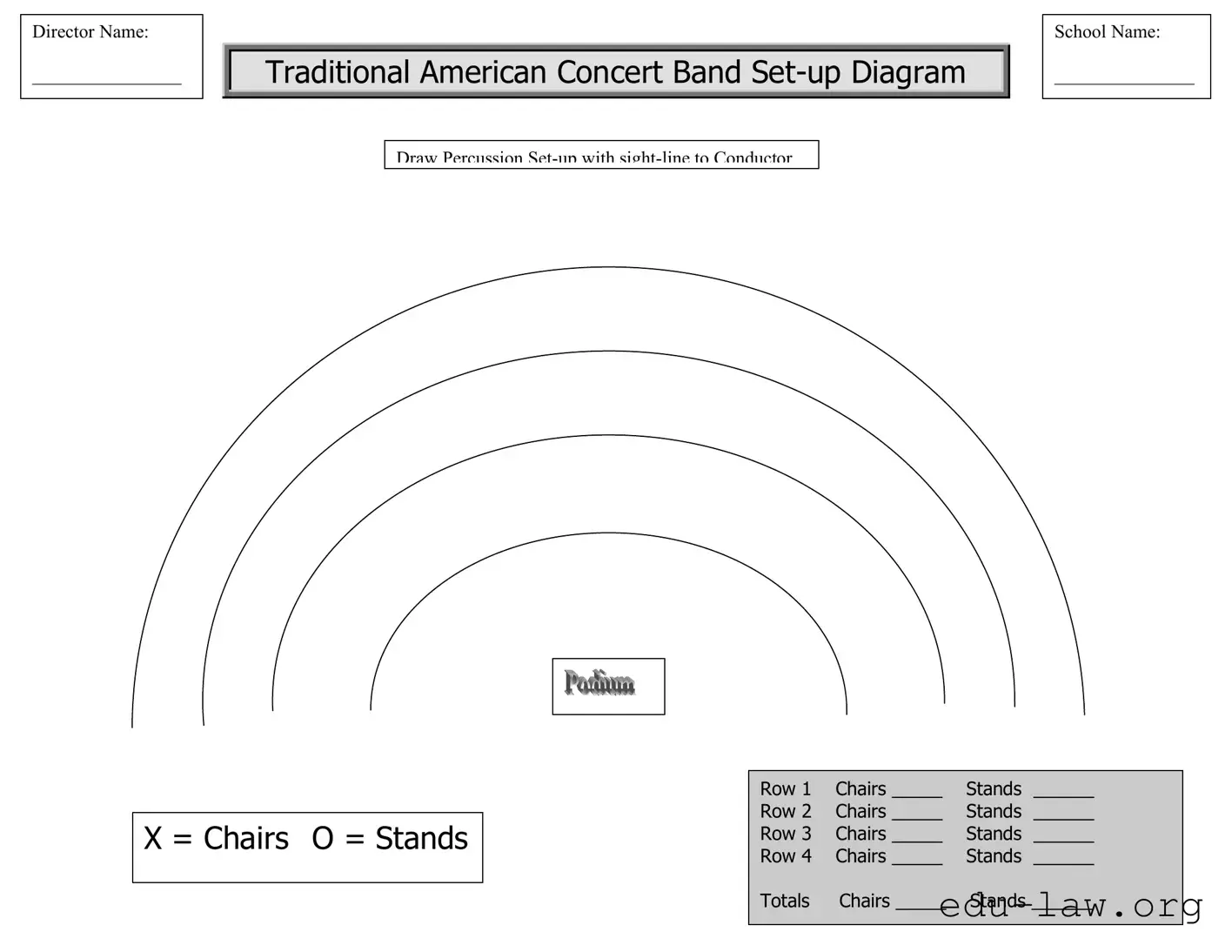
Creating a successful concert band experience requires careful planning, and the Band Seating Chart form plays a vital role in this process. This form helps directors organize the arrangement of musicians on stage, ensuring that each player has a designated spot that maximizes both sound quality and visibility. It includes essential details such as the director's name, school name, performance date, and time, which are crucial for coordination. Additionally, the form features a traditional American concert band setup diagram, allowing directors to draw the percussion setup while considering sight-lines to the conductor. The chart is divided into rows, where directors can specify the number of chairs and music stands for each section, from flutes to tubas. Accurate completion of this form not only aids the stage crew in setting up the performance space but also ensures that each musician can perform to the best of their abilities. Remember, it’s important to submit this form by the deadline to guarantee your specific needs are met.
Director Name:
________________
Traditional American Concert Band
Draw Percussion
School Name:
_______________
X = Chairs O = Stands
Row 1 |
Chairs _____ |
Stands |
______ |
Row 2 |
Chairs _____ |
Stands |
______ |
Row 3 |
Chairs _____ |
Stands |
______ |
Row 4 |
Chairs _____ |
Stands |
______ |
Totals |
Chairs _____ |
Stands ______ |
|
|
|
|
|
Concert Band
ROW 5
ROW 4
ROW 3
ROW 2
ROW 1
PODIUM
School: _______________________________________
Director: ______________________________________
Performance Date: _____________ Time: __________
ROW 1 ______ CHAIRS & _______ MUSIC STANDS
ROW 2 |
______ CHAIRS & _______ MUSIC STANDS |
ROW 3 |
______ CHAIRS & _______ MUSIC STANDS |
ROW 4 |
______ CHAIRS & _______ MUSIC STANDS |
ROW 5 |
______ CHAIRS & _______ MUSIC STANDS |
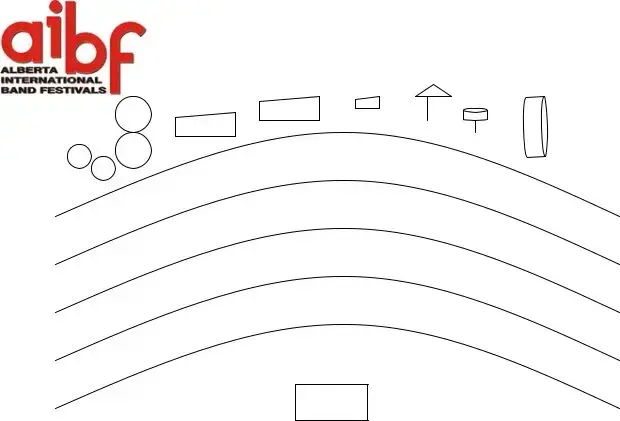
The AIBF stage crew will do their best to set the stage for your requirements.
Please note that percussion MUST stay in the basic
PLEASE FAX THIS FORM TO
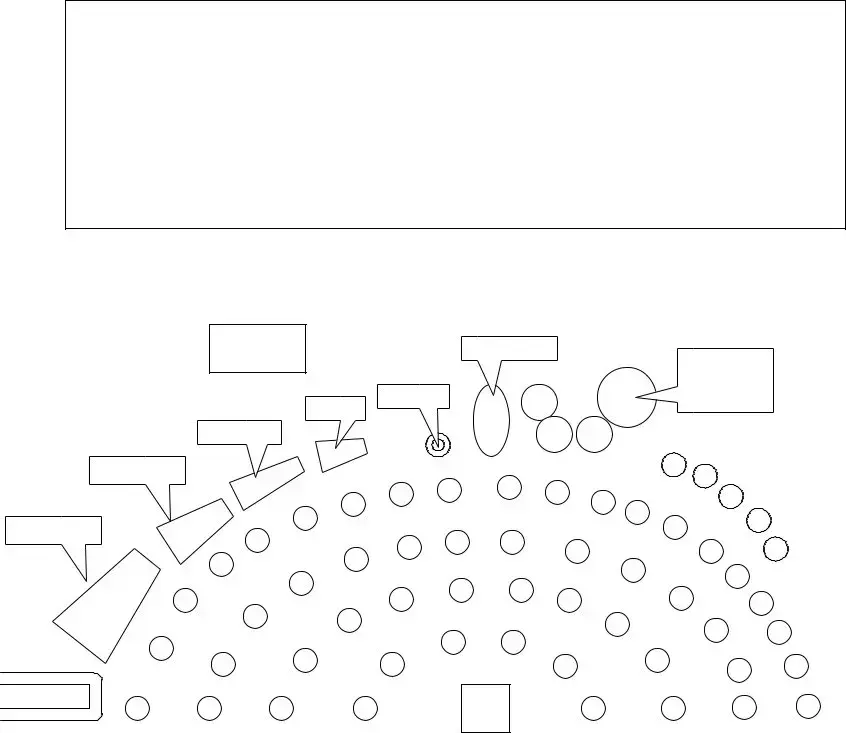
2007 Huron Concert Band
Row 1: 6 Chairs/3 Stands (Flute)
Row 2: 10 Chairs/8 Stands (1st & 2nd Clarinets, Oboe, Bassoon, Bass Clarinet)
Row 3: 14 Chairs/10 Stands (3rd Clarinet, Horns, Bari, Tenor, Alto
Row 4: 19 Chairs/13 Stands (Trumpets, Trombones, Euphonium, Tuba)
Row 5: 5 Stands
Percussion: 11 Stands
Auxiliary
Vibes
Bass
Timpani
Snare
Bells
Xylophone
Marimba
Chimes
| Fact Name | Description |
|---|---|
| Director Name | The form requires the director's name to be filled out, ensuring accountability and clear communication. |
| Traditional American Concert Band Set-up | A diagram is provided for the traditional concert band set-up, allowing for a visual representation of the arrangement. |
| School Information | Participants must include the school name and performance details, which helps in organizing the event logistics. |
| Chair and Stand Allocation | The form specifies the number of chairs and stands required for each row, ensuring that all musicians have the necessary equipment. |
| Fax Submission | Submission of the completed form must be done via fax to a designated number, which streamlines the collection process. |
| Stage Crew Assistance | The AIBF stage crew will assist in setting up the stage according to the submitted requirements, promoting a collaborative effort. |
| Governing Laws | This form is subject to the laws of the state in which the performance takes place, ensuring compliance with local regulations. |
Filling out the Band Seating Chart form is essential for organizing the concert band setup. This form helps ensure that all musicians have the necessary seating and stands for their instruments. Follow these steps to complete the form accurately.
What is the purpose of the Band Seating Chart form?
The Band Seating Chart form is designed to help organize the seating arrangement for a concert band performance. It allows directors to specify the number of chairs and music stands needed for each row, ensuring that all musicians are comfortably accommodated. Additionally, it provides a visual representation of the stage setup, which is crucial for maintaining sight lines to the conductor, especially for percussionists who must remain in their designated area.
How should I fill out the form correctly?
To fill out the Band Seating Chart form, start by entering the director's name and the school name at the top. Next, indicate the performance date and time. In each row section, specify the number of chairs and music stands required. Be sure to follow the traditional American concert band setup diagram provided, particularly for percussion instruments, which must adhere to the basic setup. Finally, fax the completed form to the designated number before the deadline to ensure your requirements are met.
What happens if I miss the submission deadline?
Submitting the Band Seating Chart form after the deadline may result in the stage crew being unable to accommodate your specific needs. This could lead to an unorganized setup, affecting the performance experience for both the musicians and the audience. It is crucial to meet the deadline of March 1, 2008, to ensure that all arrangements are made in time for your concert.
Can I make changes to the seating chart after submission?
While it is advisable to finalize your seating chart before submission, changes may be possible depending on the circumstances. If you need to make adjustments after sending the form, contact the stage crew as soon as possible. Keep in mind that last-minute changes may not always be feasible, particularly if they conflict with the overall stage setup or other performances.
What should I do if I have special requests for the setup?
If you have special requests regarding the setup, such as specific placements for certain instruments or additional equipment, make sure to include these details on the form. The AIBF stage crew will do their best to accommodate your requirements. However, clear communication is essential, so providing as much detail as possible will help ensure that your requests are understood and met.
Failing to include the director's name and school name. These details are essential for identification and coordination.
Not accurately counting the number of chairs and stands for each row. Miscounts can lead to inadequate seating and equipment during the performance.
Overlooking the percussion set-up. It is crucial that percussion instruments remain in the specified arrangement to ensure proper sight-lines to the conductor.
Ignoring the deadline for submission. The form must be faxed before the specified date to ensure the stage crew can accommodate the requests.
Not providing a performance date and time. This information is vital for scheduling and planning purposes.
When planning a concert for a band, several forms and documents are essential to ensure everything runs smoothly. Each document serves a specific purpose, helping the director, crew, and musicians coordinate their efforts effectively. Below is a list of important documents that are often used alongside the Band Seating Chart form.
Utilizing these documents alongside the Band Seating Chart form can greatly enhance the organization and execution of a concert. Each piece plays a vital role in ensuring that everyone involved is informed and prepared, leading to a successful performance.
The Seating Arrangement Form is similar to the Band Seating Chart form in that it outlines the specific placement of musicians in an ensemble. Both documents help directors visualize the layout of performers, ensuring that each musician has an assigned spot. This arrangement is crucial for maintaining order during rehearsals and performances. The Seating Arrangement Form typically includes details about the number of chairs and stands, much like the Band Seating Chart, allowing for a clear understanding of the setup required for a successful performance.
The Performance Setup Sheet also shares similarities with the Band Seating Chart form. This document focuses on the overall arrangement for a performance, including stage dimensions and equipment placement. Like the Band Seating Chart, it addresses the needs of various sections of the band, ensuring that all performers can see the conductor and hear one another. Both forms emphasize the importance of sight-lines and acoustics, which are vital for a cohesive performance experience.
The Orchestra Seating Plan is another document that mirrors the Band Seating Chart form. It serves a similar purpose by detailing the seating layout for an orchestra, which includes strings, woodwinds, brass, and percussion. This plan helps conductors organize their musicians effectively, ensuring that each section is positioned correctly for optimal sound blending. Just as the Band Seating Chart does, the Orchestra Seating Plan highlights the importance of sight-lines and communication among musicians.
The Stage Layout Diagram is akin to the Band Seating Chart form as it visually represents the arrangement of performers and equipment on stage. This document includes markings for where each musician will sit, similar to how the Band Seating Chart specifies chair and stand placements. Both documents help to facilitate communication between the director and stage crew, ensuring that everyone understands the intended setup before the performance.
The Event Logistics Form parallels the Band Seating Chart form by providing a comprehensive overview of the event's requirements. This document typically includes information about the number of performers, equipment needs, and setup times. Like the Band Seating Chart, it serves as a tool for planning and coordination, helping to ensure that all necessary elements are in place for a successful event.
The Rehearsal Schedule shares similarities with the Band Seating Chart form by outlining the structure of rehearsals, including which sections will practice together and when. While the Band Seating Chart focuses on physical placement, the Rehearsal Schedule emphasizes the timing and organization of practice sessions. Both documents aim to enhance the efficiency of the ensemble, ensuring that all musicians are prepared for the performance.
Finally, the Equipment Inventory List is comparable to the Band Seating Chart form in that it details the specific items needed for a performance. This list may include instruments, stands, and other equipment required for each section of the band. Just as the Band Seating Chart organizes musicians, the Equipment Inventory List organizes the tools necessary for their success, ensuring that everything is accounted for before the event.
When filling out the Band Seating Chart form, keep these tips in mind:
Misconception 1: The Band Seating Chart is only for the director's use.
This form is actually a collaborative tool. It helps both the director and the band members understand the arrangement for performances. Everyone benefits from clarity in seating and setup.
Misconception 2: The percussion section can be arranged freely.
In reality, the percussion must adhere to a specific setup as outlined in the form. This ensures that they have proper sight-lines to the conductor and that all instruments are positioned effectively for performance.
Misconception 3: The number of chairs and stands can be adjusted without limitations.
While adjustments can be made, they should align with the traditional setup guidelines. The form provides a framework that helps maintain balance and sound quality in the ensemble.
Misconception 4: The form is not time-sensitive.
Submitting the form by the specified deadline is crucial. It allows the stage crew to prepare adequately and ensures that all requirements are met for a successful performance.
Misconception 5: The setup diagram is optional.
The diagram is essential for visualizing the arrangement. It provides a clear reference for both the stage crew and the band, facilitating a smoother setup process on performance day.
Here are some important points to remember when filling out and using the Band Seating Chart form: