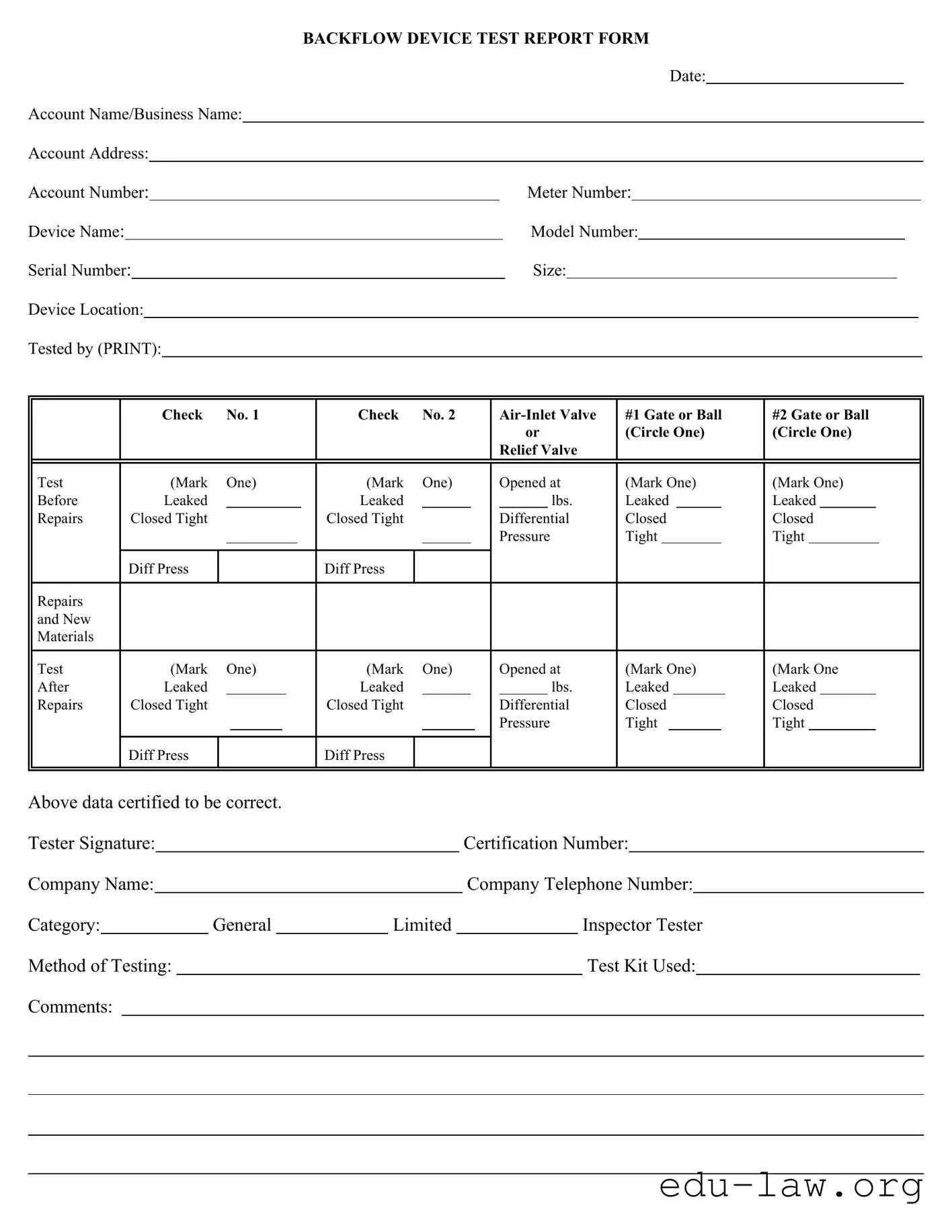
The Backflow Test Report form serves as a crucial document in ensuring the safety and integrity of water supply systems. This form captures essential details such as the date of testing, account information, and specifics about the backflow device being assessed. Key fields include the device name, model number, and serial number, all of which help identify the equipment in question. The form also requires the tester to provide their name, certification number, and company details, ensuring accountability and traceability. During the testing process, various checks are performed, including evaluations of air-inlet valves and relief valves, with results indicating whether the device is functioning properly or if leaks are present. Additionally, the form includes space for documenting repairs and new materials used, along with comments that may provide further context. Overall, this report is vital for maintaining compliance with health and safety regulations while safeguarding public water supplies.

BACKFLOW DEVICE TEST REPORT FORM
Date:
Account Name/Business Name:
Account Address:
Account Number: |
|
|
|
|
|
|
|
|
|
|
|
|
|
|
|
|
|
|
|
|
Meter Number: |
|
|
|
|
|
|
|
|
||||||||||||||||||||||
Device Name: |
|
|
|
|
|
|
|
|
|
|
|
|
|
|
|
|
|
|
|
|
|
|
|
|
|
|
Model Number: |
|
|
|
|
|
|
|
|
||||||||||||||||
Serial Number: |
|
|
|
|
|
|
|
|
|
|
|
|
|
|
|
|
|
|
|
|
Size: |
|
|
|
|
|
|
|
|
|
|
|
|
|
|
|
|
|
|
|
|
|
|||||||||
Device Location: |
|
|
|
|
|
|
|
|
|
|
|
|
|
|
|
|
|
|
|
|
|
|
|
|
|
|
|
|
|
|
|
|
|
|
|
|
|
|
|
|
|
|
|
||||||||
Tested by (PRINT): |
|
|
|
|
|
|
|
|
|
|
|
|
|
|
|
|
|
|
|
|
|
|
|
|
|
|
|
|
|
|
|
|
|
|
|
|
|
|
|
|
|
|
|||||||||
|
|
|
|
|
|
|
|
|
|
|
|
|
|
|
|
|
|
|
|
|
|
|
|
|
|
|
|
|
|
|
|
|
|
|
|
|
|
|
|
|
|
|
|
|
|
|
|
|
|
|
|
|
|
|
|
|
|
|
|
CHECK |
|
|
NO. 1 |
CHECK |
|
NO. 2 |
|
|
|
|
#1 GATE OR BALL |
#2 GATE OR BALL |
|||||||||||||||||||||||||||||||
|
|
|
|
|
|
|
|
|
|
|
|
|
|
|
|
|
|
|
|
|
|
|
|
|
|
|
|
|
OR |
|
|
(CIRCLE ONE) |
(CIRCLE ONE) |
||||||||||||||||||
|
|
|
|
|
|
|
|
|
|
|
|
|
|
|
|
|
|
|
|
|
|
|
|
|
|
|
RELIEF VALVE |
|
|
|
|
|
|
|
|
|
|
|
|
|
|
|
|
|
|
|
|
||||
|
|
|
|
|
|
|
|
|
|
|
|
|
|
|
|
|
|
|
|
|
|
|
|
|
|
|
|
|
|
|
|
|
|
|
|
|
|
|
|
|
|
|
|
|
|
|
|
|
|
|
|
Test |
|
|
|
|
|
|
(Mark |
|
|
One) |
(Mark |
|
One) |
|
|
|
|
Opened at |
|
|
(Mark One) |
(Mark One) |
|||||||||||||||||||||||||||||
Before |
|
|
|
|
|
|
Leaked |
|
|
|
|
|
|
|
|
|
Leaked |
|
|
|
|
|
|
|
|
|
lbs. |
|
|
Leaked |
|
|
Leaked |
|
|
||||||||||||||||
Repairs |
|
Closed Tight |
|
|
|
|
|
|
|
|
|
Closed Tight |
|
|
|
|
|
|
Differential |
|
|
Closed |
Closed |
||||||||||||||||||||||||||||
|
|
|
|
|
|
|
|
|
|
|
|
|
|
|
|
|
|
|
|
|
|
|
|
|
|
|
Pressure |
|
|
Tight |
Tight |
||||||||||||||||||||
|
|
|
|
|
|
|
|
|
|
|
|
|
|
|
|
|
|
|
|
|
|
|
|
|
|
|
|
|
|
|
|
|
|
|
|
|
|
|
|
|
|
|
|
|
|
|
|
|
|
|
|
|
|
|
Diff Press |
|
|
|
|
|
|
|
|
|
Diff Press |
|
|
|
|
|
|
|
|
|
|
|
|
|
|
|
|
|
|
|
|
|
|
|
|
|
|
|
|
|
|
|
|||||||
|
|
|
|
|
|
|
|
|
|
|
|
|
|
|
|
|
|
|
|
|
|
|
|
|
|
|
|
|
|
|
|
|
|
|
|
|
|
|
|
|
|
|
|
|
|
|
|
|
|
|
|
Repairs |
|
|
|
|
|
|
|
|
|
|
|
|
|
|
|
|
|
|
|
|
|
|
|
|
|
|
|
|
|
|
|
|
|
|
|
|
|
|
|
|
|
|
|
|
|
|
|
|
|
|
|
and New |
|
|
|
|
|
|
|
|
|
|
|
|
|
|
|
|
|
|
|
|
|
|
|
|
|
|
|
|
|
|
|
|
|
|
|
|
|
|
|
|
|
|
|
|
|
|
|
|
|
|
|
Materials |
|
|
|
|
|
|
|
|
|
|
|
|
|
|
|
|
|
|
|
|
|
|
|
|
|
|
|
|
|
|
|
|
|
|
|
|
|
|
|
|
|
|
|
|
|
|
|
|
|
|
|
|
|
|
|
|
|
|
|
|
|
|
|
|
|
|
|
|
|
|
|
|
|
|
|
|
|
|
|
|
|
|
|
|
|
|
|
|
|
|
|
|
|
|
|
|
|
|
|
|
|
|
|
Test |
|
|
|
|
|
|
(Mark |
|
|
One) |
(Mark |
|
One) |
|
|
|
|
Opened at |
|
|
(Mark One) |
(Mark One |
|||||||||||||||||||||||||||||
After |
|
|
|
|
|
|
Leaked |
|
|
|
|
|
|
|
|
|
Leaked |
|
|
|
|
|
|
|
|
|
lbs. |
|
|
Leaked |
|
|
Leaked |
|
|
||||||||||||||||
Repairs |
|
Closed Tight |
|
|
|
|
|
|
|
|
|
Closed Tight |
|
|
|
|
|
|
Differential |
|
|
Closed |
Closed |
||||||||||||||||||||||||||||
|
|
|
|
|
|
|
|
|
|
|
|
|
|
|
|
|
|
|
|
|
|
|
|
|
|
|
Pressure |
|
|
Tight |
Tight |
||||||||||||||||||||
|
|
|
|
|
|
|
|
|
|
|
|
|
|
|
|
|
|
|
|
|
|
|
|
|
|
|
|
|
|
|
|
|
|
|
|
|
|
|
|
|
|
|
|
|
|
|
|
|
|
|
|
|
|
|
Diff Press |
|
|
|
|
|
|
|
|
|
Diff Press |
|
|
|
|
|
|
|
|
|
|
|
|
|
|
|
|
|
|
|
|
|
|
|
|
|
|
|
|
|
|
|
|||||||
|
|
|
|
|
|
|
|
|
|
|
|
|
|
|
|
|
|
|
|
|
|
|
|
|
|
|
|
|
|
|
|
|
|
|
|
|
|
|
|
|
|
|
|
|
|
|
|
|
|
||
|
|
|
|
|
|
|
|
|
|
|
|
|
|
|
|
|
|
|
|
|
|
|
|
|
|
|
|
|
|
|
|
|
|
|
|
|
|
|
|
|
|
|
|
|
|
|
|
|
|
|
|
Above data certified to be correct. |
|
|
|
|
|
|
|
|
|
|
|
|
|
|
|
|
|
|
|
|
|
|
|
|
|
|
|
|
|
|
|
|
|
||||||||||||||||||
Tester Signature: |
|
|
|
|
|
|
|
|
|
|
|
|
|
Certification Number: |
|
|
|
|
|
|
|
||||||||||||||||||||||||||||||
|
|
|
|
|
|
|
|
|
|
|
|
|
|
|
|
|
|
|
|
|
|
|
|
|
|
|
|
|
|||||||||||||||||||||||
Company Name: |
|
|
|
|
|
|
|
|
|
|
|
|
|
|
Company Telephone Number: |
|
|
|
|
|
|
|
|||||||||||||||||||||||||||||
|
|
|
|
|
|
|
|
|
|
|
|
|
|
|
|
|
|
|
|
|
|
|
|
|
|
|
|
|
|
|
|
|
|||||||||||||||||||
Category: |
|
|
|
|
|
|
|
|
General |
|
|
Limited |
|
|
|
|
|
|
|
|
|
Inspector Tester |
|
|
|
|
|
|
|
||||||||||||||||||||||
Method of Testing: |
|
|
|
|
|
|
|
|
|
|
|
|
|
|
|
|
|
|
|
|
|
|
|
Test Kit Used: |
|
|
|
|
|
|
|
||||||||||||||||||||
Comments: |
|
|
|
|
|
|
|
|
|
|
|
|
|
|
|
|
|
|
|
|
|
|
|
|
|
|
|
|
|
|
|
|
|
|
|
|
|
|
|
|
|
|
|
|
|
|
|
|
|
||
|
|
|
|
|
|
|
|
|
|
|
|
|
|
|
|
|
|
|
|
|
|
|
|
|
|
|
|
|
|
|
|
|
|
|
|
|
|
|
|
|
|
|
|
|
|
|
|
|
|
|
|
|
|
|
|
|
|
|
|
|
|
|
|
|
|
|
|
|
|
|
|
|
|
|
|
|
|
|
|
|
|
|
|
|
|
|
|
|
|
|
|
|
|
|
|
|
|
|
|
|
|
|
|
|
|
|
|
|
|
|
|
|
|
|
|
|
|
|
|
|
|
|
|
|
|
|
|
|
|
|
|
|
|
|
|
|
|
|
|
|
|
|
|
|
|
|
|
|
|
|
|
|
|
|
|
|
|
|
|
|
|
|
|
|
|
|
|
|
|
|
|
|
|
|
|
|
|
|
|
|
|
|
|
|
|
|
|
|
|
|
|
|
|
|
|
|
|
|
|
|
|
|
|
|
|
|
|
| Fact Name | Description |
|---|---|
| Date | The report must include the date when the backflow device was tested. |
| Account Information | Details such as account name, business name, account address, and account number are required. |
| Device Details | Information about the backflow device includes its name, model number, serial number, and size. |
| Device Location | The exact location of the device must be specified in the report. |
| Tester Information | The report requires the name of the tester, their certification number, and the company they represent. |
| Test Results | Results must indicate whether the device leaked, was closed tight, or required repairs. |
| Governing Laws | In many states, backflow testing is governed by local plumbing codes and regulations. |
| Method of Testing | The form requires the method of testing used and the test kit that was employed. |
| Comments Section | A section for additional comments allows testers to provide further insights or notes. |
| Certification | By signing the report, the tester certifies that all provided data is accurate and complete. |
Filling out the Backflow Test Report form is an important step in ensuring that your backflow prevention device is functioning properly. Once you have completed the form, it will be submitted to the appropriate authority for review and record-keeping. Here’s how to fill it out step by step.
What is the purpose of the Backflow Test Report form?
The Backflow Test Report form is used to document the results of a backflow prevention device test. This form ensures that the device is functioning correctly and preventing contaminated water from flowing back into the clean water supply. It provides essential information about the device, the testing process, and the tester's qualifications.
What information is required on the Backflow Test Report form?
Key details must be included on the form. This includes the date of the test, account name, account address, account number, meter number, device name, model number, serial number, size, and device location. Additionally, the tester's name, certification number, company name, and contact information are also necessary. The results of various checks performed on the device must be documented, including whether it leaked or was tight under pressure.
Who is qualified to fill out the Backflow Test Report form?
The form should be completed by a certified tester or inspector who has the necessary training and credentials to perform backflow prevention device tests. This ensures that the results are reliable and that the device has been tested according to industry standards.
What happens if a backflow device fails the test?
If a backflow device fails the test, the tester will typically note the necessary repairs on the report. It is crucial to address any issues promptly to maintain the safety of the water supply. Depending on the severity of the failure, repairs may need to be made immediately, or the device may need to be replaced altogether.
How often should backflow devices be tested?
Backflow devices are generally required to be tested annually, although local regulations may vary. Some jurisdictions may have specific requirements regarding the frequency of testing based on the type of device or its usage. It is essential to check local laws to ensure compliance.
What should I do if I have questions about the Backflow Test Report form?
If you have questions regarding the Backflow Test Report form or the testing process, it is advisable to contact a certified backflow tester or your local water authority. They can provide guidance and clarify any concerns you may have about the testing requirements or the report itself.
Missing Information: Failing to fill out all required fields can lead to delays. Ensure you complete the date, account name, and device details fully.
Incorrect Test Results: Entering inaccurate test results can cause confusion. Double-check your readings before submitting the form.
Signature Issues: Forgetting to sign the form or using an unreadable signature may invalidate the report. Always print your name clearly and provide your signature.
Omitting Comments: Not including comments or notes can lead to misunderstandings. Use the comments section to clarify any unusual findings or repairs made.
The Backflow Test Report form is an essential document used to ensure that backflow prevention devices are functioning correctly. Several other forms and documents often accompany it to provide a comprehensive view of the testing process and any necessary follow-up actions. Here are some commonly used documents:
These documents work together to ensure that backflow prevention systems are properly installed, maintained, and tested. They help protect public water supplies and ensure compliance with local regulations.
The Cross-Connection Control Survey form is similar to the Backflow Test Report form in that both documents focus on ensuring the safety of water systems. The Cross-Connection Control Survey assesses potential cross-connections within a plumbing system that could allow contaminants to enter the potable water supply. Like the Backflow Test Report, it requires detailed information about the location and type of devices used, as well as the testing methods employed. Both forms are crucial for maintaining public health and safety standards.
The Water Quality Test Report serves a similar purpose by documenting the results of water quality tests conducted on a water supply. This report includes details about the specific contaminants tested for, the methods used, and the results obtained. Just as the Backflow Test Report outlines the condition of backflow prevention devices, the Water Quality Test Report provides essential information about the overall safety and quality of the water being supplied to consumers.
The Plumbing Inspection Report also shares similarities with the Backflow Test Report. It documents the findings of a plumbing inspection, which can include the status of backflow prevention devices. Both reports require detailed information about the plumbing system and the devices in use. They serve as records that can be referenced for compliance with local codes and regulations, ensuring that plumbing systems function safely and effectively.
The Irrigation System Inspection Report is another document that parallels the Backflow Test Report. This report evaluates irrigation systems for compliance with safety standards, including the presence of backflow prevention devices. Both documents require information about the system's components, testing methods, and any repairs needed. Ensuring that irrigation systems are properly inspected helps protect the water supply from contamination.
The Fire Protection System Inspection Report is similar as it documents the condition and functionality of fire protection systems, which often include backflow prevention devices. This report details the inspection findings, including any necessary repairs or maintenance. Both the Fire Protection System Inspection Report and the Backflow Test Report are vital for ensuring that safety systems are operational and compliant with regulations.
The Drinking Water System Compliance Report is another related document. It outlines compliance with federal and state regulations regarding drinking water systems, including the presence and condition of backflow prevention devices. Like the Backflow Test Report, this document provides essential data on system performance and safety, helping to ensure that drinking water remains uncontaminated and safe for public consumption.
Finally, the Equipment Maintenance Log shares a connection with the Backflow Test Report by providing a record of maintenance activities performed on various equipment, including backflow prevention devices. This log tracks repairs, inspections, and any testing performed. Both documents emphasize the importance of regular maintenance and documentation to ensure the continued safety and functionality of water systems.
When filling out the Backflow Test Report form, it is essential to follow specific guidelines to ensure accuracy and compliance. Here is a list of things you should and shouldn't do:
Following these guidelines will help ensure that the report is accurate and complete, facilitating proper processing and compliance with regulations.
Understanding the Backflow Test Report form is crucial for ensuring the safety and compliance of water systems. However, several misconceptions can lead to confusion. Here are six common misunderstandings:
By addressing these misconceptions, individuals and businesses can better navigate the requirements of the Backflow Test Report form and ensure the safety of their water supply systems.
Filling out the Backflow Test Report form accurately is essential for maintaining compliance and ensuring the safety of water systems. Here are key takeaways to consider: